Loading...
Herbert Kitchener vs Qin Shi Huang
Qin Shi Huang leads by 23.1 pts · 2 figures compared
…

Herbert Kitchener
General · Modern
62.1Total
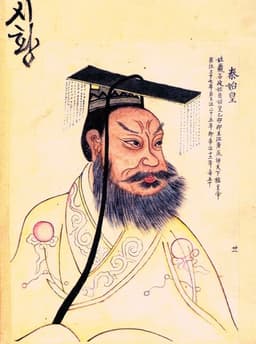
Qin Shi Huang
Emperor · Ancient
85.2Total
Basic Information
Born
1850
-259
Died
1916
-210
Era
Modern
Ancient
Nationality
United Kingdom
China
Occupation
General
Emperor
Civilization
Western
Eastern
Score Comparison
Military (10%)
72.0
80.0
Political (20%)
72.0
90.0
Influence (20%)
65.0
85.0
Legacy (20%)
55.0
90.0
Leadership (15%)
48.8
78.0
Strategy (15%)
68.0
82.0
TOTAL
62.1
85.2
Herbert Kitchener — Complete Timeline
1898 AD
Battle of OmdurmanWar◆ Major
Kitchener commanded Anglo-Egyptian forces at the Battle of Omdurman, defeating the Mahdist army in Sudan. The victory avenged the death of General Gordon and established British control over Sudan, with Kitchener becoming Governor-General.
SudanMahdist WarBritish Empire
Impact: regional
Fashoda IncidentPolitical Action◆ Major
Kitchener confronted a French expedition at Fashoda in Sudan, leading to a diplomatic crisis between Britain and France. The incident was resolved peacefully with French withdrawal, solidifying British control over the Nile Valley.
Fashoda IncidentColonial RivalryAnglo-French Relations
Impact: global
1902 AD
Appointed Commander-in-Chief in IndiaPolitical Action◆ Major
Kitchener was appointed Commander-in-Chief of the British Indian Army. He implemented major reforms, including reorganizing the army into divisions and improving training, but clashed with Viceroy Curzon over military administration.
Indian ArmyMilitary ReformBritish Raj
Impact: regionalconstructive
1914 AD
Appointed Secretary of State for WarPolitical Action
Kitchener was appointed Secretary of State for War at the outbreak of World War I. He organized the massive expansion of the British Army, raising the 'New Armies' of volunteers, a critical contribution to the war effort.
World War IBritish ArmyMilitary Organization
Impact: globalconstructive
1916 AD
Killed on HMS HampshireOther◆ Major
Kitchener died when HMS Hampshire struck a German mine off the Orkney Islands while en route to Russia. His death was a major shock to the British public and removed a key figure from the war leadership.
World War IDeathNaval Incident
Impact: globaltragic
Qin Shi Huang — Complete Timeline
246 BC
Construction of the Mausoleum and Terracotta ArmyOther◆ Major
Qin Shi Huang commissioned a vast mausoleum complex near Xi'an, guarded by thousands of life-sized terracotta soldiers, horses, and chariots. The project employed hundreds of thousands of workers and reflected his obsession with immortality and imperial power.
Impact: global
230 BC
Conquest of the Six Warring StatesWar
From 230 to 221 BCE, Ying Zheng led the Qin state in a series of campaigns that conquered the Han, Zhao, Wei, Chu, Yan, and Qi states. This unified China under a single ruler for the first time, ending the Warring States period.
Impact: global
221 BC
Standardization of Writing, Currency, and MeasurementsReform◆ Major
Qin Shi Huang ordered the standardization of Chinese script, currency, and weights and measures across the unified empire. This facilitated administration, trade, and cultural integration, laying a foundation for future dynasties.
Impact: globalconstructive
Proclamation of the Qin DynastyPolitical Action
After conquering the last independent state, Ying Zheng declared himself Shi Huangdi (First Emperor), founding the Qin Dynasty. He adopted a new title to signify his supreme authority and initiated centralized imperial rule.
Impact: global
214 BC
Initiation of the Great Wall ConstructionOther◆ Major
Qin Shi Huang ordered the connection and extension of existing northern fortifications to create a unified defensive wall against nomadic Xiongnu raids. This project involved massive conscripted labor and became the precursor to the later Great Wall.
Impact: regional
213 BC
Burning of Books and Burying of ScholarsPolitical Action◆ Major
On the advice of Li Si, Qin Shi Huang ordered the burning of historical records and philosophical texts not aligned with Legalist doctrine. He also had 460 Confucian scholars buried alive to suppress dissent and consolidate ideological control.
Impact: nationaldestructive
Expert Analysis
herbert-kitchener-vs-qin-shi-huang
# The Emperor and the General: Two Paths to Immortality
On a June evening in 1916, the HMS Hampshire slipped through the choppy waters off the Orkney Islands, carrying the most famous military figure in the British Empire. A German mine ripped through the hull, and within minutes, Herbert Kitchener was gone—swallowed by the sea, his body never recovered, his legend suddenly frozen. Two thousand years earlier and half a world away, another man had prepared for eternity with far greater deliberation. Near Xi'an, in what is now China, Qin Shi Huang ordered the construction of a subterranean army: thousands of life-sized terracotta soldiers, each with a unique face, standing in battle formation for all eternity. One man died in an instant, leaving a legacy that would be debated and diminished. The other built a monument that would astonish the world millennia later. What separates these two figures—both titans of their age, both architects of vast change—is not merely time and geography, but the deeper currents of ambition, circumstance, and the very nature of power itself.
Origins
Qin Shi Huang was born in 259 BC into a world of chaos. The Warring States period had torn China apart for centuries, a relentless cycle of conflict among seven competing kingdoms. His father was the king of Qin, a state on the western frontier that had long been dismissed as semi-barbaric by the more cultured central states. The young prince, originally named Ying Zheng, grew up in a court rife with intrigue, his mother involved in scandal, his regent a eunuch who may have sought to usurp the throne. He learned early that trust was a weapon turned against the unwary.
Herbert Kitchener, born in 1850 in County Kerry, Ireland, came of age in the high noon of the British Empire. His father was a colonel, his family solidly upper-middle-class, and his path was clear: military service, colonial adventure, the steady climb through the ranks. Where Qin Shi Huang inherited a throne through blood and survived through cunning, Kitchener earned his through examination and patience—he entered the Royal Military Academy at Woolwich in 1868, then spent years mapping Palestine and Cyprus, learning the craft of imperial administration. One man was forged in the furnace of civil war; the other in the orderly machinery of global empire.
Rise to Power
The Qin king began his conquests at age twenty-two. From 230 to 221 BC, his generals swept through the six rival states—Han, Zhao, Wei, Chu, Yan, and Qi—with a ruthless efficiency that stunned the ancient world. Each campaign was methodical, each victory complete. When the last king surrendered, Ying Zheng did not simply declare himself ruler of a larger kingdom. He invented a new title: Shi Huangdi, the First Emperor. He was not continuing a dynasty; he was beginning time itself.
Kitchener's ascent was no less remarkable, but it followed a different logic. His great victory came in 1898 at the Battle of Omdurman, where his Anglo-Egyptian forces annihilated the Mahdist army in Sudan, avenging the death of General Gordon thirteen years earlier. The battle was a slaughter—some 10,000 Sudanese dead against fewer than 50 British casualties—and it made Kitchener a national hero. He then marched to Fashoda, where he confronted a French expedition and forced a diplomatic retreat, cementing British control over the Nile. Where Qin Shi Huang conquered kingdoms, Kitchener conquered territories. Where the First Emperor remade civilization, Kitchener expanded an empire already built.
Leadership & Governance
Qin Shi Huang's genius was not military but administrative. Once unified, he imposed a radical standardization across his realm: the same script, the same currency, the same axle lengths for carts, the same weights and measures. He built roads and canals, connected the northern fortifications into what would become the Great Wall, and created a centralized bureaucracy that replaced the old feudal nobility. His reign was short—just eleven years as emperor—but its reforms lasted two millennia. "We have encompassed the six directions," he declared on a stele, "and everywhere there is peace."
Kitchener's leadership was of a different order. As Commander-in-Chief in India from 1902, he reorganized the British Indian Army, breaking the hold of the old presidency system and creating a unified command structure. But his greatest test came in 1914, when he was appointed Secretary of State for War at the outbreak of World War I. While others predicted a short war, Kitchener foresaw a conflict of years and millions of men. He launched the largest volunteer recruitment campaign in British history, and his face—that famous mustache, those piercing eyes—stared from posters declaring "Your Country Needs YOU." He built an army from nothing, then watched it bleed on the Somme.
Triumph & Tragedy
For Qin Shi Huang, triumph and tragedy were inseparable. He unified China, but at a terrible cost. In 213 BC, on the advice of his chancellor Li Si, he ordered the burning of historical records and philosophical texts that did not align with Legalist doctrine. Scholars who protested were buried alive. The First Emperor sought to control not just the present but the past itself—to erase competing memories and write his own version of history. His mausoleum, with its terracotta army, was the ultimate expression of this ambition: a perfect, unchanging world for the afterlife.
Kitchener's tragedy was more conventional. He died in 1916, not in battle but by accident, on a diplomatic mission to Russia. His death shocked the British public, who had invested him with almost mythical authority. But his reputation had already begun to fray. The volunteer army he raised was fed into the meat grinder of the Western Front. The shells he failed to procure became a political scandal. He was a great organizer but a poor politician, a man of action in a war that demanded patience and compromise.
Character & Destiny
Qin Shi Huang was driven by an almost cosmic ambition. He sought immortality—sending expeditions for the elixir of life, building his tomb as a fortress against time. His paranoia was legendary: he slept in different rooms each night, executed those who revealed his location, and trusted no one. Yet this same suspicion drove his achievements. He saw that the old order had failed, that the warring states had brought only suffering, and that only total control could create lasting peace. His cruelty was not random but systematic, a tool of statecraft.
Kitchener was aloof, cold, and utterly dedicated to duty. He had no close friends, never married, and lived for the army. His biographers note his inability to delegate, his disdain for politicians, his preference for action over discussion. He was a colonial warrior in an industrial war, and the scale of the conflict overwhelmed even his formidable talents. Where Qin Shi Huang created a new world, Kitchener tried to save an old one.
Legacy
The First Emperor's legacy is paradoxical. His dynasty collapsed within four years of his death, undone by rebellion and succession crisis. Yet the empire he created endured. The writing system he standardized is still used. The Great Wall he began still stands. The terracotta army, unearthed in 1974, has become a global symbol of Chinese civilization. He is remembered as both a unifier and a tyrant, a figure of awe and horror.
Kitchener's legacy is more ambiguous. His military reforms in India and Sudan were lasting, but his reputation was forever shaped by the First World War. The poster with his pointing finger remains one of the most iconic images of the twentieth century, but it represents a war that many now view as futile. He is remembered as a symbol of imperial confidence—and of its limits.
Conclusion
Standing before the terracotta army, one feels the weight of a single human will reaching across two thousand years. Standing before Kitchener's poster, one feels the urgency of a moment that has passed. Both men sought to shape history, but they worked with different materials. Qin Shi Huang had a blank slate—a fractured civilization he could remake in his image. Kitchener had an empire already built, a war already begun, a system that resisted his control. The First Emperor's cruelty was absolute because his power was absolute. Kitchener's failures were human because his constraints were human. One built for eternity; the other fought for a season. And in the end, the difference between them is not talent or ambition, but the age in which they lived—and the world they inherited.
Rankings
🥇
Qin Shi HuangLeader
Mil: 80.0Pol: 90.0Inf: 85.0
85.2
🥈
Herbert Kitchener
Mil: 72.0Pol: 72.0Inf: 65.0
62.1
+23.1 behind
How This Comparison Works
Algorithm
Each figure is scored on 6 dimensions (0—100 scale) based on structured historical data: Military (10%), Political (20%), Influence (20%), Legacy (20%), Leadership (15%), Strategy (15%). The weighted total produces the final ranking.
Data Sources
Scores are computed from structured sub-indicators in the database. Scale factors adjust for era (Ancient ×0.85, Modern ×1.0) and civilization size (Eastern ×1.05, Other ×0.80) to account for differences in population and military scale.
Maximum 3 Figures
Comparisons are limited to 2—3 figures to ensure readability and statistical meaningfulness.
Error Margins
±5 points per dimension — Sub-scores are derived from historical records with inherent uncertainty. Two figures within 5 points on a dimension should be considered roughly equivalent in that area.
Total Score Accuracy
±3 points overall — The weighted combination of 6 dimensions produces a total score with approximately ±3 points of uncertainty. Differences of less than 3 points are not statistically significant— the figures are effectively tied.
Known Limitations
- Historical records are incomplete and uneven across civilizations
- Figures from oral-tradition societies may be underrepresented
- Occupation labels can misclassify multi-role figures
- Scores measure capability and impact, not moral character
- Quantitative scoring is a comparison tool, not absolute truth
Capability Radar
Military (10%) — Battles & Warfare
Battles
75
85
Win Rate
80
90
Expansion
85
90
Political (20%) — Governance & Reform
Reform
70
95
Diplomacy
55
75
Economy
50
90
Influence (20%) — Cultural & Global Reach
Cultural
55
95
Global
70
85
Legacy (20%) — Historical Impact
Historical
75
95
Longevity
60
95
Leadership (15%) — Power & Stability
Tenure
60
70
Stability
45
65
Strategy (15%) — Tactics & Innovation
Strategy
85
85
Tactics
65
80
Reform
90
95
Similar Comparisons
Comments & Discussion
TerraCottaTactician6/17/2026
As a military historian, Kitchener's failure to adapt to modern warfare is the real story here. The man who crushed the Mahdi at Omdurman with Maxim guns in 1898 couldn't see that the Great War was beyond his Victorian playbook. He raised "New Armies" by sheer charisma, sure, but sent millions into a meat grinder he never understood. Qin Shi Huang, by contrast, unified China through strategic brilliance—standardizing weapons, chariots, and crossbows across his legions. One built an empire; the o
沙丘篡史6/17/2026
我作为数据怀疑论者,最受不了这种浪漫化历史。说秦始皇子虚乌有?正史记录确凿!他统一度量衡、文字、货币,工程兵修了七百多公里的驰道和长城,这都有竹简和遗址实证。而Kitchener在苏丹靠人海战术和军令如山,伤亡率却高得惊人——1915年统计显示英军征召的志愿兵中近三成压根没活过训练。别拿石刻对比坑道,史实才硬。
ClassicsConsigliere6/17/2026
A classics scholar sees a tragic irony: both men sought immortality through legacy, but in opposite registers. Qin Shi Huang, fed alchemical mercury to live forever, instead built the terracotta army as a physical afterlife—a model replicating his conquests in clay and bronze. Kitchener, the imperial icon, became a poster for "Your Country Needs You" while his body rotted in the North Sea. Their fates speak to East and West: one controls the memory; the other is consumed by it.
铁幕评史6/17/2026
从军事革命角度批判:Kitchener根本是战术退化论样本。他在布尔战争中发明了集中营(死亡超2.7万平民),到一战却又退回线性战术,死伤百万。秦始皇帝却创立了古代战争工程学巅峰——俑坑里发现的青铜弩机,射程可达800米,远超同期希腊投石兵。一个迷恋个人权威,一个打造系统暴力,高下立判。
MoldbreakerMemoir6/17/2026
A history buff loves this contrast. Qin Shi Huang's burial mound was a microcosm of his unified China—cosmic rivers of mercury flowing, ceilings painted with constellations, armies of clay ready to march. Kitchener's "grave" is the ocean floor, dark and empty. One planned for eternity in meticulous detail; the other's tragic end was sudden, a footnote to a war he helped start but couldn't finish. Qin's stillness is eerie; Kitchener's disappearance is pathetic.