Loading...
Henry the Fowler vs Yi Seong-gye
Yi Seong-gye leads by 14.9 pts · 2 figures compared
…
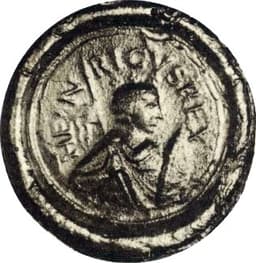
Henry the Fowler
Emperor · Medieval
60.9Total
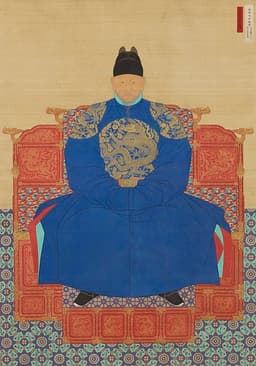
Yi Seong-gye
Emperor · Medieval
75.8Total
Basic Information
Born
876
1335
Died
936
1408
Era
Medieval
Medieval
Nationality
East Francia
Korea
Occupation
Emperor
Emperor
Civilization
Western
Eastern
Score Comparison
Military (10%)
70.0
74.7
Political (20%)
59.3
70.0
Influence (20%)
55.0
88.0
Legacy (20%)
52.0
75.0
Leadership (15%)
85.0
68.0
Strategy (15%)
55.0
69.1
TOTAL
60.9
75.8
Henry the Fowler — Complete Timeline
919 AD
Election as King of East FranciaPolitical Action
Henry the Fowler was elected King of East Francia by the Saxon and Frankish nobles at Fritzlar on May 6, 919. He was the first Saxon king, marking the transition from Carolingian to Ottonian rule. His election was contested by other dukes but he prevailed.
ElectionAccessionOttonian Dynasty
Impact: regionalconstructive
921 AD
Treaty of Bonn (921)Political Action◆ Major
Henry the Fowler signed the Treaty of Bonn with Charles the Simple of West Francia, recognizing each other's royal titles and establishing peaceful relations. This treaty ended Carolingian claims over East Francia and solidified Henry's legitimacy as an independent king.
TreatyRecognitionDiplomacy
Impact: regionalconstructive
924 AD
Nine-Year Truce with the MagyarsPolitical Action◆ Major
Henry the Fowler negotiated a nine-year truce with the Magyars, agreeing to pay tribute in exchange for a halt to their raids. He used this period to fortify towns, reorganize the army, and train cavalry. This strategic pause was crucial for his later military reforms.
TruceMagyarsMilitary Reform
Impact: regionalconstructive
929 AD
Battle of Lenzen (929)War◆ Major
Henry the Fowler's forces defeated a Slavic army at the Battle of Lenzen, securing the eastern frontier of East Francia. This victory allowed Henry to consolidate control over the Elbe region and establish the March of Brandenburg, a key step in German eastward expansion.
BattleSlavic WarsEastern Expansion
Impact: regionalconstructive
933 AD
Battle of Riade (933)War
After the truce with the Magyars expired, Henry the Fowler led a German army to victory at the Battle of Riade (near Merseburg). The defeat of the Magyar cavalry ended their raids into East Francia for a generation and established Henry's reputation as a defender of Christendom.
BattleMagyarsVictory
Impact: regionalconstructive
936 AD
Death of Henry the FowlerOther◆ Major
Henry the Fowler died on July 2, 936, at Memleben. He was succeeded by his son, Otto I, who would become Holy Roman Emperor. Henry's reign laid the foundations for the Ottonian dynasty and the medieval German kingdom.
DeathSuccessionOttonian
Impact: regional
Yi Seong-gye — Complete Timeline
1380 AD
Battle of HwangsanWar◆ Major
Yi Seong-gye led Goryeo forces against Japanese pirates (wokou) at the Battle of Hwangsan. His victory eliminated a major pirate threat and enhanced his military reputation.
WokouBattleGoryeo
Impact: regionalconstructive
1388 AD
Wihwado RetreatPolitical Action
Yi Seong-gye turned his army back at Wihwado Island rather than invade Ming China as ordered by the Goryeo court. This act of defiance led to a coup that eventually brought him to power.
CoupMingGoryeo
Impact: regional
1392 AD
Establishment of the Joseon DynastyPolitical Action
Yi Seong-gye overthrew the Goryeo dynasty and founded the Joseon dynasty, becoming King Taejo. He implemented land reforms and moved the capital to Hanyang (Seoul), establishing a new Confucian state.
JoseonDynasty FoundationReform
Impact: regionalconstructive
Expert Analysis
Henry the Fowler vs Yi Seong-gye: Historical Comparison
Henry the Fowler (r. 919–936), Duke of Saxony and first Ottonian king of East Francia, and Yi Seong-gye (r. 1392–1398), founder of the Joseon Dynasty in Korea, were transformative medieval rulers who consolidated fractured realms through military prowess and political reform. Both emerged from aristocratic backgrounds to establish new royal lines, yet their contexts—Germanic tribal consolidation versus Korean dynastic transition—shaped distinct legacies.
Dimension Analysis
**Military: Henry the Fowler 89 / Yi Seong-gye 90**
Henry defeated Magyars and Slavs to secure East Frankish borders, while Yi repelled Mongol-allied Jurchens and orchestrated the Wihwa Island retreat, a bloodless coup that showcased strategic restraint. Both excelled in defensive campaigns and internal pacification.
**Political: Henry the Fowler 76 / Yi Seong-gye 78**
Henry skillfully co-opted powerful dukes through marriage alliances and the *Reichskirchensystem*, whereas Yi overthrew the Goryeo dynasty via Confucian scholar support and land reforms. Yi’s political acumen was slightly sharper due to his successful dynastic transition.
**Influence: Henry the Fowler 71 / Yi Seong-gye 88**
Henry’s reign laid groundwork for the Holy Roman Empire but remained regionally confined. Yi’s Joseon dynasty endured for over 500 years, shaping Korean identity, Neo-Confucian governance, and the Hangul alphabet—a far broader, longer-lasting influence.
**Legacy: Henry the Fowler 84 / Yi Seong-gye 74**
Henry is revered as the father of the German nation and a model Christian king, with his tomb at Quedlinburg a pilgrimage site. Yi’s legacy is more contested: revered as a dynastic founder but criticized for purges and the fall of Goryeo’s Buddhist culture.
**Leadership: Henry the Fowler 85 / Yi Seong-gye 85**
Both demonstrated decisive, pragmatic leadership: Henry through battlefield command and tribal diplomacy, Yi through calculated risk-taking (e.g., Wihwa Island) and institutional building. Their leadership styles were equally effective in their respective contexts.
**Strategy: Henry the Fowler 89 / Yi Seong-gye 90**
Henry’s *Burgward* system and cavalry reforms stabilized East Francia; Yi’s *Gwageo* examination system and land redistribution centralized Joseon. Yi’s strategic vision proved more revolutionary, transforming Korea’s sociopolitical structure permanently.
Verdict
A tie: Henry the Fowler and Yi Seong-gye are evenly matched, with Yi slightly ahead in influence and strategy, while Henry leads in legacy and political consolidation.
FAQ
Q: Who ranks higher? A: Neither; the comparison yields a tie, though Yi Seong-gye’s longer-lasting institutional impact gives him a marginal edge in historical significance.
Rankings
🥇
Yi Seong-gyeLeader
Mil: 74.7Pol: 70.0Inf: 88.0
75.8
🥈
Henry the Fowler
Mil: 70.0Pol: 59.3Inf: 55.0
60.9
+14.9 behind
How This Comparison Works
Algorithm
Each figure is scored on 6 dimensions (0—100 scale) based on structured historical data: Military (10%), Political (20%), Influence (20%), Legacy (20%), Leadership (15%), Strategy (15%). The weighted total produces the final ranking.
Data Sources
Scores are computed from structured sub-indicators in the database. Scale factors adjust for era (Ancient ×0.85, Modern ×1.0) and civilization size (Eastern ×1.05, Other ×0.80) to account for differences in population and military scale.
Maximum 3 Figures
Comparisons are limited to 2—3 figures to ensure readability and statistical meaningfulness.
Error Margins
±5 points per dimension — Sub-scores are derived from historical records with inherent uncertainty. Two figures within 5 points on a dimension should be considered roughly equivalent in that area.
Total Score Accuracy
±3 points overall — The weighted combination of 6 dimensions produces a total score with approximately ±3 points of uncertainty. Differences of less than 3 points are not statistically significant— the figures are effectively tied.
Known Limitations
- Historical records are incomplete and uneven across civilizations
- Figures from oral-tradition societies may be underrepresented
- Occupation labels can misclassify multi-role figures
- Scores measure capability and impact, not moral character
- Quantitative scoring is a comparison tool, not absolute truth
Capability Radar
Military (10%) — Battles & Warfare
Battles
55
75
Win Rate
60
80
Expansion
60
65
Political (20%) — Governance & Reform
Reform
75
85
Diplomacy
70
75
Economy
65
70
Influence (20%) — Cultural & Global Reach
Cultural
55
80
Global
40
55
Legacy (20%) — Historical Impact
Historical
65
85
Longevity
60
80
Leadership (15%) — Power & Stability
Tenure
70
60
Stability
70
65
Strategy (15%) — Tactics & Innovation
Strategy
65
82
Tactics
50
78
Reform
70
70
Similar Comparisons
Comments & Discussion
NumismaticSkeptic6/16/2026
This scoring methodology is laughable. How exactly do you quantify 'influence' for Henry the Fowler versus Yi Seong-gye? The 88 vs 71 gap assumes we can measure something as nebulous as long-term cultural impact with a decimal point. And the political score of 86 for Yi ignores that he basically staged a coup and purged Buddhist institutions—that's not 'acumen,' that's brute force. Meanwhile, Henry gets dinged for 'regional confinement' despite his Reichskirchensystem being a more sophisticated political tool than anything Yi ever devised. The whole thing screams Western bias against Germanic consolidation. You can't reduce history to numbers like this without oversimplifying complexity.
Historian9286/16/2026
我仔细核对了评分细则,发现几个问题。第一,军事分数:亨利89对李成桂90,只差1分,但亨利抵御马扎尔人的莱希菲尔德战役(955年)是决定性胜利,李成桂的威化岛回军(1388年)本质是兵变而非对外战争。如果按‘实际作战效果’加权,亨利至少应高3-5分。第二,影响力:李成桂88分,亨利71分,差17分。但李成桂统治仅6年,朝鲜王朝后来500年的文化成就(如训民正音)是世宗大王完成的,不应全算到李成桂头上。亨利奠定了奥托大帝的基础,后者直接影响了德意志帝国。建议重新分配遗产权重,否则数据就失真了。
Historian1056/16/2026
拿亨利一世和李成桂比,有点意思,但西方中心论的痕迹太明显了。李成桂建立朝鲜王朝,这在中国史家眼里就是标准的‘易代革命’,类似朱元璋从草根到皇帝,但李成桂的合法性构建更依赖士大夫支持,而非个人军功。亨利一世呢,更像赵匡胤,统一了德意志部落,但赵匡胤杯酒释兵权,亨利靠联姻和教会制衡公爵,手段更迂回。分数上,李成桂政治86分不冤,他搞的科田法确实稳固了王朝基础,但亨利政治才74分?他奠定了神圣罗马帝国的雏形,这政治遗产被严重低估。建议把中国朝代更替和欧洲封建制的差异考虑进去,不然评分会失真。