Loading...
Henry the Fowler vs Wedem Arad
Henry the Fowler leads by 12.4 pts · 2 figures compared
…
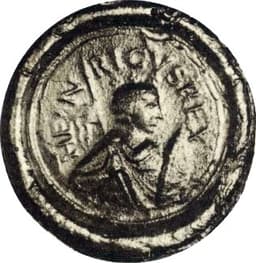
Henry the Fowler
Emperor · Medieval
60.9Total

Wedem Arad
Emperor · Medieval
48.5Total
Basic Information
Born
876
1270
Died
936
1314
Era
Medieval
Medieval
Nationality
East Francia
Ethiopia
Occupation
Emperor
Emperor
Civilization
Western
Other
Score Comparison
Military (10%)
70.0
50.0
Political (20%)
59.3
35.1
Influence (20%)
55.0
58.0
Legacy (20%)
52.0
45.8
Leadership (15%)
85.0
55.3
Strategy (15%)
55.0
39.6
TOTAL
60.9
48.5
Henry the Fowler — Complete Timeline
919 AD
Election as King of East FranciaPolitical Action
Henry the Fowler was elected King of East Francia by the Saxon and Frankish nobles at Fritzlar on May 6, 919. He was the first Saxon king, marking the transition from Carolingian to Ottonian rule. His election was contested by other dukes but he prevailed.
ElectionAccessionOttonian Dynasty
Impact: regionalconstructive
921 AD
Treaty of Bonn (921)Political Action◆ Major
Henry the Fowler signed the Treaty of Bonn with Charles the Simple of West Francia, recognizing each other's royal titles and establishing peaceful relations. This treaty ended Carolingian claims over East Francia and solidified Henry's legitimacy as an independent king.
TreatyRecognitionDiplomacy
Impact: regionalconstructive
924 AD
Nine-Year Truce with the MagyarsPolitical Action◆ Major
Henry the Fowler negotiated a nine-year truce with the Magyars, agreeing to pay tribute in exchange for a halt to their raids. He used this period to fortify towns, reorganize the army, and train cavalry. This strategic pause was crucial for his later military reforms.
TruceMagyarsMilitary Reform
Impact: regionalconstructive
929 AD
Battle of Lenzen (929)War◆ Major
Henry the Fowler's forces defeated a Slavic army at the Battle of Lenzen, securing the eastern frontier of East Francia. This victory allowed Henry to consolidate control over the Elbe region and establish the March of Brandenburg, a key step in German eastward expansion.
BattleSlavic WarsEastern Expansion
Impact: regionalconstructive
933 AD
Battle of Riade (933)War
After the truce with the Magyars expired, Henry the Fowler led a German army to victory at the Battle of Riade (near Merseburg). The defeat of the Magyar cavalry ended their raids into East Francia for a generation and established Henry's reputation as a defender of Christendom.
BattleMagyarsVictory
Impact: regionalconstructive
936 AD
Death of Henry the FowlerOther◆ Major
Henry the Fowler died on July 2, 936, at Memleben. He was succeeded by his son, Otto I, who would become Holy Roman Emperor. Henry's reign laid the foundations for the Ottonian dynasty and the medieval German kingdom.
DeathSuccessionOttonian
Impact: regional
Wedem Arad — Complete Timeline
1306 AD
First Contact with EuropePolitical Action◆ Major
Wedem Arad sent an embassy to Europe, likely to the court of Pope Clement V in Avignon. This was the first recorded diplomatic contact between Ethiopia and a European power since antiquity, establishing a precedent for future Ethiopian-European relations.
Impact: regional
Expert Analysis
Henry the Fowler vs Wedem Arad
# The King Who Built a Kingdom and the Emperor Who Opened a Door
On a May morning in 919, the nobles of Saxony and Franconia gathered at Fritzlar, a small town in what is now central Germany. They elected a man named Henry, a duke from the Saxon frontier, as their king. Half a continent away, in the highlands of Ethiopia, another ruler sat on a throne that claimed descent from the Queen of Sheba. Wedem Arad, emperor of a Christian kingdom that had survived for centuries in isolation, was about to do something no Ethiopian ruler had ever done: reach out to the distant, mysterious world of Europe. One man built a dynasty; the other opened a door. Their stories, separated by four centuries and thousands of miles, reveal how leadership is shaped by geography, circumstance, and the raw material of ambition.
Origins
Henry the Fowler was born in 876 into a world of chaos. The Carolingian Empire, which had once united much of Western Europe under Charlemagne, was crumbling. Viking raiders swept along the coasts, Magyar horsemen thundered out of the steppes, and local dukes fought for scraps of power. Henry’s father, Otto the Illustrious, was Duke of Saxony, a region of forests, marshes, and hardscrabble farms. The Saxons were a proud, warlike people, suspicious of Frankish kings and their Roman pretensions. Henry grew up in a world where power was personal, where a man’s strength and cunning mattered more than any crown.
Wedem Arad, born in 1270, inherited a very different world. Ethiopia was an ancient Christian kingdom, isolated by geography and faith. Surrounded by Muslim sultanates and pagan tribes, it had developed its own traditions, its own language, and its own sense of destiny. The Solomonic dynasty, to which Wedem Arad belonged, claimed direct descent from King Solomon and the Queen of Sheba, a lineage that gave Ethiopian emperors a sacred aura unknown to European kings. But isolation also meant stagnation. While Europe was undergoing the ferment of the High Middle Ages—universities, cathedrals, crusades—Ethiopia remained a fortress, proud but alone.
Rise to Power
Henry’s path to kingship was neither smooth nor inevitable. When the last Carolingian king of East Francia died in 911, the nobles elected Conrad I, a Frankish duke, as his successor. Conrad spent his reign fighting rebellious dukes, including Henry himself. On his deathbed in 918, Conrad reportedly told his brother, “Henry is the most capable man for the throne; let him be king.” It was a stunning admission from a dying enemy. In 919, the nobles of Saxony and Franconia gathered at Fritzlar and elected Henry as their king. But he was not crowned or anointed. Henry refused the traditional rite of unction—the holy oil that made a king God’s chosen. He was a warrior king, not a priest-king, and he wanted his authority to rest on his sword, not on a bishop’s blessing.
Wedem Arad’s rise was quieter, more conventional. He was the son of Emperor Yekuno Amlak, who had restored the Solomonic dynasty after a century of usurpers. When Yekuno Amlak died around 1285, Wedem Arad inherited a stable kingdom, its borders secure, its church strong. There were no dramatic elections, no rival claimants. He was emperor by blood, and his people accepted that as natural.
Leadership & Governance
Henry’s genius lay in consolidation. He understood that a king could not rule by force alone. In 921, he signed the Treaty of Bonn with Charles the Simple of West Francia, recognizing each other’s titles. It was a diplomatic masterstroke: by acknowledging Charles as king of the West, Henry gained legitimacy for his own rule in the East. But his greatest challenge was the Magyars, the terrifying horsemen who had raided Central Europe for decades. In 924, Henry negotiated a nine-year truce, agreeing to pay tribute. It was a humiliating bargain, but Henry used the time wisely. He built fortified towns, trained a new cavalry, and drilled his army. When the truce expired in 933, Henry refused to pay further tribute. The Magyars invaded, and Henry met them at Riade, near the Unstrut River. The German victory was decisive. For the first time in a generation, the Magyar threat was broken.
Wedem Arad governed a kingdom that was more settled, more ritualized. His great act was diplomatic, not military. In 1306, he sent an embassy to Europe, likely to the court of Pope Clement V in Avignon. This was the first recorded contact between Ethiopia and Europe in centuries. The embassy carried letters, gifts, and perhaps a proposal for an alliance against their common Muslim enemies. But nothing came of it. Europe was distracted by the Avignon papacy, the Hundred Years’ War, and its own internal conflicts. Wedem Arad’s initiative faded into obscurity, a footnote in history.
Triumph & Tragedy
Henry’s triumph was the Battle of Riade. It was not a great slaughter—the Magyars fled before the German cavalry—but it was a turning point. Henry had transformed East Francia from a victim into a power. He had also secured his eastern frontier by defeating the Slavic tribes at the Battle of Lenzen in 929, a brutal engagement that crushed a rebellion and opened the way for German colonization. By the time he died on July 2, 936, at Memleben, Henry had laid the foundations for the Ottonian dynasty, which would produce the Holy Roman Emperors.
Wedem Arad’s triumph was more fragile. His embassy to Europe was a bold gesture, but it achieved little. He died in 1314, his kingdom unchanged, his name barely remembered outside Ethiopia. His tragedy was not failure but irrelevance. He had tried to connect his isolated kingdom to a wider world, but the world was not ready to listen.
Character & Destiny
Henry was a pragmatist, a man who understood the limits of power. He accepted tribute when necessary, fought when possible, and always planned for the future. His refusal of unction was not just a political calculation; it was a statement about the nature of kingship. He would be a leader of warriors, not a puppet of priests. This hard-headed realism allowed him to build a kingdom that would last.
Wedem Arad was a visionary, a man who looked beyond his borders. His embassy to Europe was an act of imagination, a recognition that Ethiopia could not remain forever alone. But vision without power is often wasted. He lacked the military strength to make Europe take notice, and his kingdom lacked the resources to sustain a long-term diplomatic effort. He was a man ahead of his time, and that is often a lonely place.
Legacy
Henry’s legacy is written in the history of Germany. His son, Otto I, would be crowned Holy Roman Emperor in 962, the first of a line that would dominate Central Europe for centuries. Henry himself is remembered as the founder of the Ottonian dynasty, a king who turned a collection of warring duchies into a kingdom. His military reforms, his diplomacy, his strategic patience—all set the stage for the medieval German Empire.
Wedem Arad’s legacy is more subtle. His embassy to Europe was a first step, a tentative gesture that would not be repeated for centuries. But it planted a seed. When Portuguese explorers reached Ethiopia in the 16th century, they found a Christian kingdom that remembered its ancient ties to Europe. Wedem Arad had opened a door, even if no one walked through it in his lifetime. Today, he is remembered as a pioneer of Ethiopian diplomacy, a ruler who dared to reach out.
Conclusion
Henry the Fowler and Wedem Arad were products of their worlds, and their worlds were very different. Henry built a kingdom from chaos, using war and diplomacy to forge a new order. Wedem Arad tried to connect his ancient kingdom to a wider world, but the world was not yet ready. One succeeded; the other failed. But both understood something essential about leadership: that power is not just about strength, but about vision. Henry saw a kingdom where others saw only warring tribes. Wedem Arad saw a world where others saw only isolation. In the end, it is not the outcome that defines a leader, but the courage to act.
Rankings
🥇
Henry the FowlerLeader
Mil: 70.0Pol: 59.3Inf: 55.0
60.9
🥈
Wedem Arad
Mil: 50.0Pol: 35.1Inf: 58.0
48.5
+12.4 behind
How This Comparison Works
Algorithm
Each figure is scored on 6 dimensions (0—100 scale) based on structured historical data: Military (10%), Political (20%), Influence (20%), Legacy (20%), Leadership (15%), Strategy (15%). The weighted total produces the final ranking.
Data Sources
Scores are computed from structured sub-indicators in the database. Scale factors adjust for era (Ancient ×0.85, Modern ×1.0) and civilization size (Eastern ×1.05, Other ×0.80) to account for differences in population and military scale.
Maximum 3 Figures
Comparisons are limited to 2—3 figures to ensure readability and statistical meaningfulness.
Error Margins
±5 points per dimension — Sub-scores are derived from historical records with inherent uncertainty. Two figures within 5 points on a dimension should be considered roughly equivalent in that area.
Total Score Accuracy
±3 points overall — The weighted combination of 6 dimensions produces a total score with approximately ±3 points of uncertainty. Differences of less than 3 points are not statistically significant— the figures are effectively tied.
Known Limitations
- Historical records are incomplete and uneven across civilizations
- Figures from oral-tradition societies may be underrepresented
- Occupation labels can misclassify multi-role figures
- Scores measure capability and impact, not moral character
- Quantitative scoring is a comparison tool, not absolute truth
Capability Radar
Military (10%) — Battles & Warfare
Battles
55
15
Win Rate
60
20
Expansion
60
10
Political (20%) — Governance & Reform
Reform
75
20
Diplomacy
70
55
Economy
65
15
Influence (20%) — Cultural & Global Reach
Cultural
55
20
Global
40
40
Legacy (20%) — Historical Impact
Historical
65
35
Longevity
60
30
Leadership (15%) — Power & Stability
Tenure
70
40
Stability
70
30
Strategy (15%) — Tactics & Innovation
Strategy
65
10
Tactics
50
10
Reform
70
5
Similar Comparisons
Comments & Discussion
SaxonSpear6/16/2026
Henry the Fowler wasn't just some lucky barbarian who stumbled into a crown. He deliberately bypassed church coronation, refusing the "king by God's grace" title at Fritzlar. That's a diplomatic masterstroke—neutralizing bishops' influence before they could control him. Wedem Arad sent envoys to Europe seeking alliance against Muslims, but with zero leverage or military threats to back it. Henry built a kingdom on tactical pragmatism; Wedem built a fantasy.
数据猎手6/16/2026
那套"查理曼继承者"的叙事纯属扯淡。亨利一世在919年称王时,东部边界还在疯狂被马扎尔人洗劫,他靠签了九年停战协议才换来的喘息时间。所谓"王朝奠基人"就是这么个窝囊账本:被迫向游牧部落纳贡,跟后来的奥托大帝相比就是个开局苟活的主儿。韦德姆·阿拉德至少敢派使者去欧洲,亨利连跨过莱茵河南下的胆子都没有。吹什么吹?
EthiopiaAnchored6/16/2026
You revisionists miss the point entirely. Wedem Arad's European embassy wasn't weakness—it was desperate genius. In 1306, his envoys reached Avignon to meet Pope Clement V, carrying relics and proposing a joint crusade. This was a visionary attempt to break Ethiopia's centuries-long isolation, predating any meaningful European outreach by African kings. Henry the Fowler played it safe, consolidating on familiar Saxon turf. Wedem gambled on a world-changing connection. Which takes more nerve?
硬核书虫6/16/2026
冷死了吧,提一下关键差异:亨利一世能成功是因为日耳曼地区当时在玩"选举君主制"残局,各路诸侯互相制衡给了他空间。而韦德姆·阿拉德面对的是所罗门王朝的传统继承杂技——他靠干掉前任上台,把宝押在外部联盟上纯粹是政治豪赌。两个都是实用主义者,但亨利用的是战术韧性,韦德姆用的就是外交投机。不是一类玩家。
ChroniclerOfIron6/16/2026
Forget the diplomacy puffery. Henry the Fowler's real legacy is military: he introduced fortified burghs across Saxony, transforming peasant levies into reliable garrison troops. That system directly enabled his son Otto's later victories. Wedem Arad? His reign is so sparsely documented we're still debating basic chronology. One ruler reshaped his kingdom's defense architecture; the other sent some letters that got lost for decades. I'll take the iron over the ink trade every time.