Loading...
Henry the Fowler vs Theodore I Laskaris
Theodore I Laskaris leads by 0.9 pts · 2 figures compared
…
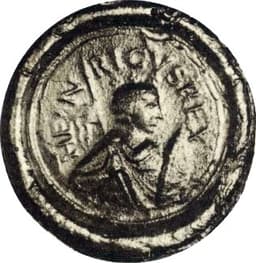
Henry the Fowler
Emperor · Medieval
60.9Total
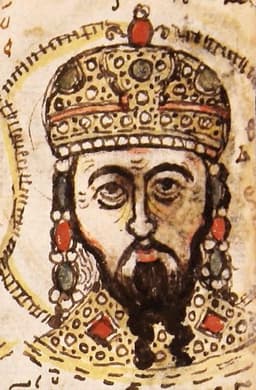
Theodore I Laskaris
Emperor · Medieval
61.8Total
Basic Information
Born
876
1174
Died
936
1222
Era
Medieval
Medieval
Nationality
East Francia
Nicaean Empire
Occupation
Emperor
Emperor
Civilization
Western
Western
Score Comparison
Military (10%)
70.0
65.0
Political (20%)
59.3
60.0
Influence (20%)
55.0
61.0
Legacy (20%)
52.0
56.0
Leadership (15%)
85.0
77.2
Strategy (15%)
55.0
55.0
TOTAL
60.9
61.8
Henry the Fowler — Complete Timeline
919 AD
Election as King of East FranciaPolitical Action
Henry the Fowler was elected King of East Francia by the Saxon and Frankish nobles at Fritzlar on May 6, 919. He was the first Saxon king, marking the transition from Carolingian to Ottonian rule. His election was contested by other dukes but he prevailed.
ElectionAccessionOttonian Dynasty
Impact: regionalconstructive
921 AD
Treaty of Bonn (921)Political Action◆ Major
Henry the Fowler signed the Treaty of Bonn with Charles the Simple of West Francia, recognizing each other's royal titles and establishing peaceful relations. This treaty ended Carolingian claims over East Francia and solidified Henry's legitimacy as an independent king.
TreatyRecognitionDiplomacy
Impact: regionalconstructive
924 AD
Nine-Year Truce with the MagyarsPolitical Action◆ Major
Henry the Fowler negotiated a nine-year truce with the Magyars, agreeing to pay tribute in exchange for a halt to their raids. He used this period to fortify towns, reorganize the army, and train cavalry. This strategic pause was crucial for his later military reforms.
TruceMagyarsMilitary Reform
Impact: regionalconstructive
929 AD
Battle of Lenzen (929)War◆ Major
Henry the Fowler's forces defeated a Slavic army at the Battle of Lenzen, securing the eastern frontier of East Francia. This victory allowed Henry to consolidate control over the Elbe region and establish the March of Brandenburg, a key step in German eastward expansion.
BattleSlavic WarsEastern Expansion
Impact: regionalconstructive
933 AD
Battle of Riade (933)War
After the truce with the Magyars expired, Henry the Fowler led a German army to victory at the Battle of Riade (near Merseburg). The defeat of the Magyar cavalry ended their raids into East Francia for a generation and established Henry's reputation as a defender of Christendom.
BattleMagyarsVictory
Impact: regionalconstructive
936 AD
Death of Henry the FowlerOther◆ Major
Henry the Fowler died on July 2, 936, at Memleben. He was succeeded by his son, Otto I, who would become Holy Roman Emperor. Henry's reign laid the foundations for the Ottonian dynasty and the medieval German kingdom.
DeathSuccessionOttonian
Impact: regional
Theodore I Laskaris — Complete Timeline
1204 AD
Foundation of the Empire of NicaeaPolitical Action
After the Fourth Crusade captured Constantinople, Theodore I Laskaris fled to Nicaea in Asia Minor and established a Byzantine government-in-exile. He organized resistance against the Latin Empire and the Seljuk Turks, laying the foundation for the Nicaean Empire as the primary successor state of Byzantium.
Fourth CrusadeSuccessor StateExile Government
Impact: regionalconstructive
1208 AD
Coronation as emperor by the Patriarch of ConstantinoplePolitical Action◆ Major
Theodore I Laskaris was formally crowned as emperor by the newly elected Patriarch of Constantinople-in-exile, Michael IV Autoreianos. This coronation legitimized the Nicaean Empire as the rightful continuation of the Byzantine Empire, with full ecclesiastical authority.
CoronationLegitimacyPatriarchate
Impact: regionalconstructive
1211 AD
Battle of Antioch on the MeanderWar◆ Major
Theodore I Laskaris defeated the Seljuk Sultanate of Rum at the Battle of Antioch on the Meander. The victory secured Nicaean control over western Anatolia and prevented Seljuk expansion into Byzantine territories, establishing Theodore as a major regional power.
Byzantine-Seljuk WarsMilitary VictoryAnatolian Campaign
Impact: regional
Defeat of the Latin Empire at the Battle of RhyndacusWar
Theodore I Laskaris led Nicaean forces to a victory over the Latin Empire at the Battle of Rhyndacus. The battle halted Latin expansion into Asia Minor and secured Nicaean control over the region, strengthening the Byzantine resistance against the crusader states.
Latin EmpireMilitary VictoryAsia Minor
Impact: regional
Expert Analysis
Henry the Fowler vs Theodore I Laskaris
# The Architects of Survival: Henry the Fowler and Theodore I Laskaris
In the spring of 933, on a field near Riade in northern Thuringia, an aging king of East Francia watched his cavalry shatter the lines of Magyar raiders who had terrorized his lands for a generation. Less than a century later, on the banks of the Meander River in Anatolia, another emperor—wounded, exhausted, but victorious—stood over the body of a Seljuk sultan he had killed with his own hands. Both moments were acts of defiance, born from the ashes of collapse. But the men who achieved them could not have been more different: one a pragmatic Saxon duke who built a kingdom from truces and tribute, the other a Byzantine aristocrat who conjured an empire from exile and desperation. Their stories reveal how two rulers, facing extinction, chose radically different paths to survival—and why one founded a dynasty while the other founded a dream.
Origins
Henry the Fowler was born in 876 into a world of fractured loyalties. The Carolingian Empire had dissolved into squabbling kingdoms, and the Saxon nobility—proud, insular, and suspicious of Frankish dominance—raised their own leaders. Henry’s father, Otto the Illustrious, was Duke of Saxony, but the family’s power rested on land and sword, not divine right. Henry grew up hunting in the Harz forests, learning to read men’s intentions before their words. His nickname “the Fowler” came from a legend that he was setting bird traps when messengers arrived to announce his election as king—a story that captures his earthy, unpretentious nature.
Theodore I Laskaris was born in 1174 into the glittering but decaying court of the Byzantine Empire. The Komnenian restoration had given way to the Angeloi dynasty, a family whose incompetence would soon cost Constantinople itself. Theodore was a member of the Laskaris clan, minor aristocrats who married into power. He knew the protocols of the palace, the intrigues of the eunuchs, the weight of imperial purple. When the Fourth Crusade’s Venetian ships appeared off the Golden Horn in 1204, Theodore was already a man accustomed to seeing the world in terms of legitimacy and hierarchy. His crisis would not be a matter of truces and tribute, but of whether an empire could survive without its capital.
Rise to Power
Henry’s ascent was a masterclass in patience. When King Conrad I of East Francia died in 918, the realm was bleeding from Magyar raids and internal feuds. Conrad, a Frank, had spent his reign fighting Saxon rebels—including Henry himself. On his deathbed, Conrad reportedly told his brother Eberhard to offer the crown to Henry, recognizing that only a Saxon could unite the tribes. At Fritzlar on May 6, 919, the Saxon and Frankish nobles elected Henry king. But he refused anointment by the Archbishop of Mainz, rejecting the Carolingian model of sacred kingship. Henry would rule as first among equals, not as God’s viceroy.
Theodore’s path was steeper and bloodier. When the Crusaders stormed Constantinople in 1204, he fled across the Bosporus to Nicaea, a city in western Anatolia. There he gathered refugees, soldiers, and the remnants of the Byzantine bureaucracy. Other claimants emerged—a Laskaris cousin in Trebizond, a despot in Epirus—but Theodore moved faster. In 1205 he declared himself emperor, though not yet crowned. He spent three years fighting off Latin knights and Seljuk raiders, building a state from nothing. In 1208, with a newly elected Patriarch in exile, Theodore received the imperial crown in a ceremony that echoed the rituals of the lost capital. He was no longer a fugitive; he was the true Roman emperor.
Leadership & Governance
Henry the Fowler governed like a farmer rotating fields. He understood that East Francia was a patchwork of tribes—Saxons, Franks, Bavarians, Swabians—each with its own loyalties. His strategy was to secure the borders while buying time. In 921, he signed the Treaty of Bonn with Charles the Simple of West Francia, a simple recognition of mutual kingship that ended decades of Frankish rivalry. Then came the Magyars. In 924, Henry negotiated a nine-year truce, paying tribute in exchange for peace. He used those years wisely: building fortified towns (the *Burgward* system), training heavy cavalry, and turning Saxon peasants into soldiers. When the truce expired in 933, Henry refused to pay further tribute. At Riade, his new army proved its worth.
Theodore I Laskaris ruled as a man constantly improvising. His Nicaean Empire was a state in exile, lacking the resources and prestige of Constantinople. He fought wars on two fronts: against the Latin Empire to the west and the Seljuk Sultanate of Rum to the east. In 1211, he defeated the Seljuks at Antioch on the Meander, killing Sultan Kaykhusraw I in single combat—a feat that became legend. That same year, he checked Latin expansion at the Battle of Rhyndacus. But Theodore’s genius was diplomatic. He married his daughters to Latin knights and Venetian merchants, securing alliances that kept Nicaea alive. He also courted the Orthodox Church, using the exiled Patriarch to legitimize his rule. Where Henry built walls, Theodore wove webs.
Triumph & Tragedy
Henry’s greatest triumph was not Riade but the decade that preceded it. The nine-year truce with the Magyars was a gamble that paid off: it gave him time to transform a vulnerable kingdom into a fortified state. When the Magyars returned in 933, they faced a different Germany. Henry’s victory was decisive but not total—the Magyars remained a threat until Otto I’s victory at Lechfeld in 955. Henry’s tragedy was that he died before seeing the full fruit of his labor. On July 2, 936, at Memleben, he passed away, leaving his son Otto a kingdom that was stable but still fragile.
Theodore’s triumph was survival itself. He kept the Byzantine flame burning when all seemed lost. But his tragedy was that he never recaptured Constantinople. His successors—his son-in-law John III Vatatzes, and later Michael VIII Palaiologos—would achieve that dream in 1261. Theodore died in 1222, having spent his life defending a capital he could not reclaim. His empire was a promise, not a reality.
Character & Destiny
Henry was a builder, not a visionary. He accepted what was possible—a kingdom of equals, a truce with pagans, a crown without anointment. His decisions were pragmatic, his ambitions modest. This groundedness allowed him to lay foundations that his son Otto I would raise into the Holy Roman Empire. Henry’s destiny was to be the root of a tree he would never see fully grown.
Theodore was a keeper of the flame. He believed, with all the fervor of exile, that the Roman Empire had not fallen—it had merely moved. His coronation, his diplomacy, his wars—all were acts of faith in a continuity that others had abandoned. This made him inspiring but also inflexible. He could not compromise on the idea of empire, even when compromise might have brought him peace. His destiny was to be remembered as the man who refused to let Byzantium die.
Legacy
Henry the Fowler is remembered as the founder of the Ottonian dynasty, the first Saxon king to unite the German tribes. His legacy is the medieval German kingdom, a political entity that would dominate Europe for centuries. He is a national hero in Germany, though his name is less known abroad than his son’s.
Theodore I Laskaris is a hero of the Greek world, the man who preserved Hellenic civilization when the Crusaders tried to destroy it. The Nicaean Empire he built became the vessel through which Byzantine culture, law, and Orthodoxy survived to be reborn under the Palaiologoi. Without him, there would have been no Constantinople to fall again in 1453.
Conclusion
One built a kingdom; the other kept an empire alive. Henry the Fowler accepted the world as it was and shaped it with patience. Theodore I Laskaris refused to accept the world as it had become and shaped it with defiance. Both succeeded, but their successes were of different orders. Henry’s legacy is tangible—a dynasty, a kingdom, a German nation. Theodore’s legacy is intangible—a memory, a continuity, a dream that outlasted its own failure. In the end, the difference between them is the difference between building a house and rebuilding a temple. Both require skill, but only one requires faith.
Rankings
🥇
Theodore I LaskarisLeader
Mil: 65.0Pol: 60.0Inf: 61.0
61.8
🥈
Henry the Fowler
Mil: 70.0Pol: 59.3Inf: 55.0
60.9
+0.9 behind
How This Comparison Works
Algorithm
Each figure is scored on 6 dimensions (0—100 scale) based on structured historical data: Military (10%), Political (20%), Influence (20%), Legacy (20%), Leadership (15%), Strategy (15%). The weighted total produces the final ranking.
Data Sources
Scores are computed from structured sub-indicators in the database. Scale factors adjust for era (Ancient ×0.85, Modern ×1.0) and civilization size (Eastern ×1.05, Other ×0.80) to account for differences in population and military scale.
Maximum 3 Figures
Comparisons are limited to 2—3 figures to ensure readability and statistical meaningfulness.
Error Margins
±5 points per dimension — Sub-scores are derived from historical records with inherent uncertainty. Two figures within 5 points on a dimension should be considered roughly equivalent in that area.
Total Score Accuracy
±3 points overall — The weighted combination of 6 dimensions produces a total score with approximately ±3 points of uncertainty. Differences of less than 3 points are not statistically significant— the figures are effectively tied.
Known Limitations
- Historical records are incomplete and uneven across civilizations
- Figures from oral-tradition societies may be underrepresented
- Occupation labels can misclassify multi-role figures
- Scores measure capability and impact, not moral character
- Quantitative scoring is a comparison tool, not absolute truth
Capability Radar
Military (10%) — Battles & Warfare
Battles
55
65
Win Rate
60
70
Expansion
60
60
Political (20%) — Governance & Reform
Reform
75
65
Diplomacy
70
70
Economy
65
60
Influence (20%) — Cultural & Global Reach
Cultural
55
50
Global
40
45
Legacy (20%) — Historical Impact
Historical
65
65
Longevity
60
55
Leadership (15%) — Power & Stability
Tenure
70
70
Stability
70
65
Strategy (15%) — Tactics & Innovation
Strategy
65
75
Tactics
50
60
Reform
70
55
Similar Comparisons
Comments & Discussion
SwordAndScribe6/16/2026
Henry the Fowler is a myth. A guy whose whole brand is "bird catcher" who got elected because the Franks couldn't be bothered? Please. His "castle-building" strategy against Magyars is just belt-and-braces medieval cowardice dressed as genius. Meanwhile, Theodore Laskaris actually bled for his throne — killed a Seljuk sultan with his own hands at the Meander. That's not administration, that's poetry. Henry inherited stability. Theodore forged it from a refugee camp.
战锤罗马6/16/2026
亨利一世就是个德国村长上位史,连加冕都躲着走。真正的帝国救赎在尼西亚:大越小镇埋伏战里他亲率三百骑兵,把拉丁人打到哭爹喊娘。别拿捕鸟人和屠龙者比,一个在养鹰,一个在喂鹰。