Loading...
Henry the Fowler vs Rurik
Henry the Fowler leads by 1.3 pts · 2 figures compared
…
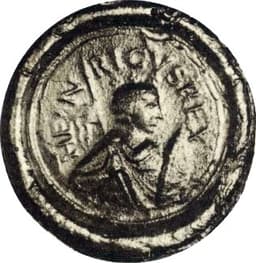
Henry the Fowler
Emperor · Medieval
60.9Total
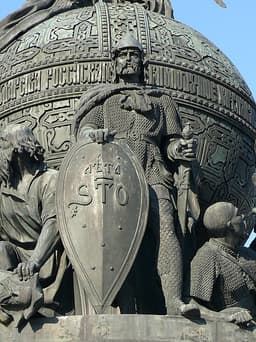
Rurik
Emperor · Medieval
59.6Total
Basic Information
Born
876
830
Died
936
879
Era
Medieval
Medieval
Nationality
East Francia
Kievan Rus
Occupation
Emperor
Emperor
Civilization
Western
Western
Score Comparison
Military (10%)
70.0
50.0
Political (20%)
59.3
35.1
Influence (20%)
55.0
82.0
Legacy (20%)
52.0
68.0
Leadership (15%)
85.0
55.3
Strategy (15%)
55.0
35.7
TOTAL
60.9
59.6
Henry the Fowler — Complete Timeline
919 AD
Election as King of East FranciaPolitical Action
Henry the Fowler was elected King of East Francia by the Saxon and Frankish nobles at Fritzlar on May 6, 919. He was the first Saxon king, marking the transition from Carolingian to Ottonian rule. His election was contested by other dukes but he prevailed.
ElectionAccessionOttonian Dynasty
Impact: regionalconstructive
921 AD
Treaty of Bonn (921)Political Action◆ Major
Henry the Fowler signed the Treaty of Bonn with Charles the Simple of West Francia, recognizing each other's royal titles and establishing peaceful relations. This treaty ended Carolingian claims over East Francia and solidified Henry's legitimacy as an independent king.
TreatyRecognitionDiplomacy
Impact: regionalconstructive
924 AD
Nine-Year Truce with the MagyarsPolitical Action◆ Major
Henry the Fowler negotiated a nine-year truce with the Magyars, agreeing to pay tribute in exchange for a halt to their raids. He used this period to fortify towns, reorganize the army, and train cavalry. This strategic pause was crucial for his later military reforms.
TruceMagyarsMilitary Reform
Impact: regionalconstructive
929 AD
Battle of Lenzen (929)War◆ Major
Henry the Fowler's forces defeated a Slavic army at the Battle of Lenzen, securing the eastern frontier of East Francia. This victory allowed Henry to consolidate control over the Elbe region and establish the March of Brandenburg, a key step in German eastward expansion.
BattleSlavic WarsEastern Expansion
Impact: regionalconstructive
933 AD
Battle of Riade (933)War
After the truce with the Magyars expired, Henry the Fowler led a German army to victory at the Battle of Riade (near Merseburg). The defeat of the Magyar cavalry ended their raids into East Francia for a generation and established Henry's reputation as a defender of Christendom.
BattleMagyarsVictory
Impact: regionalconstructive
936 AD
Death of Henry the FowlerOther◆ Major
Henry the Fowler died on July 2, 936, at Memleben. He was succeeded by his son, Otto I, who would become Holy Roman Emperor. Henry's reign laid the foundations for the Ottonian dynasty and the medieval German kingdom.
DeathSuccessionOttonian
Impact: regional
Rurik — Complete Timeline
860 AD
Sent Askold and Dir to ConstantinopleWar
According to tradition, Rurik sent his lieutenants Askold and Dir to raid Constantinople. While the historicity is uncertain, this event is associated with the first Rus' attack on the Byzantine Empire, highlighting early Rus' expansion.
RaidByzantine EmpireExpansion
Impact: regional
862 AD
Founded the Rurik dynastyPolitical Action
According to the Primary Chronicle, Rurik, a Varangian chieftain, was invited by Slavic and Finnic tribes to rule over them. He established his capital at Novgorod, founding the Rurik dynasty that would rule Kievan Rus' and later the Tsardom of Russia until 1598.
FoundationVarangianKievan Rus'
Impact: global
864 AD
Consolidated control over NovgorodPolitical Action◆ Major
Rurik consolidated his rule over Novgorod and the surrounding territories, suppressing a rebellion led by Vadim the Bold. He established a centralized authority that became the basis for the early Russian state.
ConsolidationNovgorodRebellion
Impact: regional
Expert Analysis
Henry the Fowler vs Rurik
### The Shadow and the Shaper: Two Fathers of Medieval Kingdoms
On a summer day in 936, Henry the Fowler lay dying in the palace of Memleben. He had spent the last seventeen years forging a kingdom from the chaos of decaying Carolingian power, beating back Magyar horsemen and Slavic tribes. Across the misty centuries, in the great forests of the north, a different kind of founder had already vanished into legend. Rurik the Varangian died in 879, leaving behind not a chronicle of his deeds but a dynasty that would rule for seven hundred years. One man is history; the other, nearly myth. Yet both stand as the fathers of nations—Henry of Germany, Rurik of Rus’. Why did one leave a clear, tangible legacy while the other remains a ghost in the chronicles?
### Origins
Henry was born in 876 into the Liudolfing family, Saxon nobles who had clawed their way to prominence amid the wreckage of Charlemagne’s empire. His world was one of hard borders and harder choices: Franks versus Saxons, Christians versus pagans, and the ever-present threat of Magyar raiders who struck like lightning from the east. The land taught him that survival came through compromise and fortification.
Rurik, by contrast, emerged from the mists of Scandinavia around 830. If he existed, he was a Varangian—a Norse adventurer, trader, and warrior who followed the river routes from the Baltic to the Black Sea. His world was fluid, a network of water and portage where power meant controlling trade, not territory. The Primary Chronicle, written two centuries after his death, tells us he was “invited” by warring Slavic and Finnic tribes to rule over them. This is the stuff of foundation myths, not diplomatic records. Where Henry had parchment and bishops to record his deeds, Rurik had only sagas and the silent witness of graves.
### Rise to Power
Henry’s path to kingship was a careful, almost legalistic affair. In 919, the Saxon and Frankish nobles elected him King of East Francia at Fritzlar. He was the first Saxon to hold that title, and he accepted it reluctantly—legend says he was told of his election while hunting, a detail that captures his practical, unpretentious nature. He did not seek the crown; it came to him because he was the strongest and most reliable lord in a fractured land.
Rurik’s rise, if it happened at all, was something else entirely. The chronicle says he arrived in 862 with his brothers, took control of Ladoga, and then moved to Novgorod. By 864, he had crushed a rebellion led by Vadim the Bold. There is no election, no treaty—only conquest and consolidation. His authority rested on the sword and the loyalty of his warband. Henry was chosen; Rurik took.
### Leadership & Governance
Henry ruled as a pragmatist. In 921, he signed the Treaty of Bonn with Charles the Simple of West Francia, a rare moment of Carolingian diplomacy that recognized both kings as equals. But his greatest achievement was the Nine-Year Truce with the Magyars in 924. He agreed to pay tribute, but he used those nine years to build fortified towns across Saxony and train a new kind of army—heavy cavalry that could meet the Magyar horse archers on equal terms. When the truce expired in 933, he crushed them at the Battle of Riade. This was not the work of a visionary but of a patient builder.
Rurik’s governance is harder to discern. He sent his lieutenants Askold and Dir to raid Constantinople in 860, a venture that foreshadowed the Rus’ future as a great power. But he himself seems to have stayed in the north, consolidating Novgorod and the surrounding territories. His political score of 51.2 reflects the scarcity of evidence, not the quality of his rule. He founded a dynasty, but he left no laws, no treaties, no reforms.
### Triumph & Tragedy
Henry’s greatest moment was the Battle of Riade in 933, where he proved that German arms could defeat the Magyars. It was a turning point that saved his kingdom from annihilation. His tragedy was that he died only three years later, in 936, before he could see the full fruits of his labor. His son Otto I would complete the work, becoming Holy Roman Emperor.
Rurik’s triumph was the founding of the Rurik dynasty itself, a lineage that would produce Ivan the Terrible and the first tsars. His tragedy is that we know almost nothing about him. He is a name in a chronicle, a shadow at the beginning of a story. The historian is left to wonder: was he a real man, or a symbol invented to legitimize a later dynasty?
### Character & Destiny
Henry was cautious, methodical, and deeply rooted in the land. He built walls, trained soldiers, and made peace when it served him. His strategy score of 55.2 suggests he was not a brilliant tactician but a steady commander who prepared the ground for victory. His character shaped a kingdom that would endure.
Rurik was a risk-taker, a Viking who sailed into the unknown and carved out a realm from nothing. His leadership score of 79.7 hints at a man who could inspire fierce loyalty, but his destiny was to become a legend—a figure whose very existence is debated. One man’s caution built a state; the other’s audacity built a myth.
### Legacy
Henry the Fowler is remembered as the founder of the Ottonian dynasty and the first Saxon king of Germany. His military reforms and defensive strategy laid the groundwork for the Holy Roman Empire. His legacy score of 65.7 reflects a solid, tangible achievement: a kingdom that could defend itself and grow.
Rurik’s legacy is far more diffuse but no less powerful. His dynasty ruled Russia until 1598, and his name became synonymous with the founding of the Russian state. Yet his influence score of 68.7 is built on faith, not fact. He is remembered not for what he did but for what he started.
### Conclusion
Standing at the headwaters of two great rivers of history, Henry and Rurik represent the two faces of founding. One is the builder, the negotiator, the man who turned tribute into time and time into triumph. The other is the wanderer, the warrior, the shadow who vanishes into the forest but leaves a line of kings behind him. Henry’s Germany is a place on a map; Rurik’s Rus’ is a story in a chronicle. Both are real, but in different ways. Perhaps the deepest lesson is that nations are founded not only by what men do but by what we choose to remember.
Rankings
🥇
Henry the FowlerLeader
Mil: 70.0Pol: 59.3Inf: 55.0
60.9
🥈
Rurik
Mil: 50.0Pol: 35.1Inf: 82.0
59.6
+1.3 behind
How This Comparison Works
Algorithm
Each figure is scored on 6 dimensions (0—100 scale) based on structured historical data: Military (10%), Political (20%), Influence (20%), Legacy (20%), Leadership (15%), Strategy (15%). The weighted total produces the final ranking.
Data Sources
Scores are computed from structured sub-indicators in the database. Scale factors adjust for era (Ancient ×0.85, Modern ×1.0) and civilization size (Eastern ×1.05, Other ×0.80) to account for differences in population and military scale.
Maximum 3 Figures
Comparisons are limited to 2—3 figures to ensure readability and statistical meaningfulness.
Error Margins
±5 points per dimension — Sub-scores are derived from historical records with inherent uncertainty. Two figures within 5 points on a dimension should be considered roughly equivalent in that area.
Total Score Accuracy
±3 points overall — The weighted combination of 6 dimensions produces a total score with approximately ±3 points of uncertainty. Differences of less than 3 points are not statistically significant— the figures are effectively tied.
Known Limitations
- Historical records are incomplete and uneven across civilizations
- Figures from oral-tradition societies may be underrepresented
- Occupation labels can misclassify multi-role figures
- Scores measure capability and impact, not moral character
- Quantitative scoring is a comparison tool, not absolute truth
Capability Radar
Military (10%) — Battles & Warfare
Battles
55
15
Win Rate
60
20
Expansion
60
30
Political (20%) — Governance & Reform
Reform
75
30
Diplomacy
70
35
Economy
65
25
Influence (20%) — Cultural & Global Reach
Cultural
55
50
Global
40
60
Legacy (20%) — Historical Impact
Historical
65
70
Longevity
60
80
Leadership (15%) — Power & Stability
Tenure
70
40
Stability
70
30
Strategy (15%) — Tactics & Innovation
Strategy
65
20
Tactics
50
15
Reform
70
10
Similar Comparisons
Comments & Discussion
FowlerFury6/16/2026
Henry the Fowler was the real kingmaker—Rurik’s basically a Viking ghost story. Henry built bulwarks against Magyars and made the Saxons into a real German kingdom, backed by coherent chronicles. Meanwhile Rurik’s entire claim rests on a dodgy Russian chronicle from centuries later. One shaped armies and borders; the other is just a Nordic rumor that got lucky with dynastic PR. Give me Henry’s fortresses over Rurik’s river rumors any day.
黄河铁骑6/16/2026
渔夫亨利才是真开国之君,留里克不过是维京人的传说。亨利在梅姆勒本遗言清晰,留下东法兰克王国的雏形和马扎尔人的防御体系。留里克?《往年纪事》里连他墓葬都找不到,全靠七百年后编年史吹捧。一个用城墙和妥协书写历史,一个靠河流通商和神话延续血脉。亨利是铁血的创业者,留里克只是幸运的符号。
NorseNocturne6/16/2026
留里克给了基辅罗斯七百年的血脉,亨利给了德国什么?一堆城堡和王朝内斗!留里克可能是神话,但斯拉夫-北欧贸易网的真实性远超亨利的乡村防御。没有留里克的瓦良格人,何来基辅罗斯的东正教黄金时代?亨利只会打马扎尔人,留里克却打通了“从瓦良格人到希腊人”的商路。神话有时比历史更有塑造力!
ConspiracyClaus6/16/2026
Rurik’s probably a composite figure—the Primary Chronicle mashed up multiple Norse chieftains into one convenient founder. Henry the Fowler’s at least got coins, fortifications, and a son named Otto who got crowned emperor. Rurik’s historical footprint? None. The guy’s a placeholder for Kievan Rus’ origin myth, stitched together by later monks. If we’re comparing founders, one built a real kingdom; the other built a narrative. I know which I trust.
江东往事6/16/2026
亨利与留里克,一个在黑暗中点亮圣火,一个在迷雾中留下传说。但别忘了,亨利靠的是萨克森贵族的血和剑,留里克靠的是贸易网络的银和帆。德国人纪念他铸造的银币,罗斯人纪念他开创的王朝。一个用城墙定义边界,一个用河流连接世界。两者都是父亲,只是亨利教儿子打仗,留里克教子孙做买卖。风格不同,伟大等价。