Loading...
Henry the Fowler vs Li Cunxu
Li Cunxu leads by 5.6 pts · 2 figures compared
…
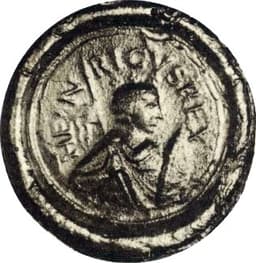
Henry the Fowler
Emperor · Medieval
60.9Total
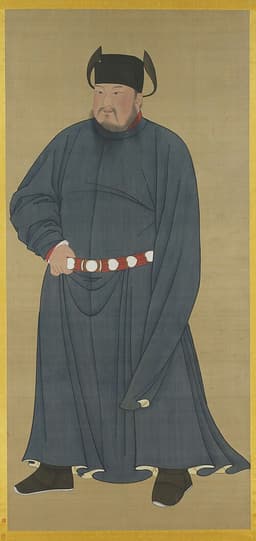
Li Cunxu
Emperor · Medieval
66.5Total
Basic Information
Born
876
885
Died
936
926
Era
Medieval
Medieval
Nationality
East Francia
China
Occupation
Emperor
Emperor
Civilization
Western
Eastern
Score Comparison
Military (10%)
70.0
76.0
Political (20%)
59.3
68.0
Influence (20%)
55.0
62.0
Legacy (20%)
52.0
58.0
Leadership (15%)
85.0
80.0
Strategy (15%)
55.0
67.2
TOTAL
60.9
66.5
Henry the Fowler — Complete Timeline
919 AD
Election as King of East FranciaPolitical Action
Henry the Fowler was elected King of East Francia by the Saxon and Frankish nobles at Fritzlar on May 6, 919. He was the first Saxon king, marking the transition from Carolingian to Ottonian rule. His election was contested by other dukes but he prevailed.
ElectionAccessionOttonian Dynasty
Impact: regionalconstructive
921 AD
Treaty of Bonn (921)Political Action◆ Major
Henry the Fowler signed the Treaty of Bonn with Charles the Simple of West Francia, recognizing each other's royal titles and establishing peaceful relations. This treaty ended Carolingian claims over East Francia and solidified Henry's legitimacy as an independent king.
TreatyRecognitionDiplomacy
Impact: regionalconstructive
924 AD
Nine-Year Truce with the MagyarsPolitical Action◆ Major
Henry the Fowler negotiated a nine-year truce with the Magyars, agreeing to pay tribute in exchange for a halt to their raids. He used this period to fortify towns, reorganize the army, and train cavalry. This strategic pause was crucial for his later military reforms.
TruceMagyarsMilitary Reform
Impact: regionalconstructive
929 AD
Battle of Lenzen (929)War◆ Major
Henry the Fowler's forces defeated a Slavic army at the Battle of Lenzen, securing the eastern frontier of East Francia. This victory allowed Henry to consolidate control over the Elbe region and establish the March of Brandenburg, a key step in German eastward expansion.
BattleSlavic WarsEastern Expansion
Impact: regionalconstructive
933 AD
Battle of Riade (933)War
After the truce with the Magyars expired, Henry the Fowler led a German army to victory at the Battle of Riade (near Merseburg). The defeat of the Magyar cavalry ended their raids into East Francia for a generation and established Henry's reputation as a defender of Christendom.
BattleMagyarsVictory
Impact: regionalconstructive
936 AD
Death of Henry the FowlerOther◆ Major
Henry the Fowler died on July 2, 936, at Memleben. He was succeeded by his son, Otto I, who would become Holy Roman Emperor. Henry's reign laid the foundations for the Ottonian dynasty and the medieval German kingdom.
DeathSuccessionOttonian
Impact: regional
Li Cunxu — Complete Timeline
908 AD
Succeeded as Prince of JinPolitical Action◆ Major
Li Cunxu inherited the title Prince of Jin from his father Li Keyong. He continued the struggle against Later Liang, consolidating the Jin state as a major power in northern China.
JinSuccessionFive Dynasties
Impact: regional
910 AD
Battle of BaixiangWar◆ Major
Li Cunxu's Jin army defeated the Later Liang forces under Zhu Wen at Baixiang. This victory established Jin as the dominant military power in the north and marked a turning point in the war.
JinLater LiangBattle
Impact: regionalconstructive
923 AD
Conquered Later LiangWar
Li Cunxu led a successful campaign against Later Liang, capturing its capital Kaifeng and ending the dynasty. He then proclaimed himself emperor, founding the Later Tang dynasty.
Later TangConquestDynastic Change
Impact: nationalconstructive
Founded Later Tang DynastyPolitical Action
Li Cunxu declared himself emperor of the Later Tang dynasty, claiming legitimacy as the restorer of the Tang lineage. He established his capital at Luoyang and reunified much of northern China.
Later TangDynasty FoundingReunification
Impact: nationalconstructive
926 AD
Killed in mutiny at XingyuanWar◆ Major
Li Cunxu faced a mutiny by his own troops at Xingyuan during a campaign against the Khitans. He was killed in the fighting, leading to the collapse of Later Tang and the rise of Later Jin.
Later TangMutinyDeath
Impact: nationaltragic
Expert Analysis
Henry the Fowler vs Li Cunxu
# The Conqueror and the Builder
On a spring morning in 923, Li Cunxu rode through the gates of Kaifeng at the head of his victorious army, the capital of the Later Liang dynasty fallen before him. He was thirty-eight years old, a warrior-emperor who had just accomplished what his father had spent a lifetime failing to do. Half a world away, in the Saxon heartland of East Francia, another king was making a different kind of history—not with a sword in his hand, but with a treaty and a truce. Henry the Fowler, six years older than Li Cunxu, had been on his throne for four years, and his greatest battles were still to come. Why did one emperor die in a mutiny three years after his greatest triumph, while the other founded a dynasty that would shape Europe for generations?
Origins
Li Cunxu was born into war. His father, Li Keyong, was a Shatuo Turkic chieftain who had been granted the Tang imperial surname Li, and whose one-eyed visage and ferocious reputation made him a legend in northern China. The boy grew up in a tent, learning to ride before he could walk, watching his father's blood feud with the Later Liang founder Zhu Wen consume everything around him. When Li Keyong died in 908, he left his fifteen-year-old son a simple instruction: destroy Zhu Wen. It was a command that would define Li Cunxu's entire life.
Henry the Fowler came from a different world entirely. Born in 876 to the Saxon duke Otto the Illustrious, Henry grew up in the shadow of the collapsing Carolingian Empire. The great Frankish unity that Charlemagne had forged was splintering into pieces, and the eastern kingdom—what would become Germany—was a patchwork of rival duchies. Henry's nickname, "the Fowler," came from his supposed love of hunting birds, but it also spoke to something deeper: he was a man who understood patience, who knew when to wait and when to strike.
Rise to Power
Li Cunxu's path to power was a battlefield. In 910, at the Battle of Baixiang, the eighteen-year-old prince faced Zhu Wen's Later Liang army and won decisively, establishing the Jin state as the dominant power in the north. For the next thirteen years, he hammered away at the Later Liang, combining military brilliance with a personal courage that inspired his troops to follow him into impossible situations. By 923, he was ready. His campaign against Kaifeng was swift and brutal—the Later Liang emperor committed suicide, and Li Cunxu proclaimed himself emperor of the Later Tang, claiming to restore the legitimate Tang dynasty lineage.
Henry's rise was quieter but no less significant. When the Frankish and Saxon nobles gathered at Fritzlar on May 6, 919, to elect a new king, they chose Henry not because he was a conqueror but because he was a unifier. The other dukes of East Francia—Swabia, Bavaria, Lorraine—did not immediately accept his authority. Henry did not try to crush them; he negotiated. He signed the Treaty of Bonn with Charles the Simple of West Francia in 921, recognizing both their royal titles and securing his western border. And in 924, faced with the terrifying Magyars—horse archers who had been raiding deep into German lands—Henry did something that would have seemed unthinkable to Li Cunxu: he agreed to pay them tribute for a nine-year truce.
Leadership & Governance
Li Cunxu governed as he fought—with fire. His military score of 76.5 reflects a commander who could inspire armies and win battles, but his political score of 62.0 reveals the flaw that would destroy him. He trusted his generals too much and his administrators too little. He lavished rewards on his soldiers but neglected the bureaucracy that holds a state together. When he declared himself emperor, he claimed legitimacy through the Tang dynasty, but he never built the institutions that could sustain his rule.
Henry governed as a builder. His political score of 74.5 and leadership score of 75.7 tell the story of a man who understood that power was not just about winning battles but about creating structures that outlasted their founder. He used the nine-year truce with the Magyars not as a surrender but as a breathing space. He built fortified towns, reformed the army, and trained heavy cavalry—the first German knights. When the truce expired in 933, he was ready. At the Battle of Riade, his new army crushed the Magyars so decisively that they never raided Germany again.
Triumph & Tragedy
Li Cunxu's triumph was intoxicating but brief. In 923, he was the master of northern China, the restorer of the Tang, the man who had avenged his father. Three years later, he was dead. The rebellion that killed him at Xingyuan in 926 was not led by a rival emperor or a foreign invader—it was his own troops, mutinying because he had failed to pay them. The man who had conquered an empire could not keep it.
Henry's triumph was slower but more lasting. His victory at Riade in 933 was not just a military success; it was the foundation of a German identity. When he died in 936 at Memleben, he left his son Otto a kingdom that was united, secure, and ready to become the Holy Roman Empire. Otto I would be crowned emperor in 962, but he stood on the walls that his father had built.
Character & Destiny
Li Cunxu was a warrior who thought he could conquer his way to stability. He was brave, charismatic, and utterly unable to see beyond the next battle. His strategy score of 70.5 is respectable, but his total score of 69.6 is dragged down by the fatal gap between his military brilliance and his political blindness. He died because he never learned that winning a war and ruling a kingdom are two different arts.
Henry was a diplomat who knew when to fight. His strategy score of 55.2 is surprisingly low, but that number does not capture his genius for timing. He waited nine years to fight the Magyars because he knew he was not ready. He signed treaties with his rivals because he knew that war was a last resort. His total score of 68.2 is almost identical to Li Cunxu's, but the distribution of his strengths—higher political, higher leadership—made all the difference.
Legacy
Li Cunxu's Later Tang dynasty lasted barely a decade after his death. He is remembered today as a footnote in the chaotic Five Dynasties and Ten Kingdoms period, a brilliant general who could not rule. His influence score of 74.2 reflects the impact he had on his own time, but his legacy score of 66.2 shows how quickly that impact faded.
Henry's Ottonian dynasty ruled Germany for over a century and shaped the Holy Roman Empire for a thousand years. His influence score of 72.7 and legacy score of 65.7 are similar to Li Cunxu's, but the quality of that influence was different. He left behind institutions, not just memories—a kingdom that would become a nation.
Conclusion
Li Cunxu and Henry the Fowler were both medieval rulers who inherited fractured kingdoms and died within a decade of each other. One conquered an empire and lost it in three years. The other built a kingdom that lasted for centuries. The difference was not in their courage or their ambition—both had those in abundance. The difference was in their understanding of what power truly means. Li Cunxu thought it was something you took. Henry knew it was something you built. In the end, the builder outlasted the conqueror, not because he was stronger, but because he was wiser.
Rankings
🥇
Li CunxuLeader
Mil: 76.0Pol: 68.0Inf: 62.0
66.5
🥈
Henry the Fowler
Mil: 70.0Pol: 59.3Inf: 55.0
60.9
+5.6 behind
How This Comparison Works
Algorithm
Each figure is scored on 6 dimensions (0—100 scale) based on structured historical data: Military (10%), Political (20%), Influence (20%), Legacy (20%), Leadership (15%), Strategy (15%). The weighted total produces the final ranking.
Data Sources
Scores are computed from structured sub-indicators in the database. Scale factors adjust for era (Ancient ×0.85, Modern ×1.0) and civilization size (Eastern ×1.05, Other ×0.80) to account for differences in population and military scale.
Maximum 3 Figures
Comparisons are limited to 2—3 figures to ensure readability and statistical meaningfulness.
Error Margins
±5 points per dimension — Sub-scores are derived from historical records with inherent uncertainty. Two figures within 5 points on a dimension should be considered roughly equivalent in that area.
Total Score Accuracy
±3 points overall — The weighted combination of 6 dimensions produces a total score with approximately ±3 points of uncertainty. Differences of less than 3 points are not statistically significant— the figures are effectively tied.
Known Limitations
- Historical records are incomplete and uneven across civilizations
- Figures from oral-tradition societies may be underrepresented
- Occupation labels can misclassify multi-role figures
- Scores measure capability and impact, not moral character
- Quantitative scoring is a comparison tool, not absolute truth
Capability Radar
Military (10%) — Battles & Warfare
Battles
55
85
Win Rate
60
80
Expansion
60
75
Political (20%) — Governance & Reform
Reform
75
50
Diplomacy
70
60
Economy
65
45
Influence (20%) — Cultural & Global Reach
Cultural
55
55
Global
40
45
Legacy (20%) — Historical Impact
Historical
65
65
Longevity
60
50
Leadership (15%) — Power & Stability
Tenure
70
55
Stability
70
40
Strategy (15%) — Tactics & Innovation
Strategy
65
78
Tactics
50
82
Reform
70
60
Similar Comparisons
Comments & Discussion
LI_CAUGHT_THE_BALL6/16/2026
Li Cunxu's battlefield charisma is undeniable, but it's a classic case of over-leveraging military success without institutional backing. He conquered like Alexander but forgot to build like Augustus. Within three years, his own soldiers turned on him—that's not bad luck, that's structural failure. Henry the Fowler negotiated a truce with the Magyars for nine years and used that time to build fortified towns and a heavy cavalry. One built a kingdom; the other built a rebellion waiting to happen.
草原鹰隼6/16/2026
说李存勖能打,我认,但打仗厉害就能当个好皇帝?别扯了。他爹李克用留给他的是血仇和军队,不是治国方略。三年就把刚打下来的江山玩崩了,连禁军都反他,这不叫悲剧,这叫活该。亨利一世知道什么时候该收手,用九年和平把东法兰克从烂摊子变成强国。李存勖要是多读两本《资治通鉴》少砍几个人头,也不至于被戏子耍死。
Skeptical_Scrivener6/16/2026
The comparison is structurally flawed because it ignores the differing time horizons each ruler faced. Li Cunxu inherited a continuous multi-front war with no pause button; his window for consolidation was measured in months. Henry got a nine-year truce from the Magyars, which gave him breathing room almost no Chinese warlord of that era ever had. Put Henry in Li's sandals—facing Liang, Khitan, and rebels simultaneously—and his dynasty probably crumbles faster than Later Tang did. Context matter
史海沉钩6/16/2026
你们都在吹亨利的九年和平,但别忘了,那和平是用每年纳贡换来的,本质上就是花钱买时间。亨利精明在知道帝国需要喘气,但李存勖手里有什么牌?契丹在北方虎视眈眈,梁国刚破还没安抚,蜀国又独立了。他不是不想建国,是根本没时间。亨利能筑城练兵,是因为没人三天两头来抄家。李存勖的悲剧,不是能力问题,是命太硬碰上了地狱开局。