Loading...
Henry IV of France vs King Abdullah I of Jordan
Henry IV of France leads by 11.8 pts · 2 figures compared
…
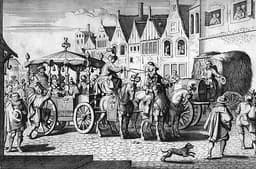
Henry IV of France
Emperor · Modern
63.7Total

King Abdullah I of Jordan
Emperor · Modern
51.9Total
Basic Information
Born
1553
1882
Died
1610
1951
Era
Modern
Modern
Nationality
France
Jordan
Occupation
Emperor
Emperor
Civilization
Western
Middle Eastern
Score Comparison
Military (10%)
70.0
38.3
Political (20%)
75.0
68.0
Influence (20%)
56.7
54.1
Legacy (20%)
55.0
48.3
Leadership (15%)
80.0
53.2
Strategy (15%)
55.0
43.3
TOTAL
63.7
51.9
Henry IV of France — Complete Timeline
1590 AD
Battle of IvryWar◆ Major
Henry IV led his forces to a decisive victory over the Catholic League at Ivry. This battle solidified his military reputation and paved the way for his eventual capture of Paris and the throne.
BattleCatholic LeagueWars of Religion
Impact: national
1593 AD
Conversion to CatholicismPolitical Action◆ Major
Henry IV converted from Protestantism to Catholicism, reportedly stating 'Paris is worth a mass.' This act secured his acceptance by the Catholic majority and enabled his coronation, ending the religious civil wars.
ConversionPolitical PragmatismCatholicism
Impact: national
1598 AD
Edict of NantesReform
Henry IV issued the Edict of Nantes, granting substantial religious tolerance to French Protestants (Huguenots). It allowed them freedom of worship in specified areas and access to public office, ending the French Wars of Religion.
Religious ToleranceHuguenotsWars of Religion
Impact: nationalprogressive
Sully's Economic ReformsReform◆ Major
Henry IV, with his minister Sully, implemented economic reforms including tax reduction, infrastructure projects (roads, canals), and agricultural improvements. These measures stabilized the French economy after decades of war.
Economic ReformInfrastructureSully
Impact: nationalconstructive
1610 AD
Assassination by François RavaillacPolitical Action◆ Major
Henry IV was stabbed to death in Paris by Catholic fanatic Fran
AssassinationRegencyReligious Conflict
Impact: nationaltragic
King Abdullah I of Jordan — Complete Timeline
1921 AD
Establishment of the Emirate of TransjordanPolitical Action
Abdullah, with British support, established the Emirate of Transjordan, becoming its Emir. This created a buffer state between British Palestine and the Arabian Peninsula, laying the foundation for the modern Hashemite Kingdom of Jordan.
FoundingTransjordanBritish Mandate
Impact: regionalconstructive
1946 AD
Independence of JordanPolitical Action◆ Major
The Emirate of Transjordan gained full independence from the British Mandate, and Abdullah was crowned King of the Hashemite Kingdom of Jordan. The treaty with Britain was revised, granting Jordan sovereignty over its foreign and domestic affairs.
IndependenceMonarchySovereignty
Impact: nationalconstructive
1950 AD
Annexation of the West BankPolitical Action◆ Major
Following the 1948 Arab-Israeli War, Abdullah annexed the West Bank, including East Jerusalem, into Jordan. This move was condemned by most Arab states and the Arab League, but it significantly expanded Jordan's territory and population.
AnnexationWest BankArab-Israeli Conflict
Impact: regional
1951 AD
Assassination at Al-Aqsa MosquePolitical Action
King Abdullah was assassinated by a Palestinian gunman while entering the Al-Aqsa Mosque in Jerusalem. The assassin was motivated by Abdullah's perceived willingness to negotiate with Israel and his annexation of the West Bank. His son Talal succeeded him.
AssassinationJerusalemSuccession
Impact: regionaltragic
Expert Analysis
Origins
Henry IV of France was born on December 13, 1553, in Pau, Kingdom of Navarre, to Antoine de Bourbon and Jeanne d'Albret. He was raised as a Protestant (Huguenot) and inherited the throne of Navarre in 1572. His early life was shaped by the French Wars of Religion, a series of conflicts between Catholics and Protestants. He received a robust military education and was exposed to the political intrigues of the French court. His marriage to Margaret of Valois in 1572 was intended to reconcile Catholics and Protestants but instead led to the St. Bartholomew's Day Massacre.
King Abdullah I of Jordan was born on February 2, 1882, in Mecca, Hejaz (now Saudi Arabia), into the Hashemite family, direct descendants of the Prophet Muhammad. He was the second son of Hussein bin Ali, Sharif of Mecca. Abdullah was educated in Istanbul and later in the Hejaz, learning about Arab nationalism and Ottoman politics. His formative years were marked by the Arab Revolt (1916-1918), where he served as a key military leader alongside T.E. Lawrence. This experience shaped his vision for a unified Arab state.
Rise to Power
Henry IV's rise began during the War of the Three Henrys (1587-1589). After the death of Henry III in 1589, Henry of Navarre became the legitimate heir to the French throne, but his Protestant faith made him unacceptable to the Catholic majority. He secured his position through military victories, notably the Battle of Ivry (March 14, 1590), where he defeated the Catholic League. However, he could not capture Paris. In 1593, he converted to Catholicism, reportedly stating "Paris is worth a mass," which allowed him to be crowned King of France in 1594. His conversion neutralized Catholic opposition, and he gradually pacified the realm.
Abdullah I's rise was facilitated by British support after World War I. In 1921, British Colonial Secretary Winston Churchill offered Abdullah the emirate of Transjordan, a region carved out of the British Mandate of Palestine. Abdullah accepted and established the Emirate of Transjordan on April 11, 1921, becoming its Emir. He proved a capable administrator, maintaining stability and loyalty to Britain. On May 25, 1946, Transjordan gained full independence, and Abdullah was crowned King of the Hashemite Kingdom of Jordan. His legitimacy was rooted in his Hashemite lineage and his role in the Arab Revolt.
Leadership & Governance
Henry IV's leadership was pragmatic and conciliatory. He prioritized religious peace through the Edict of Nantes (April 30, 1598), which granted Huguenots substantial rights, including freedom of worship in specified areas and access to public office. This defused religious tensions and allowed France to rebuild after decades of war. Economically, he worked with his minister Sully to reduce taxes, improve infrastructure (roads, canals), and promote agriculture, leading to increased prosperity. He also curtailed the power of the nobility by centralizing administration. His governance scored 80.0 in leadership, reflecting his ability to unite a fractured nation.
Abdullah I's governance was authoritarian but adaptive. He maintained power by balancing tribal loyalties, British interests, and emerging Arab nationalism. He established a constitution in 1952 (after his death) but ruled largely by decree. His most controversial act was the annexation of the West Bank in 1950 after the 1948 Arab-Israeli War, which expanded Jordan's territory but drew condemnation from other Arab states. He also focused on building state institutions, including the Arab Legion, a well-trained military force. However, his political score of 68.0 was lower than Henry's 75.0, partly due to his reliance on external support and limited internal reforms.
Triumph & Tragedy
Henry IV's greatest triumph was the Edict of Nantes, which ended the French Wars of Religion and established a precedent for religious tolerance in Europe. His economic reforms also revived France's economy. However, his assassination on May 14, 1610, by Catholic fanatic François Ravaillac, was a tragedy that plunged France into a regency under Marie de' Medici, undermining his achievements. His legacy score of 55.0 reflects both his successes and the instability after his death.
Abdullah I's triumph was the creation and consolidation of Jordan as a stable state in a volatile region. He successfully annexed the West Bank, though this was later lost in 1967. His assassination on July 20, 1951, at the Al-Aqsa Mosque in Jerusalem by a Palestinian gunman was a direct consequence of his perceived betrayal of Palestinian aspirations. This act destabilized Jordan temporarily, but his grandson Hussein eventually secured the throne. Abdullah's military score of 38.3 is low because he relied more on diplomacy and British support than on martial prowess.
Character & Destiny
Henry IV was known for his charisma, pragmatism, and ability to forgive his enemies. He converted to Catholicism for political gain, showing his strategic flexibility. His decision to issue the Edict of Nantes demonstrated a commitment to peace over religious purity. However, his conversion and tolerance made him enemies among Catholic extremists, leading to his assassination. His character—pragmatic but not ruthless—shaped his fate: he achieved peace but died at the hands of a fanatic.
Abdullah I was ambitious, cunning, and determined to build a Hashemite kingdom. He pursued territorial expansion (West Bank) and sought to lead the Arab world. His character was shaped by his Hashemite pride and belief in Arab unity. However, his willingness to negotiate with Israel and his perceived betrayal of Palestinian rights led to his assassination. His destiny was to create a lasting monarchy, but his methods alienated many.
Legacy
Henry IV's legacy is primarily the Edict of Nantes, which influenced later concepts of religious tolerance. His economic policies set the stage for French absolutism under Louis XIII and Louis XIV. He is remembered as a good king who cared for his people, earning the nickname "Henry the Great." His total score of 63.7 reflects his balanced contributions.
Abdullah I's legacy is the Hashemite Kingdom of Jordan, which has endured for over a century. He established a dynasty that continues to rule. However, his annexation of the West Bank and his assassination left a mixed record. Jordan's stability is his lasting achievement, but his political score of 68.0 is tempered by his limited institutional reforms. His total score of 51.9 is lower than Henry's due to weaker military and strategy scores.
Conclusion
Henry IV of France had a greater impact than King Abdullah I of Jordan. Henry's Edict of Nantes transformed European religious politics and laid groundwork for secular governance. He scored 63.7 overall, compared to Abdullah's 51.9, a gap of 11.8 points. While Abdullah founded a state, Henry's influence extended beyond his nation to shape modern tolerance. Henry's leadership score of 80.0 far exceeds Abdullah's 53.2. Though both were assassinated, Henry's reforms had more enduring global significance.
Rankings
🥇
Henry IV of FranceLeader
Mil: 70.0Pol: 75.0Inf: 56.7
63.7
🥈
King Abdullah I of Jordan
Mil: 38.3Pol: 68.0Inf: 54.1
51.9
+11.8 behind
How This Comparison Works
Algorithm
Each figure is scored on 6 dimensions (0—100 scale) based on structured historical data: Military (10%), Political (20%), Influence (20%), Legacy (20%), Leadership (15%), Strategy (15%). The weighted total produces the final ranking.
Data Sources
Scores are computed from structured sub-indicators in the database. Scale factors adjust for era (Ancient ×0.85, Modern ×1.0) and civilization size (Eastern ×1.05, Other ×0.80) to account for differences in population and military scale.
Maximum 3 Figures
Comparisons are limited to 2—3 figures to ensure readability and statistical meaningfulness.
Error Margins
±5 points per dimension — Sub-scores are derived from historical records with inherent uncertainty. Two figures within 5 points on a dimension should be considered roughly equivalent in that area.
Total Score Accuracy
±3 points overall — The weighted combination of 6 dimensions produces a total score with approximately ±3 points of uncertainty. Differences of less than 3 points are not statistically significant— the figures are effectively tied.
Known Limitations
- Historical records are incomplete and uneven across civilizations
- Figures from oral-tradition societies may be underrepresented
- Occupation labels can misclassify multi-role figures
- Scores measure capability and impact, not moral character
- Quantitative scoring is a comparison tool, not absolute truth
Capability Radar
Military (10%) — Battles & Warfare
Battles
65
35
Win Rate
70
40
Expansion
50
25
Political (20%) — Governance & Reform
Reform
85
50
Diplomacy
80
60
Economy
75
40
Influence (20%) — Cultural & Global Reach
Cultural
65
30
Global
60
35
Legacy (20%) — Historical Impact
Historical
75
50
Longevity
70
40
Leadership (15%) — Power & Stability
Tenure
70
55
Stability
65
45
Strategy (15%) — Tactics & Innovation
Strategy
75
45
Tactics
60
30
Reform
55
20
Similar Comparisons
Comments & Discussion
No comments yet. Be the first to share your thoughts!