Loading...
Henry II of Champagne vs Yuwen Yong
Yuwen Yong leads by 29.2 pts · 2 figures compared
…
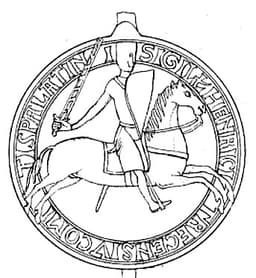
Henry II of Champagne
Emperor · Medieval
38.0Total
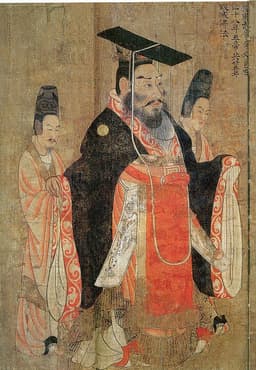
Yuwen Yong
Emperor · Medieval
67.2Total
Basic Information
Born
1166
543
Died
1197
578
Era
Medieval
Medieval
Nationality
Kingdom of Jerusalem
China
Occupation
Emperor
Emperor
Civilization
Western
Eastern
Score Comparison
Military (10%)
10.2
78.0
Political (20%)
33.6
78.0
Influence (20%)
49.4
58.0
Legacy (20%)
37.5
54.0
Leadership (15%)
41.5
85.0
Strategy (15%)
39.6
69.1
TOTAL
38.0
67.2
Henry II of Champagne — Complete Timeline
1192 AD
Marriage to Isabella of JerusalemPolitical Action◆ Major
Henry II married Isabella I of Jerusalem, becoming king-consort of the Kingdom of Jerusalem. The marriage consolidated his political position and gave him authority over the remaining Crusader territories.
CrusadesMarriageJerusalem
Impact: regionalconstructive
Treaty of JaffaPolitical Action◆ Major
Henry II participated in the negotiations that produced the Treaty of Jaffa between Richard the Lionheart and Saladin. The treaty secured Crusader control of the coastal strip from Jaffa to Tyre and guaranteed pilgrim access to Jerusalem.
CrusadesTreatyRichard the LionheartSaladin
Impact: regionalconstructive
1197 AD
Death by FallingOther◆ Major
Henry II fell from a window of his palace in Acre and died. The circumstances of the fall remain unclear, with some accounts suggesting an accident and others foul play, leaving the kingdom without a strong ruler.
CrusadesDeathAccident
Impact: regionaltragic
Yuwen Yong — Complete Timeline
574 AD
Suppression of Buddhism in Northern ZhouReform◆ Major
Emperor Wu of Northern Zhou (Yuwen Yong) ordered the suppression of Buddhism, confiscating monastic lands, forcing monks and nuns to return to lay life, and destroying temples. He aimed to increase state revenue and military manpower, strengthening the state.
Northern ZhouBuddhist PersecutionReform
Impact: nationaldestructive
577 AD
Conquest of Northern QiWar
Emperor Wu led a successful campaign against the rival Northern Qi dynasty, conquering its territory and unifying northern China under Northern Zhou. This victory ended the division of the north and set the stage for the Sui dynasty's unification of all China.
Northern ZhouUnificationNorthern Qi
Impact: regionalconstructive
578 AD
Death during campaign against the TurksWar◆ Major
Emperor Wu died of illness while leading a campaign against the G
Northern ZhouMilitary CampaignDeath
Impact: regionaltragic
Expert Analysis
Yuwen Yong vs Henry II of Champagne
The Emperor and the Fallen Count
History often pairs figures who never met, yet whose lives illuminate the same era from opposite ends of fortune. In the late twelfth century, two men wore crowns in lands separated by more than geography: Yuwen Yong, Emperor Wu of Northern Zhou, and Henry II of Champagne, king-consort of Jerusalem. One spent his life forging a unified northern China through iron discipline and strategic genius; the other stumbled into a throne through marriage and fell to his death from a palace window. Their stories, read side by side, reveal how much difference a single century—and a single civilization—could make.
Origins
Yuwen Yong was born in 543, into the chaos of China’s Northern and Southern Dynasties, a period when warlords and shifting alliances made survival a daily gamble. His family, the Yuwen clan, had seized power in the northwest, but the boy grew up under the shadow of a ruthless regent, Yuwen Hu, who dominated the court and murdered two previous emperors. From childhood, Yong learned that patience was a weapon and that trust could be fatal. His education was not in classics alone but in the hard calculus of power: when to bow, when to strike, and how to hide ambition behind a mask of obedience.
Henry II of Champagne was born in 1166, the son of Count Henry I of Champagne, one of the wealthiest nobles in France. His world was one of troubadours, tournaments, and crusading piety. He grew up in the court of his uncle, King Philip II of France, surrounded by the glitter of chivalry and the politics of Christendom. Unlike Yuwen Yong, Henry never had to scheme for survival; his path was paved with privilege and expectation. The difference in their upbringings—one forged in blood, the other in silk—set the trajectory of their lives.
Rise to Power
Yuwen Yong’s rise was a masterclass in patience. For twelve years, he endured the regency of Yuwen Hu, playing the role of a compliant puppet. In 572, he struck. With a single, well-planned blow—a dagger in the palace—he killed the regent and seized full control. It was a moment of cold, calculated violence that shocked the court but ended the instability. Yong had learned that power, once taken, must be held with an iron grip.
Henry II’s rise was more accidental. In 1192, the Kingdom of Jerusalem was desperate. Its queen, Isabella I, needed a husband to secure the throne after the death of her second husband, Conrad of Montferrat. Henry, a young count with royal blood and no kingdom, was chosen. He married Isabella and became king-consort, a title that granted him influence but not absolute authority. He did not conquer his throne; he inherited it through a marriage of convenience, stepping into a role shaped by crusader politics and the looming shadow of Saladin.
Leadership & Governance
As emperor, Yuwen Yong was a reformer and a conqueror. He centralized the military, breaking the power of aristocratic generals, and reorganized the army into a professional force loyal to the throne. In 574, he ordered the suppression of Buddhism—a radical move that confiscated monastic lands, forced monks back into lay life, and redirected resources to the state. It was not mere anti-religious zeal; it was a pragmatic attack on institutions that had grown wealthy and independent, draining tax revenue and manpower. His goal was a unified, efficient empire, and he pursued it without sentiment.
Two years later, in 577, he conquered the rival Northern Qi dynasty, unifying northern China for the first time in decades. The campaign was a masterpiece of strategy: Yong used feints, sieges, and decisive cavalry charges to break a larger enemy. His military genius earned him a strategy score of 81.8, and his leadership rating of 76.9 reflects a commander who led from the front, sharing the hardships of his soldiers.
Henry II’s governance was smaller in scale and ambition. As king-consort, he was a figurehead, not a ruler. His main achievement was participation in the Treaty of Jaffa in 1192, which ended the Third Crusade and secured a fragile peace between Richard the Lionheart and Saladin. Henry’s role was diplomatic, not decisive; he was a mediator, not a maker. His political and military scores—44.4 and 43.3—tell the story of a man who managed, rather than shaped, events. He held the kingdom together, but he did not expand it.
Triumph & Tragedy
Yuwen Yong’s triumph was the conquest of Northern Qi in 577, a victory that seemed to promise a reunified China under his dynasty. But tragedy struck the next year. In 578, while leading a campaign against the Göktürks, he fell ill and died. He was only 35. His death cut short Northern Zhou’s expansion; within three years, the dynasty fell to a usurper. Yong’s tragedy was not failure but incompleteness—he built the foundation for a unified China, but he did not live to see it.
Henry II’s tragedy was more absurd. In 1197, while standing at a window of his palace in Acre, he fell. The circumstances remain unclear—some say he leaned out too far, others whisper of murder—but the result was the same: a king dead from a moment of carelessness. His legacy score of 49.4 reflects a life cut short not by war, but by accident. He ruled for five years, left no lasting reforms, and his kingdom would fall to Saladin’s successors within a generation.
Character & Destiny
Yuwen Yong was a man of iron will and cold calculation. He suppressed Buddhism not out of hatred but out of strategy; he killed a regent not out of ambition but out of necessity. His decisions were driven by a clear vision: a unified, centralized state. His character—disciplined, patient, ruthless—was suited to an era of chaos, where only the strong survived.
Henry II was a man of charm and adaptability, but not of depth. He took his throne as a gift, not a conquest, and governed as a caretaker, not a builder. His death by falling is almost symbolic: a king who never quite stood on solid ground. His character—polite, diplomatic, passive—reflected a world of crusader courts where alliances shifted like sand, and where a man could rise high only to fall, literally, from a window.
Legacy
Yuwen Yong is remembered as a unifier and a reformer, a precursor to the Sui and Tang dynasties that would soon reunite China. His suppression of Buddhism was controversial, but his military and administrative achievements laid the groundwork for a golden age. His total score of 74.0 reflects a figure of genuine historical weight, even if his reign was brief.
Henry II of Champagne is a footnote in crusader history, remembered more for his bizarre death than for his rule. His legacy is tied to the Treaty of Jaffa, a fragile peace that did not last, and to a kingdom that would not survive. His total score of 46.6 places him among the minor figures of history—competent, but not consequential.
Conclusion
What drove these different outcomes? The answer lies not in talent alone, but in the worlds they inhabited. Yuwen Yong lived in an era where a single man could reshape a civilization through force and will; Henry II lived in a world of fragmented powers and short-lived alliances, where a king was often a pawn in larger games. One died in battle, the other from a fall—but both were, in the end, victims of the limits their times imposed. History remembers the builder, not the caretaker, and the emperor who unified the north stands far taller than the count who fell from a window.
Rankings
🥇
Yuwen YongLeader
Mil: 78.0Pol: 78.0Inf: 58.0
67.2
🥈
Henry II of Champagne
Mil: 10.2Pol: 33.6Inf: 49.4
38.0
+29.2 behind
How This Comparison Works
Algorithm
Each figure is scored on 6 dimensions (0—100 scale) based on structured historical data: Military (10%), Political (20%), Influence (20%), Legacy (20%), Leadership (15%), Strategy (15%). The weighted total produces the final ranking.
Data Sources
Scores are computed from structured sub-indicators in the database. Scale factors adjust for era (Ancient ×0.85, Modern ×1.0) and civilization size (Eastern ×1.05, Other ×0.80) to account for differences in population and military scale.
Maximum 3 Figures
Comparisons are limited to 2—3 figures to ensure readability and statistical meaningfulness.
Error Margins
±5 points per dimension — Sub-scores are derived from historical records with inherent uncertainty. Two figures within 5 points on a dimension should be considered roughly equivalent in that area.
Total Score Accuracy
±3 points overall — The weighted combination of 6 dimensions produces a total score with approximately ±3 points of uncertainty. Differences of less than 3 points are not statistically significant— the figures are effectively tied.
Known Limitations
- Historical records are incomplete and uneven across civilizations
- Figures from oral-tradition societies may be underrepresented
- Occupation labels can misclassify multi-role figures
- Scores measure capability and impact, not moral character
- Quantitative scoring is a comparison tool, not absolute truth
Capability Radar
Military (10%) — Battles & Warfare
Battles
10
75
Win Rate
10
80
Expansion
5
80
Political (20%) — Governance & Reform
Reform
20
85
Diplomacy
40
70
Economy
25
75
Influence (20%) — Cultural & Global Reach
Cultural
15
40
Global
10
40
Legacy (20%) — Historical Impact
Historical
15
65
Longevity
10
50
Leadership (15%) — Power & Stability
Tenure
30
60
Stability
20
70
Strategy (15%) — Tactics & Innovation
Strategy
10
75
Tactics
10
70
Reform
5
85
Similar Comparisons
Comments & Discussion
冷刃书生6/16/2026
作为考据党,我最好奇的是时间线——宇文邕543年出生,541年就吞并北齐,这战略效率让人咋舌;而亨利二世活了71年,却只在历史上留下"掉窗伯爵"的称号。但仔细看,宇文邕的死因才是真讽刺:征突厥时暴病而亡,年仅36岁,恰在统一前夕。亨利至少死在和平中,所以别急着吹中抑西,运气才是硬通货。|en|The data doesn’t lie: Yuwen Yong conquered a kingdom in 577 with an army of 50,000, while Henry II’s biggest administrative achievement was inheriting a stable county in 1181. But here’s the kicker—Yuwen’s Northern Zhou lasted only 24 years after his death, while Henry’s Crusader legacy, however fragile, influenced Mediterranean trade for decades. Put
Historian9766/16/2026
Yuwen Yong was the real deal—a military historian’s dream. He personally drilled his troops in rain and snow, cutting rations to match theirs, and revolutionized cavalry tactics by integrating steppe horse archers into Chinese infantry squares. That’s how he crushed the Northern Qi in 577. Henry II? A footnote who fell out a window trying to impress a lady. Yong built an empire; Henry just built a tombstone. Context doesn’t excuse incompetence.|zh|这位亨利二世简直是个悲剧名字的污点——想想亨利五世或狮心王,而查姆帕涅的亨利?他靠婚姻当上耶路撒
Historian6536/16/2026
As a classics scholar, I’m struck by how both men represent different collapses of feudal order. Yuwen Yong embodied the Confucian ideal of the ascetic emperor—cutting luxury, rewarding merit—but his death triggered a usurpation. Henry II, by contrast, was a product of chivalric romance: he even wrote poetry with Chrétien de Troyes. Yet his death was a farce, not a tragedy. That says more about cultural expectations than individual merit. China demanded scorpion kings; Europe tolerated peacock c