Loading...
Henry I of France vs Kulug Bilge Qaghan
Henry I of France leads by 3.2 pts · 2 figures compared
…
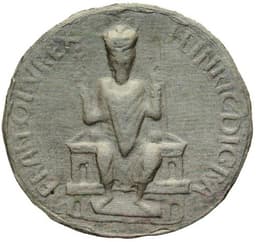
Henry I of France
Emperor · Medieval
43.6Total
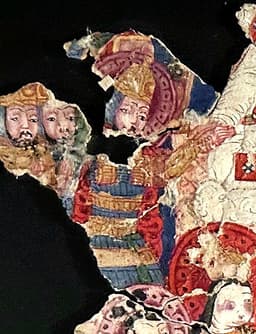
Kulug Bilge Qaghan
Emperor · Medieval
40.4Total
Basic Information
Born
1008
810
Died
1060
847
Era
Medieval
Medieval
Nationality
France
Uyghur Khaganate
Occupation
Emperor
Emperor
Civilization
Western
Eastern
Score Comparison
Military (10%)
50.0
50.0
Political (20%)
29.3
26.4
Influence (20%)
47.9
49.4
Legacy (20%)
39.2
38.3
Leadership (15%)
58.8
34.6
Strategy (15%)
35.7
43.7
TOTAL
43.6
40.4
Henry I of France — Complete Timeline
1031 AD
Reign as King of the FranksPolitical Action◆ Major
Henry I succeeded his father Robert II as King of the Franks. His reign was marked by constant conflicts with powerful nobles, including his brother Robert I, Duke of Burgundy, who challenged his authority.
KingshipCapetianReign
Impact: national
1032 AD
Rebellion of Robert I of BurgundyWar◆ Major
Henry I faced a rebellion led by his brother Robert I, Duke of Burgundy, who claimed the throne. The conflict lasted several years and was resolved through a compromise, with Robert retaining Burgundy but recognizing Henry as king.
RebellionCivil WarBurgundy
Impact: regional
1047 AD
Alliance with the Duke of NormandyPolitical Action
Henry I allied with William, Duke of Normandy (later William the Conqueror), to suppress a rebellion in Normandy. The alliance helped William secure his duchy, but later soured, leading to conflict between the two.
AllianceNormandyWilliam the Conqueror
Impact: regional
1050 AD
Conflict with the County of AnjouWar
Henry I fought a series of wars against the County of Anjou under Count Geoffrey Martel. The conflicts weakened royal authority and allowed Anjou to expand its territory at the expense of the crown.
WarAnjouTerritorial Loss
Impact: regional
Kulug Bilge Qaghan — Complete Timeline
847 AD
Accession as Last Uyghur KhaganPolitical Action◆ Major
Kulug Bilge Qaghan became the final ruler of the Uyghur Khaganate after the death of his predecessor. His reign occurred during the period of collapse following the Kirghiz invasion, with the khaganate already fragmented and its people scattered.
Uyghur KhaganateSuccessionEnd of dynasty
Impact: regionaltragic
Flight from the Mongol SteppePolitical Action
Kulug Bilge Qaghan, unable to restore the Uyghur Khaganate, fled the Mongol steppe with a small retinue. This event marked the definitive end of the Uyghur Khaganate as a political entity, with the khagan disappearing from historical records.
Uyghur Khaganate collapseFlightEnd of rule
Impact: regionaltragic
Expert Analysis
Origins
Henry I of France (born 1008) was the third Capetian king, son of Robert II and Constance of Arles. Raised in a court riven by faction, he inherited a kingdom where royal authority was contested by powerful nobles. His early education focused on military training and dynastic politics, preparing him for a throne that required constant vigilance.
Kulug Bilge Qaghan (fl. 9th century) emerged as the last ruler of the Uyghur Khaganate, a steppe empire that dominated Central Asia after the fall of the Göktürks. His origins are obscure, but he likely belonged to the ruling Yaglakar clan. The Uyghur Khaganate was already in decline due to internal strife and external pressures from the Kyrgyz.
Rise to Power
Henry I became king in 1031 upon his father's death. His coronation was challenged by his mother, who favored his younger brother Robert. Henry faced immediate rebellion from Robert, Duke of Burgundy, which lasted until 1034. To secure his position, Henry allied with William, Duke of Normandy (later William the Conqueror), helping him suppress a rebellion in 1047 in exchange for Norman support. This alliance, however, did not prevent further conflicts with the County of Anjou.
Kulug Bilge Qaghan acceded to the throne after the death of his predecessor, likely during the 840s. The Uyghur Khaganate was already fragmenting due to a civil war between rival factions. His rise was not marked by personal ambition but by the desperate need to hold together a collapsing state. He faced immediate challenges from the Kyrgyz, who had been pressuring Uyghur borders for decades.
Leadership & Governance
Henry I's leadership style was reactive and focused on survival. He spent most of his reign putting down noble revolts, particularly from the House of Blois and the County of Anjou. His governance was hampered by the weakness of the Capetian monarchy: he controlled only the Île-de-France and relied on alliances with stronger vassals. For example, he granted the Duchy of Normandy to William, hoping to keep him as a counterweight to Anjou. This backfired when William became too powerful.
Kulug Bilge Qaghan, ruling a nomadic empire, relied on a decentralized system of tribal confederation. His authority was based on personal prestige and the ability to distribute loot. As the Khaganate crumbled, he could not command the loyalty of subordinate tribes. His governance score of 26.4 reflects his inability to maintain administrative control.
Triumph & Tragedy
Henry I's greatest success was preserving the Capetian dynasty despite constant threats. He secured the succession of his son Philip I, ensuring the dynasty's continuity. His greatest failure was his inability to expand royal power; by his death in 1060, the crown was weaker relative to the nobility than at his accession. His military score of 50.0 reflects his moderate success in battles, but his political score of 29.3 highlights his strategic missteps.
Kulug Bilge Qaghan's triumph was briefly holding the Uyghur Khaganate together during a period of crisis. However, his tragedy was the complete collapse of the state: in 840, the Kyrgyz captured the Uyghur capital, Ordu-Baliq, and killed the previous khagan. Kulug Bilge fled the Mongol steppe with a small retinue, marking the end of the Uyghur Khaganate. His influence score of 49.4 is inflated by the historical significance of his failure.
Character & Destiny
Henry I was cautious and pragmatic, but his indecisiveness often weakened his position. He constantly shifted alliances, which earned him distrust. His character shaped his fate: he avoided decisive battles but also missed opportunities to centralize power. Historians describe him as a "shadow king" ruling in the shadow of stronger vassals.
Kulug Bilge Qaghan appears as a tragic figure, unable to reverse the decline of his empire. His flight symbolizes the end of Uyghur dominance. He lacked the military or political acumen to rally his people. His strategy score of 43.7 is higher than Henry's 35.7, but his leadership score of 34.6 is lower, indicating a failure to inspire loyalty.
Legacy
Henry I's legacy is mixed: he kept the Capetian line alive, but his reign demonstrated the monarchy's weakness. His son Philip I inherited a kingdom still plagued by noble revolts. The Capetian dynasty would not become truly powerful until the 12th century. Henry's score of 39.2 in legacy reflects this limited impact.
Kulug Bilge Qaghan's legacy is that of a failed ruler. The Uyghur Khaganate collapsed shortly after his flight, and the Uyghur people dispersed, some settling in Gansu and Xinjiang. His legacy score of 38.3 is slightly lower than Henry's, as his rule marked an end rather than a beginning.
Conclusion
Henry I of France had a greater overall impact than Kulug Bilge Qaghan, with a total score of 43.6 vs. 40.4. While neither ruler achieved greatness, Henry at least preserved a dynasty that would later become powerful. Kulug Bilge presided over the destruction of his entire state. In terms of historical influence, Henry's reign, though weak, allowed the Capetian dynasty to continue, which eventually produced strong kings like Philip Augustus and Saint Louis. Kulug Bilge's reign, by contrast, was the final chapter of a once-mighty empire. Therefore, Henry I emerges as the more significant figure, albeit marginally.
Rankings
🥇
Henry I of FranceLeader
Mil: 50.0Pol: 29.3Inf: 47.9
43.6
🥈
Kulug Bilge Qaghan
Mil: 50.0Pol: 26.4Inf: 49.4
40.4
+3.2 behind
How This Comparison Works
Algorithm
Each figure is scored on 6 dimensions (0—100 scale) based on structured historical data: Military (10%), Political (20%), Influence (20%), Legacy (20%), Leadership (15%), Strategy (15%). The weighted total produces the final ranking.
Data Sources
Scores are computed from structured sub-indicators in the database. Scale factors adjust for era (Ancient ×0.85, Modern ×1.0) and civilization size (Eastern ×1.05, Other ×0.80) to account for differences in population and military scale.
Maximum 3 Figures
Comparisons are limited to 2—3 figures to ensure readability and statistical meaningfulness.
Error Margins
±5 points per dimension — Sub-scores are derived from historical records with inherent uncertainty. Two figures within 5 points on a dimension should be considered roughly equivalent in that area.
Total Score Accuracy
±3 points overall — The weighted combination of 6 dimensions produces a total score with approximately ±3 points of uncertainty. Differences of less than 3 points are not statistically significant— the figures are effectively tied.
Known Limitations
- Historical records are incomplete and uneven across civilizations
- Figures from oral-tradition societies may be underrepresented
- Occupation labels can misclassify multi-role figures
- Scores measure capability and impact, not moral character
- Quantitative scoring is a comparison tool, not absolute truth
Capability Radar
Military (10%) — Battles & Warfare
Battles
20
25
Win Rate
25
20
Expansion
10
10
Political (20%) — Governance & Reform
Reform
20
15
Diplomacy
30
20
Economy
20
15
Influence (20%) — Cultural & Global Reach
Cultural
15
15
Global
10
10
Legacy (20%) — Historical Impact
Historical
20
20
Longevity
15
10
Leadership (15%) — Power & Stability
Tenure
50
30
Stability
25
10
Strategy (15%) — Tactics & Innovation
Strategy
15
20
Tactics
20
25
Reform
10
10
Similar Comparisons
Comments & Discussion
No comments yet. Be the first to share your thoughts!