Loading...
Frederick I of Denmark vs Henry I of France
Frederick I of Denmark leads by 5.4 pts · 2 figures compared
…

Frederick I of Denmark
Emperor · Medieval
49.0Total
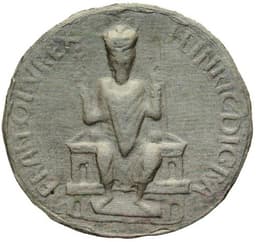
Henry I of France
Emperor · Medieval
43.6Total
Basic Information
Born
1471
1008
Died
1533
1060
Era
Medieval
Medieval
Nationality
Denmark
France
Occupation
Emperor
Emperor
Civilization
Western
Western
Score Comparison
Military (10%)
14.9
50.0
Political (20%)
68.0
29.3
Influence (20%)
58.0
47.9
Legacy (20%)
49.2
39.2
Leadership (15%)
40.0
58.8
Strategy (15%)
45.0
35.7
TOTAL
49.0
43.6
Frederick I of Denmark — Complete Timeline
1523 AD
Siege of CopenhagenWar
Frederick I besieged Copenhagen, which remained loyal to the deposed Christian II. The city surrendered after a blockade, consolidating Frederick's control over Denmark and ending the immediate threat from his predecessor.
Civil WarSiege
Impact: national
Accession as King of Denmark and NorwayPolitical Action◆ Major
Frederick I was elected king after his nephew Christian II was deposed by the Danish nobility. His reign marked the end of the Kalmar Union and the beginning of a period of religious and political change.
AccessionKalmar Union
Impact: national
1526 AD
Introduction of LutheranismReform◆ Major
Frederick I allowed Lutheran preaching in Denmark, protecting reformers like Hans Tausen. He did not formally break with the Catholic Church but permitted the spread of Reformation ideas, laying the groundwork for state Lutheranism.
ReformationLutheranism
Impact: nationalprogressive
1530 AD
Conflict with the Catholic BishopsPolitical Action
Frederick I faced opposition from Catholic bishops who resisted his pro-Reformation policies. He convened a meeting in Copenhagen where Lutheran and Catholic representatives debated, but no resolution was reached, escalating tensions.
Religious ConflictReformation
Impact: national
Henry I of France — Complete Timeline
1031 AD
Reign as King of the FranksPolitical Action◆ Major
Henry I succeeded his father Robert II as King of the Franks. His reign was marked by constant conflicts with powerful nobles, including his brother Robert I, Duke of Burgundy, who challenged his authority.
KingshipCapetianReign
Impact: national
1032 AD
Rebellion of Robert I of BurgundyWar◆ Major
Henry I faced a rebellion led by his brother Robert I, Duke of Burgundy, who claimed the throne. The conflict lasted several years and was resolved through a compromise, with Robert retaining Burgundy but recognizing Henry as king.
RebellionCivil WarBurgundy
Impact: regional
1047 AD
Alliance with the Duke of NormandyPolitical Action
Henry I allied with William, Duke of Normandy (later William the Conqueror), to suppress a rebellion in Normandy. The alliance helped William secure his duchy, but later soured, leading to conflict between the two.
AllianceNormandyWilliam the Conqueror
Impact: regional
1050 AD
Conflict with the County of AnjouWar
Henry I fought a series of wars against the County of Anjou under Count Geoffrey Martel. The conflicts weakened royal authority and allowed Anjou to expand its territory at the expense of the crown.
WarAnjouTerritorial Loss
Impact: regional
Expert Analysis
Origins
Frederick I of Denmark was born in 1471 as the younger son of King Christian I of Denmark, Norway, and Sweden. His early life was shaped by the complex politics of the Kalmar Union, a personal union of the three Scandinavian kingdoms. Frederick was raised in a court where power struggles were common, and he spent his youth in relative obscurity as Duke of Schleswig and Holstein. He was not initially destined for the throne, but his brother King John’s reign and the subsequent deposition of his nephew Christian II opened the path.
Henry I of France was born in 1008, the son of King Robert II of France and Constance of Arles. As the eldest surviving son, he was groomed for kingship from an early age. However, his father’s reign was marked by conflicts with powerful nobles and the Church, and Henry grew up in an environment of political instability. He was crowned co-king in 1027 to secure the succession, but his father’s death in 1031 left him to deal with a rebellious nobility.
Rise to Power
Frederick I rose to power in 1523 after the Danish nobility deposed his nephew, King Christian II, who had alienated the nobles and the Church. Frederick was elected king, but his position was precarious. He had to promise to uphold the Catholic Church, yet he secretly supported Lutheran reformers. His rise was a result of noble rebellion rather than inheritance, and he immediately faced opposition from supporters of Christian II, particularly in Copenhagen.
Henry I became king in 1031 upon his father’s death, but his succession was contested by his younger brother Robert, who raised a rebellion. Henry was forced to flee to Normandy and seek aid from the Duke of Normandy. He managed to regain his throne through military action and negotiations, but his authority was constantly challenged by powerful nobles like Robert I of Burgundy and the Count of Anjou.
Leadership & Governance
Frederick I governed as a pragmatic ruler who navigated the religious turmoil of the Reformation. He allowed Lutheran preaching, protected reformers like Hans Tausen, and permitted the translation of the Bible into Danish. However, he did not formally break with the Catholic Church, maintaining a balance to avoid open conflict. His political score of 68.0 reflects his ability to manage factions, but his military score of 14.9 indicates his limited use of force. He focused on consolidating power through alliances and religious tolerance.
Henry I’s leadership was characterized by constant warfare with his nobles. He fought against his brother Robert and the County of Anjou, but his military campaigns were often inconclusive. His political score of 29.3 shows his difficulty in centralizing authority. He relied on alliances, such as with William of Normandy, but these often backfired. His reign saw the erosion of royal power as nobles like the Duke of Burgundy gained autonomy.
Triumph & Tragedy
Frederick I’s greatest triumph was the introduction of Lutheranism to Denmark, which laid the foundation for the Protestant Reformation in Scandinavia. He protected reformers and allowed the spread of new ideas, which eventually led to the official adoption of Lutheranism after his death. His tragedy was his failure to fully secure his dynasty’s position; his son Christian III faced a civil war (the Count’s Feud) to assert his rule.
Henry I’s triumph was surviving a tumultuous reign and passing the throne to his son Philip I. He managed to maintain the Capetian dynasty despite numerous rebellions. His tragedy was his inability to strengthen royal authority; the monarchy remained weak, and powerful nobles like the Count of Anjou expanded their territories at his expense.
Character & Destiny
Frederick I was cautious and pragmatic, often avoiding direct confrontation. He was known as a patient diplomat who used religious policy to strengthen his position. His character shaped his destiny: by not forcing a break with Rome, he avoided immediate conflict but left a contested succession. Historical assessments note his role as a transitional figure between Catholicism and Lutheranism.
Henry I was determined but often indecisive in military matters. He faced constant challenges and struggled to assert his authority. His character led to a reign of defensive wars and lost opportunities. Historians view him as a weak king who failed to curb noble power, setting the stage for later Capetian consolidation under stronger successors.
Legacy
Frederick I’s legacy is significant for the Reformation: his policies enabled the spread of Lutheranism, which became the state religion in Denmark and Norway. His influence score of 58.0 reflects this impact. The Danish Church became independent of Rome, and the Bible was translated into Danish, shaping national identity. His reign also marked the end of the Kalmar Union.
Henry I’s legacy is more modest. He maintained the Capetian dynasty but did little to strengthen the monarchy. His legacy score of 39.2 reflects the limited achievements. The French monarchy remained weak until the reign of his grandson, Louis VI. His conflicts with Anjou and Burgundy foreshadowed future struggles.
Conclusion
Frederick I of Denmark had a greater impact than Henry I of France. With a total score of 49.0 against Henry’s 43.6, Frederick’s introduction of Lutheranism transformed Danish society and religion, with lasting effects on Northern Europe. Henry I’s reign, while maintaining the dynasty, failed to advance royal power. Frederick’s political acumen (68.0) and influence (58.0) outweigh Henry’s military (50.0) and leadership (58.8) scores, as the Reformation had a broader historical significance than the feudal conflicts of 11th-century France.
Rankings
🥇
Frederick I of DenmarkLeader
Mil: 14.9Pol: 68.0Inf: 58.0
49.0
🥈
Henry I of France
Mil: 50.0Pol: 29.3Inf: 47.9
43.6
+5.4 behind
How This Comparison Works
Algorithm
Each figure is scored on 6 dimensions (0—100 scale) based on structured historical data: Military (10%), Political (20%), Influence (20%), Legacy (20%), Leadership (15%), Strategy (15%). The weighted total produces the final ranking.
Data Sources
Scores are computed from structured sub-indicators in the database. Scale factors adjust for era (Ancient ×0.85, Modern ×1.0) and civilization size (Eastern ×1.05, Other ×0.80) to account for differences in population and military scale.
Maximum 3 Figures
Comparisons are limited to 2—3 figures to ensure readability and statistical meaningfulness.
Error Margins
±5 points per dimension — Sub-scores are derived from historical records with inherent uncertainty. Two figures within 5 points on a dimension should be considered roughly equivalent in that area.
Total Score Accuracy
±3 points overall — The weighted combination of 6 dimensions produces a total score with approximately ±3 points of uncertainty. Differences of less than 3 points are not statistically significant— the figures are effectively tied.
Known Limitations
- Historical records are incomplete and uneven across civilizations
- Figures from oral-tradition societies may be underrepresented
- Occupation labels can misclassify multi-role figures
- Scores measure capability and impact, not moral character
- Quantitative scoring is a comparison tool, not absolute truth
Capability Radar
Military (10%) — Battles & Warfare
Battles
10
20
Win Rate
10
25
Expansion
10
10
Political (20%) — Governance & Reform
Reform
60
20
Diplomacy
55
30
Economy
40
20
Influence (20%) — Cultural & Global Reach
Cultural
50
15
Global
40
10
Legacy (20%) — Historical Impact
Historical
55
20
Longevity
50
15
Leadership (15%) — Power & Stability
Tenure
50
50
Stability
45
25
Strategy (15%) — Tactics & Innovation
Strategy
10
15
Tactics
10
20
Reform
10
10
Similar Comparisons
Comments & Discussion
No comments yet. Be the first to share your thoughts!