Loading...
Al-Hakim II of Cairo vs Henry I of France
Henry I of France leads by 2.2 pts · 2 figures compared
…

Al-Hakim II of Cairo
Emperor · Medieval
41.4Total
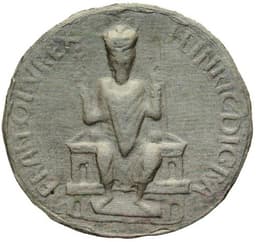
Henry I of France
Emperor · Medieval
43.6Total
Basic Information
Born
1300
1008
Died
1352
1060
Era
Medieval
Medieval
Nationality
Abbasid Caliphate
France
Occupation
Emperor
Emperor
Civilization
Middle Eastern
Western
Score Comparison
Military (10%)
35.7
50.0
Political (20%)
35.0
29.3
Influence (20%)
52.5
47.9
Legacy (20%)
35.0
39.2
Leadership (15%)
31.2
58.8
Strategy (15%)
60.0
35.7
TOTAL
41.4
43.6
Al-Hakim II of Cairo — Complete Timeline
1341 AD
Installation as CaliphPolitical Action
Al-Hakim II was installed as caliph by Mamluk Sultan Al-Nasir Muhammad after the deposition of Al-Mustakfi I. His reign was entirely ceremonial, with no recorded political or military actions.
Caliphal Installation
1352 AD
Death in ObscurityOther
Al-Hakim II died after a reign of about 11 years. His death passed without significant historical note, reflecting the diminished status of the Abbasid caliphate under the Mamluks.
DeathObscurity
Henry I of France — Complete Timeline
1031 AD
Reign as King of the FranksPolitical Action◆ Major
Henry I succeeded his father Robert II as King of the Franks. His reign was marked by constant conflicts with powerful nobles, including his brother Robert I, Duke of Burgundy, who challenged his authority.
KingshipCapetianReign
Impact: national
1032 AD
Rebellion of Robert I of BurgundyWar◆ Major
Henry I faced a rebellion led by his brother Robert I, Duke of Burgundy, who claimed the throne. The conflict lasted several years and was resolved through a compromise, with Robert retaining Burgundy but recognizing Henry as king.
RebellionCivil WarBurgundy
Impact: regional
1047 AD
Alliance with the Duke of NormandyPolitical Action
Henry I allied with William, Duke of Normandy (later William the Conqueror), to suppress a rebellion in Normandy. The alliance helped William secure his duchy, but later soured, leading to conflict between the two.
AllianceNormandyWilliam the Conqueror
Impact: regional
1050 AD
Conflict with the County of AnjouWar
Henry I fought a series of wars against the County of Anjou under Count Geoffrey Martel. The conflicts weakened royal authority and allowed Anjou to expand its territory at the expense of the crown.
WarAnjouTerritorial Loss
Impact: regional
Expert Analysis
Origins
Al-Hakim II was born in the late 13th century into the Abbasid caliphate, a dynasty that once ruled a vast empire but by his time was reduced to a symbolic role under Mamluk suzerainty. Little is known of his early life; he emerged as a figurehead when Mamluk Sultan Al-Nasir Muhammad installed him as caliph in 1341 after deposing Al-Mustakfi I. His family background was purely ceremonial, with no real political or military training.
Henry I of France was born in 1008, the son of King Robert II and Constance of Arles. As a Capetian prince, he was raised in the shadow of a monarchy that controlled little beyond the Île-de-France. His early life involved navigating court intrigues and the ambitions of his powerful mother and brother. He was crowned King of the Franks in 1027, co-ruling with his father until Robert's death in 1031.
Rise to Power
Al-Hakim II's rise was entirely passive: he was chosen by the Mamluk sultan to serve as a puppet caliph, a role that required no initiative. His installation in 1341 was a minor event, as the Abbasid caliphs in Cairo held no temporal power. He remained in this position until his death in 1352, with no recorded efforts to expand his authority.
Henry I's rise was more active but fraught with conflict. Upon his father's death, he faced immediate rebellion from his brother Robert, Duke of Burgundy, who claimed the throne. With the support of his mother and the Duke of Normandy, Henry suppressed the revolt by 1032, but the conflict weakened royal authority. He spent the next two decades struggling to maintain control over his vassals, including his brother, who retained Burgundy.
Leadership & Governance
Al-Hakim II's leadership was non-existent in practice. He scored 31.2 in leadership, reflecting his complete subordination to the Mamluks. He performed ceremonial duties, such as confirming the sultan's appointments, but had no independent governance. The caliphate was a hollow institution, and he made no reforms.
Henry I's leadership scored 58.8, indicating a more active but still constrained rule. He governed through personal relationships and military campaigns, but his authority was constantly challenged. He attempted to consolidate royal power by supporting the Church and granting charters, but his wars against Anjou and Burgundy drained resources. His governance was reactive rather than visionary, and he failed to expand the royal domain significantly.
Triumph & Tragedy
Al-Hakim II's greatest success was simply surviving as caliph for 11 years, a testament to his compliance. His failure was his irrelevance: he scored 35.0 in legacy, as his reign left no mark on history. His death in obscurity mirrored his life.
Henry I's triumph was maintaining the Capetian dynasty against internal threats. He successfully defeated his brother's rebellion and secured the succession of his son, Philip I. His alliance with William of Normandy helped stabilize the region. However, his tragedy was his inability to curb noble power: his wars against Anjou ended in stalemate, and his military score of 50.0 reflects mixed results. The rise of Geoffrey Martel weakened the crown, and Henry died in 1060 with the monarchy still fragile.
Character & Destiny
Al-Hakim II was a passive figure, content with his ceremonial role. His character was shaped by the Mamluk system that reduced caliphs to figureheads. He made no decisions that altered his fate, which was to be forgotten.
Henry I was more dynamic but cautious. He was a persistent but not brilliant ruler, often forced into compromises. His decision to ally with William of Normandy showed strategic thinking (strategy score 35.7), but his overall political score of 29.3 indicates poor long-term planning. His character was defined by resilience in the face of constant rebellion, but he lacked the ruthlessness to centralize power.
Legacy
Al-Hakim II's legacy is negligible. He scored 35.0 in legacy, as the Abbasid caliphate continued its decline. His reign is a footnote in Islamic history, remembered only for its insignificance.
Henry I's legacy is more substantial, scoring 39.2. He maintained the Capetian line during a critical period, allowing his son Philip I to inherit the throne. The dynasty's survival paved the way for later expansion under Philip II Augustus. However, his reign saw no major territorial gains or institutional reforms, and his conflicts weakened royal authority in the short term.
Conclusion
Henry I of France had a greater impact than Al-Hakim II, despite his modest achievements. Henry's total score of 43.6 vs. 41.4 reflects his more active role in shaping his kingdom's trajectory. While both were limited by their circumstances, Henry preserved a dynasty that would eventually dominate France, whereas Al-Hakim II was a passive instrument of Mamluk power. The 2.2-point gap is small but meaningful: Henry's legacy, though flawed, contributed to the rise of the Capetian monarchy, while Al-Hakim's reign was a dead end.
Rankings
🥇
Henry I of FranceLeader
Mil: 50.0Pol: 29.3Inf: 47.9
43.6
🥈
Al-Hakim II of Cairo
Mil: 35.7Pol: 35.0Inf: 52.5
41.4
+2.2 behind
How This Comparison Works
Algorithm
Each figure is scored on 6 dimensions (0—100 scale) based on structured historical data: Military (10%), Political (20%), Influence (20%), Legacy (20%), Leadership (15%), Strategy (15%). The weighted total produces the final ranking.
Data Sources
Scores are computed from structured sub-indicators in the database. Scale factors adjust for era (Ancient ×0.85, Modern ×1.0) and civilization size (Eastern ×1.05, Other ×0.80) to account for differences in population and military scale.
Maximum 3 Figures
Comparisons are limited to 2—3 figures to ensure readability and statistical meaningfulness.
Error Margins
±5 points per dimension — Sub-scores are derived from historical records with inherent uncertainty. Two figures within 5 points on a dimension should be considered roughly equivalent in that area.
Total Score Accuracy
±3 points overall — The weighted combination of 6 dimensions produces a total score with approximately ±3 points of uncertainty. Differences of less than 3 points are not statistically significant— the figures are effectively tied.
Known Limitations
- Historical records are incomplete and uneven across civilizations
- Figures from oral-tradition societies may be underrepresented
- Occupation labels can misclassify multi-role figures
- Scores measure capability and impact, not moral character
- Quantitative scoring is a comparison tool, not absolute truth
Capability Radar
Military (10%) — Battles & Warfare
Battles
34
20
Win Rate
32
25
Expansion
36
10
Political (20%) — Governance & Reform
Reform
5
20
Diplomacy
10
30
Economy
5
20
Influence (20%) — Cultural & Global Reach
Cultural
5
15
Global
0
10
Legacy (20%) — Historical Impact
Historical
5
20
Longevity
5
15
Leadership (15%) — Power & Stability
Tenure
20
50
Stability
15
25
Strategy (15%) — Tactics & Innovation
Strategy
41
15
Tactics
44
20
Reform
44
10
Similar Comparisons
Comments & Discussion
No comments yet. Be the first to share your thoughts!