Loading...
Henry I of France vs James IV of Scotland
James IV of Scotland leads by 14.7 pts · 2 figures compared
…
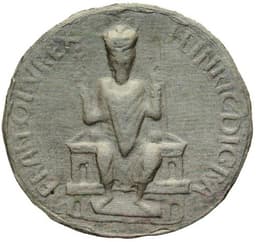
Henry I of France
Emperor · Medieval
43.6Total

James IV of Scotland
Emperor · Medieval
58.3Total
Basic Information
Born
1008
1473
Died
1060
1513
Era
Medieval
Medieval
Nationality
France
Scotland
Occupation
Emperor
Emperor
Civilization
Western
Western
Score Comparison
Military (10%)
50.0
50.0
Political (20%)
29.3
60.0
Influence (20%)
47.9
59.0
Legacy (20%)
39.2
48.3
Leadership (15%)
58.8
72.0
Strategy (15%)
35.7
66.3
TOTAL
43.6
58.3
Henry I of France — Complete Timeline
1031 AD
Reign as King of the FranksPolitical Action◆ Major
Henry I succeeded his father Robert II as King of the Franks. His reign was marked by constant conflicts with powerful nobles, including his brother Robert I, Duke of Burgundy, who challenged his authority.
KingshipCapetianReign
Impact: national
1032 AD
Rebellion of Robert I of BurgundyWar◆ Major
Henry I faced a rebellion led by his brother Robert I, Duke of Burgundy, who claimed the throne. The conflict lasted several years and was resolved through a compromise, with Robert retaining Burgundy but recognizing Henry as king.
RebellionCivil WarBurgundy
Impact: regional
1047 AD
Alliance with the Duke of NormandyPolitical Action
Henry I allied with William, Duke of Normandy (later William the Conqueror), to suppress a rebellion in Normandy. The alliance helped William secure his duchy, but later soured, leading to conflict between the two.
AllianceNormandyWilliam the Conqueror
Impact: regional
1050 AD
Conflict with the County of AnjouWar
Henry I fought a series of wars against the County of Anjou under Count Geoffrey Martel. The conflicts weakened royal authority and allowed Anjou to expand its territory at the expense of the crown.
WarAnjouTerritorial Loss
Impact: regional
James IV of Scotland — Complete Timeline
1495 AD
Foundation of the University of AberdeenCultural
James IV issued a papal bull to found the University of Aberdeen, Scotland's third university. The university was established to promote education and learning in the north of Scotland, reflecting James's interest in Renaissance humanism.
FoundationEducationRenaissance
Impact: nationalconstructive
1496 AD
Support for Perkin WarbeckPolitical Action
James IV supported the pretender Perkin Warbeck, who claimed to be Richard of Shrewsbury, by invading northern England. The invasion failed, and James later abandoned Warbeck, but the episode strained relations with England.
InvasionPretenderAnglo-Scottish Relations
Impact: regionaldestructive
1503 AD
Marriage to Margaret TudorPolitical Action◆ Major
James IV married Margaret Tudor, daughter of Henry VII of England, under the Treaty of Perpetual Peace. The marriage united the Scottish and English royal houses and later gave James VI a claim to the English throne.
MarriageTreatyUnion of Crowns
Impact: nationalconstructive
1511 AD
Construction of the Great MichaelOther
James IV commissioned the construction of the Great Michael, the largest warship in Europe at the time. The ship was built at Newhaven and cost a fortune, but it was sold to France after Flodden and never saw significant action.
ShipbuildingNavyExpense
Impact: national
1513 AD
Battle of FloddenWar
James IV led a Scottish invasion of England but was defeated at the Battle of Flodden Field near Branxton, Northumberland. James IV was killed along with many Scottish nobles, making it one of Scotland's worst military defeats.
BattleDefeatDeath
Impact: nationaltragic
Expert Analysis
Origins
Henry I of France was born in 1008, the second son of King Robert II and Constance of Arles. As a younger son, he was not initially destined for the throne, but his elder brother Hugh died young. He received a traditional Capetian education in Latin and governance, but his early years were overshadowed by the domineering influence of his mother and powerful nobles. James IV of Scotland was born on March 17, 1473, to King James III and Margaret of Denmark. He grew up during a period of political instability, with his father facing rebellions. James received a Renaissance education, studying Latin, French, and law, and developed interests in medicine, alchemy, and shipbuilding. His father's death in 1488, after a battle against rebels that James may have supported, left him king at age 15.
Rise to Power
Henry I became king of the Franks upon his father's death in 1031, but his reign began with a rebellion led by his brother Robert I of Burgundy. The conflict lasted until 1032, when Henry ceded Burgundy to Robert to end the war. Henry then faced challenges from the County of Anjou under Geoffrey Martel, who expanded his territory at Henry's expense. Henry's alliance with William, Duke of Normandy, helped suppress Norman rebellions but also strengthened William, who later conquered England. James IV's rise was marked by his involvement in the rebellion against his father. After the Battle of Sauchieburn in 1488, where James III was killed, James IV ascended the throne. He quickly consolidated power by reconciling with the nobles who had opposed him and by marrying Margaret Tudor in 1503, securing a peace with England. He also supported Perkin Warbeck, a pretender to the English throne, in 1496-1497, but this failed.
Leadership & Governance
Henry I's leadership was characterized by reactive crisis management rather than proactive reform. He relied on alliances with the Church and lesser nobles to counterbalance powerful magnates like his brother Robert and Count Geoffrey Martel. His governance was feudal and decentralized, with royal authority limited to the Île-de-France. In contrast, James IV actively promoted Renaissance ideals, founding the University of Aberdeen in 1495 and commissioning the Great Michael, a massive warship completed in 1511. He centralized royal power by improving the justice system and curbing noble violence. His marriage to Margaret Tudor was a diplomatic masterstroke that brought peace with England for a decade. However, his support for Warbeck and later invasion of England showed a willingness to gamble on military adventures.
Triumph & Tragedy
Henry I's greatest success was surviving his reign and passing the throne to his son, Philip I, despite constant rebellions. He maintained Capetian rule during a period of feudal fragmentation. His greatest failure was his inability to prevent the rise of powerful vassals like William of Normandy and Geoffrey Martel, which weakened the crown. James IV's triumphs include fostering Scottish culture and education, and building a powerful navy with the Great Michael. His marriage to Margaret Tudor laid the groundwork for the eventual Union of the Crowns. However, his tragic defeat and death at the Battle of Flodden in 1513, where he led an invasion of England and was killed, was a disaster for Scotland. The battle cost the lives of many nobles and left the kingdom leaderless.
Character & Destiny
Henry I was cautious and pragmatic, often choosing diplomacy over war. He lacked the charisma to inspire loyalty, as evidenced by his brother's rebellion. His character led to a reign of defensive consolidation rather than expansion. James IV was energetic, ambitious, and chivalrous, often involving himself in military campaigns and intellectual pursuits. His decision to invade England in 1513, despite a treaty of peace, was driven by honor and the French alliance. His death at Flodden resulted from his refusal to avoid battle despite tactical disadvantages.
Legacy
Henry I's legacy is modest: he kept the Capetian dynasty alive during a difficult period. His reign saw no major territorial gains or reforms. He scored 39.2 in legacy. In contrast, James IV left a more tangible legacy: the University of Aberdeen, the Great Michael, and the Tudor marriage. His death at Flodden became a symbol of Scottish resistance. His legacy score is 48.3, higher than Henry's.
Conclusion
James IV had a greater impact than Henry I. His total score of 58.3 outpaces Henry's 43.6 by 14.7 points. James advanced Scottish education, navy, and diplomacy, while Henry merely held onto his throne. James's actions had lasting consequences, including the eventual union with England, whereas Henry's reign was a holding pattern. The data supports James IV as the more influential figure.
Rankings
🥇
James IV of ScotlandLeader
Mil: 50.0Pol: 60.0Inf: 59.0
58.3
🥈
Henry I of France
Mil: 50.0Pol: 29.3Inf: 47.9
43.6
+14.7 behind
How This Comparison Works
Algorithm
Each figure is scored on 6 dimensions (0—100 scale) based on structured historical data: Military (10%), Political (20%), Influence (20%), Legacy (20%), Leadership (15%), Strategy (15%). The weighted total produces the final ranking.
Data Sources
Scores are computed from structured sub-indicators in the database. Scale factors adjust for era (Ancient ×0.85, Modern ×1.0) and civilization size (Eastern ×1.05, Other ×0.80) to account for differences in population and military scale.
Maximum 3 Figures
Comparisons are limited to 2—3 figures to ensure readability and statistical meaningfulness.
Error Margins
±5 points per dimension — Sub-scores are derived from historical records with inherent uncertainty. Two figures within 5 points on a dimension should be considered roughly equivalent in that area.
Total Score Accuracy
±3 points overall — The weighted combination of 6 dimensions produces a total score with approximately ±3 points of uncertainty. Differences of less than 3 points are not statistically significant— the figures are effectively tied.
Known Limitations
- Historical records are incomplete and uneven across civilizations
- Figures from oral-tradition societies may be underrepresented
- Occupation labels can misclassify multi-role figures
- Scores measure capability and impact, not moral character
- Quantitative scoring is a comparison tool, not absolute truth
Capability Radar
Military (10%) — Battles & Warfare
Battles
20
55
Win Rate
25
40
Expansion
10
45
Political (20%) — Governance & Reform
Reform
20
75
Diplomacy
30
65
Economy
20
70
Influence (20%) — Cultural & Global Reach
Cultural
15
55
Global
10
30
Legacy (20%) — Historical Impact
Historical
20
50
Longevity
15
40
Leadership (15%) — Power & Stability
Tenure
50
70
Stability
25
60
Strategy (15%) — Tactics & Innovation
Strategy
15
50
Tactics
20
60
Reform
10
65
Similar Comparisons
Comments & Discussion
No comments yet. Be the first to share your thoughts!