Loading...
This comparison has not been analyzed yet.
One-time AI generation (~1 minute). Scores and timeline are already available below.
Henry I of England vs Tokhta
Tokhta leads by 3.2 pts · 2 figures compared
…
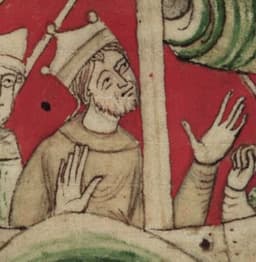
Henry I of England
Emperor · Medieval
55.9Total
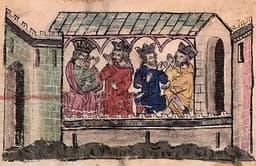
Tokhta
Emperor · Medieval
59.1Total
Basic Information
Born
1068
1270
Died
1135
1312
Era
Medieval
Medieval
Nationality
England
Golden Horde
Occupation
Emperor
Emperor
Civilization
Western
Eastern
Score Comparison
Military (10%)
10.0
65.0
Political (20%)
72.0
68.0
Influence (20%)
56.4
56.4
Legacy (20%)
54.0
49.2
Leadership (15%)
72.0
66.0
Strategy (15%)
57.5
60.7
TOTAL
55.9
59.1
Henry I of England — Complete Timeline
1100 AD
Coronation of Henry IPolitical Action◆ Major
Henry was crowned king of England on August 5, 1100, just three days after his brother William II's death. He issued the Charter of Liberties, promising to curb royal abuses.
CoronationCharter of LibertiesReform
Impact: nationalconstructive
1106 AD
Battle of TinchebrayWar◆ Major
Henry defeated his brother Robert Curthose at Tinchebray in Normandy. Robert was captured and imprisoned for life, and Henry reunited England and Normandy under his rule.
BattleVictoryNormandy
Impact: regional
1110 AD
Administrative ReformsReform◆ Major
Henry established the Exchequer as a central financial department, standardizing tax collection and accounting. He also issued the Leges Henrici Primi, a legal code that systematized English law.
ExchequerLegal ReformAdministration
Impact: nationalconstructive
1120 AD
White Ship DisasterOther◆ Major
Henry's only legitimate son, William Adelin, drowned in the White Ship disaster off the coast of Normandy. This tragedy left Henry without a male heir, leading to a succession crisis after his death.
DisasterSuccession CrisisHeir
Impact: nationaltragic
1135 AD
Death of Henry IPolitical Action◆ Major
Henry died on December 1, 1135, at Lyons-la-For
DeathSuccession CrisisAnarchy
Impact: nationaltragic
Tokhta — Complete Timeline
1299 AD
Restoration of Centralized RulePolitical Action◆ Major
Tokhta reasserted the authority of the central khan over the Golden Horde, suppressing rebellious emirs and consolidating power. He reorganized the administration and restored the capital at Sarai, ending a period of fragmentation.
Golden HordeCentralizationReformSarai
Impact: nationalconstructive
1300 AD
Defeat of the Nogai HordeWar◆ Major
Tokhta led a military campaign against the Nogai Horde, a breakaway faction that had challenged his authority. The campaign culminated in the defeat and death of Nogai, the leader of the Horde, restoring Tokhta's control over the western territories of the Golden Horde.
Golden HordeNogai HordeCivil WarRestoration
Impact: regional
1308 AD
Conflict with the Genoese in CrimeaWar
Tokhta ordered the expulsion of Genoese merchants from the Crimean port of Caffa, leading to a military conflict. The Genoese were defeated, and their trading privileges were revoked, strengthening the Golden Horde's control over the Black Sea trade.
Golden HordeGenoaCrimeaTrade
Impact: regional
This comparison has not been analyzed yet.
One-time AI generation (~1 minute). Scores and timeline are already available below.
Rankings
🥇
TokhtaLeader
Mil: 65.0Pol: 68.0Inf: 56.4
59.1
🥈
Henry I of England
Mil: 10.0Pol: 72.0Inf: 56.4
55.9
+3.2 behind
How This Comparison Works
Algorithm
Each figure is scored on 6 dimensions (0—100 scale) based on structured historical data: Military (10%), Political (20%), Influence (20%), Legacy (20%), Leadership (15%), Strategy (15%). The weighted total produces the final ranking.
Data Sources
Scores are computed from structured sub-indicators in the database. Scale factors adjust for era (Ancient ×0.85, Modern ×1.0) and civilization size (Eastern ×1.05, Other ×0.80) to account for differences in population and military scale.
Maximum 3 Figures
Comparisons are limited to 2—3 figures to ensure readability and statistical meaningfulness.
Error Margins
±5 points per dimension — Sub-scores are derived from historical records with inherent uncertainty. Two figures within 5 points on a dimension should be considered roughly equivalent in that area.
Total Score Accuracy
±3 points overall — The weighted combination of 6 dimensions produces a total score with approximately ±3 points of uncertainty. Differences of less than 3 points are not statistically significant— the figures are effectively tied.
Known Limitations
- Historical records are incomplete and uneven across civilizations
- Figures from oral-tradition societies may be underrepresented
- Occupation labels can misclassify multi-role figures
- Scores measure capability and impact, not moral character
- Quantitative scoring is a comparison tool, not absolute truth
Capability Radar
Military (10%) — Battles & Warfare
Battles
30
65
Win Rate
55
70
Expansion
35
60
Political (20%) — Governance & Reform
Reform
85
65
Diplomacy
75
60
Economy
80
55
Influence (20%) — Cultural & Global Reach
Cultural
40
40
Global
30
40
Legacy (20%) — Historical Impact
Historical
60
50
Longevity
55
45
Leadership (15%) — Power & Stability
Tenure
70
70
Stability
70
65
Strategy (15%) — Tactics & Innovation
Strategy
45
65
Tactics
40
60
Reform
60
55
Similar Comparisons
Comments & Discussion
No comments yet. Be the first to share your thoughts!