Loading...
Henry I of England vs Henry IV of England
Henry I of England leads by 8.2 pts · 2 figures compared
…
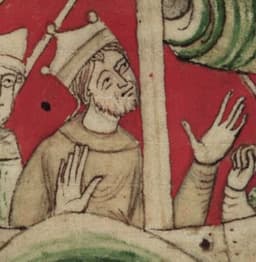
Henry I of England
Emperor · Medieval
55.9Total
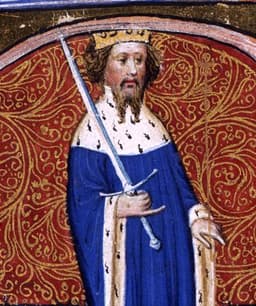
Henry IV of England
Emperor · Medieval
47.7Total
Basic Information
Born
1068
1367
Died
1135
1413
Era
Medieval
Medieval
Nationality
England
England
Occupation
Emperor
Emperor
Civilization
Western
Western
Score Comparison
Military (10%)
10.0
55.0
Political (20%)
72.0
35.1
Influence (20%)
56.4
53.3
Legacy (20%)
54.0
45.8
Leadership (15%)
72.0
55.3
Strategy (15%)
57.5
38.3
TOTAL
55.9
47.7
Henry I of England — Complete Timeline
1100 AD
Coronation of Henry IPolitical Action◆ Major
Henry was crowned king of England on August 5, 1100, just three days after his brother William II's death. He issued the Charter of Liberties, promising to curb royal abuses.
CoronationCharter of LibertiesReform
Impact: nationalconstructive
1106 AD
Battle of TinchebrayWar◆ Major
Henry defeated his brother Robert Curthose at Tinchebray in Normandy. Robert was captured and imprisoned for life, and Henry reunited England and Normandy under his rule.
BattleVictoryNormandy
Impact: regional
1110 AD
Administrative ReformsReform◆ Major
Henry established the Exchequer as a central financial department, standardizing tax collection and accounting. He also issued the Leges Henrici Primi, a legal code that systematized English law.
ExchequerLegal ReformAdministration
Impact: nationalconstructive
1120 AD
White Ship DisasterOther◆ Major
Henry's only legitimate son, William Adelin, drowned in the White Ship disaster off the coast of Normandy. This tragedy left Henry without a male heir, leading to a succession crisis after his death.
DisasterSuccession CrisisHeir
Impact: nationaltragic
1135 AD
Death of Henry IPolitical Action◆ Major
Henry died on December 1, 1135, at Lyons-la-For
DeathSuccession CrisisAnarchy
Impact: nationaltragic
Henry IV of England — Complete Timeline
1399 AD
Usurpation of the ThronePolitical Action◆ Major
Henry Bolingbroke deposed Richard II and claimed the English throne as Henry IV. This usurpation established the Lancastrian dynasty but created a legitimacy crisis that led to future conflicts.
UsurpationLancasterSuccession
Impact: national
1403 AD
Battle of ShrewsburyWar◆ Major
Henry IV defeated a rebellion led by Henry Percy (Hotspur) at the Battle of Shrewsbury. Hotspur was killed, and the rebellion was crushed, but the king suffered heavy casualties and ongoing challenges.
BattleRebellionPercy
Impact: nationaldestructive
1405 AD
Execution of Archbishop ScropePolitical Action◆ Major
Henry IV ordered the execution of Richard Scrope, Archbishop of York, for leading a rebellion. This act shocked the church and nobility, damaging Henry's reputation and legitimacy.
ExecutionChurchRebellion
Impact: nationaldestructive
Illness and DeclineOther
Henry IV suffered from a debilitating illness, possibly leprosy or epilepsy, which weakened his rule. He became increasingly unable to govern effectively, leading to factionalism and his son's growing influence.
IllnessDecline
Impact: nationaltragic
Expert Analysis
Origins
Henry I of England was born in 1068/1069, the youngest son of William the Conqueror and Matilda of Flanders. As a fourth son, he was not expected to inherit the throne; his early life was marked by obscurity and a modest education compared to his brothers. He was, however, literate, earning the nickname 'Beauclerc' (fine scholar). His formative years involved maneuvering among his father's holdings and witnessing the violent reigns of his brothers William Rufus and Robert Curthose.
Henry IV of England was born Henry Bolingbroke in April 1367 at Bolingbroke Castle, Lincolnshire. He was the son of John of Gaunt, Duke of Lancaster, and Blanche of Lancaster, making him a member of the powerful House of Lancaster. He was well-educated, trained in chivalry, and participated in tournaments. His early life was shaped by his father's wealth and political influence, as well as the turbulent reign of his cousin Richard II.
Rise to Power
Henry I's rise began abruptly upon the death of his brother William II in a hunting accident on August 2, 1100. While his elder brother Robert was returning from the First Crusade, Henry seized the royal treasury at Winchester and had himself crowned king just three days later on August 5. He quickly issued the Charter of Liberties, promising to curb royal abuses and win support from the nobility. In 1106, at the Battle of Tinchebray, he defeated and captured Robert Curthose, reuniting England and Normandy after a period of division.
Henry IV's rise was a direct usurpation. In 1399, while Richard II was campaigning in Ireland, Henry returned from exile (to which Richard had banished him) and capitalized on widespread discontent. He raised an army, captured Richard, and forced his abdication. On October 13, 1399, he was crowned king. However, his claim was weak—he was not the direct heir—and he faced immediate challenges from the Mortimer line and former allies.
Leadership & Governance
Henry I was an administrative reformer. He established the Exchequer as a central financial department, standardizing tax collection and accounting. He issued the Leges Henrici Primi, a legal code that formalized many customary laws. He also curbed the power of barons by appointing loyal officials and using royal justices. His governance was systematic: he maintained peace through a network of sheriffs and itinerant justices, and his reign saw a consolidation of royal authority. His political score of 72.0 reflects this effective administration.
Henry IV's governance was reactive and unstable. He faced numerous rebellions, including the Percy uprising (Battle of Shrewsbury, 1403), the Epiphany Rising (1400), and the revolt of Owain Glyndŵr in Wales. He struggled to maintain control, partly due to his weak claim and partly due to his own political missteps. His execution of Archbishop Scrope in 1405 alienated the church and nobility, further undermining his authority. His political score of 35.1 indicates his difficulties. He relied heavily on his son, the future Henry V, to manage affairs.
Triumph & Tragedy
Henry I's greatest triumph was the unification of England and Normandy and the establishment of a stable, centralized government. The Exchequer system was a lasting innovation. His tragedy was the White Ship disaster of 1120, in which his only legitimate son William Adelin drowned. This left him without a male heir, leading to a succession crisis after his death. Despite securing an oath for his daughter Matilda to succeed, the throne was seized by Stephen of Blois, plunging England into civil war.
Henry IV's triumph was successfully deposing Richard II and founding the Lancastrian dynasty. He also crushed major rebellions, notably at Shrewsbury. His tragedy was his illness (possibly leprosy or epilepsy) that crippled his rule in later years, leading to a loss of control and a contested legacy. His execution of Archbishop Scrope was a major moral and political error. He died in 1413, worn out and unpopular.
Character & Destiny
Henry I was calculating, ruthless, and methodical. He earned a reputation for cruelty (e.g., blinding and castrating prisoners) but also for justice and order. His character shaped a reign of consolidation: he was a king who built institutions rather than personal glory. His destiny was to be remembered as a 'lion of justice' but also as the king whose succession failure undid his work.
Henry IV was ambitious and chivalric but also insecure and prone to poor decisions. His usurpation created a legacy of instability, as his reign was consumed by rebellion. His illness sapped his energy, and he became withdrawn. His character led to a reign of constant crisis, and his destiny was to be a transitional figure, overshadowed by his son Henry V.
Legacy
Henry I's legacy is primarily administrative. He transformed the English government, and his Exchequer system influenced medieval finance. His legal reforms laid groundwork for common law. However, his failure to secure succession led to the Anarchy. In terms of scores, his legacy is 54.0 and influence 56.4.
Henry IV's legacy is more political: he established the Lancastrian dynasty, but his usurpation set a precedent for deposing kings, contributing to the Wars of the Roses. His reign weakened royal authority, though his son restored it. His legacy score is 45.8, influence 53.3.
Conclusion
Henry I had greater impact than Henry IV. With a total score of 55.9 vs. 47.7, Henry I's administrative reforms created lasting institutions, while Henry IV's reign was largely reactive and destabilizing. Henry I's governance score of 72.0 dwarfs Henry IV's 35.1, reflecting effective rule versus constant crisis. Though Henry IV's usurpation changed the dynasty, its effects were largely negative and short-lived. Henry I's contributions to English government endured for centuries. Thus, Henry I is the more significant ruler.
Rankings
🥇
Henry I of EnglandLeader
Mil: 10.0Pol: 72.0Inf: 56.4
55.9
🥈
Henry IV of England
Mil: 55.0Pol: 35.1Inf: 53.3
47.7
+8.2 behind
How This Comparison Works
Algorithm
Each figure is scored on 6 dimensions (0—100 scale) based on structured historical data: Military (10%), Political (20%), Influence (20%), Legacy (20%), Leadership (15%), Strategy (15%). The weighted total produces the final ranking.
Data Sources
Scores are computed from structured sub-indicators in the database. Scale factors adjust for era (Ancient ×0.85, Modern ×1.0) and civilization size (Eastern ×1.05, Other ×0.80) to account for differences in population and military scale.
Maximum 3 Figures
Comparisons are limited to 2—3 figures to ensure readability and statistical meaningfulness.
Error Margins
±5 points per dimension — Sub-scores are derived from historical records with inherent uncertainty. Two figures within 5 points on a dimension should be considered roughly equivalent in that area.
Total Score Accuracy
±3 points overall — The weighted combination of 6 dimensions produces a total score with approximately ±3 points of uncertainty. Differences of less than 3 points are not statistically significant— the figures are effectively tied.
Known Limitations
- Historical records are incomplete and uneven across civilizations
- Figures from oral-tradition societies may be underrepresented
- Occupation labels can misclassify multi-role figures
- Scores measure capability and impact, not moral character
- Quantitative scoring is a comparison tool, not absolute truth
Capability Radar
Military (10%) — Battles & Warfare
Battles
30
35
Win Rate
55
40
Expansion
35
15
Political (20%) — Governance & Reform
Reform
85
30
Diplomacy
75
35
Economy
80
25
Influence (20%) — Cultural & Global Reach
Cultural
40
30
Global
30
20
Legacy (20%) — Historical Impact
Historical
60
45
Longevity
55
30
Leadership (15%) — Power & Stability
Tenure
70
50
Stability
70
20
Strategy (15%) — Tactics & Innovation
Strategy
45
25
Tactics
40
30
Reform
60
10
Similar Comparisons
Comments & Discussion
No comments yet. Be the first to share your thoughts!