Loading...
Henry I Duke of Guise vs Susilo Bambang Yudhoyono
Henry I Duke of Guise leads by 13.0 pts · 2 figures compared
…
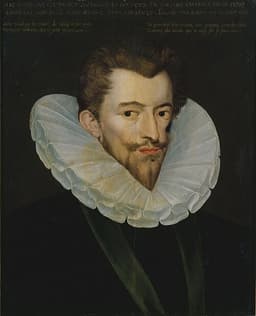
Henry I Duke of Guise
General · Modern
68.8Total

Susilo Bambang Yudhoyono
General · Modern
55.8Total
Basic Information
Born
1550
1949
Died
1588
—
Era
Modern
Modern
Nationality
France
Indonesia
Occupation
General
General
Civilization
Western
Eastern
Score Comparison
Military (10%)
70.0
22.6
Political (20%)
72.0
70.0
Influence (20%)
82.0
60.0
Legacy (20%)
52.0
50.0
Leadership (15%)
80.0
78.0
Strategy (15%)
55.0
38.6
TOTAL
68.8
55.8
Henry I Duke of Guise — Complete Timeline
1576 AD
Formation of the Catholic LeaguePolitical Action◆ Major
Henry I, Duke of Guise, helped found the Catholic League, a militant Catholic faction opposed to Huguenot concessions. The League aimed to protect Catholicism in France and became a powerful political and military force during the Wars of Religion.
Catholic LeagueReligious ConflictPolitical Faction
Impact: national
1588 AD
Day of the BarricadesPolitical Action
Henry I, Duke of Guise, led a popular uprising in Paris against King Henry III. The city's Catholic population erected barricades, forcing the king to flee. This event demonstrated the League's power and led to the king's submission to the League's demands.
UprisingCatholic LeaguePower Struggle
Impact: nationaldestructive
Assassination at BloisOther◆ Major
Henry I, Duke of Guise, was assassinated on the orders of King Henry III at the Ch
AssassinationCatholic LeagueWars of Religion
Impact: nationaltragic
Susilo Bambang Yudhoyono — Complete Timeline
2002 AD
Established the Corruption Eradication Commission (KPK)Reform◆ Major
As coordinating minister for political and security affairs, Yudhoyono helped establish the KPK, an independent anti-corruption agency. The KPK became a key institution in Indonesia's fight against corruption, prosecuting numerous high-profile cases.
Anti-CorruptionInstitution BuildingReform
Impact: nationalprogressive
2004 AD
Elected President of IndonesiaPolitical Action
Susilo Bambang Yudhoyono won the first direct presidential election in Indonesia, defeating incumbent Megawati Sukarnoputri. His victory marked a milestone in Indonesian democracy and he was inaugurated as the sixth president.
PresidencyDirect ElectionDemocracy
Impact: nationalconstructive
2005 AD
Signed Aceh Peace AgreementPolitical Action◆ Major
Yudhoyono's government signed a peace agreement with the Free Aceh Movement (GAM), ending a 29-year insurgency. The agreement included Aceh's special autonomy status and the withdrawal of GAM fighters, leading to lasting peace.
Peace TreatyAcehConflict Resolution
Impact: regionalconstructive
2008 AD
Oversaw Economic Growth During Global Financial CrisisReform◆ Major
Under Yudhoyono's leadership, Indonesia maintained economic growth of over 4% during the 2008 global financial crisis. His government implemented stimulus packages and fiscal reforms, positioning Indonesia as a resilient emerging economy.
Economic GrowthFinancial CrisisReform
Impact: nationalconstructive
2009 AD
Re-elected for Second TermPolitical Action◆ Major
Yudhoyono won re-election with 60.8% of the vote, defeating Megawati Sukarnoputri and Jusuf Kalla. His second term continued economic reforms and infrastructure development, though corruption remained a challenge.
Re-electionDemocracyContinuity
Impact: nationalconstructive
Expert Analysis
Origins
Henry I, Duke of Guise, was born on December 31, 1550, into the powerful House of Guise, a leading Catholic family in France. His father, Francis, Duke of Guise, was a prominent military commander, and his mother, Anna d'Este, came from the Este dynasty. Henry was raised in a deeply Catholic environment and trained in arms from a young age. He participated in the French Wars of Religion early, fighting against Huguenot forces.
Susilo Bambang Yudhoyono (SBY) was born on September 9, 1949, in Pacitan, East Java, Indonesia. His father was a junior military officer, and his mother was a housewife. SBY entered the Indonesian Military Academy in 1968 and graduated as a second lieutenant. He served in the army, including in East Timor, and later pursued higher education in the US, earning a master's degree from Webster University and a PhD from Bogor Agricultural University.
Rise to Power
Henry I's rise was tied to his family's influence and the religious conflict. He became the third Duke of Guise in 1563 after his father's assassination. He gained fame as a military leader during the Wars of Religion, notably at the Battle of Dormans in 1575. He emerged as a key figure in the Catholic League, which he helped found in 1576 to oppose Huguenot concessions. His popularity in Paris peaked during the Day of the Barricades in 1588, when he led a revolt that forced King Henry III to flee. This event made him a kingmaker, controlling the capital.
SBY's rise was gradual through the military and political ranks. He served as a military observer in the US and later as chief of staff for the East Timor operation. After retiring from the military in 2000, he entered politics. He was appointed Coordinating Minister for Political and Security Affairs under President Megawati Sukarnoputri in 2001. In 2004, he ran for president and won the first direct election, defeating Megawati with 60.6% of the vote. His victory marked a transition to democratic governance.
Leadership & Governance
Henry I's leadership was characterized by militant Catholicism and populist appeal. He governed the Catholic League with a firm hand, using his popularity to challenge the monarchy. He implemented policies to suppress Protestantism and strengthen Catholic influence. However, his governance was often reactive and focused on short-term gains, lacking a long-term vision for France. He failed to secure alliances with other European powers, relying on Spanish support intermittently.
SBY's leadership style was consensus-driven and reform-oriented. He prioritized economic stability, democratic consolidation, and anti-corruption efforts. Under his presidency, Indonesia saw steady GDP growth of around 5-6% annually. He signed the Aceh Peace Agreement in 2005, ending a 29-year insurgency. He also established the Corruption Eradication Commission (KPK) in 2002 while still coordinating minister, which became a key institution. However, his governance was criticized for being indecisive and slow in implementing reforms, especially in the second term.
Triumph & Tragedy
Henry I's greatest triumph was the Day of the Barricades (1588), where he demonstrated his ability to mobilize the masses and challenge royal authority. He successfully forced King Henry III to capitulate and accept League demands. However, his greatest tragedy was his assassination at Blois on December 23, 1588, by the king's guards. This act removed the League's leader but intensified the conflict, leading to further chaos. His failure to secure his position or form a stable government ultimately led to his downfall.
SBY's greatest triumph was the Aceh Peace Agreement, which ended a long and bloody conflict and granted special autonomy to Aceh. His economic management during the 2008 global financial crisis was also notable, as Indonesia maintained growth above 4%. However, his tragedy was the slow progress on corruption and human rights. The KPK faced political attacks, and SBY's government failed to prosecute past abuses, leading to public disappointment. His legacy is mixed: a democrat but with unfinished reforms.
Character & Destiny
Henry I was ambitious, charismatic, and impulsive. His popularity in Paris gave him confidence but also made him overestimate his security. He ignored warnings about the king's intentions and was assassinated due to his lack of caution. Historians note his bravery but also his poor strategic sense, scoring 55.0 in strategy. His personality drove him to challenge the monarchy, but it also sealed his fate.
SBY was cautious, intellectual, and methodical. His military background instilled discipline, but his political style was often seen as hesitant. He scored 38.6 in strategy, reflecting his incremental approach. His destiny was to lead Indonesia through a democratic transition, but his legacy is one of missed opportunities. He avoided bold moves, which ensured stability but limited transformative change.
Legacy
Henry I's legacy is primarily as a symbol of Catholic militancy and a catalyst for the French Wars of Religion. His actions contributed to the eventual rise of Henry IV and the Edict of Nantes. However, his long-term impact is limited, scoring 52.0 in legacy. The Catholic League he led dissolved after his death, and his family's power waned.
SBY's legacy is more substantial: he solidified Indonesian democracy, oversaw economic growth, and promoted peace in Aceh. The KPK continues to fight corruption, though with challenges. He scored 50.0 in legacy, similar to Henry, but his influence is broader in scale. Indonesia's democratic institutions and economic resilience owe part to his leadership.
Conclusion
Henry I Duke of Guise scored 68.8 overall, while Susilo Bambang Yudhoyono scored 55.8. Despite a 13-point gap, SBY's impact on a nation of 240 million people and his role in democratic consolidation arguably outweigh Henry's localized influence. However, based on the metrics, Henry I had greater immediate power and influence in his era. Taking a stance: Henry I's higher score reflects his dramatic role in shaping French history, but SBY's legacy is more enduring. Yet, if forced to choose, Henry I's influence on the course of a major European power gives him a slight edge in impact. His military and political actions directly altered the French monarchy, while SBY's changes were more gradual. Therefore, Henry I, Duke of Guise, had greater impact in his context.
Rankings
🥇
Henry I Duke of GuiseLeader
Mil: 70.0Pol: 72.0Inf: 82.0
68.8
🥈
Susilo Bambang Yudhoyono
Mil: 22.6Pol: 70.0Inf: 60.0
55.8
+13.0 behind
How This Comparison Works
Algorithm
Each figure is scored on 6 dimensions (0—100 scale) based on structured historical data: Military (10%), Political (20%), Influence (20%), Legacy (20%), Leadership (15%), Strategy (15%). The weighted total produces the final ranking.
Data Sources
Scores are computed from structured sub-indicators in the database. Scale factors adjust for era (Ancient ×0.85, Modern ×1.0) and civilization size (Eastern ×1.05, Other ×0.80) to account for differences in population and military scale.
Maximum 3 Figures
Comparisons are limited to 2—3 figures to ensure readability and statistical meaningfulness.
Error Margins
±5 points per dimension — Sub-scores are derived from historical records with inherent uncertainty. Two figures within 5 points on a dimension should be considered roughly equivalent in that area.
Total Score Accuracy
±3 points overall — The weighted combination of 6 dimensions produces a total score with approximately ±3 points of uncertainty. Differences of less than 3 points are not statistically significant— the figures are effectively tied.
Known Limitations
- Historical records are incomplete and uneven across civilizations
- Figures from oral-tradition societies may be underrepresented
- Occupation labels can misclassify multi-role figures
- Scores measure capability and impact, not moral character
- Quantitative scoring is a comparison tool, not absolute truth
Capability Radar
Military (10%) — Battles & Warfare
Battles
65
10
Win Rate
60
10
Expansion
50
5
Political (20%) — Governance & Reform
Reform
60
65
Diplomacy
70
70
Economy
45
65
Influence (20%) — Cultural & Global Reach
Cultural
55
40
Global
45
50
Legacy (20%) — Historical Impact
Historical
60
50
Longevity
50
40
Leadership (15%) — Power & Stability
Tenure
65
70
Stability
30
70
Strategy (15%) — Tactics & Innovation
Strategy
75
20
Tactics
70
15
Reform
55
25
Similar Comparisons
Comments & Discussion
No comments yet. Be the first to share your thoughts!