Loading...
Henry Bennet vs Julius Caesar
Julius Caesar leads by 28.1 pts · 2 figures compared
…
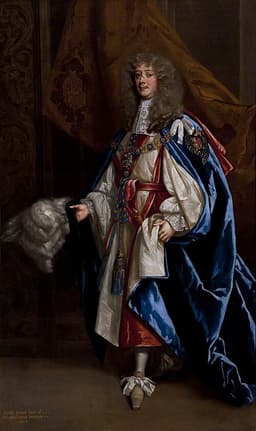
Henry Bennet
Politician · Modern
54.7Total

Julius Caesar
General · Ancient
82.8Total
Basic Information
Born
1618
-100
Died
1685
-44
Era
Modern
Ancient
Nationality
England
Roman Republic
Occupation
Politician
General
Civilization
Western
Western
Score Comparison
Military (10%)
50.0
88.0
Political (20%)
68.0
78.0
Influence (20%)
51.8
85.0
Legacy (20%)
45.0
82.0
Leadership (15%)
74.0
80.0
Strategy (15%)
42.0
85.0
TOTAL
54.7
82.8
Henry Bennet — Complete Timeline
1668 AD
Member of the CABAL MinistryPolitical Action◆ Major
Arlington became a leading member of the CABAL, the informal council of five ministers under Charles II. His initials formed the 'A' in the acronym, and he was instrumental in shaping foreign policy, particularly the pro-French alignment.
CABALCharles IIGovernment
Impact: national
1670 AD
Negotiated the Treaty of DoverPolitical Action◆ Major
As Secretary of State, Henry Bennet, Earl of Arlington, was a key negotiator of the secret Treaty of Dover between England and France. The treaty allied England with France against the Dutch Republic and included a secret clause for Charles II to convert to Catholicism.
Treaty of DoverAnglo-French allianceSecret diplomacy
Impact: regionaldestructive
1674 AD
Impeached and removed from officePolitical Action◆ Major
Following the Third Anglo-Dutch War, Parliament impeached Arlington for his role in the war and the Treaty of Dover. He was forced to resign as Secretary of State, though he later served as Lord Chamberlain until his death.
ImpeachmentAnglo-Dutch WarResignation
Impact: nationaltragic
Julius Caesar — Complete Timeline
58 BC
Gallic WarsWar◆ Major
Caesar, as proconsul of Gaul, launched a series of campaigns that conquered all of Gaul (modern France, Belgium, and parts of Switzerland). He fought numerous battles, including against the Helvetii, the Belgae, and the Gallic chieftain Vercingetorix. The wars brought immense wealth and a loyal army to Caesar.
Gallic WarsConquestRoman Expansion
Impact: regional
49 BC
Crossing the RubiconPolitical Action◆ Major
Caesar led Legio XIII across the Rubicon River into Italy, defying the Roman Senate's order to disband his army. This act triggered a civil war against Pompey and the Optimates, ultimately leading to Caesar's dictatorship and the end of the Roman Republic.
Roman Civil WarEnd of RepublicPower Struggle
Impact: global
48 BC
Battle of PharsalusWar◆ Major
Caesar's outnumbered army defeated the larger forces of Pompey the Great at Pharsalus in Greece. Caesar's tactical use of a reserve line to counter Pompey's cavalry charge proved decisive. Pompey fled to Egypt, where he was assassinated, leaving Caesar as the undisputed master of the Roman world.
Roman Civil WarBattleDecisive Victory
Impact: regional
44 BC
Appointment as Dictator for LifePolitical Action◆ Major
The Roman Senate appointed Caesar dictator perpetuo (dictator for life), granting him unprecedented personal power. This move concentrated military, legislative, and judicial authority in one person, effectively ending the Roman Republic's traditional system of checks and balances and alarming many senators.
DictatorshipEnd of RepublicPower Consolidation
Impact: regionaldestructive
Assassination on the Ides of MarchPolitical Action◆ Major
A group of Roman senators, led by Marcus Junius Brutus and Gaius Cassius Longinus, stabbed Caesar to death at a meeting of the Senate in the Theatre of Pompey. The assassination was intended to restore the Republic, but instead triggered another civil war that led to the rise of the Roman Empire.
AssassinationRoman PoliticsEnd of Republic
Impact: globaldestructive
Expert Analysis
henry-bennet-vs-julius-caesar
# The Crossing and the Cabal
On a cold January morning in 49 BCE, Julius Caesar stood at the banks of the Rubicon, a small river that marked the boundary of his legal command. To cross with his army was treason. To turn back was political oblivion. He paused, then uttered a phrase that would echo through millennia: *"Alea iacta est"* — the die is cast. Across the Channel and seventeen centuries later, Henry Bennet, Earl of Arlington, sat in a candlelit chamber in Whitehall, drafting a secret treaty with the Catholic King of France. His crossing was not of a river but of a conscience. Both men chose a path that would define them, yet one reshaped the world while the other became a footnote in a larger story.
Origins
Julius Caesar was born into a patrician family that had seen better days. The Roman Republic of the first century BCE was a cauldron of ambition, corruption, and civil war. Young Caesar learned early that in Rome, survival meant spectacle. He borrowed fortunes to stage gladiatorial games, won the hearts of the common people, and cultivated an image of invincibility. His uncle by marriage, Gaius Marius, had been a populist general; his rival, Sulla, a dictator who posted proscription lists. Caesar absorbed the lesson: power came from the sword and the crowd, not from the Senate.
Henry Bennet was born in 1618, a year before the Thirty Years' War engulfed Europe, and into a world of religious fracture. His father was a Royalist lawyer; his mother, a woman of modest gentry. England under the Stuarts was a kingdom torn between Parliament and Crown, between Protestant and Catholic. Bennet studied at Oxford, served as a diplomat in Madrid, and learned the arts of courtly intrigue. His era was not one of open conquest but of whispered negotiations, secret clauses, and shifting alliances. He was a creature of the cabinet, not the battlefield.
Rise to Power
Caesar's ascent was a masterclass in calculated risk. He served as quaestor in Spain, then aedile, then pontifex maximus. In 60 BCE, he formed the First Triumvirate with Pompey and Crassus, a backroom deal that gave him command of Gaul. Over eight years, he conquered a territory larger than Italy, wrote commentaries that became classics of Latin prose, and built an army that adored him. When the Senate ordered him to disband, he chose war. The crossing of the Rubicon was not a moment of madness but of cold logic: either he would rule Rome or die trying.
Bennet's rise was quieter but no less cunning. He served Charles II in exile during the Commonwealth, earning trust through loyalty. After the Restoration in 1660, he became a Privy Councillor, then Secretary of State. His great opportunity came in 1668, when he joined the CABAL Ministry — an acronym formed from the initials of five ministers: Clifford, Ashley, Buckingham, Arlington, and Lauderdale. This informal council ran England's foreign policy. Bennet, now Earl of Arlington, was its most secretive member. His power lay not in armies but in letters, ciphers, and the king's ear.
Leadership & Governance
Caesar governed as he conquered: with speed, ruthlessness, and a vision of order. As dictator, he reformed the calendar, extended citizenship to provincials, launched public works, and centralized tax collection. His military genius was unmatched — at Alesia, he besieged a Gallic stronghold while simultaneously fighting off a relief army, a feat of logistics and nerve. Yet his political wisdom was flawed. He pardoned former enemies, packed the Senate with his supporters, and accepted the title "dictator for life." He believed his own myth, and that belief blinded him to the daggers of his friends.
Arlington's governance was the art of the possible in a fractious kingdom. He negotiated the Treaty of Dover in 1670, a secret pact in which Charles II promised to convert to Catholicism in exchange for French subsidies. The treaty was a masterpiece of duplicity: Arlington helped draft a public version that downplayed the religious clause, while the secret version bound England to France. His strategy was not war but balance — keeping the king funded, Parliament at bay, and his own position secure. He was a politician, not a reformer. His achievements were fragile, built on secrets that could not stay hidden.
Triumph & Tragedy
Caesar's greatest moment was his triumph in 46 BCE, when he paraded through Rome with captives from Gaul, Egypt, and Pontus. He had defeated his rivals, pacified the provinces, and brought the Republic to its knees. His tragedy came three years later, on the Ides of March, when sixty senators stabbed him to death in the Theatre of Pompey. He fell at the foot of a statue of his old enemy, bleeding out on the marble floor. His assassination plunged Rome into another civil war, but his name became synonymous with imperial power.
Arlington's triumph was the Treaty of Dover itself. For a few years, he was the king's most trusted minister, the architect of a pro-French policy that seemed to secure England's interests. His tragedy unfolded in 1674, when the Third Anglo-Dutch War ended in humiliation. Parliament turned on him, impeaching him for his role in the war and the secret treaty. He was removed from office, his reputation stained. Unlike Caesar, he died in his bed in 1685, but his legacy was already dust.
Character & Destiny
Caesar was audacity incarnate. He pardoned his enemies because he believed they could be won over, and he underestimated their hatred. He was generous, brilliant, and arrogant — a combination that built an empire and cost him his life. His destiny was to be the bridge between Republic and Empire, a role he embraced with fatal confidence.
Arlington was caution dressed as cunning. He operated in shadows, preferring secret clauses to open declarations. He was a survivor in a court of shifting loyalties, but survival came at a cost: he left no lasting institution, no reform, no epic tale. His destiny was to be a functionary in the drama of others — a supporting actor in the Restoration, remembered only by specialists.
Legacy
Caesar's legacy is the Roman Empire itself. His name became a title — Kaiser, Tsar — carried by rulers from Germany to Russia. His writings shaped military education for centuries. His assassination, however, proved that even genius cannot outrun the hatred it sows. He is remembered as a man who changed history by crossing a line.
Arlington's legacy is the CABAL Ministry, a word that entered the English language as "cabal" — a secret political clique. The Treaty of Dover poisoned Anglo-Dutch relations and fueled anti-Catholic paranoia that exploded in the Popish Plot of 1678. He is remembered, if at all, as a cautionary tale about the limits of secrecy and the fragility of courtly power.
Conclusion
One man crossed a river and changed the world. Another crossed a line of trust and was forgotten. Caesar's tragedy was that he could not stop winning; Arlington's was that he could not stop maneuvering. Both were products of their eras: the Roman Republic demanded a conqueror; the Restoration court demanded a courtier. In the end, Caesar's ambition built an empire that outlasted him, while Arlington's ambition built a secret that collapsed under its own weight. The die is cast — but not all dice roll the same way.
Rankings
🥇
Julius CaesarLeader
Mil: 88.0Pol: 78.0Inf: 85.0
82.8
🥈
Henry Bennet
Mil: 50.0Pol: 68.0Inf: 51.8
54.7
+28.1 behind
How This Comparison Works
Algorithm
Each figure is scored on 6 dimensions (0—100 scale) based on structured historical data: Military (10%), Political (20%), Influence (20%), Legacy (20%), Leadership (15%), Strategy (15%). The weighted total produces the final ranking.
Data Sources
Scores are computed from structured sub-indicators in the database. Scale factors adjust for era (Ancient ×0.85, Modern ×1.0) and civilization size (Eastern ×1.05, Other ×0.80) to account for differences in population and military scale.
Maximum 3 Figures
Comparisons are limited to 2—3 figures to ensure readability and statistical meaningfulness.
Error Margins
±5 points per dimension — Sub-scores are derived from historical records with inherent uncertainty. Two figures within 5 points on a dimension should be considered roughly equivalent in that area.
Total Score Accuracy
±3 points overall — The weighted combination of 6 dimensions produces a total score with approximately ±3 points of uncertainty. Differences of less than 3 points are not statistically significant— the figures are effectively tied.
Known Limitations
- Historical records are incomplete and uneven across civilizations
- Figures from oral-tradition societies may be underrepresented
- Occupation labels can misclassify multi-role figures
- Scores measure capability and impact, not moral character
- Quantitative scoring is a comparison tool, not absolute truth
Capability Radar
Military (10%) — Battles & Warfare
Battles
29
95
Win Rate
31
92
Expansion
34
97
Political (20%) — Governance & Reform
Reform
40
90
Diplomacy
70
85
Economy
30
82
Influence (20%) — Cultural & Global Reach
Cultural
20
88
Global
30
94
Legacy (20%) — Historical Impact
Historical
40
95
Longevity
30
96
Leadership (15%) — Power & Stability
Tenure
65
75
Stability
20
60
Strategy (15%) — Tactics & Innovation
Strategy
36
94
Tactics
42
96
Reform
43
88
Similar Comparisons
Comments & Discussion
No comments yet. Be the first to share your thoughts!