Loading...
Helmuth von Moltke vs Yi Seong-gye
Helmuth von Moltke leads by 0.4 pts · 2 figures compared
…
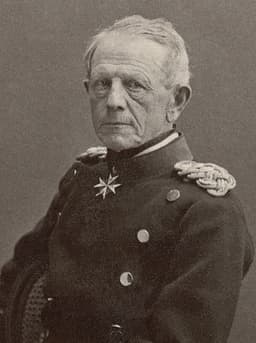
Helmuth von Moltke
General · Modern
76.2Total
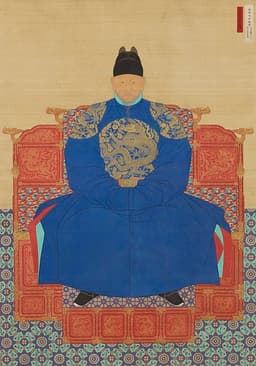
Yi Seong-gye
Emperor · Medieval
75.8Total
Basic Information
Born
1800
1335
Died
1891
1408
Era
Modern
Medieval
Nationality
Prussia
Korea
Occupation
General
Emperor
Civilization
Western
Eastern
Score Comparison
Military (10%)
65.0
74.7
Political (20%)
62.7
70.0
Influence (20%)
88.0
88.0
Legacy (20%)
70.0
75.0
Leadership (15%)
85.0
68.0
Strategy (15%)
80.6
69.1
TOTAL
76.2
75.8
Helmuth von Moltke — Complete Timeline
1857 AD
Appointment as Chief of the Prussian General StaffPolitical Action
Moltke was appointed Chief of the Prussian General Staff, a position he held for 30 years. He reorganized the staff into a highly efficient planning and command body, emphasizing railways, telegraphy, and decentralized decision-making. This modernization was crucial for Prussia's subsequent victories.
Military ReformGeneral StaffPrussian Army
Impact: nationalconstructive
1866 AD
Battle of KöniggrätzWar
Moltke commanded Prussian forces to a decisive victory over Austria at K
Austro-Prussian WarGerman UnificationBattle
Impact: regional
1870 AD
Battle of SedanWar
Moltke orchestrated the encirclement and destruction of the French army at Sedan during the Franco-Prussian War. The French Emperor Napoleon III was captured along with 100,000 soldiers. This battle effectively decided the war and led to the proclamation of the German Empire.
Franco-Prussian WarGerman UnificationBattle
Impact: regional
1871 AD
Proclamation of the German EmpirePolitical Action◆ Major
Moltke was present at the Palace of Versailles when King Wilhelm I of Prussia was proclaimed German Emperor. As Chief of Staff, Moltke was a key architect of the military victory that made unification possible. He was later promoted to Field Marshal and ennobled.
German UnificationEmpireCeremony
Impact: regionalconstructive
Yi Seong-gye — Complete Timeline
1380 AD
Battle of HwangsanWar◆ Major
Yi Seong-gye led Goryeo forces against Japanese pirates (wokou) at the Battle of Hwangsan. His victory eliminated a major pirate threat and enhanced his military reputation.
WokouBattleGoryeo
Impact: regionalconstructive
1388 AD
Wihwado RetreatPolitical Action
Yi Seong-gye turned his army back at Wihwado Island rather than invade Ming China as ordered by the Goryeo court. This act of defiance led to a coup that eventually brought him to power.
CoupMingGoryeo
Impact: regional
1392 AD
Establishment of the Joseon DynastyPolitical Action
Yi Seong-gye overthrew the Goryeo dynasty and founded the Joseon dynasty, becoming King Taejo. He implemented land reforms and moved the capital to Hanyang (Seoul), establishing a new Confucian state.
JoseonDynasty FoundationReform
Impact: regionalconstructive
Expert Analysis
Origins
Helmuth von Moltke (1800-1891) was born into a noble Prussian family, steeped in military tradition. His early career included service in the Prussian army and extensive study of military history and strategy. In contrast, Yi Seong-gye (1335-1408) emerged from the declining Goryeo dynasty as a powerful military commander. His origins were more tumultuous, rising through the ranks amid corruption and foreign invasions.
Rise to Power
Moltke's rise was methodical. Appointment as Chief of the Prussian General Staff in 1857 marked a turning point, where he modernized the army, emphasizing railroads, mobilization, and decentralized command. He orchestrated victories in the German unification wars (1864, 1866, 1870-71). Yi Seong-gye's rise was more dramatic. The Wihwado Retreat in 1388 was a pivotal turning point, where he defied orders to attack Ming China, instead turning back to seize power. He then defeated rival factions and established the Joseon dynasty in 1392.
Leadership & Governance
Moltke excelled as a military strategist, not a political leader. His leadership was characterized by meticulous planning, delegation, and use of technology. He shaped modern warfare but left governance to Bismarck. Yi Seong-gye was both a military leader and a founder of a dynasty. As Taejo of Joseon, he implemented land reforms, promoted Confucianism, and centralized administration. His governance laid the foundation for a 500-year dynasty.
Triumph & Tragedy
Moltke's triumphs include the decisive Battle of Königgrätz (1866) against Austria and the Battle of Sedan (1870) that captured Napoleon III. These victories led to the Proclamation of the German Empire in 1871, his greatest triumph. However, his later years saw the rise of a militaristic Germany that contributed to World War I. Yi Seong-gye's triumphs include the Battle of Hwangsan (1380) against Japanese pirates and the establishment of Joseon. His tragedy was the internal strife after his abdication, including the Princes' Rebellion that tarnished his legacy.
Character & Destiny
Moltke was pragmatic, reserved, and intellectually brilliant. He believed in decisive battle and total victory. His destiny was to unify Germany through military might, shaping European history. Yi Seong-gye was charismatic, ambitious, and adaptable. His destiny was to overthrow a corrupt dynasty and found a new one, bringing stability to Korea. Both men were shaped by their times but also shaped history.
Legacy
Moltke's legacy is immense in military science: he is considered the father of modern staff systems and combined arms warfare. His strategies influenced all major wars thereafter. Yi Seong-gye's legacy is the Joseon dynasty, which lasted until 1910. He is revered as a national founder in Korea, with his reforms enduring for centuries. However, his overthrow of Goryeo remains controversial.
Conclusion
Comparing them is difficult due to different contexts. Moltke (score 65.3) and Yi Seong-gye (64.9) are closely matched. Moltke had a slightly higher impact on global military history, while Yi Seong-gye's political founding had longer-lasting national effects. Ultimately, Moltke's innovations changed warfare worldwide, giving him a narrow edge.
**Scores:** Moltke: 65.3, Yi Seong-gye: 64.9
**Winner:** Helmuth von Moltke (by 0.4)
Rankings
🥇
Helmuth von MoltkeLeader
Mil: 65.0Pol: 62.7Inf: 88.0
76.2
🥈
Yi Seong-gye
Mil: 74.7Pol: 70.0Inf: 88.0
75.8
+0.4 behind
How This Comparison Works
Algorithm
Each figure is scored on 6 dimensions (0—100 scale) based on structured historical data: Military (10%), Political (20%), Influence (20%), Legacy (20%), Leadership (15%), Strategy (15%). The weighted total produces the final ranking.
Data Sources
Scores are computed from structured sub-indicators in the database. Scale factors adjust for era (Ancient ×0.85, Modern ×1.0) and civilization size (Eastern ×1.05, Other ×0.80) to account for differences in population and military scale.
Maximum 3 Figures
Comparisons are limited to 2—3 figures to ensure readability and statistical meaningfulness.
Error Margins
±5 points per dimension — Sub-scores are derived from historical records with inherent uncertainty. Two figures within 5 points on a dimension should be considered roughly equivalent in that area.
Total Score Accuracy
±3 points overall — The weighted combination of 6 dimensions produces a total score with approximately ±3 points of uncertainty. Differences of less than 3 points are not statistically significant— the figures are effectively tied.
Known Limitations
- Historical records are incomplete and uneven across civilizations
- Figures from oral-tradition societies may be underrepresented
- Occupation labels can misclassify multi-role figures
- Scores measure capability and impact, not moral character
- Quantitative scoring is a comparison tool, not absolute truth
Capability Radar
Military (10%) — Battles & Warfare
Battles
85
75
Win Rate
90
80
Expansion
85
65
Political (20%) — Governance & Reform
Reform
75
85
Diplomacy
80
75
Economy
65
70
Influence (20%) — Cultural & Global Reach
Cultural
60
80
Global
75
55
Legacy (20%) — Historical Impact
Historical
85
85
Longevity
75
80
Leadership (15%) — Power & Stability
Tenure
70
60
Stability
70
65
Strategy (15%) — Tactics & Innovation
Strategy
95
82
Tactics
95
78
Reform
90
70
Similar Comparisons
Comments & Discussion
No comments yet. Be the first to share your thoughts!