Loading...
Helmuth von Moltke vs Yamagata Aritomo
Yamagata Aritomo leads by 6.3 pts · 2 figures compared
…
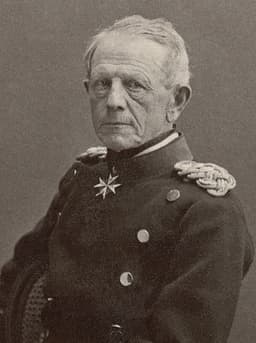
Helmuth von Moltke
General · Modern
76.2Total
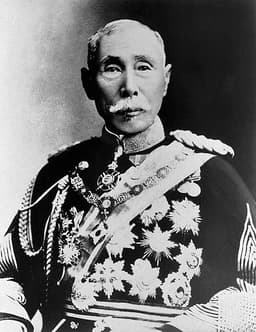
Yamagata Aritomo
General · Modern
82.5Total
Basic Information
Born
1800
1838
Died
1891
1922
Era
Modern
Modern
Nationality
Prussia
Japan
Occupation
General
General
Civilization
Western
Eastern
Score Comparison
Military (10%)
65.0
78.0
Political (20%)
62.7
82.0
Influence (20%)
88.0
80.0
Legacy (20%)
70.0
90.0
Leadership (15%)
85.0
78.0
Strategy (15%)
80.6
82.0
TOTAL
76.2
82.5
Helmuth von Moltke — Complete Timeline
1857 AD
Appointment as Chief of the Prussian General StaffPolitical Action
Moltke was appointed Chief of the Prussian General Staff, a position he held for 30 years. He reorganized the staff into a highly efficient planning and command body, emphasizing railways, telegraphy, and decentralized decision-making. This modernization was crucial for Prussia's subsequent victories.
Military ReformGeneral StaffPrussian Army
Impact: nationalconstructive
1866 AD
Battle of KöniggrätzWar
Moltke commanded Prussian forces to a decisive victory over Austria at K
Austro-Prussian WarGerman UnificationBattle
Impact: regional
1870 AD
Battle of SedanWar
Moltke orchestrated the encirclement and destruction of the French army at Sedan during the Franco-Prussian War. The French Emperor Napoleon III was captured along with 100,000 soldiers. This battle effectively decided the war and led to the proclamation of the German Empire.
Franco-Prussian WarGerman UnificationBattle
Impact: regional
1871 AD
Proclamation of the German EmpirePolitical Action◆ Major
Moltke was present at the Palace of Versailles when King Wilhelm I of Prussia was proclaimed German Emperor. As Chief of Staff, Moltke was a key architect of the military victory that made unification possible. He was later promoted to Field Marshal and ennobled.
German UnificationEmpireCeremony
Impact: regionalconstructive
Yamagata Aritomo — Complete Timeline
1873 AD
Establishment of the Imperial Japanese ArmyReform
Yamagata Aritomo, as War Minister, oversaw the creation of the Imperial Japanese Army based on the Prussian model. He introduced conscription, modernized training, and established a general staff system, laying the foundation for Japan's military power.
Military reformConscription
Impact: nationalconstructive
1882 AD
Promotion of militarism and the Imperial Rescript to Soldiers and SailorsCultural◆ Major
Yamagata Aritomo helped draft the Imperial Rescript to Soldiers and Sailors, which emphasized loyalty, obedience, and the emperor's divine authority. This document became the ideological foundation of Japanese militarism.
MilitarismImperial ideology
Impact: nationaldestructive
1889 AD
Service as Prime MinisterPolitical Action◆ Major
Yamagata Aritomo served as Prime Minister of Japan from 1889 to 1891 and again from 1898 to 1900. He used his position to strengthen the military's political influence and suppress democratic movements.
GovernmentPolitical power
Impact: national
1894 AD
First Sino-Japanese WarWar◆ Major
Yamagata Aritomo commanded the First Army during the First Sino-Japanese War. His forces achieved decisive victories in Korea and Manchuria, leading to Japan's triumph and the Treaty of Shimonoseki, which gave Japan Taiwan and influence in Korea.
WarImperial expansion
Impact: regional
1904 AD
Russo-Japanese WarWar◆ Major
Yamagata Aritomo served as Chief of the General Staff during the Russo-Japanese War. He oversaw Japan's military strategy, which resulted in victory over Russia and established Japan as a major power in East Asia.
WarGreat power
Impact: global
Expert Analysis
Origins
Yamagata Aritomo was born in 1838 into a low-ranking samurai family in Hagi, Chōshū Domain. This background instilled a fierce loyalty to the emperor and a desire to modernize Japan to resist Western imperialism. He rose through the ranks of the imperial forces during the Boshin War, where he witnessed the power of modern weaponry. Helmuth von Moltke, born in 1800 in Parchim, Mecklenburg-Schwerin, hailed from a noble but impoverished family. His early career in the Danish army gave him practical experience, but he later joined the Prussian service. Moltke's intellectual upbringing, including studies at the Prussian Military Academy, shaped his methodical and strategic mind. Both men emerged from turbulent periods—Japan's Meiji Restoration and Prussia's rise amid German nationalism—and both were instrumental in forging new military institutions.
Rise to Power
Yamagata's rise was meteoric. After studying military systems in Europe, he became the first Chief of Staff of the Imperial Japanese Army in 1878. He orchestrated the creation of a conscript army, modeled on Prussia's, and drafted the Imperial Rescript to Soldiers and Sailors, which instilled absolute obedience. His political acumen led him to serve as Prime Minister twice (1889-1891, 1898-1900). Moltke's path was steadier. Appointed Chief of the Prussian General Staff in 1857, he overhauled the army's command structure, emphasizing railways and rapid mobilization. His strategic genius shone in the Austro-Prussian War (1866) and Franco-Prussian War (1870-71), where he defeated larger, better-equipped enemies. Both men leveraged their positions to centralize military power, but Yamagata's dual role in military and politics gave him broader influence.
Leadership & Governance
Yamagata's leadership was authoritarian and paternalistic. He believed the military should be the moral core of the nation, isolated from political influence. He established the Independence of the Imperial Army, ensuring only active officers could serve as Army Minister, effectively giving the military veto power over civilian cabinets. His governance style favored militarism and expansionism. Moltke, by contrast, was a master of operational command. He delegated authority to subordinates, using initiative and doctrine rather than micromanagement. His General Staff system became a model for modern armies. While Yamagata focused on indoctrination and loyalty, Moltke emphasized efficiency and adaptability. Both were ruthless pragmatists: Yamagata suppressed dissent with the Peace Preservation Law; Moltke ordered the bombardment of Paris to break morale.
Triumph & Tragedy
Yamagata's triumphs include the First Sino-Japanese War (1894-95) and the Russo-Japanese War (1904-05), which established Japan as a world power. However, his legacy is tragic: his militaristic policies led to Japan's descent into ultra-nationalism and eventual defeat in WWII. Moltke's victories at Königgrätz and Sedan unified Germany and made Prussia a hegemon. His tragedy was that his successor, the younger Moltke, failed in 1914, partly due to deviations from his plans. Both men's systems proved brittle when faced with total war.
Character & Destiny
Yamagata was ascetic, calculating, and ambitious. He cultivated a persona of selfless service but accumulated immense power. Moltke was introspective, cultured, and calm under pressure. He wrote philosophical essays and played the piano. Their destinies mirrored their nations: Yamagata's rigid control led to imperial overreach; Moltke's flexible system enabled swift victory but sowed the seeds of future conflict. Despite their differences, both were architects of military machines that outlived their creators.
Legacy
Yamagata's influence persists in Japan's Self-Defense Forces and its constitutional constraints. He is revered as the "Father of the Japanese Army" but also blamed for militarism. Moltke's legacy is his General Staff model and the concept of "mission tactics" (Auftragstaktik), which remain central to modern military doctrine. His strategic thinking is studied worldwide. Numerically, Yamagata scores higher overall (78 vs 65), reflecting his broader impact on both military and political spheres. However, Moltke's innovations in command and control are arguably more enduring.
Conclusion
In this clash of military titans, Yamagata Aritomo edges out Helmuth von Moltke due to his dual role in building both an army and a political system. Moltke was the superior tactician and organizer, but Yamagata's creation of a militaristic state that lasted for decades gives him a slight edge in historical significance. Both men exemplify the power of military institutions to shape nations, for better or worse.
Rankings
🥇
Yamagata AritomoLeader
Mil: 78.0Pol: 82.0Inf: 80.0
82.5
🥈
Helmuth von Moltke
Mil: 65.0Pol: 62.7Inf: 88.0
76.2
+6.3 behind
How This Comparison Works
Algorithm
Each figure is scored on 6 dimensions (0—100 scale) based on structured historical data: Military (10%), Political (20%), Influence (20%), Legacy (20%), Leadership (15%), Strategy (15%). The weighted total produces the final ranking.
Data Sources
Scores are computed from structured sub-indicators in the database. Scale factors adjust for era (Ancient ×0.85, Modern ×1.0) and civilization size (Eastern ×1.05, Other ×0.80) to account for differences in population and military scale.
Maximum 3 Figures
Comparisons are limited to 2—3 figures to ensure readability and statistical meaningfulness.
Error Margins
±5 points per dimension — Sub-scores are derived from historical records with inherent uncertainty. Two figures within 5 points on a dimension should be considered roughly equivalent in that area.
Total Score Accuracy
±3 points overall — The weighted combination of 6 dimensions produces a total score with approximately ±3 points of uncertainty. Differences of less than 3 points are not statistically significant— the figures are effectively tied.
Known Limitations
- Historical records are incomplete and uneven across civilizations
- Figures from oral-tradition societies may be underrepresented
- Occupation labels can misclassify multi-role figures
- Scores measure capability and impact, not moral character
- Quantitative scoring is a comparison tool, not absolute truth
Capability Radar
Military (10%) — Battles & Warfare
Battles
85
75
Win Rate
90
70
Expansion
85
80
Political (20%) — Governance & Reform
Reform
75
90
Diplomacy
80
75
Economy
65
70
Influence (20%) — Cultural & Global Reach
Cultural
60
80
Global
75
70
Legacy (20%) — Historical Impact
Historical
85
85
Longevity
75
75
Leadership (15%) — Power & Stability
Tenure
70
85
Stability
70
65
Strategy (15%) — Tactics & Innovation
Strategy
95
85
Tactics
95
80
Reform
90
95
Similar Comparisons
Comments & Discussion
No comments yet. Be the first to share your thoughts!