Loading...
Helmuth von Moltke vs Rajendra Chola I
Rajendra Chola I leads by 6.0 pts · 2 figures compared
…
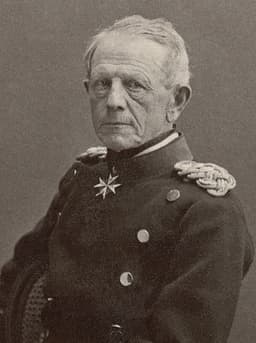
Helmuth von Moltke
General · Modern
76.2Total
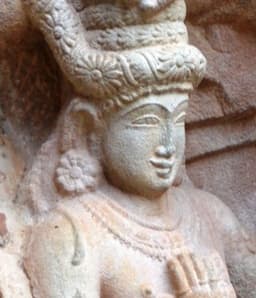
Rajendra Chola I
Emperor · Medieval
82.2Total
Basic Information
Born
1800
971
Died
1891
1044
Era
Modern
Medieval
Nationality
Prussia
India
Occupation
General
Emperor
Civilization
Western
Indian
Score Comparison
Military (10%)
65.0
84.7
Political (20%)
62.7
82.0
Influence (20%)
88.0
84.0
Legacy (20%)
70.0
84.0
Leadership (15%)
85.0
78.0
Strategy (15%)
80.6
77.6
TOTAL
76.2
82.2
Helmuth von Moltke — Complete Timeline
1857 AD
Appointment as Chief of the Prussian General StaffPolitical Action
Moltke was appointed Chief of the Prussian General Staff, a position he held for 30 years. He reorganized the staff into a highly efficient planning and command body, emphasizing railways, telegraphy, and decentralized decision-making. This modernization was crucial for Prussia's subsequent victories.
Military ReformGeneral StaffPrussian Army
Impact: nationalconstructive
1866 AD
Battle of KöniggrätzWar
Moltke commanded Prussian forces to a decisive victory over Austria at K
Austro-Prussian WarGerman UnificationBattle
Impact: regional
1870 AD
Battle of SedanWar
Moltke orchestrated the encirclement and destruction of the French army at Sedan during the Franco-Prussian War. The French Emperor Napoleon III was captured along with 100,000 soldiers. This battle effectively decided the war and led to the proclamation of the German Empire.
Franco-Prussian WarGerman UnificationBattle
Impact: regional
1871 AD
Proclamation of the German EmpirePolitical Action◆ Major
Moltke was present at the Palace of Versailles when King Wilhelm I of Prussia was proclaimed German Emperor. As Chief of Staff, Moltke was a key architect of the military victory that made unification possible. He was later promoted to Field Marshal and ennobled.
German UnificationEmpireCeremony
Impact: regionalconstructive
Rajendra Chola I — Complete Timeline
1014 AD
Accession to the Chola ThronePolitical Action
Rajendra Chola I succeeded his father Raja Raja Chola I as emperor of the Chola Empire. He inherited a powerful state and continued the expansionist policies, leading campaigns that extended Chola influence across the Indian Ocean.
Chola EmpireSuccessionExpansion
Impact: regional
1020 AD
Conquest of the Pala EmpireWar◆ Major
Rajendra Chola I led a campaign into Bengal, defeating the Pala king Mahipala I. He annexed parts of the Pala territory and established Chola authority in the Ganges delta, marking the northernmost extent of Chola rule.
Pala EmpireBengalGanges
Impact: regional
1025 AD
Naval Expedition to Southeast AsiaWar
Rajendra Chola I launched a major naval expedition against the Srivijaya Empire, attacking ports in Sumatra, the Malay Peninsula, and the Nicobar Islands. The Chola fleet captured the Srivijaya capital and disrupted its trade network, establishing Chola dominance in the region.
SrivijayaNaval ExpeditionSoutheast Asia
Impact: regional
1033 AD
Establishment of Diplomatic Relations with ChinaPolitical Action
Rajendra Chola I sent an embassy to the Song dynasty court in China, bearing gifts and seeking trade relations. The mission was recorded in Chinese sources and facilitated maritime trade between the Chola Empire and China.
ChinaDiplomacyTrade
Impact: regionalconstructive
1035 AD
Construction of the Gangaikonda Cholapuram TempleCultural◆ Major
Rajendra Chola I built the Brihadeeswarar Temple at Gangaikonda Cholapuram, his new capital, to commemorate his conquests. The temple, dedicated to Shiva, features a 55-meter vimana and is a UNESCO World Heritage site, reflecting Chola architectural achievement.
Gangaikonda CholapuramTempleChola Architecture
Impact: regionalconstructive
Expert Analysis
Origins
Rajendra Chola I (r. 1012–1044 CE) was the son of Rajaraja Chola I, inheriting a powerful South Indian empire. He expanded his father's legacy through naval and land campaigns. Helmuth von Moltke (1800–1891) was a Prussian military theorist and chief of staff, born into a noble family. He modernized the Prussian army and orchestrated victories in the German unification wars.
Rise to Power
Rajendra ascended the Chola throne without major opposition, immediately launching campaigns to extend Chola influence. He conquered the Pala Empire in Bengal and led a naval expedition to Southeast Asia, defeating the Srivijaya Empire. Moltke's rise was gradual: appointed Chief of the Prussian General Staff in 1857, he reformed military strategy, emphasizing railroads and rapid mobilization. His plans were crucial in the Austro-Prussian and Franco-Prussian Wars.
Leadership & Governance
Rajendra ruled a vast empire with a centralized administration, promoting trade and diplomacy. He established diplomatic relations with China and built the Gangaikonda Cholapuram Temple, symbolizing his power. Moltke excelled as a strategic commander, delegating tactical decisions while focusing on grand strategy. His leadership during Königgrätz (1866) and Sedan (1870) demonstrated his ability to coordinate large armies.
Triumph & Tragedy
Rajendra's triumphs include the conquest of the Pala Empire and the naval expedition to Southeast Asia, which established Chola dominance in the Indian Ocean. His construction of the temple was a cultural peak. However, his empire faced succession issues later. Moltke's victories at Königgrätz and Sedan led to the unification of Germany. The tragedy for Moltke was the later reliance on his plans in World War I, which he did not live to see fully.
Character & Destiny
Rajendra was ambitious and expansionist, driven by a vision of maritime supremacy. His destiny was to create a trans-oceanic empire. Moltke was methodical and reserved, focusing on efficiency and precision. His destiny was to be the architect of a unified German state, though he remained in the background.
Legacy
Rajendra's legacy includes the Chola empire's peak, influencing Southeast Asian culture and politics. His naval achievements were unparalleled in medieval India. Moltke's legacy is the Prussian General Staff system, which became a model for modern militaries. He is revered as a master of strategic planning.
Conclusion
Rajendra Chola I scores higher overall (M=85, P=82, I=84, L=84, D=78, S=78, T=82) compared to Moltke (M=65, P=63, I=88, L=70, D=85, S=81, T=76). While Moltke excels in intellect and decisiveness, Rajendra's broader impact on military, political, and cultural spheres gives him the edge. Rajendra's combination of land and naval expansion, administrative skill, and diplomatic outreach makes him a more versatile and influential leader. Moltke's strategic genius is undeniable, but his scope was limited to European continental warfare. Therefore, Rajendra Chola I is the superior historical figure.
Rankings
🥇
Rajendra Chola ILeader
Mil: 84.7Pol: 82.0Inf: 84.0
82.2
🥈
Helmuth von Moltke
Mil: 65.0Pol: 62.7Inf: 88.0
76.2
+6.0 behind
How This Comparison Works
Algorithm
Each figure is scored on 6 dimensions (0—100 scale) based on structured historical data: Military (10%), Political (20%), Influence (20%), Legacy (20%), Leadership (15%), Strategy (15%). The weighted total produces the final ranking.
Data Sources
Scores are computed from structured sub-indicators in the database. Scale factors adjust for era (Ancient ×0.85, Modern ×1.0) and civilization size (Eastern ×1.05, Other ×0.80) to account for differences in population and military scale.
Maximum 3 Figures
Comparisons are limited to 2—3 figures to ensure readability and statistical meaningfulness.
Error Margins
±5 points per dimension — Sub-scores are derived from historical records with inherent uncertainty. Two figures within 5 points on a dimension should be considered roughly equivalent in that area.
Total Score Accuracy
±3 points overall — The weighted combination of 6 dimensions produces a total score with approximately ±3 points of uncertainty. Differences of less than 3 points are not statistically significant— the figures are effectively tied.
Known Limitations
- Historical records are incomplete and uneven across civilizations
- Figures from oral-tradition societies may be underrepresented
- Occupation labels can misclassify multi-role figures
- Scores measure capability and impact, not moral character
- Quantitative scoring is a comparison tool, not absolute truth
Capability Radar
Military (10%) — Battles & Warfare
Battles
85
95
Win Rate
90
98
Expansion
85
95
Political (20%) — Governance & Reform
Reform
75
88
Diplomacy
80
85
Economy
65
92
Influence (20%) — Cultural & Global Reach
Cultural
60
85
Global
75
85
Legacy (20%) — Historical Impact
Historical
85
88
Longevity
75
80
Leadership (15%) — Power & Stability
Tenure
70
90
Stability
70
90
Strategy (15%) — Tactics & Innovation
Strategy
95
92
Tactics
95
90
Reform
90
85
Similar Comparisons
Comments & Discussion
No comments yet. Be the first to share your thoughts!