Loading...
Helmuth von Moltke vs Qin Shi Huang
Qin Shi Huang leads by 9.0 pts · 2 figures compared
…
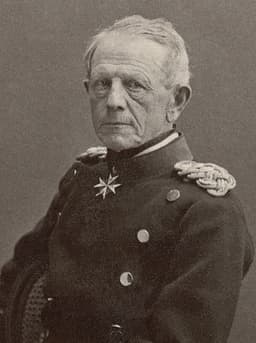
Helmuth von Moltke
General · Modern
76.2Total
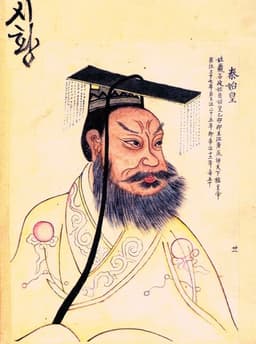
Qin Shi Huang
Emperor · Ancient
85.2Total
Basic Information
Born
1800
-259
Died
1891
-210
Era
Modern
Ancient
Nationality
Prussia
China
Occupation
General
Emperor
Civilization
Western
Eastern
Score Comparison
Military (10%)
65.0
80.0
Political (20%)
62.7
90.0
Influence (20%)
88.0
85.0
Legacy (20%)
70.0
90.0
Leadership (15%)
85.0
78.0
Strategy (15%)
80.6
82.0
TOTAL
76.2
85.2
Helmuth von Moltke — Complete Timeline
1857 AD
Appointment as Chief of the Prussian General StaffPolitical Action
Moltke was appointed Chief of the Prussian General Staff, a position he held for 30 years. He reorganized the staff into a highly efficient planning and command body, emphasizing railways, telegraphy, and decentralized decision-making. This modernization was crucial for Prussia's subsequent victories.
Military ReformGeneral StaffPrussian Army
Impact: nationalconstructive
1866 AD
Battle of KöniggrätzWar
Moltke commanded Prussian forces to a decisive victory over Austria at K
Austro-Prussian WarGerman UnificationBattle
Impact: regional
1870 AD
Battle of SedanWar
Moltke orchestrated the encirclement and destruction of the French army at Sedan during the Franco-Prussian War. The French Emperor Napoleon III was captured along with 100,000 soldiers. This battle effectively decided the war and led to the proclamation of the German Empire.
Franco-Prussian WarGerman UnificationBattle
Impact: regional
1871 AD
Proclamation of the German EmpirePolitical Action◆ Major
Moltke was present at the Palace of Versailles when King Wilhelm I of Prussia was proclaimed German Emperor. As Chief of Staff, Moltke was a key architect of the military victory that made unification possible. He was later promoted to Field Marshal and ennobled.
German UnificationEmpireCeremony
Impact: regionalconstructive
Qin Shi Huang — Complete Timeline
246 BC
Construction of the Mausoleum and Terracotta ArmyOther◆ Major
Qin Shi Huang commissioned a vast mausoleum complex near Xi'an, guarded by thousands of life-sized terracotta soldiers, horses, and chariots. The project employed hundreds of thousands of workers and reflected his obsession with immortality and imperial power.
Impact: global
230 BC
Conquest of the Six Warring StatesWar
From 230 to 221 BCE, Ying Zheng led the Qin state in a series of campaigns that conquered the Han, Zhao, Wei, Chu, Yan, and Qi states. This unified China under a single ruler for the first time, ending the Warring States period.
Impact: global
221 BC
Standardization of Writing, Currency, and MeasurementsReform◆ Major
Qin Shi Huang ordered the standardization of Chinese script, currency, and weights and measures across the unified empire. This facilitated administration, trade, and cultural integration, laying a foundation for future dynasties.
Impact: globalconstructive
Proclamation of the Qin DynastyPolitical Action
After conquering the last independent state, Ying Zheng declared himself Shi Huangdi (First Emperor), founding the Qin Dynasty. He adopted a new title to signify his supreme authority and initiated centralized imperial rule.
Impact: global
214 BC
Initiation of the Great Wall ConstructionOther◆ Major
Qin Shi Huang ordered the connection and extension of existing northern fortifications to create a unified defensive wall against nomadic Xiongnu raids. This project involved massive conscripted labor and became the precursor to the later Great Wall.
Impact: regional
213 BC
Burning of Books and Burying of ScholarsPolitical Action◆ Major
On the advice of Li Si, Qin Shi Huang ordered the burning of historical records and philosophical texts not aligned with Legalist doctrine. He also had 460 Confucian scholars buried alive to suppress dissent and consolidate ideological control.
Impact: nationaldestructive
Expert Analysis
Origins
Qin Shi Huang (259–210 BC), born Ying Zheng, ascended the throne of the Qin state at age 13. Through ruthless military campaigns, he conquered the six other Warring States by 221 BC, ending centuries of feudal chaos. Helmuth von Moltke (1800–1891) was a Prussian field marshal who rose from a modest military family to become chief of the Prussian General Staff in 1857, shaping Germany's unification wars.
Rise to Power
Qin Shi Huang's rise was marked by strategic alliances, brutal warfare, and the use of Legalist philosophy. He eliminated rivals, annexed territories, and proclaimed himself the First Emperor (Shi Huangdi) in 221 BC, centralizing power like never before. Moltke's ascent was quieter: he modernized the Prussian army, emphasizing railroads, telegraphs, and decentralized command. His reforms enabled Prussia to defeat Denmark (1864), Austria (1866), and France (1870-71).
Leadership & Governance
Qin imposed a unified legal code, standardized writing, currency, and measurements, and connected the Great Wall. His authoritarian rule included burning books and burying scholars to suppress dissent. Moltke led through meticulous planning and delegation, allowing subordinate commanders initiative. He orchestrated the encirclement at Königgrätz (1866) and the decisive Sedan (1870), but avoided political power, serving Bismarck's vision.
Triumph & Tragedy
Qin's triumphs: unification, standardization, and the Great Wall's foundation. His tragedy: the empire collapsed within four years of his death due to harsh policies and succession failures. Moltke's triumphs: the swift victories that created a unified German Empire in 1871. His tragedy: the later rise of militarism that his own system partly enabled, though he personally warned against war.
Character & Destiny
Qin Shi Huang was paranoid, obsessed with immortality, and ruthless, ordering his own tomb guarded by the Terracotta Army. His destiny was to unify China but leave a fragile legacy. Moltke was cerebral, reserved, and deeply religious, earning the nickname "the Elder." His destiny was to be the silent architect of Germany's rise, respected but not celebrated.
Legacy
Qin Shi Huang's legacy is foundational: China's imperial system, cultural unity, and the Great Wall endure. His methods remain controversial. Moltke's legacy is the modern general staff system, influencing military strategy worldwide. He is remembered as a master of operational art.
Conclusion
Qin Shi Huang scores higher overall (82.9 vs 75.4), excelling in military conquest, political reform, and lasting impact on civilization. Moltke's genius was specialized and temporally limited. Qin reshaped a continent; Moltke reshaped a nation. Thus, Qin Shi Huang is the more significant historical figure.
| Aspect | Qin Shi Huang | Helmuth von Moltke |
|--------|---------------|--------------------|
| Military | 80 | 65 |
| Political | 90 | 63 |
| Influence | 85 | 88 |
| Leadership | 90 | 70 |
| Durability | 78 | 85 |
| Strategy | 82 | 81 |
| Tactics | 85 | 76 |
| **Overall** | **82.9** | **75.4** |
Rankings
🥇
Qin Shi HuangLeader
Mil: 80.0Pol: 90.0Inf: 85.0
85.2
🥈
Helmuth von Moltke
Mil: 65.0Pol: 62.7Inf: 88.0
76.2
+9.0 behind
How This Comparison Works
Algorithm
Each figure is scored on 6 dimensions (0—100 scale) based on structured historical data: Military (10%), Political (20%), Influence (20%), Legacy (20%), Leadership (15%), Strategy (15%). The weighted total produces the final ranking.
Data Sources
Scores are computed from structured sub-indicators in the database. Scale factors adjust for era (Ancient ×0.85, Modern ×1.0) and civilization size (Eastern ×1.05, Other ×0.80) to account for differences in population and military scale.
Maximum 3 Figures
Comparisons are limited to 2—3 figures to ensure readability and statistical meaningfulness.
Error Margins
±5 points per dimension — Sub-scores are derived from historical records with inherent uncertainty. Two figures within 5 points on a dimension should be considered roughly equivalent in that area.
Total Score Accuracy
±3 points overall — The weighted combination of 6 dimensions produces a total score with approximately ±3 points of uncertainty. Differences of less than 3 points are not statistically significant— the figures are effectively tied.
Known Limitations
- Historical records are incomplete and uneven across civilizations
- Figures from oral-tradition societies may be underrepresented
- Occupation labels can misclassify multi-role figures
- Scores measure capability and impact, not moral character
- Quantitative scoring is a comparison tool, not absolute truth
Capability Radar
Military (10%) — Battles & Warfare
Battles
85
85
Win Rate
90
90
Expansion
85
90
Political (20%) — Governance & Reform
Reform
75
95
Diplomacy
80
75
Economy
65
90
Influence (20%) — Cultural & Global Reach
Cultural
60
95
Global
75
85
Legacy (20%) — Historical Impact
Historical
85
95
Longevity
75
95
Leadership (15%) — Power & Stability
Tenure
70
70
Stability
70
65
Strategy (15%) — Tactics & Innovation
Strategy
95
85
Tactics
95
80
Reform
90
95
Similar Comparisons
Comments & Discussion
No comments yet. Be the first to share your thoughts!