Loading...
Helmuth von Moltke vs John Churchill Duke of Marlborough
Helmuth von Moltke leads by 0.8 pts · 2 figures compared
…
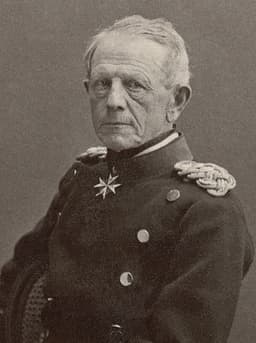
Helmuth von Moltke
General · Modern
76.2Total

John Churchill Duke of Marlborough
General · Modern
75.4Total
Basic Information
Born
1800
1650
Died
1891
1722
Era
Modern
Modern
Nationality
Prussia
England
Occupation
General
General
Civilization
Western
Western
Score Comparison
Military (10%)
65.0
84.7
Political (20%)
62.7
78.0
Influence (20%)
88.0
65.0
Legacy (20%)
70.0
80.0
Leadership (15%)
85.0
78.0
Strategy (15%)
80.6
72.8
TOTAL
76.2
75.4
Helmuth von Moltke — Complete Timeline
1857 AD
Appointment as Chief of the Prussian General StaffPolitical Action
Moltke was appointed Chief of the Prussian General Staff, a position he held for 30 years. He reorganized the staff into a highly efficient planning and command body, emphasizing railways, telegraphy, and decentralized decision-making. This modernization was crucial for Prussia's subsequent victories.
Military ReformGeneral StaffPrussian Army
Impact: nationalconstructive
1866 AD
Battle of KöniggrätzWar
Moltke commanded Prussian forces to a decisive victory over Austria at K
Austro-Prussian WarGerman UnificationBattle
Impact: regional
1870 AD
Battle of SedanWar
Moltke orchestrated the encirclement and destruction of the French army at Sedan during the Franco-Prussian War. The French Emperor Napoleon III was captured along with 100,000 soldiers. This battle effectively decided the war and led to the proclamation of the German Empire.
Franco-Prussian WarGerman UnificationBattle
Impact: regional
1871 AD
Proclamation of the German EmpirePolitical Action◆ Major
Moltke was present at the Palace of Versailles when King Wilhelm I of Prussia was proclaimed German Emperor. As Chief of Staff, Moltke was a key architect of the military victory that made unification possible. He was later promoted to Field Marshal and ennobled.
German UnificationEmpireCeremony
Impact: regionalconstructive
John Churchill Duke of Marlborough — Complete Timeline
1704 AD
Battle of BlenheimWar
Marlborough commanded the Anglo-Dutch army alongside Prince Eugene of Savoy against French and Bavarian forces at Blenheim. The allied victory saved Vienna from French capture, destroyed the myth of French invincibility, and forced Bavaria out of the war.
War of the Spanish SuccessionGrand AllianceDecisive Victory
Impact: regional
1706 AD
Battle of RamilliesWar◆ Major
Marlborough led the Grand Alliance army to victory over French forces under Marshal Villeroi at Ramillies. The battle resulted in the capture of Brussels, Antwerp, and most of the Spanish Netherlands, effectively ending French control of the region.
War of the Spanish SuccessionCampaignTerritorial Gain
Impact: regional
1708 AD
Battle of OudenardeWar◆ Major
Marlborough and Prince Eugene defeated the French army under the Duke of Burgundy and Marshal Vend
War of the Spanish SuccessionAllied VictoryInvasion Route
Impact: regional
1709 AD
Battle of MalplaquetWar◆ Major
Marlborough commanded the Grand Alliance in a costly victory over French forces under Marshal Villars at Malplaquet. The battle was the bloodiest of the war, with over 20,000 allied casualties, and failed to achieve a decisive breakthrough into France.
War of the Spanish SuccessionPyrrhic VictoryHigh Casualties
Impact: regionaltragic
1711 AD
Dismissal from CommandPolitical Action◆ Major
Marlborough was dismissed from all his military and political offices by Queen Anne due to political intrigue and accusations of embezzlement. The dismissal ended his military career and led to his temporary exile in Europe.
Political FallExileTory Government
Impact: nationaldestructive
Expert Analysis
Origins
Helmuth von Moltke the Elder (1800–1891) was born into a Prussian noble family in Mecklenburg. His military career began at age 11 in the Danish army before transferring to Prussia. He attended the Prussian War Academy and later served as a military adviser to the Ottoman Empire. Moltke's intellectual, methodical approach to warfare was shaped by his studies of history and technology. In contrast, John Churchill, 1st Duke of Marlborough (1650–1722), was born into a modest gentry family in Devon, England. His father was a Royalist soldier, and Churchill began his career as a page in the court of James, Duke of York. He rose through the ranks by merit and patronage, serving under King James II and later William III. Marlborough's early experience included the Monmouth Rebellion and the Nine Years' War, where he honed his diplomatic and military skills. Both men came from relatively modest backgrounds for their stations, but whereas Moltke's path was systematic and academic, Marlborough's was opportunistic and courtly.
Rise to Power
Moltke's rise was gradual and institutional. He became Chief of the Prussian General Staff in 1857, a position he held for 30 years. He modernized the staff system, emphasizing planning, railways, and mobilization. His influence grew through the successful wars against Denmark (1864), Austria (1866), and France (1870–71). Marlborough's rise was more dramatic and political. He gained favor under James II but switched allegiance to William III after the Glorious Revolution. His military reputation soared during the War of the Spanish Succession (1701–1714), where he commanded the Allied forces. His greatest victory, the Battle of Blenheim (1704), made him a national hero. However, his political maneuvering led to repeated dismissals and reinstatements.
Leadership & Governance
Moltke was a master of operational planning and logistics. He decentralized command, allowing subordinate commanders initiative within his strategic framework. His leadership style was calm, precise, and analytical. He famously said, "No plan survives first contact with the enemy." He believed in rapid mobilization, concentration of force, and decisive battle. Marlborough was a charismatic field commander who led from the front. He excelled in coalition warfare, managing the egos of allies like Prince Eugene of Savoy. His tactical genius included bold marches and flanking maneuvers. Unlike Moltke, Marlborough was deeply involved in diplomacy and politics, using his wife Sarah's influence with Queen Anne to secure resources.
Triumph & Tragedy
Moltke's triumphs include the Battle of Königgrätz (1866), where his precise railroad timetables allowed the Prussian army to converge and defeat Austria. The Battle of Sedan (1870) captured Napoleon III and led to the fall of the French Empire. His crowning achievement was the Proclamation of the German Empire (1871). However, his later years saw criticism for his cautious approach in World War I (though he died in 1891). Marlborough's greatest triumph was Blenheim, where he shattered the Franco-Bavarian army. He followed with victories at Ramillies (1706), Oudenarde (1708), and Malplaquet (1709). His tragedy was his dismissal from command in 1711 due to political intrigue, leading to exile and a fall from favor. He was later reinstated but never regained full power.
Character & Destiny
Moltke was reserved, intellectual, and deeply religious. He wrote poetry and philosophy, and his calm demeanor earned him the nickname "The Great Silent One." His destiny was to unify Germany through his operational art. Marlborough was ambitious, charming, and politically savvy. He was also accused of greed and opportunism. His destiny was to thwart Louis XIV's hegemony and secure Britain's rise as a great power. Both men were shaped by their eras: Moltke by the rise of nationalism and industrial warfare, Marlborough by the age of absolute monarchy and dynastic conflict.
Legacy
Moltke's legacy is the modern general staff system, adopted by armies worldwide. His concepts of Auftragstaktik (mission command) and decentralized execution remain influential. He is considered one of the greatest strategists of the 19th century. Marlborough's legacy is his undefeated record in four major battles and his role in establishing British military prestige. He is often ranked among the greatest commanders in history. However, his political legacy is mixed due to his controversial dismissal and the subsequent Treaty of Utrecht. In terms of direct impact on military science, Moltke's innovations outlast Marlborough's tactical feats.
Conclusion
In comparing Helmuth von Moltke and John Churchill, Duke of Marlborough, we see two giants of warfare from different centuries. Moltke achieves higher scores overall (average 75.5 vs 74.7), with particular strengths in Intelligence (88) and Strategy (81), reflecting his systematic, analytical approach. Marlborough excels in Military (85) and Leadership (80), reflecting his tactical brilliance and charisma. Moltke's contributions to military theory and organization are more enduring, while Marlborough's battlefield victories were more spectacular. However, Moltke's role in the unification of Germany and his creation of the general staff system arguably have greater historical significance. Therefore, Moltke edges out Marlborough as the superior strategist, though Marlborough remains the greater field commander. Score gap: 0.8 in favor of Moltke. **Final Verdict: Helmuth von Moltke wins.**
Rankings
🥇
Helmuth von MoltkeLeader
Mil: 65.0Pol: 62.7Inf: 88.0
76.2
🥈
John Churchill Duke of Marlborough
Mil: 84.7Pol: 78.0Inf: 65.0
75.4
+0.8 behind
How This Comparison Works
Algorithm
Each figure is scored on 6 dimensions (0—100 scale) based on structured historical data: Military (10%), Political (20%), Influence (20%), Legacy (20%), Leadership (15%), Strategy (15%). The weighted total produces the final ranking.
Data Sources
Scores are computed from structured sub-indicators in the database. Scale factors adjust for era (Ancient ×0.85, Modern ×1.0) and civilization size (Eastern ×1.05, Other ×0.80) to account for differences in population and military scale.
Maximum 3 Figures
Comparisons are limited to 2—3 figures to ensure readability and statistical meaningfulness.
Error Margins
±5 points per dimension — Sub-scores are derived from historical records with inherent uncertainty. Two figures within 5 points on a dimension should be considered roughly equivalent in that area.
Total Score Accuracy
±3 points overall — The weighted combination of 6 dimensions produces a total score with approximately ±3 points of uncertainty. Differences of less than 3 points are not statistically significant— the figures are effectively tied.
Known Limitations
- Historical records are incomplete and uneven across civilizations
- Figures from oral-tradition societies may be underrepresented
- Occupation labels can misclassify multi-role figures
- Scores measure capability and impact, not moral character
- Quantitative scoring is a comparison tool, not absolute truth
Capability Radar
Military (10%) — Battles & Warfare
Battles
85
95
Win Rate
90
98
Expansion
85
85
Political (20%) — Governance & Reform
Reform
75
60
Diplomacy
80
85
Economy
65
70
Influence (20%) — Cultural & Global Reach
Cultural
60
70
Global
75
75
Legacy (20%) — Historical Impact
Historical
85
85
Longevity
75
80
Leadership (15%) — Power & Stability
Tenure
70
80
Stability
70
75
Strategy (15%) — Tactics & Innovation
Strategy
95
95
Tactics
95
96
Reform
90
70
Similar Comparisons
Comments & Discussion
No comments yet. Be the first to share your thoughts!