Loading...
Helmuth von Moltke the Elder vs Saladin
Helmuth von Moltke the Elder leads by 10.7 pts · 2 figures compared
…
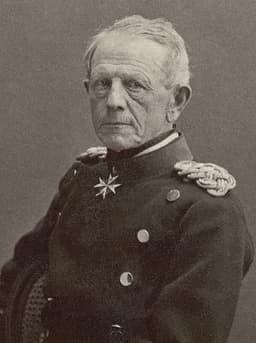
Helmuth von Moltke the Elder
General · Modern
74.8Total
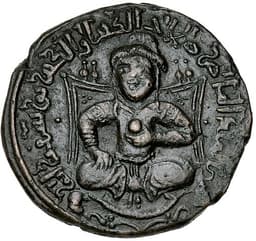
Saladin
General · Medieval
64.1Total
Basic Information
Born
1800
1137
Died
1891
1193
Era
Modern
Medieval
Nationality
Germany
Ayyubid Sultanate
Occupation
General
General
Civilization
Western
Middle Eastern
Score Comparison
Military (10%)
75.0
75.0
Political (20%)
55.0
69.6
Influence (20%)
88.0
65.2
Legacy (20%)
65.0
52.0
Leadership (15%)
85.0
62.0
Strategy (15%)
80.6
76.0
TOTAL
74.8
64.1
Helmuth von Moltke the Elder — Complete Timeline
1857 AD
Appointment as Chief of the Prussian General StaffPolitical Action◆ Major
Moltke was appointed Chief of the Prussian General Staff, a position he held for 30 years. He reorganized the staff system, emphasizing strategic planning, railroad logistics, and decentralized command, laying the foundation for Prussian military dominance.
PrussiaMilitary ReformGeneral Staff
Impact: nationalconstructive
1866 AD
Battle of KöniggrätzWar
Moltke commanded Prussian forces to a decisive victory over Austria at K
Austro-Prussian WarGerman UnificationBattle
Impact: regional
1870 AD
Battle of SedanWar
Moltke's strategic planning led to the encirclement and capture of the French army under Napoleon III at Sedan during the Franco-Prussian War. This battle effectively decided the war and led to the fall of the Second French Empire.
Franco-Prussian WarBattleFrench Defeat
Impact: global
Siege of ParisWar◆ Major
Moltke directed the Prussian siege of Paris from September 1870 to January 1871. The siege cut off the city from supplies and forced its surrender, leading to the end of the Franco-Prussian War and the proclamation of the German Empire.
Franco-Prussian WarSiegeGerman Unification
Impact: global
1871 AD
Publication of 'On War' InfluenceCultural◆ Major
Moltke's strategic writings and after-action reports, though not a single book, shaped military doctrine for decades. His emphasis on decentralized command (Auftragstaktik) and railroad logistics became foundational to modern warfare.
Military TheoryDoctrineLegacy
Impact: globalconstructive
Saladin — Complete Timeline
1187 AD
Battle of HattinWar
Saladin's forces defeated the Crusader army at Hattin, near Tiberias. He captured King Guy of Jerusalem and the True Cross relic. The victory decimated the Crusader military and opened the way for the recapture of Jerusalem.
BattleCrusadesVictory
Impact: regional
Recapture of JerusalemWar
Saladin's army besieged and captured Jerusalem from the Crusaders after 88 years of Christian rule. He allowed the inhabitants to leave peacefully or be ransomed, contrasting with the Crusaders' massacre in 1099. This event triggered the Third Crusade.
ConquestJerusalemCrusades
Impact: global
1189 AD
Siege of AcreWar◆ Major
Saladin faced a prolonged siege of Acre by Crusader forces under Richard the Lionheart and Philip Augustus. After nearly two years, the city fell to the Crusaders. Saladin's inability to relieve the siege was a major setback.
SiegeCrusadesDefeat
Impact: regional
1191 AD
Battle of ArsufWar◆ Major
Saladin's forces attacked Richard the Lionheart's army marching south from Acre. Richard's disciplined infantry repelled the attacks, inflicting heavy losses on Saladin's troops. The battle ended in a tactical Crusader victory, but Saladin's army remained intact.
BattleCrusadesRichard the Lionheart
Impact: regional
1192 AD
Treaty of RamlaPolitical Action◆ Major
Saladin and Richard the Lionheart signed the Treaty of Ramla, ending the Third Crusade. The treaty granted Crusaders control of a coastal strip from Jaffa to Acre, while Muslims retained Jerusalem. Christian pilgrims were allowed access to holy sites.
TreatyCrusadesDiplomacy
Impact: regional
Expert Analysis
Saladin vs Helmuth von Moltke the Elder
### The Conqueror and the Calculator
In the summer of 1187, a Kurdish general stood before the walls of Jerusalem, his army having shattered the armies of Christendom at Hattin. He would enter the Holy City not with fire and sword, but with a mercy that would echo through the ages. Seven hundred years later, a Prussian staff officer in Berlin pored over railway timetables and mobilization schedules, calculating the precise minute when hundreds of thousands of men could converge on a battlefield. One man conquered with chivalry; the other with a railway timetable. What separates the warrior who wins a kingdom from the strategist who creates an empire? The answer lies not in their weapons, but in their worlds.
### Origins
Saladin was born in 1137 in Tikrit, into a Kurdish family serving the Zengid dynasty. The Middle East of his youth was a fractured landscape of warring emirs and Crusader states. The great Islamic empires of the past were memories; power was local, personal, and constantly contested. His father, Najm ad-Din Ayyub, was a governor, and young Yusuf (his birth name) grew up in the courts of Damascus and Aleppo, learning the arts of politics and war as a family trade. The world he inherited demanded a leader who could inspire loyalty across tribal lines, who could wield both sword and diplomacy.
Helmuth von Moltke was born in 1800 in Mecklenburg, into a world being reshaped by the French Revolution and Napoleon. He grew up in the aftermath of Prussia's catastrophic defeat at Jena, a humiliation that burned itself into the Prussian soul. Unlike Saladin, he was not born to high command. His family was impoverished, and he entered the Danish army as a cadet, later transferring to Prussia. His education was formal and rigorous: military academies, staff rides, and the study of history and engineering. The world he inherited was one of industrializing states, mass conscription, and the terrifying efficiency of modern bureaucracy. Power was no longer personal; it was systemic.
### Rise to Power
Saladin’s ascent was a masterpiece of patient opportunism. He served his uncle Shirkuh, a general for the Zengid sultan Nur ad-Din. When Shirkuh died in 1169, Saladin, then only 32, was appointed vizier of Fatimid Egypt—a brilliant political maneuver by Nur ad-Din to place a loyal, but distant, subordinate in a critical post. Saladin, however, had his own ambitions. He slowly purged the Fatimid court, consolidated his control over Egypt, and after Nur ad-Din’s death in 1174, turned his gaze north. He spent the next decade fighting not Crusaders, but fellow Muslims—conquering Damascus, Aleppo, and Mosul, building a united front through a blend of military force, calculated generosity, and religious legitimacy.
Moltke’s rise was quieter, but no less decisive. He was appointed Chief of the Prussian General Staff in 1857, at age 57—a late bloomer by any standard. His power was not personal but institutional. He did not command armies in the field by charisma; he commanded them through a system of trained staff officers, detailed plans, and delegated authority. His genius was to transform the General Staff from a bureaucratic backwater into the brain of the Prussian army. He spent years preparing for wars that had not yet begun, studying maps, calculating march speeds, and designing mobilization timetables that would allow Prussia to fight on two fronts simultaneously.
### Leadership & Governance
Saladin was a leader of the campfire and the council chamber. He led from the front, sharing the hardships of his soldiers, eating simple food, and distributing his wealth generously. His greatest political achievement was the unification of Syria, Egypt, and parts of Mesopotamia under a single Sunni banner—a feat of diplomacy as much as war. He was a master of the *waqf*, using religious endowments to bind scholars, judges, and Sufi mystics to his cause. His military style was aggressive and mobile, relying on cavalry archers and the exhaustion of his enemy. The Battle of Hattin in 1187 was a textbook example: he lured the Crusader army into a waterless plain, surrounded them, and destroyed them through thirst and tactical pressure.
Moltke was a leader of the map room and the telegraph office. He rarely spoke to his soldiers, never shared their rations, and was known for his dry, almost icy demeanor. His genius was strategic, not tactical. He understood that in an age of mass armies, victory came not from a single brilliant charge, but from the orchestration of multiple corps converging on a single point. The Battle of Königgrätz in 1866 was his masterpiece: three Prussian armies marched separately, coordinated by telegraph and railway, and converged on the Austrian army at the precise moment. The Battle of Sedan in 1870 was even more stunning: he encircled an entire French army, capturing Napoleon III himself. He was the first great practitioner of industrial war.
### Triumph & Tragedy
Saladin’s greatest triumph was the recapture of Jerusalem in October 1187. After 88 years of Crusader rule, he entered the city without massacre, granting amnesty to most Christians and allowing them to leave with their possessions. This act of mercy became the bedrock of his legend. But his tragedy followed soon after. The Third Crusade brought Richard the Lionheart to the Holy Land, a king as brilliant and ruthless as Saladin was merciful. The Siege of Acre (1189-1191) was a grinding, two-year stalemate that ended with Saladin’s garrison slaughtered. At the Battle of Arsuf in 1191, Richard’s disciplined infantry repulsed Saladin’s cavalry, proving that the Muslim army could not defeat the Crusaders in open battle. The Treaty of Ramla in 1192 left the Crusaders with a coastal strip, but Jerusalem remained in Muslim hands—a strategic draw that felt, to Saladin, like a defeat.
Moltke’s triumph was the unification of Germany. After the Franco-Prussian War, King Wilhelm I was proclaimed German Emperor in the Hall of Mirrors at Versailles in January 1871. Moltke, now a field marshal, had achieved what centuries of German princes could not. But his tragedy was the shadow he cast. The Siege of Paris (1870-1871) was a brutal, four-month ordeal that starved the city into submission, and the war ended with the annexation of Alsace-Lorraine, planting the seeds of future conflict. Moltke himself warned against the arrogance of victory, but his system—decentralized command, rapid mobilization, and offensive doctrine—became the template for the German army that would march into catastrophe in 1914.
### Character & Destiny
Saladin was a man of his age: pious, generous, and fiercely ambitious within the bounds of Islamic chivalry. He wept at the death of his son, forgave his enemies, and treated prisoners with a humanity that shocked his contemporaries. His character shaped his destiny: his mercy at Jerusalem secured his legacy, but his reluctance to press advantages against Richard may have cost him a decisive victory. He was a conqueror who sought legitimacy, not annihilation.
Moltke was a man of his age: rational, methodical, and almost eerily detached. He was a devout Lutheran, but his faith was private, not public. He wrote poetry, studied art, and played the piano, but his public persona was that of a silent, calculating machine. His character shaped his destiny: his system of war was so efficient that it became a trap. The very railroads and timetables that won his wars locked his successors into a rigid, time-bound strategy that left no room for diplomacy. He created a monster he could not control.
### Legacy
Saladin is remembered as the ideal Muslim ruler: a unifier, a liberator, and a paragon of chivalry. His name is still invoked in the Middle East as a symbol of resistance and unity. In the West, he is a rare figure of respect from the Crusades, a worthy foe to Richard the Lionheart. His legacy is one of honor in war.
Moltke is remembered as the father of modern military strategy. His innovations in staff work, logistics, and decentralized command are still studied in war colleges today. But his legacy is ambiguous: he made war more efficient, more deadly, and more total. He is the architect of the machine age of conflict, a man whose brilliance paved the way for the slaughter of the Somme and the Marne.
### Conclusion
Two men, seven centuries apart. One fought for a city, the other for a nation. One conquered through personal example, the other through institutional genius. Saladin’s world was one of honor, faith, and the limits of power. Moltke’s world was one of systems, railroads, and the terrifying potential of unleashed force. In the end, both were prisoners of their own success: Saladin, the merciful conqueror, could not finish what he started; Moltke, the calculating strategist, built a machine that would one day consume his own creation. History remembers them both, not for what they won, but for what they unleashed.
Rankings
🥇
Helmuth von Moltke the ElderLeader
Mil: 75.0Pol: 55.0Inf: 88.0
74.8
🥈
Saladin
Mil: 75.0Pol: 69.6Inf: 65.2
64.1
+10.7 behind
How This Comparison Works
Algorithm
Each figure is scored on 6 dimensions (0—100 scale) based on structured historical data: Military (10%), Political (20%), Influence (20%), Legacy (20%), Leadership (15%), Strategy (15%). The weighted total produces the final ranking.
Data Sources
Scores are computed from structured sub-indicators in the database. Scale factors adjust for era (Ancient ×0.85, Modern ×1.0) and civilization size (Eastern ×1.05, Other ×0.80) to account for differences in population and military scale.
Maximum 3 Figures
Comparisons are limited to 2—3 figures to ensure readability and statistical meaningfulness.
Error Margins
±5 points per dimension — Sub-scores are derived from historical records with inherent uncertainty. Two figures within 5 points on a dimension should be considered roughly equivalent in that area.
Total Score Accuracy
±3 points overall — The weighted combination of 6 dimensions produces a total score with approximately ±3 points of uncertainty. Differences of less than 3 points are not statistically significant— the figures are effectively tied.
Known Limitations
- Historical records are incomplete and uneven across civilizations
- Figures from oral-tradition societies may be underrepresented
- Occupation labels can misclassify multi-role figures
- Scores measure capability and impact, not moral character
- Quantitative scoring is a comparison tool, not absolute truth
Capability Radar
Military (10%) — Battles & Warfare
Battles
85
78
Win Rate
95
72
Expansion
85
82
Political (20%) — Governance & Reform
Reform
75
68
Diplomacy
65
88
Economy
60
65
Influence (20%) — Cultural & Global Reach
Cultural
75
85
Global
80
78
Legacy (20%) — Historical Impact
Historical
85
82
Longevity
80
80
Leadership (15%) — Power & Stability
Tenure
70
75
Stability
70
70
Strategy (15%) — Tactics & Innovation
Strategy
95
85
Tactics
90
80
Reform
95
70
Similar Comparisons
Comments & Discussion
No comments yet. Be the first to share your thoughts!