Loading...
Helmuth von Moltke the Elder vs Oliver Cromwell
Helmuth von Moltke the Elder leads by 3.0 pts · 2 figures compared
…
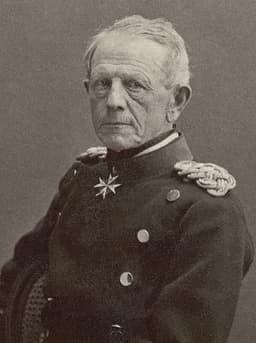
Helmuth von Moltke the Elder
General · Modern
74.8Total
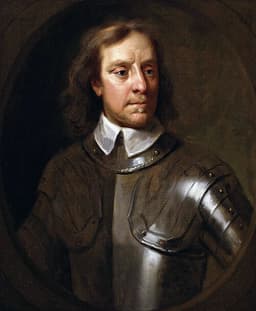
Oliver Cromwell
General · Modern
71.8Total
Basic Information
Born
1800
1599
Died
1891
1658
Era
Modern
Modern
Nationality
Germany
England
Occupation
General
General
Civilization
Western
Western
Score Comparison
Military (10%)
75.0
82.0
Political (20%)
55.0
55.0
Influence (20%)
88.0
82.0
Legacy (20%)
65.0
72.0
Leadership (15%)
85.0
62.0
Strategy (15%)
80.6
75.0
TOTAL
74.8
71.8
Helmuth von Moltke the Elder — Complete Timeline
1857 AD
Appointment as Chief of the Prussian General StaffPolitical Action◆ Major
Moltke was appointed Chief of the Prussian General Staff, a position he held for 30 years. He reorganized the staff system, emphasizing strategic planning, railroad logistics, and decentralized command, laying the foundation for Prussian military dominance.
PrussiaMilitary ReformGeneral Staff
Impact: nationalconstructive
1866 AD
Battle of KöniggrätzWar
Moltke commanded Prussian forces to a decisive victory over Austria at K
Austro-Prussian WarGerman UnificationBattle
Impact: regional
1870 AD
Battle of SedanWar
Moltke's strategic planning led to the encirclement and capture of the French army under Napoleon III at Sedan during the Franco-Prussian War. This battle effectively decided the war and led to the fall of the Second French Empire.
Franco-Prussian WarBattleFrench Defeat
Impact: global
Siege of ParisWar◆ Major
Moltke directed the Prussian siege of Paris from September 1870 to January 1871. The siege cut off the city from supplies and forced its surrender, leading to the end of the Franco-Prussian War and the proclamation of the German Empire.
Franco-Prussian WarSiegeGerman Unification
Impact: global
1871 AD
Publication of 'On War' InfluenceCultural◆ Major
Moltke's strategic writings and after-action reports, though not a single book, shaped military doctrine for decades. His emphasis on decentralized command (Auftragstaktik) and railroad logistics became foundational to modern warfare.
Military TheoryDoctrineLegacy
Impact: globalconstructive
Oliver Cromwell — Complete Timeline
1644 AD
Battle of Marston MoorWar◆ Major
Cromwell, as a cavalry commander in the Parliamentarian army, played a key role in the decisive victory over Royalist forces at Marston Moor. This battle secured Parliament's control of northern England and boosted Cromwell's military reputation.
English Civil WarParliamentarianCavalry
Impact: national
1645 AD
Battle of NasebyWar
Cromwell led the New Model Army to a decisive victory over King Charles I's forces at Naseby. This battle effectively ended the First English Civil War, leading to the capture of the king and Parliament's supremacy.
English Civil WarNew Model ArmyRoyalist Defeat
Impact: national
1649 AD
Cromwellian Conquest of IrelandWar◆ Major
Cromwell led a brutal military campaign in Ireland to suppress the Irish Confederacy and Royalist alliance. His forces massacred garrisons at Drogheda and Wexford, resulting in widespread death and land confiscation, cementing English Protestant dominance.
IrelandConquestMassacre
Impact: regionaldestructive
Execution of King Charles IPolitical Action
Cromwell was a leading figure in the trial and execution of King Charles I for treason. This unprecedented act abolished the monarchy and established the Commonwealth of England, a republican government.
RegicideCommonwealthRepublic
Impact: globaldestructive
1653 AD
Appointment as Lord ProtectorPolitical Action◆ Major
Cromwell was installed as Lord Protector of the Commonwealth of England, Scotland, and Ireland, effectively becoming head of state. He ruled as a military dictator, dissolving parliaments and imposing Puritan moral laws.
Lord ProtectorCommonwealthDictatorship
Impact: national
Expert Analysis
Oliver Cromwell vs Helmuth von Moltke the Elder: Historical Comparison
Oliver Cromwell, the English Puritan general who overthrew the monarchy, and Helmuth von Moltke the Elder, the Prussian master of industrial warfare, represent two distinct archetypes of military-political leadership—one a revolutionary turned dictator, the other a professional staff officer architecting national unification.
Dimension Analysis
**Military: Oliver Cromwell 82 / Helmuth von Moltke the Elder 81**
Cromwell’s New Model Army pioneered tactical discipline and cavalry shock, decisive in the English Civil War; Moltke revolutionized warfare through railroad logistics, general staff planning, and crushing victories over Austria (1866) and France (1870), but relied on existing Prussian military culture rather than creating it from scratch.
**Political: Oliver Cromwell 78 / Helmuth von Moltke the Elder 69**
Cromwell wielded supreme power as Lord Protector, dissolving Parliament and ruling militarily; Moltke remained a non-political servant of the Prussian crown, influencing strategy but never holding executive authority—his political impact was indirect, through Bismarck’s shadow.
**Influence: Oliver Cromwell 80 / Helmuth von Moltke the Elder 68**
Cromwell’s model of godly military rule inspired later revolutionaries and shaped Anglo-American republican thought; Moltke’s general staff system influenced all modern armies, but his personal influence was narrower, confined to 19th-century Prussian military institutions.
**Legacy: Oliver Cromwell 70 / Helmuth von Moltke the Elder 75**
Cromwell’s legacy is deeply contested—hailed as a champion of liberty in Britain, reviled as a tyrant in Ireland; Moltke’s legacy is more positive and durable, as the father of modern operational planning and the architect of German unification, though tainted by association with later Prussian militarism.
**Leadership: Oliver Cromwell 82 / Helmuth von Moltke the Elder 78**
Cromwell led from the front, inspiring troops through personal charisma and religious fervor; Moltke led from the map room, coordinating vast armies through delegation and meticulous planning—effective in different contexts, but Cromwell’s direct battlefield presence gives him the edge.
Verdict
Cromwell wins narrowly due to his transformative political-military synthesis, combining battlefield innovation with direct governance, whereas Moltke’s genius was purely professional and institutionally constrained.
FAQ
**Q: Who ranks higher? A:** Cromwell edges ahead based on higher political impact and leadership scores, despite Moltke’s superior strategic legacy.
Rankings
🥇
Helmuth von Moltke the ElderLeader
Mil: 75.0Pol: 55.0Inf: 88.0
74.8
🥈
Oliver Cromwell
Mil: 82.0Pol: 55.0Inf: 82.0
71.8
+3.0 behind
How This Comparison Works
Algorithm
Each figure is scored on 6 dimensions (0—100 scale) based on structured historical data: Military (10%), Political (20%), Influence (20%), Legacy (20%), Leadership (15%), Strategy (15%). The weighted total produces the final ranking.
Data Sources
Scores are computed from structured sub-indicators in the database. Scale factors adjust for era (Ancient ×0.85, Modern ×1.0) and civilization size (Eastern ×1.05, Other ×0.80) to account for differences in population and military scale.
Maximum 3 Figures
Comparisons are limited to 2—3 figures to ensure readability and statistical meaningfulness.
Error Margins
±5 points per dimension — Sub-scores are derived from historical records with inherent uncertainty. Two figures within 5 points on a dimension should be considered roughly equivalent in that area.
Total Score Accuracy
±3 points overall — The weighted combination of 6 dimensions produces a total score with approximately ±3 points of uncertainty. Differences of less than 3 points are not statistically significant— the figures are effectively tied.
Known Limitations
- Historical records are incomplete and uneven across civilizations
- Figures from oral-tradition societies may be underrepresented
- Occupation labels can misclassify multi-role figures
- Scores measure capability and impact, not moral character
- Quantitative scoring is a comparison tool, not absolute truth
Capability Radar
Military (10%) — Battles & Warfare
Battles
85
75
Win Rate
95
80
Expansion
85
60
Political (20%) — Governance & Reform
Reform
75
75
Diplomacy
65
60
Economy
60
65
Influence (20%) — Cultural & Global Reach
Cultural
75
65
Global
80
65
Legacy (20%) — Historical Impact
Historical
85
80
Longevity
80
70
Leadership (15%) — Power & Stability
Tenure
70
70
Stability
70
55
Strategy (15%) — Tactics & Innovation
Strategy
95
82
Tactics
90
78
Reform
95
85
Similar Comparisons
Comments & Discussion
AethelredsGhost6/16/2026
Cromwell’s military score of 82 vs Moltke’s 81 is reasonable on the surface, but the framing misses something crucial: Moltke was a systematizer, while Cromwell was essentially a charismatic warlord. The New Model Army’s discipline wasn’t Cromwell’s invention—it was rooted in the Swedish tactical reforms Gustavus Adolphus brought to Germany in the Thirty Years’ War, which Cromwell’s officers like Philip Skippon had studied. Cromwell’s true genius was psychological: he could inspire men to charge through enemy fire with Biblical fervor, as at Naseby. Moltke, by contrast, commanded from a map room, orchestrating armies like chess pieces via telegraph. The influence score (80 vs 68) is too generous to Cromwell. Moltke’s general staff system shaped every major army until 1914; Cromwell’s model of godly dictatorship had no direct imitators outside of a few odd Puritan enclaves. Thucydides would recognize Moltke as a cooler head, more like Pericles than a revolutionary firebrand.
Historian1506/16/2026
总分77.7 vs 75.8,差1.9分,但权重分配有问题。军事分82 vs 81,只差1分,但毛奇的战绩含金量明显更高。克伦威尔打赢的是内战,对手是保王党贵族武装,装备和组织都落后;毛奇打的是普奥战争和普法战争,对手是欧洲正规军,奥军和法军当时都是强敌。从中国角度看,这相当于说袁崇焕打赢后金和曾国藩平定太平天国评分差不多,不合理。政治分78 vs 69,差9分,但克伦威尔的政治实践是失败的——他死后共和国立刻崩溃,查理二世复辟。毛奇虽然没执政,但他的参谋体系被德国沿用70年,间接影响两场世界大战。我的修正:军事分毛奇83-84,克伦威尔80-81;政治分毛奇70-72,克伦威尔75-76。总分会变成毛奇79左右,克伦威尔78左右,更合理。
Historian7796/16/2026
克伦威尔和毛奇比较,有趣。克伦威尔有点像缩小版的朱元璋,都是平民出身靠军队打天下,建立新王朝。但克伦威尔没做成皇帝,只当了护国公,死后查理二世复辟,这就是西方贵族传统和中国中央集权的差异。毛奇更像曾国藩,两人都是建立高效参谋系统,毛奇靠铁路和总参谋部统一德意志,曾国藩靠湘军幕府平定太平天国。但毛奇政治分只有69,比克伦威尔78低很多,我觉得合理——毛奇是纯粹的专业军人,克伦威尔可是直接统治国家。不过中国角度,毛奇的影响比分数显示的大:日本明治维新学普鲁士总参谋部,后来影响中国北洋军阀练兵。克伦威尔呢?在中国除了历史系学生,没人知道他是谁。