Loading...
He Long vs Maarten Tromp
Maarten Tromp leads by 7.1 pts · 2 figures compared
…
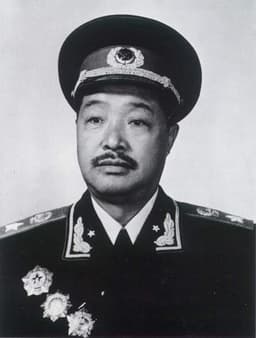
He Long
General · Modern
60.0Total

Maarten Tromp
General · Modern
67.1Total
Basic Information
Born
1896
1598
Died
1969
1653
Era
Modern
Modern
Nationality
China
Netherlands
Occupation
General
General
Civilization
Eastern
Western
Score Comparison
Military (10%)
67.5
79.1
Political (20%)
68.0
68.0
Influence (20%)
57.2
82.0
Legacy (20%)
52.0
58.0
Leadership (15%)
72.0
48.8
Strategy (15%)
50.0
66.7
TOTAL
60.0
67.1
He Long — Complete Timeline
1927 AD
Led the Nanchang UprisingWar
He Long led the Nanchang Uprising, the first major armed conflict between the Chinese Communist Party and the Nationalists. Although the uprising failed, it is celebrated as the founding moment of the People's Liberation Army.
Chinese Civil WarUprisingPLA Founding
Impact: nationaldestructive
1937 AD
Commander of the 120th Division in the Second Sino-Japanese WarWar◆ Major
He Long commanded the 120th Division of the Eighth Route Army, operating in the Shanxi-Chahar-Hebei border region. He led guerrilla campaigns against Japanese forces and expanded Communist-controlled territory.
Second Sino-Japanese WarGuerrilla Warfare
Impact: regional
1955 AD
Appointed Marshal of the People's Liberation ArmyPolitical Action◆ Major
He Long was appointed as one of the ten marshals of the People's Liberation Army. This honor recognized his contributions to the Communist victory and his role in the Nanchang Uprising.
Military HonorPLA
Impact: nationalconstructive
1969 AD
Purged and Died in Prison during the Cultural RevolutionPolitical Action◆ Major
He Long was purged by Mao Zedong during the Cultural Revolution, accused of being a 'counter-revolutionary.' He was imprisoned and died in custody in 1969, later being posthumously rehabilitated in 1982.
Cultural RevolutionPolitical PurgeDeath
Impact: nationaltragic
Maarten Tromp — Complete Timeline
1637 AD
Appointed Lieutenant-Admiral of HollandPolitical Action◆ Major
Tromp was appointed Lieutenant-Admiral of Holland, the highest naval command in the Dutch Republic. This appointment recognized his successful campaigns against the Spanish and placed him in charge of the Dutch fleet.
Dutch NavyNaval CommandPromotion
Impact: national
1639 AD
Battle of the DownsWar
Tromp commanded the Dutch fleet to a decisive victory over a Spanish fleet at the Battle of the Downs. The Dutch destroyed or captured most of the Spanish ships, ending Spanish naval power in the North Sea and securing Dutch independence.
Eighty Years' WarNaval BattleSpanish Defeat
Impact: regional
1652 AD
Battle of the Kentish KnockWar
Tromp led the Dutch fleet against the English under Robert Blake at the Battle of the Kentish Knock. The Dutch were defeated, but the battle demonstrated the growing naval power of both nations during the First Anglo-Dutch War.
First Anglo-Dutch WarNaval BattleEnglish Victory
Impact: regional
Battle of DungenessWar◆ Major
Tromp defeated an English fleet under Robert Blake at the Battle of Dungeness. This victory gave the Dutch temporary control of the English Channel and allowed them to protect their merchant convoys.
First Anglo-Dutch WarNaval BattleDutch Victory
Impact: regional
1653 AD
Battle of PortlandWar◆ Major
Tromp fought a three-day battle against Robert Blake at the Battle of Portland. The Dutch were forced to retreat after heavy losses, and Tromp was killed in action during the final day of the battle.
First Anglo-Dutch WarNaval BattleDeath in Battle
Impact: regionaltragic
Expert Analysis
Origins
He Long was born in 1896 in Sangzhi County, Hunan, China, into a poor peasant family. With minimal formal education, he joined the revolutionary cause early, participating in the Xinhai Revolution and later becoming a warlord in his home region. His background shaped his strong ties to the Communist Party's rural base.
Maarten Tromp was born in 1598 in Brielle, Dutch Republic, into a naval family. His father, a ship captain, died in battle when Tromp was young. He went to sea at age nine, gaining practical experience. He rose through the ranks of the Dutch navy, becoming a skilled sailor and tactician.
Rise to Power
He Long's rise began as a local warlord in Hunan, but his pivotal moment came in 1927 when he led the Nanchang Uprising, the first armed conflict between the Chinese Communist Party and the Nationalists. Although the uprising failed, it marked his commitment to the Communist cause. He joined the party soon after and led guerrilla forces in the Hunan-Jiangxi border region. His military reputation grew during the Long March (1934-1935), where he commanded the Second Front Army.
Maarten Tromp gained prominence in 1639 at the Battle of the Downs, where he decisively defeated a Spanish fleet, destroying or capturing most of their ships. This victory established Dutch naval supremacy and made Tromp a national hero. He was appointed Lieutenant-Admiral of Holland in 1637, the highest naval command. His career was marked by conflicts with the English during the First Anglo-Dutch War (1652-1654).
Leadership & Governance
He Long's leadership style was characterized by close ties with his troops and reliance on guerrilla tactics. He commanded the 120th Division during the Second Sino-Japanese War, operating in the Shanxi-Chahar-Hebei border region, where he employed hit-and-run attacks against Japanese forces. His political loyalty to Mao Zedong was unwavering, but his governance approach was more traditional, focusing on military discipline rather than ideological indoctrination. His scores reflect this: Leadership 72.0, Strategy 50.0.
Maarten Tromp was a bold and aggressive naval commander. He believed in engaging the enemy directly, as seen at the Battle of Dungeness in 1652, where he defeated Robert Blake's English fleet, gaining temporary control of the English Channel. However, his aggressive tactics sometimes led to overextension, as at the Battle of Portland in 1653, where he was killed in action after a three-day battle. His strategic score of 66.7 indicates competence, but his leadership score of 48.8 suggests less effective command in prolonged engagements.
Triumph & Tragedy
He Long's greatest success was his role in the Communist victory in the Chinese Civil War, culminating in his appointment as one of the ten marshals of the People's Liberation Army in 1955. His guerrilla campaigns contributed significantly to the Communist cause. However, his greatest failure came during the Cultural Revolution, when he was purged by Mao Zedong, accused of being a counter-revolutionary. He was imprisoned and died in custody in 1969, a tragic end for a loyal party member.
Maarten Tromp's triumph was the Battle of the Downs, which broke Spanish naval power and affirmed Dutch independence. His victory at Dungeness in 1652 was also notable. His tragedy was his death at the Battle of Portland, where his fleet was forced to retreat after heavy losses. Despite his tactical skill, he could not secure a decisive victory against the English.
Character & Destiny
He Long was known for his physical courage and peasant origins, which endeared him to the common soldier. He was politically astute enough to survive the purges of the 1930s but ultimately fell victim to Mao's paranoia. His character—loyal but not a political insider—shaped his fate: he was honored but later destroyed by the system he helped build.
Maarten Tromp was a daring and patriotic commander, often criticized for recklessness. His aggressive style brought both victories and defeats. His death in battle was fitting for a man who led from the front. Historical assessments note his influence on naval tactics but also his inability to adapt to changing warfare.
Legacy
He Long's legacy is mixed. He is remembered as a founding marshal of the PLA, but his purged status was only rehabilitated after Mao's death in 1976. Today, he is honored in China as a revolutionary hero, but his contributions are overshadowed by more prominent figures like Zhu De. His influence score of 57.2 reflects this limited global recognition.
Maarten Tromp's legacy is more enduring in naval history. He is considered one of the greatest Dutch admirals, and his tactics influenced later naval warfare. The Battle of the Downs is a key event in Dutch history. His influence score of 82.0 indicates his lasting impact on maritime strategy and national identity.
Conclusion
While He Long played a critical role in China's Communist revolution, his overall impact is constrained by his later purge and the regional nature of his influence. Maarten Tromp, with a total score of 67.1 against He Long's 60.0, had greater impact on global naval history and the balance of power in Europe. Tromp's victories shifted the course of the Eighty Years' War and established Dutch naval dominance. He Long's contributions, though significant, were largely limited to China's internal struggle. Therefore, Maarten Tromp had the greater historical impact.
Rankings
🥇
Maarten TrompLeader
Mil: 79.1Pol: 68.0Inf: 82.0
67.1
🥈
He Long
Mil: 67.5Pol: 68.0Inf: 57.2
60.0
+7.1 behind
How This Comparison Works
Algorithm
Each figure is scored on 6 dimensions (0—100 scale) based on structured historical data: Military (10%), Political (20%), Influence (20%), Legacy (20%), Leadership (15%), Strategy (15%). The weighted total produces the final ranking.
Data Sources
Scores are computed from structured sub-indicators in the database. Scale factors adjust for era (Ancient ×0.85, Modern ×1.0) and civilization size (Eastern ×1.05, Other ×0.80) to account for differences in population and military scale.
Maximum 3 Figures
Comparisons are limited to 2—3 figures to ensure readability and statistical meaningfulness.
Error Margins
±5 points per dimension — Sub-scores are derived from historical records with inherent uncertainty. Two figures within 5 points on a dimension should be considered roughly equivalent in that area.
Total Score Accuracy
±3 points overall — The weighted combination of 6 dimensions produces a total score with approximately ±3 points of uncertainty. Differences of less than 3 points are not statistically significant— the figures are effectively tied.
Known Limitations
- Historical records are incomplete and uneven across civilizations
- Figures from oral-tradition societies may be underrepresented
- Occupation labels can misclassify multi-role figures
- Scores measure capability and impact, not moral character
- Quantitative scoring is a comparison tool, not absolute truth
Capability Radar
Military (10%) — Battles & Warfare
Battles
65
78
Win Rate
60
75
Expansion
55
60
Political (20%) — Governance & Reform
Reform
45
40
Diplomacy
50
60
Economy
40
45
Influence (20%) — Cultural & Global Reach
Cultural
40
55
Global
35
55
Legacy (20%) — Historical Impact
Historical
55
65
Longevity
45
50
Leadership (15%) — Power & Stability
Tenure
55
55
Stability
45
50
Strategy (15%) — Tactics & Innovation
Strategy
60
70
Tactics
55
82
Reform
50
65
Similar Comparisons
Comments & Discussion
No comments yet. Be the first to share your thoughts!