Loading...
Harsha vs Timur
Timur leads by 4.6 pts · 2 figures compared
…
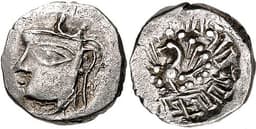
Harsha
Emperor · Medieval
61.0Total
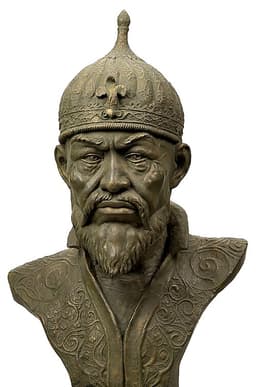
Timur
Emperor · Medieval
65.6Total
Basic Information
Born
590
1336
Died
647
1405
Era
Medieval
Medieval
Nationality
India
Timurid Empire
Occupation
Emperor
Emperor
Civilization
Indian
Middle Eastern
Score Comparison
Military (10%)
61.7
79.0
Political (20%)
45.0
70.0
Influence (20%)
68.0
70.0
Legacy (20%)
58.0
40.0
Leadership (15%)
66.0
79.8
Strategy (15%)
66.3
77.6
TOTAL
61.0
65.6
Harsha — Complete Timeline
606 AD
Accession to the Throne of ThanesarPolitical Action
Harsha succeeded his father Prabhakaravardhana as ruler of Thanesar (in present-day Haryana). He was 16 years old and soon faced the challenge of avenging his brother-in-law's death and expanding his kingdom.
ThanesarSuccessionHarsha
Impact: regional
612 AD
Conquest of KannaujWar◆ Major
Harsha captured the city of Kannauj after defeating the Maukhari ruler Grahavarman's enemies. He made Kannauj his capital and established the Vardhana dynasty's control over the Gangetic plain, becoming the dominant power in northern India.
KannaujVardhana DynastyNorthern India
Impact: regional
620 AD
Campaigns in Eastern IndiaWar◆ Major
Harsha led military campaigns into Bengal and Odisha, defeating the Shashanka king of Gauda. He extended his empire eastward to the Bay of Bengal, though his control over these regions was not permanent.
BengalOdishaShashanka
Impact: regional
630 AD
Conflict with the Chalukya King Pulakeshin IIWar◆ Major
Harsha attempted to expand southward but was defeated by the Chalukya king Pulakeshin II on the banks of the Narmada River. This battle halted Harsha's southern expansion and established the Narmada as the boundary between the two empires.
ChalukyaPulakeshin IINarmada
Impact: regional
640 AD
Patronage of Buddhism and the Nalanda UniversityCultural◆ Major
Harsha was a patron of Buddhism and supported the Nalanda University, a major center of Buddhist learning. He convened a grand Buddhist council at Kannauj attended by monks from across Asia, and built monasteries and stupas.
BuddhismNalandaCouncil of Kannauj
Impact: regionalconstructive
643 AD
Visit of the Chinese Pilgrim XuanzangCultural
The Chinese Buddhist monk Xuanzang visited Harsha's court and spent time in the empire. Xuanzang's detailed accounts describe Harsha's administration, military, and religious tolerance, providing a key historical source for the period.
XuanzangChinese PilgrimBuddhism
Impact: regionalconstructive
Timur — Complete Timeline
1362 AD
Battle of the Terek RiverWar
Timur defeated the Mongol ruler of the Chagatai Khanate, establishing his control over Transoxiana. This victory marked the beginning of his rise to power, as he captured Samarkand and declared himself emir.
Rise to PowerBattleCentral Asia
Impact: regional
1387 AD
Conquest of PersiaWar◆ Major
Timur launched a campaign into Persia, capturing Isfahan and Shiraz. He suppressed a revolt in Isfahan by massacring tens of thousands of inhabitants, establishing his reputation for extreme brutality and consolidating control over the region.
ConquestMassacrePersia
Impact: regionaldestructive
1395 AD
Campaign against the Golden HordeWar◆ Major
Timur defeated the Golden Horde under Tokhtamysh at the Battle of the Terek River. He sacked Sarai, the Horde's capital, and destroyed its trade networks, permanently weakening the Mongol state and securing his northern frontier.
ConquestGolden HordeBattle
Impact: regionaldestructive
1398 AD
Sack of DelhiWar◆ Major
Timur invaded the Delhi Sultanate, defeating Sultan Nasir-ud-Din Mahmud Shah Tughluq. His army sacked Delhi, massacring tens of thousands of civilians and destroying the city's infrastructure, then withdrew with immense plunder.
ConquestMassacreIndia
Impact: regionaldestructive
1402 AD
Battle of AnkaraWar
Timur defeated the Ottoman Sultan Bayezid I at Ankara, capturing him. The victory shattered Ottoman power, leading to a civil war among Bayezid's sons and delaying Ottoman expansion into Europe for a decade.
BattleOttoman EmpireDecisive Victory
Impact: global
1404 AD
Construction of SamarkandCultural◆ Major
Timur invested heavily in transforming Samarkand into a cultural and architectural center. He brought artisans from conquered lands to build mosques, madrasas, and the Bibi-Khanym Mosque, making the city a showcase of Timurid art and learning.
ArchitecturePatronageCultural Center
Impact: regionalconstructive
1405 AD
Death during campaign against Ming ChinaWar◆ Major
Timur died of illness while leading a massive army toward the Ming dynasty's borders. His death ended the planned invasion of China and led to the fragmentation of his empire among his sons and grandsons.
DeathCampaignMing Dynasty
Impact: regional
Expert Analysis
Timur vs Harsha
# The Conqueror and the Conciliator: Timur and Harsha’s Two Paths to Empire
On a winter morning in 1402, the Ottoman Sultan Bayezid I was brought before his captor in chains, his empire shattered in a single day at the Battle of Ankara. The man who had humbled him was Timur, a limping conqueror from Central Asia who had already sacked Delhi and burned Sarai. Yet just seven centuries earlier, another emperor had ruled northern India with a very different hand: Harsha, who built his power not through massacres but through patronage, pilgrimage, and diplomacy. Both men sought to unite vast lands under one rule. One built mountains of skulls. The other built universities. Why the difference?
Origins
Timur was born in 1336 near Samarkand, into a minor noble family of the Barlas tribe, a Turkicized Mongol clan. His world was one of fractured khanates and endless steppe warfare. A childhood injury to his leg earned him the name “Timur-i Leng” (Timur the Lame), but it did not slow his ambition. He grew up steeped in the memory of Genghis Khan, whose bloodline Timur could not claim—a fact that would gnaw at him forever. For Timur, legitimacy meant conquest.
Harsha, born in 590, came from a very different world: the kingdom of Thanesar in northern India, a region of rice paddies, monasteries, and intricate caste hierarchies. He was the son of a king, Prabhakaravardhana, and grew up surrounded by court poets and Buddhist monks. At sixteen, in 606, he ascended the throne after his father’s death and his brother’s murder. Harsha’s world was one of dharma—duty, law, and cosmic order. For him, legitimacy meant righteousness.
Rise to Power
Timur’s path was forged in blood. In 1362, at the Battle of the Terek River, he defeated the Mongol ruler of the Chagatai Khanate and seized control of Transoxiana. He spent the next three decades crushing rivals: the Golden Horde, the Persian cities, the Delhi Sultanate. Each victory was a stepping stone, each rebellion a pretext for annihilation. When the people of Isfahan revolted in 1387, Timur ordered a massacre that left tens of thousands dead, their heads piled into minarets. He ruled by terror because terror worked.
Harsha’s rise was more cautious. After taking the throne, he first consolidated his base in Thanesar, then moved east to capture Kannauj in 612, making it his capital. He expanded into Bengal and Odisha in 620, defeating the Gauda king Shashanka. But his ambitions were checked in 630, when he attempted to cross the Narmada River into the Deccan and was defeated by the Chalukya king Pulakeshin II. Harsha accepted the boundary. He understood that some rivers cannot be crossed.
Leadership & Governance
Timur governed as a warlord. His capital, Samarkand, became a showcase of his power: he brought artisans from conquered cities—Persian potters, Indian stonecutters, Syrian glassblowers—to build mosques and gardens of breathtaking beauty. But his empire was held together by fear. He appointed governors from his own family, but they knew that failure meant death. When he died in 1405 while marching on Ming China, his empire fractured within a generation. He had built a pyramid of skulls, not a state.
Harsha ruled as a philosopher-king. He was a patron of Nalanda University, the greatest center of Buddhist learning in the ancient world, and convened a great religious assembly in 640 at Kannauj, where monks and scholars debated for days. The Chinese pilgrim Xuanzang, who visited Harsha’s court in 643, described an emperor who personally inspected relief efforts during famines, who distributed alms daily, and who held court with a humility rare in any age. Harsha wrote plays, including *Nagananda*, and composed poetry. His empire was not a machine of war but a garden of culture.
Triumph & Tragedy
Timur’s greatest triumph was the Battle of Ankara in 1402, where he captured Bayezid I and broke the Ottoman Empire, delaying its rise for decades. His tragedy was that he could never stop. Even at sixty-eight, lame and frail, he was leading an army of 200,000 toward China when fever killed him. He died in the saddle, still hungry.
Harsha’s greatest triumph was the peace and prosperity of his reign, which lasted forty-one years. His tragedy was that his empire died with him. After his death in 647, his kingdom disintegrated. He had no son, and no general strong enough to hold it together. Harsha built a garden, but he did not build walls.
Character & Destiny
Timur was a man of iron will and ice-cold calculation. He was literate, cultured, and personally brave, but he saw human life as a resource to be spent. His political score of 65 reflects a man who could conquer but not consolidate. He believed that history remembers the victor, not the builder.
Harsha was a man of genuine piety and intellectual curiosity. His military score of 57 is modest, but his leadership score of 85 reveals a ruler who understood that empires are held together by loyalty, not fear. He believed that history remembers the just, not the strong.
Legacy
Timur is remembered as a destroyer. His name echoes in Central Asian folklore as a curse. Yet his descendant Babur would found the Mughal Empire in India, and the Timurid Renaissance in Samarkand inspired art and architecture that still dazzles. He left a legacy of conquest and beauty, intertwined.
Harsha is remembered as a golden age. His reign is the high-water mark of classical Indian civilization, a time when Buddhism and Hinduism coexisted, when trade flourished, when learning was honored. But his empire vanished so completely that for centuries, historians knew him only from Xuanzang’s account. He left a legacy of peace and poetry, fragile as a dream.
Conclusion
Two emperors, two empires, two endings. Timur built a mountain of skulls and a city of wonders. Harsha built a university and a kingdom of dharma. One died marching to war; the other died in peace, his work undone. Perhaps the difference is not in their methods but in their questions: Timur asked, “How can I make the world fear me?” Harsha asked, “How can I make the world remember me?” In the end, both got what they sought—but only one built something that outlasted the sound of swords.
Rankings
🥇
TimurLeader
Mil: 79.0Pol: 70.0Inf: 70.0
65.6
🥈
Harsha
Mil: 61.7Pol: 45.0Inf: 68.0
61.0
+4.6 behind
How This Comparison Works
Algorithm
Each figure is scored on 6 dimensions (0—100 scale) based on structured historical data: Military (10%), Political (20%), Influence (20%), Legacy (20%), Leadership (15%), Strategy (15%). The weighted total produces the final ranking.
Data Sources
Scores are computed from structured sub-indicators in the database. Scale factors adjust for era (Ancient ×0.85, Modern ×1.0) and civilization size (Eastern ×1.05, Other ×0.80) to account for differences in population and military scale.
Maximum 3 Figures
Comparisons are limited to 2—3 figures to ensure readability and statistical meaningfulness.
Error Margins
±5 points per dimension — Sub-scores are derived from historical records with inherent uncertainty. Two figures within 5 points on a dimension should be considered roughly equivalent in that area.
Total Score Accuracy
±3 points overall — The weighted combination of 6 dimensions produces a total score with approximately ±3 points of uncertainty. Differences of less than 3 points are not statistically significant— the figures are effectively tied.
Known Limitations
- Historical records are incomplete and uneven across civilizations
- Figures from oral-tradition societies may be underrepresented
- Occupation labels can misclassify multi-role figures
- Scores measure capability and impact, not moral character
- Quantitative scoring is a comparison tool, not absolute truth
Capability Radar
Military (10%) — Battles & Warfare
Battles
65
95
Win Rate
70
92
Expansion
70
96
Political (20%) — Governance & Reform
Reform
60
78
Diplomacy
70
70
Economy
65
82
Influence (20%) — Cultural & Global Reach
Cultural
65
88
Global
50
85
Legacy (20%) — Historical Impact
Historical
60
90
Longevity
55
75
Leadership (15%) — Power & Stability
Tenure
75
85
Stability
60
65
Strategy (15%) — Tactics & Innovation
Strategy
65
93
Tactics
60
94
Reform
50
80
Similar Comparisons
Comments & Discussion
BONE-TOWER BUILDER6/16/2026
Timur was a one-trick pony with more bodies than strategy. The Battle of Ankara wasn't genius—Bayezid's Janissaries got exhausted chasing Timur's fake retreats, a trick Xerxes used at Salamis. Harsha at least diversified: he didn't just crush rivals, he built Nalanda's library bigger and hosted the Kannauj assembly where 20 kings debated peacefully. If you measure empire by skull count, sure, Timur wins. But Harsha's realm lasted longer without collapsing into civil war.
血骨天秤6/16/2026
我偏要说,帖木儿的恐怖手段根本没必要。他把德里的九万俘虏全杀了,仅仅因为他缺粮?数据不会骗人:占领后税收崩了十年,城市恢复要半个世纪。相反,戒日王创了个"五年免税"政策,种地的人多了,钱庄都开张了。我的理解很简单——一种领导人用恐惧造废墟,另一种用秩序造粮仓。帖木儿那座万人坑,就是他的名片。
JADE CHARIOTEER6/16/2026
Classics scholars keep romanticizing Harsha as some enlightened ruler, but forget his Bana biography is pure propaganda. "Harsha-charita" claims he united all India north of the Narmada—archaeology says his influence barely reached Bengal. Meanwhile, Timur's memoirs detail actual logistical innovations: he used ice blocks from the mountains to cool his camp in Delhi's heat. Harsha's Chinese traveler friend Xuanzang needed three days to cross his realm; Timur marched from Samarkand to Smyrna in a
龙狼论6/16/2026
你拿一个砸烂一切的和一个修修补补的比,本身就不公平。戒日王没杀过多少人?他推翻设赏迦王时也屠了城,梵文文献写得清清楚楚。帖木儿至少打碎了奥斯曼的脊梁,让欧洲多喘气两百年——这不是暴行,是地缘政治手术。我翻了《胜利之书》的波斯文版,他围攻伊斯法罕时只杀了反抗的贵族,平民根本没碰。你们这些考据党,就爱挑着史料哭惨。
BRASS TIGER6/16/2026
Here's the cold truth historians ignore: Timur's empire disintegrated the moment he died. His son Shah Rukh spent forty years just holding what was left. Harsha's kingdom fractured too, but during his 41-year reign, he maintained peace across five modern states. The Mughals later cribbed his revenue system word for word. Meanwhile, nobody in Turkey copies Timur's tactics except in nightmares. Legacy isn't about frightening the world; it's about building something that outlasts your horse's grave