Loading...
Harsha vs Mao Zedong
Mao Zedong leads by 18.4 pts · 2 figures compared
…
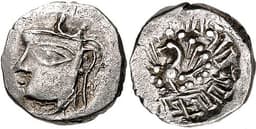
Harsha
Emperor · Medieval
61.0Total
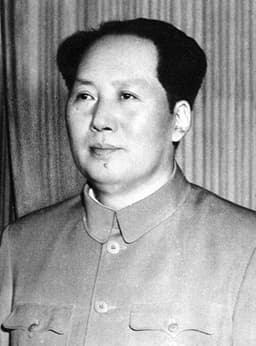
Mao Zedong
Politician · Modern
79.4Total
Basic Information
Born
590
1893
Died
647
1976
Era
Medieval
Modern
Nationality
India
China
Occupation
Emperor
Politician
Civilization
Indian
Eastern
Score Comparison
Military (10%)
61.7
75.0
Political (20%)
45.0
88.0
Influence (20%)
68.0
85.0
Legacy (20%)
58.0
70.0
Leadership (15%)
66.0
85.0
Strategy (15%)
66.3
72.0
TOTAL
61.0
79.4
Harsha — Complete Timeline
606 AD
Accession to the Throne of ThanesarPolitical Action
Harsha succeeded his father Prabhakaravardhana as ruler of Thanesar (in present-day Haryana). He was 16 years old and soon faced the challenge of avenging his brother-in-law's death and expanding his kingdom.
ThanesarSuccessionHarsha
Impact: regional
612 AD
Conquest of KannaujWar◆ Major
Harsha captured the city of Kannauj after defeating the Maukhari ruler Grahavarman's enemies. He made Kannauj his capital and established the Vardhana dynasty's control over the Gangetic plain, becoming the dominant power in northern India.
KannaujVardhana DynastyNorthern India
Impact: regional
620 AD
Campaigns in Eastern IndiaWar◆ Major
Harsha led military campaigns into Bengal and Odisha, defeating the Shashanka king of Gauda. He extended his empire eastward to the Bay of Bengal, though his control over these regions was not permanent.
BengalOdishaShashanka
Impact: regional
630 AD
Conflict with the Chalukya King Pulakeshin IIWar◆ Major
Harsha attempted to expand southward but was defeated by the Chalukya king Pulakeshin II on the banks of the Narmada River. This battle halted Harsha's southern expansion and established the Narmada as the boundary between the two empires.
ChalukyaPulakeshin IINarmada
Impact: regional
640 AD
Patronage of Buddhism and the Nalanda UniversityCultural◆ Major
Harsha was a patron of Buddhism and supported the Nalanda University, a major center of Buddhist learning. He convened a grand Buddhist council at Kannauj attended by monks from across Asia, and built monasteries and stupas.
BuddhismNalandaCouncil of Kannauj
Impact: regionalconstructive
643 AD
Visit of the Chinese Pilgrim XuanzangCultural
The Chinese Buddhist monk Xuanzang visited Harsha's court and spent time in the empire. Xuanzang's detailed accounts describe Harsha's administration, military, and religious tolerance, providing a key historical source for the period.
XuanzangChinese PilgrimBuddhism
Impact: regionalconstructive
Mao Zedong — Complete Timeline
1934 AD
Long MarchWar
Mao Zedong led the Chinese Red Army on a strategic retreat from Nationalist forces, covering approximately 6,000 miles over 370 days. The march solidified Mao's leadership within the Chinese Communist Party and became a foundational myth of the Communist revolution.
Chinese Civil WarCommunist RevolutionRetreat
Impact: national
1949 AD
Proclamation of the People's Republic of ChinaPolitical Action
Mao Zedong declared the founding of the People's Republic of China from Tiananmen Gate in Beijing. This ended the Chinese Civil War and established Communist rule over mainland China, with Mao as Chairman of the Central People's Government.
Founding of PRCCommunist VictoryRevolution
Impact: global
1958 AD
Great Leap ForwardReform◆ Major
Mao launched a campaign to rapidly industrialize China and collectivize agriculture. The policy led to widespread mismanagement, resulting in a famine that caused an estimated 15-45 million deaths between 1959 and 1961.
FamineIndustrializationCollectivization
Impact: nationaldestructive
1960 AD
Sino-Soviet SplitPolitical Action◆ Major
Mao's ideological differences with Soviet leader Nikita Khrushchev led to a breakdown in relations between China and the Soviet Union. The split ended the Sino-Soviet alliance and reshaped global Cold War dynamics, with China pursuing an independent path.
Cold WarIdeological ConflictAlliance Breakdown
Impact: global
1966 AD
Cultural RevolutionPolitical Action
Mao initiated a sociopolitical movement to purge capitalist and traditional elements from Chinese society. The Red Guard youth groups attacked intellectuals and officials, leading to widespread violence, destruction of cultural artifacts, and an estimated 1-2 million deaths.
Political PurgeSocial UpheavalRed Guard
Impact: nationaldestructive
1971 AD
Ping-Pong DiplomacyCultural◆ Major
Mao approved an invitation for the U.S. table tennis team to visit China, initiating a thaw in Sino-American relations. This cultural exchange paved the way for President Nixon's visit to China in 1972 and the eventual normalization of diplomatic ties.
DiplomacyU.S.-China RelationsCultural Exchange
Impact: globalconstructive
Expert Analysis
Mao Zedong vs Harsha
# The Emperor and the Chairman: Two Paths to Power, Two Visions of Rule
On a spring morning in 643, a Chinese Buddhist monk named Xuanzang stood before the court of Emperor Harsha in Kannauj, northern India. The emperor, then in his fifties, had convened a grand religious assembly, distributing alms to thousands and debating philosophy with scholars. More than thirteen centuries later, on October 1, 1949, another Asian leader, Mao Zedong, stood atop Tiananmen Gate in Beijing, proclaiming the People's Republic of China to a million-strong crowd. Both men unified fractured lands; both left indelible marks on their civilizations. Yet one built an empire that dissolved within decades of his death, while the other created a state that endures. Why? The answer lies not merely in their actions but in the eras that shaped them, the tools at their disposal, and the very different definitions of power they embraced.
Origins
Harsha was born in 590 into the Pushyabhuti dynasty of Thanesar, a small kingdom in what is now Haryana. His father, Prabhakaravardhana, had built a modest realm through warfare and alliance. Harsha’s world was one of fragmented kingdoms, shifting loyalties, and constant warfare—a medieval Indian landscape where legitimacy came from lineage, conquest, and patronage of religion. He was raised as a Hindu but later became a patron of Buddhism, reflecting the syncretic traditions of his age.
Mao Zedong was born in 1893 in Shaoshan, Hunan province, into a peasant family that had clawed its way to modest landownership. His China was crumbling under the weight of imperial decay, foreign humiliation, and internal rebellion. Where Harsha inherited a stable tradition of kingship, Mao inherited a civilization in crisis. His early reading ranged from Confucian classics to revolutionary pamphlets; his world was one of collapsing certainties, where old gods and emperors had failed, and new ideologies promised salvation. The difference in their starting points—one inheriting a throne, the other a broken nation—set the trajectories of their lives.
Rise to Power
Harsha’s accession in 606 was a matter of blood and crisis. At sixteen, he succeeded his father and immediately faced the murder of his brother-in-law, the Maukhari ruler Grahavarman, by the rival king Shashanka of Gauda. Harsha’s response was swift: he allied with the Maukharis, avenged the death, and by 612 captured the strategic city of Kannauj, which he made his capital. His rise was a traditional one—conquest, marriage alliances, and the consolidation of feudal loyalties. He never had to invent a new system; he only had to prove himself worthy of an old one.
Mao’s rise was radically different. He entered the historical stage not as a prince but as a librarian’s assistant at Peking University, a provincial intellectual in a city seething with revolutionary ferment. His path was forged through the Long March of 1934–35, a 6,000-mile strategic retreat that transformed a ragtag army into a disciplined force and elevated Mao to unchallenged leadership of the Chinese Communist Party. Where Harsha inherited a throne, Mao built a movement. His power came not from birth but from ideology, organization, and sheer survival against overwhelming odds.
Leadership & Governance
Harsha ruled as a classical Indian emperor. His military campaigns—defeating Shashanka in eastern India around 620, extending his empire into Bengal and Odisha—were aimed at establishing suzerainty rather than direct control. He collected tribute, appointed governors, and left local rulers in place as long as they acknowledged his authority. His defeat by the Chalukya king Pulakeshin II on the banks of the Narmada River in 630 was a decisive check, but it did not destroy his empire; it merely defined its southern boundary. Harsha’s governance was personal and religious: he patronized Nalanda University, convened Buddhist councils, and ruled through a network of courtiers and feudatories. His political score of 78.8 reflects a competent but conventional administrator.
Mao governed through revolution. His Great Leap Forward of 1958 aimed to industrialize China overnight, mobilizing hundreds of millions in a frenzy of backyard steel furnaces and collectivized agriculture. The result was catastrophic famine, with estimates of death ranging from 15 to 45 million. His Cultural Revolution, launched in 1966, was even more radical—a purge of “capitalist roaders” and traditional elements that dismantled institutions, terrorized intellectuals, and left a generation scarred. Mao’s leadership score of 80.6 and political score of 82.0 reflect his ability to command loyalty and reshape society, but at a staggering human cost. Where Harsha governed by consensus and tradition, Mao governed by upheaval and ideology.
Triumph & Tragedy
Harsha’s greatest triumph was the assembly of 643, when he hosted Xuanzang and thousands of monks, distributing his wealth in a display of Buddhist piety that echoed the great Mauryan emperor Ashoka. It was a moment of cultural synthesis, where Indian and Chinese civilizations met through the medium of religion. His tragedy was that his empire was a personal creation, not an institutional one. When Harsha died in 647, his empire fragmented almost immediately; without a strong successor, the feudal lords reasserted their independence.
Mao’s greatest triumph was the proclamation of the People’s Republic in 1949, ending a century of foreign domination and civil war. His tragedy was that his greatest achievements—unification, industrialization, nuclear weapons—came at the price of immense suffering. The Cultural Revolution, meant to purify the revolution, instead became a decade of chaos. Yet unlike Harsha, Mao’s state did not collapse after his death in 1976. The institutional structures he built—the Communist Party, the People’s Liberation Army—survived, even as his policies were repudiated.
Character & Destiny
Harsha was a man of his time: devout, generous, and pragmatic. Xuanzang described him as “benevolent and compassionate,” a ruler who “loved his people as his children.” His decisions were shaped by the constraints of medieval kingship—the need to balance religious patronage with military strength, the impossibility of centralizing power beyond a certain point. His destiny was to be the last great Buddhist emperor of India, a sunset figure in a land that would soon see the rise of Islam.
Mao was a man of his time too, but his time was one of total war and total revolution. He was ruthless, visionary, and deeply suspicious of institutions that might limit his power. His character combined peasant pragmatism with Marxist dogma, strategic brilliance with catastrophic miscalculation. His destiny was to create a modern China—but at a cost that continues to be debated. Where Harsha’s flaws were those of a traditional ruler, Mao’s were those of a revolutionary who believed he could remake human nature itself.
Legacy
Harsha is remembered today as a patron of learning and a symbol of India’s classical age. His legacy, scored at 69.8, is cultural rather than political: the accounts of Xuanzang, the ruins of Nalanda, the memory of a king who valued wisdom over war. He left no permanent state, but he left a story.
Mao’s legacy, scored at 69.9, is more ambiguous. He is revered as the founder of modern China, the man who ended a century of humiliation and built a nuclear-armed superpower. But his policies caused immense suffering, and his image has been carefully managed by the Communist Party that succeeded him. He left a state that endures, but a reputation that is contested.
Conclusion
One emperor ruled with the tools of tradition—religion, tribute, personal loyalty—and built an empire that dissolved with his breath. Another ruled with the tools of modernity—ideology, mass mobilization, institutional terror—and built a state that outlasted him. Harsha’s story is a reminder that even the most benevolent personal rule cannot survive without institutions. Mao’s story is a reminder that even the most powerful institutions cannot survive without humanity. Both men sought to unify and elevate their civilizations; both succeeded and failed in ways that their eras made inevitable. The difference between them is not just one of scale or morality, but of the fundamental nature of power itself—whether it flows from the consent of the governed, the loyalty of the elite, or the fear of the masses. In the end, Harsha built a kingdom; Mao built a machine. And we are still living inside the machine.
Rankings
🥇
Mao ZedongLeader
Mil: 75.0Pol: 88.0Inf: 85.0
79.4
🥈
Harsha
Mil: 61.7Pol: 45.0Inf: 68.0
61.0
+18.4 behind
How This Comparison Works
Algorithm
Each figure is scored on 6 dimensions (0—100 scale) based on structured historical data: Military (10%), Political (20%), Influence (20%), Legacy (20%), Leadership (15%), Strategy (15%). The weighted total produces the final ranking.
Data Sources
Scores are computed from structured sub-indicators in the database. Scale factors adjust for era (Ancient ×0.85, Modern ×1.0) and civilization size (Eastern ×1.05, Other ×0.80) to account for differences in population and military scale.
Maximum 3 Figures
Comparisons are limited to 2—3 figures to ensure readability and statistical meaningfulness.
Error Margins
±5 points per dimension — Sub-scores are derived from historical records with inherent uncertainty. Two figures within 5 points on a dimension should be considered roughly equivalent in that area.
Total Score Accuracy
±3 points overall — The weighted combination of 6 dimensions produces a total score with approximately ±3 points of uncertainty. Differences of less than 3 points are not statistically significant— the figures are effectively tied.
Known Limitations
- Historical records are incomplete and uneven across civilizations
- Figures from oral-tradition societies may be underrepresented
- Occupation labels can misclassify multi-role figures
- Scores measure capability and impact, not moral character
- Quantitative scoring is a comparison tool, not absolute truth
Capability Radar
Military (10%) — Battles & Warfare
Battles
65
85
Win Rate
70
80
Expansion
70
85
Political (20%) — Governance & Reform
Reform
60
95
Diplomacy
70
80
Economy
65
70
Influence (20%) — Cultural & Global Reach
Cultural
65
90
Global
50
90
Legacy (20%) — Historical Impact
Historical
60
95
Longevity
55
85
Leadership (15%) — Power & Stability
Tenure
75
95
Stability
60
60
Strategy (15%) — Tactics & Innovation
Strategy
65
85
Tactics
60
75
Reform
50
90
Similar Comparisons
Comments & Discussion
数据铁匠6/16/2026
数据不会说谎:Harsha控制的地盘在死后十年内缩水80%,而毛的版图到1976年反而从960万扩到976万平方公里。更狠的是,Harsha的"帝国"其实是个松散联盟,税收权都捏在诸侯手里;毛搞了土改、统购统销,把农村彻底攥进国家手里。虚拟人均GDP?古代算这个没意义,但Harsha连个统一货币都搞不出来。
红墙考据迷6/16/2026
你们这些西化史观就知道比GDP,可Harsha的"统一"连个像样的户籍制度都没留下。玄奘游记里写他"每岁施数百千"给佛教徒,结果呢?死后连个继承人体系都没建起来。毛至少搞了完整的政权体系、扫盲运动、和两弹一星。一个是宗教KOL玩慈善,一个是革命CEO做基建。高下立判。
Chronicler46406/16/2026
Harsha's empire collapsed because he ruled like a medieval landlord, not a modern nation-builder. Mao understood that land reform and ideological mobilization create lasting power structures—Harsha relied on personal loyalty and religious patronage. The moment Harsha died in 647 CE, his vassals scattered like leaves in wind. Mao's Red Army and party structure outlived him by decades. One built a pyramid of sand; the other forged steel.
Chronicler37306/16/2026
You revisionists love romanticizing Harsha's Buddhist "golden age," but read his court poet Bana's *Harshacharita*—it's basically ancient propaganda. The emperor spent 75% of his treasury on alms and monasteries, leaving nothing for roads or irrigation. Mao's land reform and industrialization, brutal as they were, gave China a steel industry and literacy rate Harsha could only dream of. Pick your poison: incense ashes or blast furnaces.
Chronicler86256/16/2026
Fine, Mao built a durable state—but at what civilizational cost? Harsha's Kannauj assembly hosted Buddhists, Jains, and Hindus debating metaphysics for months. Mao's "Let a hundred flowers bloom" turned into a cultural genocide that erased centuries of temple art, manuscripts, and local histories. You can't measure a civilization's soul with GDP charts. Harsha's empire dissolved; Mao's state persists. But one nurtured intellectual diversity; the other institutionalized conformity. Your call.