Loading...
Charles XII of Sweden vs Hachisuka Iemasa
Charles XII of Sweden leads by 10.4 pts · 2 figures compared
…
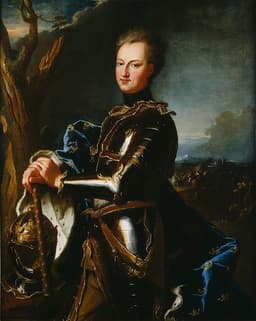
Charles XII of Sweden
General · Modern
56.6Total

Hachisuka Iemasa
General · Modern
46.2Total
Basic Information
Born
1682
1558
Died
1718
1639
Era
Modern
Modern
Nationality
Sweden
Japan
Occupation
General
General
Civilization
Western
Eastern
Score Comparison
Military (10%)
78.0
25.0
Political (20%)
39.4
45.1
Influence (20%)
56.7
50.2
Legacy (20%)
52.0
42.5
Leadership (15%)
68.0
62.0
Strategy (15%)
55.0
45.0
TOTAL
56.6
46.2
Charles XII of Sweden — Complete Timeline
1700 AD
Battle of NarvaWar◆ Major
Charles XII led a Swedish army of 8,000 to defeat a Russian force of 37,000 besieging Narva. The victory established his reputation as a military prodigy and temporarily halted Russian expansion in the Baltic.
Great Northern WarBattleSwedish Empire
Impact: regional
1706 AD
Invasion of SaxonyWar◆ Major
Charles XII invaded Saxony and forced Elector Augustus II to renounce his claim to the Polish throne through the Treaty of Altranst
Great Northern WarPolandSaxony
Impact: regional
1709 AD
Battle of PoltavaWar
Charles XII's Swedish army was decisively defeated by Peter the Great's Russian forces at Poltava. Charles fled to the Ottoman Empire, and the battle marked the end of Sweden's status as a great power and the rise of Russia.
Great Northern WarBattleSwedish Decline
Impact: globaldestructive
1718 AD
Siege of FredrikstenWar◆ Major
Charles XII was killed by a bullet to the head while besieging the Norwegian fortress of Fredriksten. His death ended the Great Northern War and led to the collapse of the Swedish Empire, with territories ceded to Russia.
DeathSiegeNorway
Impact: regionaltragic
Hachisuka Iemasa — Complete Timeline
1600 AD
Battle of SekigaharaWar◆ Major
Hachisuka Iemasa fought for the Eastern Army under Tokugawa Ieyasu at Sekigahara. He commanded a force of 3,000 men and helped secure victory. After the battle, he was confirmed as daimyo of Awa Province.
SekigaharaEastern ArmyVictory
Impact: nationalconstructive
1601 AD
Governorship of Awa DomainPolitical Action
Iemasa was confirmed as daimyo of the Awa domain (modern Tokushima Prefecture) after Sekigahara. He administered the domain for nearly four decades, developing its infrastructure and economy.
Domain GovernanceAwaAdministration
Impact: regionalconstructive
Construction of Tokushima CastleCultural
Iemasa oversaw the construction of Tokushima Castle as the seat of his domain. The castle became the administrative center of Awa Province and a symbol of Hachisuka power.
Castle ConstructionTokushimaArchitecture
Impact: regionalconstructive
1614 AD
Siege of OsakaWar
Iemasa participated in the Siege of Osaka, leading Tokugawa forces. He commanded troops in both the winter and summer campaigns, contributing to the destruction of the Toyotomi clan.
Siege of OsakaTokugawaCampaign
Impact: national
Expert Analysis
Origins
Charles XII of Sweden was born in 1682 to King Charles XI and Queen Ulrika Eleonora. He received a rigorous education in statecraft, military science, and languages, becoming fluent in Latin, German, French, and Swedish. His father died when Charles was 14, leaving him a well-organized kingdom with a strong military and stable finances. Charles's early exposure to military drills and hunting shaped his aggressive, hands-on leadership style.
Hachisuka Iemasa was born in 1558 as the son of Hachisuka Masakatsu, a retainer of Toyotomi Hideyoshi. His family served the Oda and Toyotomi clans, and Iemasa rose through the ranks as a capable administrator and warrior. After his father's death, he inherited the Hachisuka clan's holdings in Awa Province (modern Tokushima). He married a daughter of Tokugawa Ieyasu, aligning himself with the future shogun.
Rise to Power
Charles XII became king at age 15 in 1697. In 1700, the Great Northern War began when Denmark-Norway, Saxony-Poland, and Russia formed a coalition to attack Sweden. Charles quickly forced Denmark out by landing on Zealand and threatening Copenhagen. He then turned to Narva, where in November 1700 his army of 8,000 defeated 37,000 Russians in a stunning victory. This established his reputation as a military prodigy. He then invaded Poland and Saxony, forcing Augustus II to renounce the Polish throne in 1706 through the Treaty of Altranstädt.
Hachisuka Iemasa's rise came through loyalty to Tokugawa Ieyasu. At the Battle of Sekigahara in 1600, Iemasa commanded 3,000 men for the Eastern Army. His forces helped secure victory, and after the battle, Tokugawa confirmed him as daimyo of Awa Domain. In 1614-1615, he participated in the Siege of Osaka, leading troops against the Toyotomi loyalists. His consistent service to the Tokugawa shogunate ensured his domain's stability and his family's continued rule.
Leadership & Governance
Charles XII was a hands-on military commander who led from the front, often personally directing troops and sharing hardships. He insisted on offensive tactics, rapid marches, and aggressive pursuit. His governance was largely focused on war: he centralized resources for the army, conscripted peasants, and imposed heavy taxes. However, he neglected diplomacy and administration, leaving domestic affairs to bureaucrats. After the defeat at Poltava (1709), he spent years in the Ottoman Empire trying to forge alliances but failed.
Hachisuka Iemasa governed Awa Domain for nearly 40 years, focusing on infrastructure and economic development. He oversaw the construction of Tokushima Castle, which became the administrative center. He implemented land surveys, improved irrigation, and promoted local industries. As a daimyo under the Tokugawa shogunate, his leadership was conservative and bureaucratic, prioritizing stability over expansion. His military role was secondary to governance.
Triumph & Tragedy
Charles XII's greatest triumph was the victory at Narva in 1700, scoring a military feat with a 78.0 military score. He also forced Denmark and Saxony out of the war early. His greatest tragedy was the defeat at Poltava in 1709, where his depleted army was crushed by Peter the Great. This battle turned the tide of the Great Northern War, leading to Sweden's decline. Charles's refusal to negotiate or retreat cost him dearly. He died in 1718 at the Siege of Fredriksten, hit by a bullet, ending the war and Swedish great power status.
Hachisuka Iemasa's triumph was securing his domain and contributing to Tokugawa victory at Sekigahara. His political score of 45.1 reflects his success in maintaining power. His tragedy is his relative obscurity; he did not achieve major military fame despite participating in key battles. His legacy score of 42.5 shows limited long-term impact. He died in 1639, having ruled peacefully.
Character & Destiny
Charles XII was stubborn, courageous, and strategically inflexible. He believed in decisive battle and personal leadership, but his refusal to compromise led to overextension. His character—bold and reckless—shaped his fate: initial brilliance followed by catastrophic defeat. Historians often compare him to Alexander the Great, but his inability to adapt cost him.
Hachisuka Iemasa was cautious and loyal, embodying the ideal Tokugawa daimyo: reliable, administrative, and risk-averse. His destiny was to be a supporting figure in the unification of Japan, not a dominant one. His character ensured his domain's stability but limited his personal fame.
Legacy
Charles XII's legacy is mixed. He is remembered as a military genius but also as a king who bankrupted Sweden and lost its empire. His military tactics influenced later commanders, but Sweden never regained its great power status. His overall score of 56.6 reflects moderate impact.
Hachisuka Iemasa's legacy is local. He established the Hachisuka clan as rulers of Awa until the Meiji Restoration. Tokushima Castle remains a symbol, but his influence is minor compared to other daimyo. His total score is 46.2.
Conclusion
While Charles XII's aggressive warfare led to Sweden's rise and fall, his impact on European history is greater than Hachisuka Iemasa's regional administration. Charles XII's military score of 78.0 dwarfs Iemasa's 25.0, and his influence score of 56.7 exceeds Iemasa's 50.2. Charles XII had a greater impact on the course of history, despite his failures. Hachisuka Iemasa was a competent but unremarkable daimyo. The data supports Charles XII as the more significant figure.
Rankings
🥇
Charles XII of SwedenLeader
Mil: 78.0Pol: 39.4Inf: 56.7
56.6
🥈
Hachisuka Iemasa
Mil: 25.0Pol: 45.1Inf: 50.2
46.2
+10.4 behind
How This Comparison Works
Algorithm
Each figure is scored on 6 dimensions (0—100 scale) based on structured historical data: Military (10%), Political (20%), Influence (20%), Legacy (20%), Leadership (15%), Strategy (15%). The weighted total produces the final ranking.
Data Sources
Scores are computed from structured sub-indicators in the database. Scale factors adjust for era (Ancient ×0.85, Modern ×1.0) and civilization size (Eastern ×1.05, Other ×0.80) to account for differences in population and military scale.
Maximum 3 Figures
Comparisons are limited to 2—3 figures to ensure readability and statistical meaningfulness.
Error Margins
±5 points per dimension — Sub-scores are derived from historical records with inherent uncertainty. Two figures within 5 points on a dimension should be considered roughly equivalent in that area.
Total Score Accuracy
±3 points overall — The weighted combination of 6 dimensions produces a total score with approximately ±3 points of uncertainty. Differences of less than 3 points are not statistically significant— the figures are effectively tied.
Known Limitations
- Historical records are incomplete and uneven across civilizations
- Figures from oral-tradition societies may be underrepresented
- Occupation labels can misclassify multi-role figures
- Scores measure capability and impact, not moral character
- Quantitative scoring is a comparison tool, not absolute truth
Capability Radar
Military (10%) — Battles & Warfare
Battles
85
35
Win Rate
75
40
Expansion
65
30
Political (20%) — Governance & Reform
Reform
30
25
Diplomacy
20
40
Economy
25
30
Influence (20%) — Cultural & Global Reach
Cultural
50
20
Global
45
10
Legacy (20%) — Historical Impact
Historical
65
25
Longevity
55
20
Leadership (15%) — Power & Stability
Tenure
60
45
Stability
15
40
Strategy (15%) — Tactics & Innovation
Strategy
70
35
Tactics
90
30
Reform
40
20
Similar Comparisons
Comments & Discussion
No comments yet. Be the first to share your thoughts!