Loading...
Habib Bourguiba vs Julius Caesar
Julius Caesar leads by 18.4 pts · 2 figures compared
…
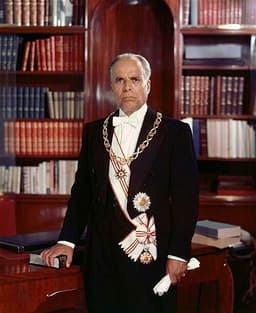
Habib Bourguiba
Politician · Modern
64.4Total

Julius Caesar
General · Ancient
82.8Total
Basic Information
Born
1903
-100
Died
2000
-44
Era
Modern
Ancient
Nationality
Tunisia
Roman Republic
Occupation
Politician
General
Civilization
Middle Eastern
Western
Score Comparison
Military (10%)
39.9
88.0
Political (20%)
82.0
78.0
Influence (20%)
68.0
85.0
Legacy (20%)
55.0
82.0
Leadership (15%)
80.0
80.0
Strategy (15%)
53.8
85.0
TOTAL
64.4
82.8
Habib Bourguiba — Complete Timeline
1956 AD
Code of Personal StatusReform◆ Major
Bourguiba enacted the Code of Personal Status, a progressive family law that abolished polygamy, established legal minimum age for marriage, and granted women rights to divorce and custody. This reform was unprecedented in the Arab world and modernized Tunisian society.
Women's RightsLegal ReformSocial Change
Impact: nationalprogressive
Tunisian IndependencePolitical Action
Habib Bourguiba led Tunisia to independence from France through a combination of political negotiation and nationalist pressure. He became the first Prime Minister of independent Tunisia, ending 75 years of French protectorate rule.
IndependenceDecolonizationNationalism
Impact: nationalconstructive
1957 AD
Proclamation of the RepublicPolitical Action◆ Major
Bourguiba abolished the Tunisian monarchy and proclaimed the Republic of Tunisia, with himself as President. This move consolidated his power and established a presidential system that would dominate Tunisian politics for decades.
RepublicConstitutional ChangePresidency
Impact: national
1961 AD
Bizerte CrisisWar◆ Major
Bourguiba demanded the evacuation of the French naval base at Bizerte. When negotiations failed, Tunisian forces blockaded the base, leading to a violent confrontation with French troops. The crisis resulted in hundreds of Tunisian casualties and strained Franco-Tunisian relations.
ConflictDecolonizationBizerte
Impact: regionaltragic
1987 AD
Removal from PowerPolitical Action◆ Major
Prime Minister Zine El Abidine Ben Ali removed Bourguiba from office in a bloodless coup, citing his failing health and inability to govern. Bourguiba was placed under house arrest, ending his 30-year presidency and his role as Tunisia's founding father.
CoupSuccessionBen Ali
Impact: nationaltragic
Julius Caesar — Complete Timeline
58 BC
Gallic WarsWar◆ Major
Caesar, as proconsul of Gaul, launched a series of campaigns that conquered all of Gaul (modern France, Belgium, and parts of Switzerland). He fought numerous battles, including against the Helvetii, the Belgae, and the Gallic chieftain Vercingetorix. The wars brought immense wealth and a loyal army to Caesar.
Gallic WarsConquestRoman Expansion
Impact: regional
49 BC
Crossing the RubiconPolitical Action◆ Major
Caesar led Legio XIII across the Rubicon River into Italy, defying the Roman Senate's order to disband his army. This act triggered a civil war against Pompey and the Optimates, ultimately leading to Caesar's dictatorship and the end of the Roman Republic.
Roman Civil WarEnd of RepublicPower Struggle
Impact: global
48 BC
Battle of PharsalusWar◆ Major
Caesar's outnumbered army defeated the larger forces of Pompey the Great at Pharsalus in Greece. Caesar's tactical use of a reserve line to counter Pompey's cavalry charge proved decisive. Pompey fled to Egypt, where he was assassinated, leaving Caesar as the undisputed master of the Roman world.
Roman Civil WarBattleDecisive Victory
Impact: regional
44 BC
Appointment as Dictator for LifePolitical Action◆ Major
The Roman Senate appointed Caesar dictator perpetuo (dictator for life), granting him unprecedented personal power. This move concentrated military, legislative, and judicial authority in one person, effectively ending the Roman Republic's traditional system of checks and balances and alarming many senators.
DictatorshipEnd of RepublicPower Consolidation
Impact: regionaldestructive
Assassination on the Ides of MarchPolitical Action◆ Major
A group of Roman senators, led by Marcus Junius Brutus and Gaius Cassius Longinus, stabbed Caesar to death at a meeting of the Senate in the Theatre of Pompey. The assassination was intended to restore the Republic, but instead triggered another civil war that led to the rise of the Roman Empire.
AssassinationRoman PoliticsEnd of Republic
Impact: globaldestructive
Expert Analysis
habib-bourguiba-vs-julius-caesar
# The General and the Statesman: Two Paths to Power
On a winter day in 44 BCE, a blood-soaked Julius Caesar collapsed at the feet of his assassins in the Roman Senate, his toga pierced by twenty-three dagger wounds. Nearly two thousand years later, in 1987, an aging Habib Bourguiba was gently removed from power in Tunis, his health failing, his legacy already secured. One died in violence, the other in peaceful retirement. One built an empire that would shape the Western world for millennia; the other built a nation from the ruins of colonialism. Both were supreme leaders, but their paths could not have been more different. What explains the chasm between Caesar’s military glory and Bourguiba’s political endurance?
Origins
Julius Caesar was born into the chaos of the late Roman Republic, a world of civil wars, aristocratic rivalries, and crumbling institutions. His family, the Julii, claimed descent from the goddess Venus, but they were politically marginal. Caesar’s father died when he was sixteen, leaving him to navigate a brutal system where survival depended on alliances and ambition. The Republic was dying, and Caesar grew up breathing its final gasps—a world that demanded ruthlessness, cunning, and a willingness to break every rule.
Habib Bourguiba entered a very different world in 1903, in the Tunisian coastal town of Monastir, then a French protectorate. His father was a modest army officer, his mother a homemaker. Bourguiba witnessed colonialism firsthand—the humiliation of a people stripped of sovereignty, the quiet erosion of language and identity. He was sent to Paris to study law, and there he absorbed the ideals of the French Revolution: liberty, equality, fraternity. But he also saw how those ideals were denied to his own people. His era was one of nationalist awakening, not imperial decay. He would not conquer; he would persuade.
Rise to Power
Caesar’s ascent was a masterpiece of calculated risk. He climbed the Roman political ladder—quaestor, aedile, praetor—but real power came through military command. In 58 BCE, he secured the governorship of Gaul and launched a decade-long campaign that would make him the richest and most feared man in Rome. He crossed the Rubicon in 49 BCE, an act of treason that ignited a civil war. Within four years, he had defeated his rivals, crushed the remnants of the Republic, and declared himself dictator for life. His path was forged in blood.
Bourguiba’s rise was quieter but no less determined. He founded the Neo Destour party in 1934, advocating for Tunisian independence through negotiation rather than armed revolt. He was imprisoned by the French multiple times, spending years in exile and detention. But he never wavered from his strategy: apply pressure, wait for the right moment, then strike a deal. In 1956, after decades of patient maneuvering, he led Tunisia to independence without a full-scale war. His turning point was not a battle but a signature on a treaty.
Leadership & Governance
Caesar ruled as a conqueror. He reformed the Roman calendar, granted citizenship to provincials, and launched massive public works. But his governance was personal and autocratic. He centralized power, bypassed the Senate, and appointed loyalists to every key post. His reforms were brilliant, but they were imposed from above. He had no patience for consensus. His military genius—88 on the strategy scale—was undeniable, but his political score of 78 reflects a man who could win wars but struggled to build lasting institutions.
Bourguiba governed as a modernizer. His greatest achievement was the Code of Personal Status in 1956, a revolutionary family law that abolished polygamy, established a legal minimum age for marriage, and gave women unprecedented rights in the Arab world. He invested heavily in education, built a secular state, and sought to transform Tunisian society from the ground up. His leadership score of 83.3 reflects his ability to inspire loyalty and drive change, but his military score of 24.7 reveals a man who understood that true power came from laws, not legions. He was a political animal, not a warrior.
Triumph & Tragedy
Caesar’s triumph was the conquest of Gaul, a campaign that added a vast territory to Rome and made him immortal. His tragedy was the Ides of March—the assassination that ended his life and plunged Rome into another civil war. He died believing he could reshape the world alone, and in a sense, he was right. But his death proved that even the greatest general cannot rule without consent.
Bourguiba’s triumph was independence itself, achieved with minimal bloodshed. His tragedy was his final years: a long decline into senility, a coup led by his own prime minister, and the slow erosion of his democratic reforms under Ben Ali. He outlived his own relevance. Unlike Caesar, he did not die at the peak of his power—he faded, and his country paid the price.
Character & Destiny
Caesar was driven by an insatiable hunger for glory. He wrote his own commentaries, controlled his own narrative, and believed that fate favored the bold. His personality—arrogant, brilliant, reckless—shaped every decision. He could have stopped at the Rubicon; he chose to cross it. He could have pardoned his enemies; he chose to crush them. His destiny was to die by the sword he lived by.
Bourguiba was driven by a different force: the desire to build a nation that would survive him. He was pragmatic, patient, and willing to compromise. He could have led a guerrilla war; he chose negotiation. He could have become a dictator in the style of Nasser; he chose to create a republic with a constitution. His personality—calculating, disciplined, visionary—shaped a different kind of destiny. He died in his bed, but his legacy was more fragile than Caesar’s.
Legacy
Caesar’s legacy is the Roman Empire itself. His name became synonymous with power—Kaiser, Czar, Caesar. His reforms outlived him, and his assassination only accelerated the transition from Republic to Empire. He is remembered as a military genius, a political revolutionary, and a cautionary tale about ambition. His influence score of 85.0 and legacy of 82.0 reflect a man who changed the course of Western civilization.
Bourguiba’s legacy is more modest but no less significant. He is remembered as the father of modern Tunisia, a statesman who created a secular, progressive state in a region often defined by authoritarianism and religious conservatism. His influence score of 68.4 and legacy of 65.3 reflect a leader who mattered deeply to his own people but whose impact was contained by geography and time. He is not a global icon; he is a national hero.
Conclusion
One man conquered an empire; the other built a nation. One died in the Senate; the other in retirement. Caesar’s story is one of glory and tragedy, a reminder that power without legitimacy is a house of cards. Bourguiba’s story is one of patience and reform, a reminder that lasting change often comes from law, not war. Both were products of their eras—Caesar of a dying Republic, Bourguiba of a rising nation. And both remind us that leadership is not a single path but a thousand different choices, each shaped by the world that made us. In the end, the general and the statesman both sought to shape history. One did so with a sword, the other with a pen. And history, as always, wrote its own verdict.
Rankings
🥇
Julius CaesarLeader
Mil: 88.0Pol: 78.0Inf: 85.0
82.8
🥈
Habib Bourguiba
Mil: 39.9Pol: 82.0Inf: 68.0
64.4
+18.4 behind
How This Comparison Works
Algorithm
Each figure is scored on 6 dimensions (0—100 scale) based on structured historical data: Military (10%), Political (20%), Influence (20%), Legacy (20%), Leadership (15%), Strategy (15%). The weighted total produces the final ranking.
Data Sources
Scores are computed from structured sub-indicators in the database. Scale factors adjust for era (Ancient ×0.85, Modern ×1.0) and civilization size (Eastern ×1.05, Other ×0.80) to account for differences in population and military scale.
Maximum 3 Figures
Comparisons are limited to 2—3 figures to ensure readability and statistical meaningfulness.
Error Margins
±5 points per dimension — Sub-scores are derived from historical records with inherent uncertainty. Two figures within 5 points on a dimension should be considered roughly equivalent in that area.
Total Score Accuracy
±3 points overall — The weighted combination of 6 dimensions produces a total score with approximately ±3 points of uncertainty. Differences of less than 3 points are not statistically significant— the figures are effectively tied.
Known Limitations
- Historical records are incomplete and uneven across civilizations
- Figures from oral-tradition societies may be underrepresented
- Occupation labels can misclassify multi-role figures
- Scores measure capability and impact, not moral character
- Quantitative scoring is a comparison tool, not absolute truth
Capability Radar
Military (10%) — Battles & Warfare
Battles
5
95
Win Rate
5
92
Expansion
5
97
Political (20%) — Governance & Reform
Reform
90
90
Diplomacy
85
85
Economy
75
82
Influence (20%) — Cultural & Global Reach
Cultural
70
88
Global
65
94
Legacy (20%) — Historical Impact
Historical
75
95
Longevity
65
96
Leadership (15%) — Power & Stability
Tenure
85
75
Stability
70
60
Strategy (15%) — Tactics & Innovation
Strategy
5
94
Tactics
5
96
Reform
10
88
Similar Comparisons
Comments & Discussion
Bourguiba's Caesar6/17/2026
Comparing Bourguiba to Caesar is like comparing a talented mayor to a world-historical hurricane. Caesar conquered Gaul, crossed the Rubicon, and permanently shattered the Roman Republic—he changed the course of Western civilization through blood and iron. Bourguiba negotiated nicely with France and got Tunisia independence. Impressive for a postcolonial leader, sure, but let's not pretend this is the same league. Caesar's legacy shaped millennia; Bourguiba's shaped a small North African country