Loading...
Francisco de Paula Santander vs H. D. Deve Gowda
Francisco de Paula Santander leads by 3.3 pts · 2 figures compared
…

Francisco de Paula Santander
Politician · Modern
55.1Total
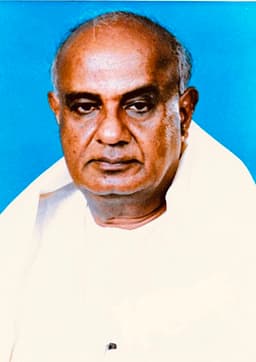
H. D. Deve Gowda
Politician · Modern
51.8Total
Basic Information
Born
1792
1933
Died
1840
—
Era
Modern
Modern
Nationality
Colombia
India
Occupation
Politician
Politician
Civilization
Western
Indian
Score Comparison
Military (10%)
47.5
40.3
Political (20%)
72.0
68.0
Influence (20%)
61.0
52.5
Legacy (20%)
50.0
41.7
Leadership (15%)
53.2
53.2
Strategy (15%)
38.3
60.0
TOTAL
55.1
51.8
Francisco de Paula Santander — Complete Timeline
1819 AD
Leadership in the Battle of BoyacáWar
Santander commanded the Republican forces at the Battle of Boyac
BattleIndependenceNew Granada
Impact: regional
1821 AD
Vice Presidency of Gran ColombiaPolitical Action◆ Major
Santander was elected Vice President of Gran Colombia under Sim
Vice PresidencyGran ColombiaAdministration
Impact: regionalconstructive
1826 AD
Conflict with Simón BolívarPolitical Action◆ Major
Santander opposed Bol
Political ConflictFederalismBolívar
Impact: regionaldestructive
1828 AD
Exile in EuropePolitical Action◆ Major
Santander was exiled to Europe after being accused of involvement in the September Conspiracy to assassinate Bol
ExilePolitical PersecutionBolívar
Impact: regional
1832 AD
Presidency of New GranadaPolitical Action◆ Major
Santander was elected President of New Granada (modern Colombia) after the dissolution of Gran Colombia. He served from 1832 to 1837, implementing liberal reforms, promoting education, and establishing a centralized but constitutional government.
PresidencyNew GranadaLiberal Reforms
Impact: nationalconstructive
H. D. Deve Gowda — Complete Timeline
1991 AD
Appointment as Chairman of the National Commission for Scheduled Castes and Scheduled TribesPolitical Action
H. D. Deve Gowda was appointed Chairman of the National Commission for Scheduled Castes and Scheduled Tribes. This role involved monitoring the implementation of constitutional safeguards for marginalized communities.
CommissionSC/STSocial Justice
Impact: nationalconstructive
1994 AD
Election as Chief Minister of KarnatakaPolitical Action◆ Major
H. D. Deve Gowda was elected Chief Minister of Karnataka, leading the Janata Dal to a landslide victory. His government focused on rural development and irrigation projects, including the Cauvery River dispute.
Chief MinisterKarnatakaJanata Dal
Impact: regionalconstructive
1996 AD
Appointment as Prime Minister of IndiaPolitical Action◆ Major
H. D. Deve Gowda became the 11th Prime Minister of India, leading the United Front coalition government. His tenure lasted 11 months, from June 1996 to April 1997, as a compromise candidate after the 1996 general election.
Prime MinisterUnited FrontCoalition
Impact: national
1997 AD
Resignation as Prime MinisterPolitical Action◆ Major
H. D. Deve Gowda resigned as Prime Minister after the Congress party withdrew its support from the United Front government. The withdrawal was triggered by differences over the handling of the DMK in Tamil Nadu.
ResignationCoalition CollapseCongress
Impact: national
1999 AD
Formation of the Janata Dal (Secular)Political Action◆ Major
H. D. Deve Gowda founded the Janata Dal (Secular) after a split in the Janata Dal. The party became a major political force in Karnataka, focusing on secularism and social justice.
Party FormationJanata Dal (Secular)Karnataka
Impact: regionalconstructive
Expert Analysis
Origins
Francisco de Paula Santander was born on April 2, 1792, in Villa del Rosario, New Granada (modern Colombia), into a wealthy Creole family. He studied law at the Colegio Mayor de San Bartolomé in Bogotá, graduating in 1810. His father, a landowner, and mother, from a prominent family, provided a privileged upbringing. Santander's education and family background positioned him for leadership in the independence movement.
H. D. Deve Gowda was born on May 18, 1933, in Haradanahalli, Kingdom of Mysore (now Karnataka, India), into a farming family of the Vokkaliga community. He studied civil engineering at the L. D. College of Engineering in Ahmedabad but left before completing his degree to enter politics. His father, a farmer, and mother, a homemaker, instilled in him a connection to rural life. Gowda's modest origins shaped his focus on agrarian issues.
Rise to Power
Santander joined the revolutionary army in 1810, rising quickly due to his organizational skills. He served under Simón Bolívar and was promoted to general after the Battle of Boyacá on August 7, 1819, where his tactical leadership secured a decisive victory against Spanish forces. This triumph made him a key figure in Gran Colombia's government. In 1821, he was elected Vice President of Gran Colombia, effectively running the state while Bolívar campaigned elsewhere. His administrative reforms and legal expertise earned him the title "The Man of Laws."
Deve Gowda entered politics in the 1950s as a member of the Indian National Congress, later joining the Janata Party. He won his first election to the Karnataka Legislative Assembly in 1962. His rise accelerated in the 1990s: he became Chief Minister of Karnataka on December 11, 1994, leading the Janata Dal to a landslide victory. His government's focus on rural development and irrigation earned him popularity. In 1996, after the general election resulted in a hung parliament, he was chosen as Prime Minister of India on June 1, 1996, heading the United Front coalition. His tenure lasted only 11 months, ending on April 21, 1997, after Congress withdrew support.
Leadership & Governance
Santander's leadership style was legalistic and institutional. As Vice President, he implemented a centralized administration, established a national treasury, and reformed the judiciary. His governance emphasized constitutional order, exemplified by the 1821 Constitution of Cúcuta. However, his conflict with Bolívar stemmed from Santander's advocacy for federalism and civilian rule against Bolívar's centralism and military authoritarianism. During his presidency of New Granada (1832-1837), Santander pursued liberal reforms: he abolished slavery, promoted free trade, and expanded education. His political score of 72.0 reflects his effectiveness in building state institutions.
Deve Gowda's leadership was pragmatic and coalition-oriented. As Prime Minister, he managed a diverse coalition of 13 parties, focusing on consensus-building. His government prioritized rural development, agriculture, and social welfare, including the launch of the Antyodaya Anna Yojana food security program. However, his lack of experience at the national level and inability to contain coalition infighting led to instability. His political score of 68.0 indicates competence, but his short tenure limited his impact. His strategic score of 60.0 outweighs Santander's 38.3, showing better maneuvering in a fragmented political landscape.
Triumph & Tragedy
Santander's greatest triumph was the Battle of Boyacá, which cemented Colombian independence. His presidency of New Granada saw the consolidation of a republican state, with liberal reforms that modernized the country. His tragedy was his exile after the September Conspiracy (1828), where he was accused of plotting Bolívar's assassination. Though he denied involvement, he spent four years in Europe, returning only after Bolívar's death. His military score of 47.5 reflects moderate battlefield success, but his political achievements overshadow his military role.
Deve Gowda's triumph was becoming Prime Minister from a rural background, representing the aspirations of agrarian communities. His tenure saw the initiation of the National Agricultural Insurance Scheme and increased budget allocation for rural development. His tragedy was the collapse of his government due to Congress's withdrawal of support, triggered by his refusal to drop a minister. The brevity of his term (11 months) prevented him from enacting lasting reforms. His legacy score of 41.7 is low, as his impact is largely regional in Karnataka rather than national.
Character & Destiny
Santander was methodical, disciplined, and deeply committed to legal frameworks. His motto "Colombians, arms have given you independence, laws will give you freedom" encapsulates his character. This rigidity, however, made him inflexible in dealing with Bolívar's authoritarian turn, leading to his exile. Historical assessments note his role as a founder of Colombia's civil institutions, but his stubbornness contributed to the fragmentation of Gran Colombia. His leadership score of 53.2 aligns with his mixed legacy.
Deve Gowda is known for his humility, simplicity, and dedication to farmers. He often described himself as a "son of the soil." His character was shaped by his rural roots, making him relatable but also limiting his appeal in urban and national politics. His decision to found the Janata Dal (Secular) in 1999 after a party split showed his resilience, but also his tendency to prioritize regional over national interests. His leadership score of 53.2 matches Santander's, indicating similar effectiveness in their respective spheres.
Legacy
Santander is remembered as the "Man of Laws" and a founder of modern Colombia. His constitutional reforms and liberal policies laid the groundwork for Colombia's 19th-century political development. However, his legacy is contested: he is revered for civilian governance but criticized for his role in the dissolution of Gran Colombia. His influence score of 61.0 is higher than Deve Gowda's 52.5, reflecting his enduring impact on Colombian state-building.
Deve Gowda's legacy is primarily regional. In Karnataka, he is a key figure in state politics, with his party remaining influential. Nationally, he is remembered as a caretaker Prime Minister whose tenure highlighted the challenges of coalition governance in India. His legacy score of 41.7 indicates limited long-term impact, as his policies were not sustained by successors. His strategy score of 60.0 shows tactical skill, but his overall influence is constrained.
Conclusion
Francisco de Paula Santander had greater historical impact than H. D. Deve Gowda. Santander's total score of 55.1 exceeds Deve Gowda's 51.8 by 3.3 points, but the gap widens in key areas: influence (61.0 vs 52.5) and legacy (50.0 vs 41.7). Santander's role in founding Colombia's legal and political systems shaped a nation's trajectory for centuries, while Deve Gowda's brief prime ministership had limited national effect. Although Deve Gowda excelled in strategy (60.0 vs 38.3), Santander's foundational contributions to state-building and his enduring constitutional legacy make him the more significant figure. Santander's position as a founding father of a nation outweighs Deve Gowda's role as a short-lived coalition leader.
Rankings
🥇
Francisco de Paula SantanderLeader
Mil: 47.5Pol: 72.0Inf: 61.0
55.1
🥈
H. D. Deve Gowda
Mil: 40.3Pol: 68.0Inf: 52.5
51.8
+3.3 behind
How This Comparison Works
Algorithm
Each figure is scored on 6 dimensions (0—100 scale) based on structured historical data: Military (10%), Political (20%), Influence (20%), Legacy (20%), Leadership (15%), Strategy (15%). The weighted total produces the final ranking.
Data Sources
Scores are computed from structured sub-indicators in the database. Scale factors adjust for era (Ancient ×0.85, Modern ×1.0) and civilization size (Eastern ×1.05, Other ×0.80) to account for differences in population and military scale.
Maximum 3 Figures
Comparisons are limited to 2—3 figures to ensure readability and statistical meaningfulness.
Error Margins
±5 points per dimension — Sub-scores are derived from historical records with inherent uncertainty. Two figures within 5 points on a dimension should be considered roughly equivalent in that area.
Total Score Accuracy
±3 points overall — The weighted combination of 6 dimensions produces a total score with approximately ±3 points of uncertainty. Differences of less than 3 points are not statistically significant— the figures are effectively tied.
Known Limitations
- Historical records are incomplete and uneven across civilizations
- Figures from oral-tradition societies may be underrepresented
- Occupation labels can misclassify multi-role figures
- Scores measure capability and impact, not moral character
- Quantitative scoring is a comparison tool, not absolute truth
Capability Radar
Military (10%) — Battles & Warfare
Battles
35
44
Win Rate
40
49
Expansion
25
47
Political (20%) — Governance & Reform
Reform
70
40
Diplomacy
65
55
Economy
55
45
Influence (20%) — Cultural & Global Reach
Cultural
50
20
Global
45
25
Legacy (20%) — Historical Impact
Historical
55
30
Longevity
50
20
Leadership (15%) — Power & Stability
Tenure
60
60
Stability
40
40
Strategy (15%) — Tactics & Innovation
Strategy
35
55
Tactics
30
55
Reform
45
56
Similar Comparisons
Comments & Discussion
No comments yet. Be the first to share your thoughts!