Loading...
Gyeongjong of Goryeo vs Timur
Timur leads by 18.5 pts · 2 figures compared
…
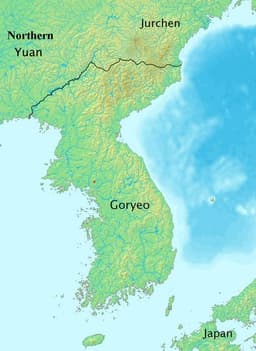
Gyeongjong of Goryeo
Emperor · Medieval
47.1Total
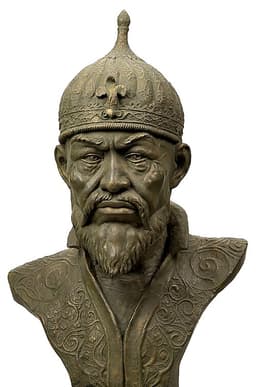
Timur
Emperor · Medieval
65.6Total
Basic Information
Born
955
1336
Died
981
1405
Era
Medieval
Medieval
Nationality
Korea
Timurid Empire
Occupation
Emperor
Emperor
Civilization
Eastern
Middle Eastern
Score Comparison
Military (10%)
20.0
79.0
Political (20%)
53.8
70.0
Influence (20%)
53.3
70.0
Legacy (20%)
47.5
40.0
Leadership (15%)
48.8
79.8
Strategy (15%)
45.0
77.6
TOTAL
47.1
65.6
Gyeongjong of Goryeo — Complete Timeline
976 AD
Institution of the Jeonsigwa Land SystemReform◆ Major
King Gyeongjong established the jeonsigwa, a land distribution system that allocated state-owned farmland to government officials based on their rank. This reform aimed to secure royal revenue and control over land, while providing a stable income for the bureaucracy.
Impact: nationalconstructive
Timur — Complete Timeline
1362 AD
Battle of the Terek RiverWar
Timur defeated the Mongol ruler of the Chagatai Khanate, establishing his control over Transoxiana. This victory marked the beginning of his rise to power, as he captured Samarkand and declared himself emir.
Rise to PowerBattleCentral Asia
Impact: regional
1387 AD
Conquest of PersiaWar◆ Major
Timur launched a campaign into Persia, capturing Isfahan and Shiraz. He suppressed a revolt in Isfahan by massacring tens of thousands of inhabitants, establishing his reputation for extreme brutality and consolidating control over the region.
ConquestMassacrePersia
Impact: regionaldestructive
1395 AD
Campaign against the Golden HordeWar◆ Major
Timur defeated the Golden Horde under Tokhtamysh at the Battle of the Terek River. He sacked Sarai, the Horde's capital, and destroyed its trade networks, permanently weakening the Mongol state and securing his northern frontier.
ConquestGolden HordeBattle
Impact: regionaldestructive
1398 AD
Sack of DelhiWar◆ Major
Timur invaded the Delhi Sultanate, defeating Sultan Nasir-ud-Din Mahmud Shah Tughluq. His army sacked Delhi, massacring tens of thousands of civilians and destroying the city's infrastructure, then withdrew with immense plunder.
ConquestMassacreIndia
Impact: regionaldestructive
1402 AD
Battle of AnkaraWar
Timur defeated the Ottoman Sultan Bayezid I at Ankara, capturing him. The victory shattered Ottoman power, leading to a civil war among Bayezid's sons and delaying Ottoman expansion into Europe for a decade.
BattleOttoman EmpireDecisive Victory
Impact: global
1404 AD
Construction of SamarkandCultural◆ Major
Timur invested heavily in transforming Samarkand into a cultural and architectural center. He brought artisans from conquered lands to build mosques, madrasas, and the Bibi-Khanym Mosque, making the city a showcase of Timurid art and learning.
ArchitecturePatronageCultural Center
Impact: regionalconstructive
1405 AD
Death during campaign against Ming ChinaWar◆ Major
Timur died of illness while leading a massive army toward the Ming dynasty's borders. His death ended the planned invasion of China and led to the fragmentation of his empire among his sons and grandsons.
DeathCampaignMing Dynasty
Impact: regional
Expert Analysis
Gyeongjong of Goryeo vs Timur
# The Conqueror and the Administrator: Timur Versus Gyeongjong of Goryeo
On a winter morning in 1405, a dying emperor lay in his tent, his body wracked by fever, his mind still fixed on the greatest prize of all: China. Timur, the Lame, had marched his army across the frozen mountains of Central Asia, determined to crush the Ming dynasty. Thousands of miles away, in the quiet court of Kaesong, a different kind of ruler had died a quarter-century earlier—not on a battlefield, but in his bed, having spent his reign not conquering empires, but building a system that would sustain one. How could two men, both called king and emperor, live such radically different lives? The answer lies not in their ambitions, but in the worlds that shaped them.
Origins
Timur was born in 1336 into a world of chaos. The Mongol Empire, which had once stretched from Korea to Hungary, was fracturing into warring khanates. His father was a minor noble of the Barlas tribe in Transoxiana, a region where steppe warriors and settled Persians clashed constantly. Timur grew up riding horses, shooting arrows, and learning that power belonged to those who could take it. He was a product of the steppe—a world where loyalty was fleeting and survival depended on force.
Gyeongjong, born in 955, entered a very different world. The Goryeo dynasty had unified the Korean peninsula just decades earlier, and its kings were building a Confucian state. His father, King Gwangjong, had already purged the old aristocracy and freed slaves to centralize power. Gyeongjong was raised in a palace, surrounded by scholars and bureaucrats, learning that power belonged to those who could administer it. While Timur learned the art of war, Gyeongjong learned the art of governance.
Rise to Power
Timur’s path to power was violent and uncertain. In 1362, at the Battle of the Terek River, he defeated the Mongol ruler of the Chagatai Khanate, establishing control over Transoxiana. But he did not claim the title of khan—he ruled through puppet khans, knowing that Mongol tradition required direct descent from Genghis Khan. He was a master of deception, forming alliances and breaking them, waiting for the right moment to strike.
Gyeongjong’s rise was far smoother. He was the son of a king, and when his father died in 975, he inherited the throne without bloodshed. But this did not make his task easy. The Goryeo court was riven with factionalism, and the old aristocracy, though weakened, still sought power. Gyeongjong had to navigate these treacherous waters with diplomacy, not force.
Leadership & Governance
Timur’s leadership was defined by terror and brilliance. His military campaigns were legendary in their scale and savagery. In 1387, when the Persian city of Isfahan revolted, he ordered the massacre of tens of thousands, building pyramids of skulls. In 1395, he crushed the Golden Horde under Tokhtamysh at the Battle of the Terek River, sacking their capital Sarai and ending their dominance. In 1398, he invaded India, sacking Delhi and massacring its inhabitants. In 1402, he defeated the Ottoman Sultan Bayezid I at the Battle of Ankara, capturing him and shattering Ottoman power for a decade. Each victory was a masterpiece of strategy and cruelty.
But Timur was not merely a destroyer. His capital, Samarkand, became a wonder of the world. In 1404, he brought artisans from conquered lands—Persian architects, Chinese potters, Indian craftsmen—to build mosques, madrasas, and palaces. He made Samarkand a center of culture and learning, a testament to his vision of empire.
Gyeongjong’s leadership was the opposite. He never led an army into battle. His military score of 55.1 reflects a ruler who relied on generals, not personal valor. Instead, his genius lay in administration. In 976, he instituted the *jeonsigwa* land system, which allocated state-owned farmland based on official rank. This was a profound reform: it stabilized state finances, reduced the power of private landowners, and created a bureaucracy loyal to the king. It was a quiet revolution, one that would shape Korean governance for centuries.
Triumph & Tragedy
Timur’s greatest triumph was the Battle of Ankara in 1402. The Ottoman Empire was at its height, and Bayezid I had crushed Christian armies across Europe. But Timur’s army, hardened by decades of war, outmaneuvered the Ottomans, and Bayezid was captured. The victory was so complete that it sparked a civil war among Bayezid’s sons, delaying Ottoman expansion for years.
His greatest tragedy came in 1405. He was leading a massive army toward the Ming dynasty’s borders, determined to conquer China. But he fell ill and died, his dream unfinished. The invasion collapsed, and his empire soon fragmented.
Gyeongjong’s triumph was the *jeonsigwa* system. It was not dramatic, but it was lasting. His tragedy was his short reign—only six years. He died in 981, possibly from illness, before he could see his reforms fully take root. He left no great battles, no pyramids of skulls, only a system that would outlast him.
Character & Destiny
Timur was ambitious, ruthless, and visionary. He believed that his destiny was to conquer the world, and he pursued it with relentless energy. His cruelty was a tool, his culture a legacy. He was a man of the steppe, where power was personal and fleeting.
Gyeongjong was cautious, pragmatic, and patient. He believed that his destiny was to build a stable kingdom, and he pursued it with quiet determination. His reforms were not flashy, but they were effective. He was a man of the court, where power was institutional and enduring.
Legacy
Timur is remembered as a conqueror, a builder, and a monster. His empire did not last, but his name lives on in the history of Central Asia, Persia, and India. Samarkand still stands as a monument to his ambition. His military tactics influenced later conquerors, and his defeat of the Ottomans shaped European history.
Gyeongjong is remembered as a reformer, a stabilizer, and a king. The *jeonsigwa* system remained in place for centuries, shaping Korean society long after his death. His reign was short, but his impact was deep. He is a footnote in many histories, but a foundation in Korean history.
Conclusion
Timur and Gyeongjong could not have been more different—one a whirlwind of destruction, the other a gentle rain of reform. Yet both understood the same truth: that power, whether won by the sword or the pen, must be used to build something lasting. Timur built a city of dreams; Gyeongjong built a system of order. In the end, the conqueror’s empire crumbled, and the administrator’s system endured. Perhaps that is the deepest lesson of all: that the quiet work of governance, though less glorious than conquest, is often the more lasting legacy.
Rankings
🥇
TimurLeader
Mil: 79.0Pol: 70.0Inf: 70.0
65.6
🥈
Gyeongjong of Goryeo
Mil: 20.0Pol: 53.8Inf: 53.3
47.1
+18.5 behind
How This Comparison Works
Algorithm
Each figure is scored on 6 dimensions (0—100 scale) based on structured historical data: Military (10%), Political (20%), Influence (20%), Legacy (20%), Leadership (15%), Strategy (15%). The weighted total produces the final ranking.
Data Sources
Scores are computed from structured sub-indicators in the database. Scale factors adjust for era (Ancient ×0.85, Modern ×1.0) and civilization size (Eastern ×1.05, Other ×0.80) to account for differences in population and military scale.
Maximum 3 Figures
Comparisons are limited to 2—3 figures to ensure readability and statistical meaningfulness.
Error Margins
±5 points per dimension — Sub-scores are derived from historical records with inherent uncertainty. Two figures within 5 points on a dimension should be considered roughly equivalent in that area.
Total Score Accuracy
±3 points overall — The weighted combination of 6 dimensions produces a total score with approximately ±3 points of uncertainty. Differences of less than 3 points are not statistically significant— the figures are effectively tied.
Known Limitations
- Historical records are incomplete and uneven across civilizations
- Figures from oral-tradition societies may be underrepresented
- Occupation labels can misclassify multi-role figures
- Scores measure capability and impact, not moral character
- Quantitative scoring is a comparison tool, not absolute truth
Capability Radar
Military (10%) — Battles & Warfare
Battles
5
95
Win Rate
5
92
Expansion
5
96
Political (20%) — Governance & Reform
Reform
70
78
Diplomacy
40
70
Economy
65
82
Influence (20%) — Cultural & Global Reach
Cultural
30
88
Global
20
85
Legacy (20%) — Historical Impact
Historical
45
90
Longevity
40
75
Leadership (15%) — Power & Stability
Tenure
55
85
Stability
50
65
Strategy (15%) — Tactics & Innovation
Strategy
5
93
Tactics
5
94
Reform
5
80
Similar Comparisons
Comments & Discussion
TIMURFANBOI936/16/2026
Give me Timur any day. This guy came from nothing, literally limped his way to ruling half the known world, and nearly took down the Ming at age 70. Gyeongjong? He spent his whole reign in bed, probably reading Confucian poetry. One led armies across frozen mountains, the other couldn't even cross his own palace courtyard without help. There's no comparison here—Timur built an empire with his own two hands, lame leg and all.
历史硬核粉6/16/2026
说句实在话,高丽靖宗被拿来和跛子帖木儿对比,本身就不公平。靖宗在位期间病弱缠身,但高丽在他治下没有亡国,没有大乱,这就是最大的功德。帖木儿牛逼是牛逼,死后方圆千里血流成河,他的帝国不到百年就灰飞烟灭。靖宗留下的是一个延续了近五百年的王朝根基。谁笑到最后,谁笑得最好。
DATA_GUY_426/16/2026
Let's look at the numbers. Timur's military campaigns stretched from Delhi to Damascus, covering roughly 4.5 million square kilometers at its peak. Gyeongjong's Goryeo was about 220,000 square kilometers—and he didn't conquer any of it. But here's the catch: Timur's empire lasted, what, 30 years after his death? Goryeo lasted 474 years. If we're measuring impact per capita, Gyeongjong's administrative legacy gave his people centuries of stability. Timur gave them piles of skulls.
儒学扫地僧6/16/2026
儒家史观下,靖宗才是真明君。帖木儿再能打,也不过是草原上的悍匪头子,靠杀人立威。靖宗在位期间推行科举、完善律令、安抚百姓,这才是王道。帖木儿征个印度都能屠城十万,这种暴政有什么好吹的?治国靠的不是刀,是规矩。靖宗让高丽人知道,皇帝不是只会打仗的蛮子。
REVISIONIST_HAMMER6/16/2026
You're all missing the point. The comparison itself is a colonial-era framing device that romanticizes "great conquerors" while dismissing administrators as weak. Timur was a brutal warlord who crippled Central Asian trade networks for generations. Gyeongjong, despite his physical frailty, maintained Goryeo's independence against the Khitan Liao dynasty through diplomacy and bureaucratic reform. One man built roads of bones; the other built roads of paper. I know which legacy I'd rather inherit.