Loading...
Gyeongjong of Goryeo vs Parakramabahu VI
Parakramabahu VI leads by 17.7 pts · 2 figures compared
…
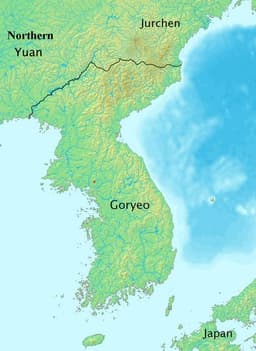
Gyeongjong of Goryeo
Emperor · Medieval
47.1Total

Parakramabahu VI
Emperor · Medieval
64.8Total
Basic Information
Born
955
1412
Died
981
1467
Era
Medieval
Medieval
Nationality
Korea
Sri Lanka
Occupation
Emperor
Emperor
Civilization
Eastern
Indian
Score Comparison
Military (10%)
20.0
72.5
Political (20%)
53.8
72.0
Influence (20%)
53.3
60.0
Legacy (20%)
47.5
56.0
Leadership (15%)
48.8
85.0
Strategy (15%)
45.0
50.0
TOTAL
47.1
64.8
Gyeongjong of Goryeo — Complete Timeline
976 AD
Institution of the Jeonsigwa Land SystemReform◆ Major
King Gyeongjong established the jeonsigwa, a land distribution system that allocated state-owned farmland to government officials based on their rank. This reform aimed to secure royal revenue and control over land, while providing a stable income for the bureaucracy.
Impact: nationalconstructive
Parakramabahu VI — Complete Timeline
1420 AD
Construction of the Temple of the Tooth in KotteCultural◆ Major
Parakramabahu VI built a new Temple of the Tooth in his capital, Kotte. This reinforced Kotte's status as the religious and political center of the island.
BuddhismArchitectureCapital
Impact: nationalconstructive
1430 AD
Patronage of Literature and ArtsCultural◆ Major
Parakramabahu VI's court was a center of literary and artistic activity. He patronized poets and scholars, leading to a flourishing of Sinhalese literature, including the 'Sandesa' (message) poems.
LiteraturePatronageCultural Renaissance
Impact: nationalconstructive
1450 AD
Unification of Sri LankaWar
Parakramabahu VI unified the entire island of Sri Lanka under his rule for the first time since Parakramabahu I. He conquered the Kingdom of Jaffna in the north and brought the entire island under Kotte's control.
UnificationConquestMilitary Campaign
Impact: national
Conquest of the Kingdom of JaffnaWar◆ Major
Parakramabahu VI's forces, led by his adopted son Sapumal Kumaraya, conquered the Kingdom of Jaffna. This brought the Tamil north under Sinhalese rule and ended the Aryacakravarti dynasty.
ConquestMilitary CampaignTamil Kingdom
Impact: national
Expert Analysis
Gyeongjong of Goryeo vs Parakramabahu VI
# The Measure of a Kingdom: Gyeongjong of Goryeo and Parakramabahu VI
In the year 976, a Korean king sat in his palace in Gaegyeong, signing a decree that would transform his kingdom’s economy. Half a world away and nearly five centuries later, a Sinhalese monarch in Kotte watched his armies march north to conquer a rival kingdom, dreaming of an island united. Both men sought order, stability, and legacy—but their paths, their worlds, and their fates could not have been more different. Why did one leave behind a bureaucratic system that outlasted his dynasty, while the other built a cultural renaissance that flickered and died with his reign?
Origins
Gyeongjong of Goryeo was born in 955, a prince in a kingdom still young and fragile. His father, King Gwangjong, had purged the aristocracy with ferocity, centralizing power through slave emancipation and Confucian reforms. Gyeongjong inherited a court scarred by violence and a treasury strained by ambition. He was a child of consolidation, raised in the shadow of a father who had remade the state with blood and ink. The boy-king understood that survival required not conquest, but compromise.
Parakramabahu VI, born in 1412, entered a different world. The Kotte kingdom was already prosperous, a trading hub that drew merchants from China, Arabia, and Southeast Asia. Yet Sri Lanka was fragmented—a patchwork of warring principalities, with the Tamil Kingdom of Jaffna controlling the north. Parakramabahu came of age in a court that valued poetry and war in equal measure. He was a product of the Indian Ocean world, where power flowed through harbors as much as through armies.
Rise to Power
Gyeongjong ascended the throne in 975, at the age of twenty. His rise was not a conquest but a succession—a quiet inheritance of a throne still wet with his father’s blood. The aristocracy, cowed by Gwangjong, now waited to see if the son would continue the father’s war against their privileges. Gyeongjong chose a different path. Instead of wielding the sword, he reached for the ledger.
Parakramabahu VI’s ascent was more dramatic. He was not the direct heir, but a prince who seized opportunity. Through marriage, military skill, and political maneuvering, he claimed the throne of Kotte in 1412, at the age of twenty-three. His rise was a story of ambition, not inheritance—a man who willed himself to power in a world that rewarded audacity.
Leadership & Governance
Here the two kings diverge most sharply. Gyeongjong’s defining act was the *jeonsigwa* land system of 976. This was a reform of breathtaking simplicity and genius: all state-owned farmland would be distributed to officials based on rank, not birth. The system stabilized royal finances, broke the power of hereditary landholders, and created a bureaucracy loyal to the crown. It was a quiet revolution, enacted with ink and parchment rather than steel. Gyeongjong ruled as an administrator, not a warrior—his military score of 55.1 reflects a king who never led an army.
Parakramabahu VI, by contrast, was a conqueror. In 1450, his forces unified the entire island of Sri Lanka for the first time since Parakramabahu I, three centuries earlier. The conquest of Jaffna in the same year, led by his adopted son Sapumal Kumaraya, brought the Tamil north under Sinhalese rule. But Parakramabahu was more than a soldier. His court became a crucible of culture: he built the Temple of the Tooth in Kotte in 1420, making his capital the religious heart of the island, and patronized poets and scholars who produced a literary golden age. His political score of 84.3 and leadership score of 83.9 speak to a king who mastered both war and the arts of peace.
Triumph & Tragedy
Gyeongjong’s triumph was the *jeonsigwa*, which functioned for centuries as the backbone of Goryeo’s economy. His tragedy was that he died young, in 981, after only six years on the throne. He never saw the full flowering of his system, nor did he father a strong successor. His legacy was institutional, not personal—a machine that outran its maker.
Parakramabahu VI’s triumph was unity. For a brief moment, all of Sri Lanka answered to one king. His tragedy was that this unity died with him. After his death in 1467, the kingdom fragmented again, and within decades, Portuguese ships appeared on the horizon. His cultural renaissance, glorious as it was, could not survive the colonial storm. He built a golden age, but it was a golden cage—beautiful, fragile, and doomed.
Character & Destiny
Gyeongjong was a pragmatist. He understood that power in Goryeo came not from charisma but from systems. He chose stability over glory, reform over conquest. His total score of 60.6, modest by comparison, masks a deeper truth: he was exactly the king his kingdom needed. Parakramabahu VI was a visionary, a man who believed that a king’s greatness was measured in stone and verse. His score of 73.9 reflects a broader ambition—but also a brittleness. He built for eternity, but eternity did not cooperate.
Legacy
Gyeongjong’s *jeonsigwa* survived for centuries, shaping Korean governance long after his name faded from popular memory. He is remembered by historians, not by poets—a king who gave his kingdom a system, not a story. Parakramabahu VI is remembered by both: the last great king of Kotte, the unifier, the patron. But his legacy is a cautionary tale. Unity achieved by conquest is fragile; culture built on a single patron’s favor vanishes when the patron dies.
Conclusion
Standing at the distance of centuries, we see two kings who answered the same question differently: *How does a ruler make his kingdom last?* Gyeongjong answered with a land system, Parakramabahu with an army and a poem. One built a machine; the other built a monument. The machine outlasted the monument, but the monument still inspires. Perhaps the deepest lesson is that no answer is final. Every kingdom falls, every system decays, every poem is forgotten—but in the trying, in the choosing, in the ruling, these two men left their mark on the world. And that, in the end, is all any king can do.
Rankings
🥇
Parakramabahu VILeader
Mil: 72.5Pol: 72.0Inf: 60.0
64.8
🥈
Gyeongjong of Goryeo
Mil: 20.0Pol: 53.8Inf: 53.3
47.1
+17.7 behind
How This Comparison Works
Algorithm
Each figure is scored on 6 dimensions (0—100 scale) based on structured historical data: Military (10%), Political (20%), Influence (20%), Legacy (20%), Leadership (15%), Strategy (15%). The weighted total produces the final ranking.
Data Sources
Scores are computed from structured sub-indicators in the database. Scale factors adjust for era (Ancient ×0.85, Modern ×1.0) and civilization size (Eastern ×1.05, Other ×0.80) to account for differences in population and military scale.
Maximum 3 Figures
Comparisons are limited to 2—3 figures to ensure readability and statistical meaningfulness.
Error Margins
±5 points per dimension — Sub-scores are derived from historical records with inherent uncertainty. Two figures within 5 points on a dimension should be considered roughly equivalent in that area.
Total Score Accuracy
±3 points overall — The weighted combination of 6 dimensions produces a total score with approximately ±3 points of uncertainty. Differences of less than 3 points are not statistically significant— the figures are effectively tied.
Known Limitations
- Historical records are incomplete and uneven across civilizations
- Figures from oral-tradition societies may be underrepresented
- Occupation labels can misclassify multi-role figures
- Scores measure capability and impact, not moral character
- Quantitative scoring is a comparison tool, not absolute truth
Capability Radar
Military (10%) — Battles & Warfare
Battles
5
60
Win Rate
5
65
Expansion
5
55
Political (20%) — Governance & Reform
Reform
70
65
Diplomacy
40
60
Economy
65
65
Influence (20%) — Cultural & Global Reach
Cultural
30
60
Global
20
40
Legacy (20%) — Historical Impact
Historical
45
65
Longevity
40
55
Leadership (15%) — Power & Stability
Tenure
55
70
Stability
50
70
Strategy (15%) — Tactics & Innovation
Strategy
5
60
Tactics
5
55
Reform
5
50
Similar Comparisons
Comments & Discussion
GaegyeongBureaucrat6/16/2026
Gyeongjong gets my vote here. Sure, Parakramabahu had his glorious conquests, but he’s a one-hit wonder. Gyeongjong implemented the *jeonsigwa* land distribution system in 976, which stabilized Goryeo’s finances for centuries by tying salaries to productivity. That’s a legacy that outlasted the dynasty itself. A cultural bloom? Pretty, but fragile. Bureaucracy wins every time.
KotteSkeptic6/16/2026
I question your romanticizing Parakramabahu VI. The text calls his reign a "cultural renaissance," but let’s be real—most of that was just repurposing Hindu temple styles for Buddhist sites. His conquest of Jaffna in 1450 didn’t even last twenty years; the north seceded quickly. Meanwhile, Gyeongjong’s fiscal reforms had real teeth. You can’t build a kingdom on poetry and raids.
ParakramAnnalist6/16/2026
Parakramabahu VI is the clear standout. Forget the numbers—Sri Lanka’s *Sandesha Kavyas* (messenger poems) from his court, like the *Kokila Sandesaya*, are unmatched in South Asian literature. He also unified the island for the first time since the Polonnaruwa period. Gyeongjong just tweaked some tax forms. One changed culture, the other changed spreadsheets.
高丽铁冠6/16/2026
高丽景宗在976年推行田柴科制度,这才是真本事。他把官员俸禄和土地产出挂钩,直接断了贵族敛财的路,这套系统撑了高丽王朝整个后半段。反观六世波罗迦罗摩巴胡,他1450年才攻下贾夫纳,没几年就乱成一团。文化复兴?诗写得好不代表国治得好,我选景宗。
僧伽罗诗翁6/16/2026
别小看六世波罗迦罗摩巴胡。他治下的科特王朝,文学水准冠绝斯里兰卡。像《孔雀信使诗》这种作品,用僧伽罗语写的情书式叙事诗,至今还是南亚经典。高丽景宗?他不过是抄他爹光宗的老路,搞田柴科也没革彻底,贵族照样架空他。一个靠诗传世,一个靠税留名,高下立判。