Loading...
Gyeongjong of Goryeo vs Oduduwa
Oduduwa leads by 12.6 pts · 2 figures compared
…
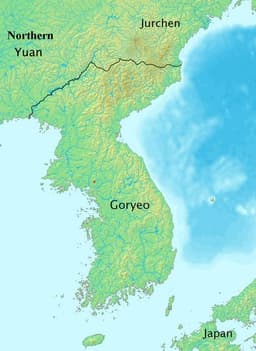
Gyeongjong of Goryeo
Emperor · Medieval
47.1Total

Oduduwa
Emperor · Medieval
59.7Total
Basic Information
Born
955
950
Died
981
1020
Era
Medieval
Medieval
Nationality
Korea
Ife
Occupation
Emperor
Emperor
Civilization
Eastern
Other
Score Comparison
Military (10%)
20.0
50.0
Political (20%)
53.8
46.6
Influence (20%)
53.3
68.0
Legacy (20%)
47.5
68.0
Leadership (15%)
48.8
67.0
Strategy (15%)
45.0
36.8
TOTAL
47.1
59.7
Gyeongjong of Goryeo — Complete Timeline
976 AD
Institution of the Jeonsigwa Land SystemReform◆ Major
King Gyeongjong established the jeonsigwa, a land distribution system that allocated state-owned farmland to government officials based on their rank. This reform aimed to secure royal revenue and control over land, while providing a stable income for the bureaucracy.
Impact: nationalconstructive
Oduduwa — Complete Timeline
1000 AD
Foundation of the Yoruba civilization at Ile-IfeCultural
According to Yoruba oral tradition, Oduduwa descended from heaven at Ile-Ife and founded the Yoruba civilization. He is credited with establishing the first Yoruba kingdom and the sacred city of Ile-Ife, which became the spiritual and cultural heartland of the Yoruba people.
Impact: regionalconstructive
1010 AD
Establishment of the Yoruba royal dynastiesPolitical Action◆ Major
Oduduwa is said to have sent his sons and grandsons to found the various Yoruba kingdoms, including Oyo, Benin, and Ketu. This act established the royal lineages that ruled these states for centuries, creating a network of related kingdoms under the spiritual authority of the Ooni of Ife.
Impact: regionalconstructive
Expert Analysis
Gyeongjong of Goryeo vs Oduduwa
# The King and the Progenitor: Gyeongjong of Goryeo and Oduduwa of Ife
On opposite sides of the medieval world, in the year 976 and around the turn of the millennium, two rulers were shaping the destiny of their peoples—though in profoundly different ways. In the Korean peninsula, King Gyeongjong signed a land reform decree that would stabilize a fragile kingdom. In the forests of West Africa, the legendary Oduduwa was weaving a creation myth that would anchor an entire civilization. One was a historical monarch dealing with the mundane but vital mechanics of state finance; the other was a semi-divine figure whose very existence hovered between history and myth. Their stories, separated by thousands of miles and vastly different worldviews, raise a compelling question: what does it mean to found a civilization—through policy or through prophecy?
Origins
Gyeongjong of Goryeo was born in 955 into a royal house still consolidating its power. His father, King Gwangjong, had been a reformer who purged rival aristocrats and strengthened the throne, but his methods left deep scars. The young prince grew up in a court riven by factionalism, where survival demanded political acumen. Gyeongjong’s world was one of documents, taxes, and bureaucratic ranks—a kingdom that had unified the Korean peninsula only decades earlier and needed institutions to hold it together.
Oduduwa’s origins, in contrast, belong to the realm of sacred narrative. According to Yoruba oral tradition, he descended from the sky at Ile-Ife, carrying a handful of earth and a five-toed chicken that scattered the land to create the world. Born around 950, he is not merely a king but a progenitor—the ancestor of all Yoruba royalty. His story is not recorded in annals but chanted by griots, preserved in rituals, and etched into the spiritual geography of West Africa. Where Gyeongjong inherited a throne, Oduduwa created one from the stuff of legend.
Rise to Power
Gyeongjong ascended the throne in 975 after his father’s death. His path was straightforward but treacherous: he was the legitimate heir, but Goryeo’s history was littered with kings who had been poisoned or overthrown. His first year was spent securing loyalty from the aristocracy that his father had alienated. The turning point came in 976, when he unveiled the *jeonsigwa* land system—a policy that allocated state-owned farmland based on official rank, not hereditary privilege. This was not a dramatic conquest but a bureaucratic coup, a quiet redistribution of power that stabilized state finances and curbed the nobility’s independent wealth.
Oduduwa’s rise is a story of divine intervention. Around 1000, according to tradition, he arrived at Ile-Ife and founded the Yoruba civilization. His authority was not political in the modern sense but spiritual and genealogical. He did not conquer through armies—his military score is a mere 11.4—but through the power of origin. By 1010, he had sent his sons and grandsons to establish the kingdoms of Oyo, Benin, and Ketu, creating a network of states linked by blood and ritual. His rise was not a campaign but a dispersal, a scattering of royal seed across the land.
Leadership & Governance
Gyeongjong ruled for only six years, from 975 to 981, yet his legacy rests on a single, decisive reform. The *jeonsigwa* system was an elegant solution to a chronic problem: how to pay officials without enriching them at the state’s expense. By tying land grants to rank, he made service to the crown the basis of wealth, not birth. His leadership score of 73.5 reflects a ruler who understood that stability required institutional design, not personal charisma. He was a technocrat in a throne—pragmatic, methodical, and perhaps cautious.
Oduduwa’s governance was of a different order. With a leadership score of 81.7, he is remembered as a unifier and a founder. His political action—sending his sons to found new kingdoms—was not centralization but diffusion. He created a civilization by establishing a common origin story, a shared genealogy that bound the Yoruba people across hundreds of miles. His influence score of 69.2 and legacy of 69.9 are rooted in myth, not policy. Where Gyeongjong wrote laws, Oduduwa wrote lineage.
Triumph & Tragedy
Gyeongjong’s triumph was the *jeonsigwa* system, which became the backbone of Goryeo’s fiscal administration for generations. His tragedy is that he died young, at just 26, in 981—leaving a system that would later be corrupted and a kingdom still fragile. His military score of 55.1 and strategy of 30.0 suggest he was no warrior-king; his battles were fought with ink and parchment.
Oduduwa’s triumph is the survival of his legacy for over a millennium. The Yoruba civilization he founded remains one of Africa’s great cultural traditions, with Ile-Ife as its spiritual capital. His tragedy, if it can be called that, is that his story is so wrapped in myth that the historical man is nearly invisible. We know what he did, but not who he was—only the archetype remains.
Character & Destiny
Gyeongjong’s personality is elusive, but his actions suggest a ruler who valued order over glory. He chose reform over expansion, stability over conquest. His destiny was to be a bridge between his father’s harsh consolidation and his successor’s cultural flourishing. He was a caretaker king, and perhaps that is why his total score of 60.6 is modest—he did not dazzle, he administered.
Oduduwa’s character is defined by the myth itself: he is the sky-father, the bringer of civilization, the ancestor of all. His destiny was to be remembered not as a man but as a symbol. His total score of 60.1 is nearly identical to Gyeongjong’s, but the resemblance is deceptive. One score reflects a brief reign of policy; the other, an eternal reign of memory.
Legacy
Gyeongjong’s legacy is the *jeonsigwa*—a system that outlasted him by centuries, even as it evolved and decayed. He is remembered in Korean history as a reformer, but not a great one. His name appears in textbooks, not songs.
Oduduwa’s legacy is the Yoruba identity itself. Every Yoruba king traces his authority to Oduduwa; every ritual at Ile-Ife honors his descent. His influence score of 72.7 and legacy of 69.9 understate the depth of his impact—he is not a historical figure but a living presence in the culture.
Conclusion
To compare Gyeongjong and Oduduwa is to see the two faces of founding: one through law, the other through legend. The Korean king built a system that organized a state; the Yoruba progenitor built a story that organized a civilization. Both succeeded, both are remembered, and both remind us that power takes many forms—sometimes a decree, sometimes a myth, sometimes a handful of earth scattered by a chicken’s feet. In the end, what endures is not the ruler but the world he leaves behind.
Rankings
🥇
OduduwaLeader
Mil: 50.0Pol: 46.6Inf: 68.0
59.7
🥈
Gyeongjong of Goryeo
Mil: 20.0Pol: 53.8Inf: 53.3
47.1
+12.6 behind
How This Comparison Works
Algorithm
Each figure is scored on 6 dimensions (0—100 scale) based on structured historical data: Military (10%), Political (20%), Influence (20%), Legacy (20%), Leadership (15%), Strategy (15%). The weighted total produces the final ranking.
Data Sources
Scores are computed from structured sub-indicators in the database. Scale factors adjust for era (Ancient ×0.85, Modern ×1.0) and civilization size (Eastern ×1.05, Other ×0.80) to account for differences in population and military scale.
Maximum 3 Figures
Comparisons are limited to 2—3 figures to ensure readability and statistical meaningfulness.
Error Margins
±5 points per dimension — Sub-scores are derived from historical records with inherent uncertainty. Two figures within 5 points on a dimension should be considered roughly equivalent in that area.
Total Score Accuracy
±3 points overall — The weighted combination of 6 dimensions produces a total score with approximately ±3 points of uncertainty. Differences of less than 3 points are not statistically significant— the figures are effectively tied.
Known Limitations
- Historical records are incomplete and uneven across civilizations
- Figures from oral-tradition societies may be underrepresented
- Occupation labels can misclassify multi-role figures
- Scores measure capability and impact, not moral character
- Quantitative scoring is a comparison tool, not absolute truth
Capability Radar
Military (10%) — Battles & Warfare
Battles
5
10
Win Rate
5
10
Expansion
5
30
Political (20%) — Governance & Reform
Reform
70
50
Diplomacy
40
40
Economy
65
40
Influence (20%) — Cultural & Global Reach
Cultural
30
80
Global
20
70
Legacy (20%) — Historical Impact
Historical
45
80
Longevity
40
80
Leadership (15%) — Power & Stability
Tenure
55
40
Stability
50
50
Strategy (15%) — Tactics & Innovation
Strategy
5
10
Tactics
5
10
Reform
5
10
Similar Comparisons
Comments & Discussion
No comments yet. Be the first to share your thoughts!