Loading...
Gyeongjong of Goryeo vs Moctezuma I
Moctezuma I leads by 11.8 pts · 2 figures compared
…
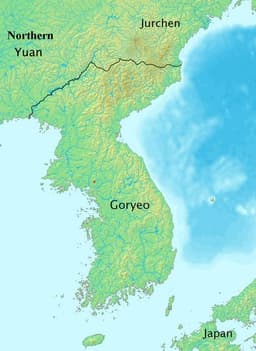
Gyeongjong of Goryeo
Emperor · Medieval
47.1Total

Moctezuma I
Emperor · Medieval
58.9Total
Basic Information
Born
955
1398
Died
981
1469
Era
Medieval
Medieval
Nationality
Korea
Aztec Empire
Occupation
Emperor
Emperor
Civilization
Eastern
Other
Score Comparison
Military (10%)
20.0
82.0
Political (20%)
53.8
45.0
Influence (20%)
53.3
58.3
Legacy (20%)
47.5
56.0
Leadership (15%)
48.8
66.0
Strategy (15%)
45.0
55.0
TOTAL
47.1
58.9
Gyeongjong of Goryeo — Complete Timeline
976 AD
Institution of the Jeonsigwa Land SystemReform◆ Major
King Gyeongjong established the jeonsigwa, a land distribution system that allocated state-owned farmland to government officials based on their rank. This reform aimed to secure royal revenue and control over land, while providing a stable income for the bureaucracy.
Impact: nationalconstructive
Moctezuma I — Complete Timeline
1428 AD
Conquest of the TepanecsWar◆ Major
Itzcoatl led the Triple Alliance forces in a war against the Tepanecs of Azcapotzalco, the dominant power in the region. The victory broke Tepanec hegemony and established Tenochtitlan as the leading city-state in central Mexico.
WarTepanec WarAztec Expansion
Impact: regional
Formed the Triple AlliancePolitical Action
Itzcoatl, as tlatoani of Tenochtitlan, formed the Triple Alliance with Texcoco and Tlacopan. This military and political pact created the Aztec Empire, enabling coordinated conquests and the subjugation of neighboring city-states in the Valley of Mexico.
Aztec EmpireAlliancePolitical Foundation
Impact: regional
1430 AD
Burned Historical CodicesCultural◆ Major
Itzcoatl ordered the burning of historical codices from conquered peoples, rewriting Aztec history to legitimize his rule and the empire's divine origins. This act destroyed pre-Aztec records and reshaped Mesoamerican historical memory.
Cultural DestructionHistorical RevisionAztec Ideology
Impact: regionaldestructive
Expert Analysis
Gyeongjong of Goryeo vs Moctezuma I
# The Emperor and the Reformer: Two Paths to Power in a Medieval World
The fire consumed centuries of history. In 1430, the Aztec emperor Itzcoatl—uncle and mentor to the young prince Moctezuma I—ordered the burning of every captured codex from the conquered Tepanec people. As smoke rose over Tenochtitlan, a new story of the world was being written, one that would justify Aztec supremacy through divine mandate. Half a world away, in the Korean kingdom of Goryeo, another ruler faced a different kind of flame: the slow, bureaucratic fire of administrative reform. King Gyeongjong, frail and short-lived, would leave behind no conquests, no epic battles, but a land system that would outlast his dynasty. These two medieval rulers, born within four centuries of each other, embody radically different answers to the same question: how does a ruler secure his legacy when power is fragile and time is short?
Origins
Moctezuma I was born in 1398 into a world of shifting alliances and constant warfare. The Valley of Mexico was a patchwork of city-states, each vying for dominance. His uncle Itzcoatl, a seasoned warrior-priest, had risen to become tlatoani—speaker—of Tenochtitlan, the rising power among the lake cities. Young Moctezuma grew up in the shadow of temples and the echo of war drums, learning that power was something to be seized, not inherited. The Aztec worldview demanded blood and tribute; the gods themselves required human hearts to keep the sun moving across the sky.
Gyeongjong of Goryeo, born in 955, entered a world already ordered. The Korean peninsula had been unified under the Goryeo dynasty for nearly a century. His father, King Gwangjong, had purged the old aristocratic families and established a centralized bureaucracy. The young prince was raised in a court of scholars and eunuchs, where the highest virtue was not martial prowess but administrative competence. The Confucian classics shaped his mind, not the war cries of sacrifice. These were not merely different childhoods—they were different universes of meaning.
Rise to Power
When Itzcoatl died in 1440, Moctezuma I inherited an empire in motion. The Triple Alliance—formed in 1428 between Tenochtitlan, Texcoco, and Tlacopan—had already shattered the Tepanec hegemony. But alliances are fragile things. Moctezuma’s first task was to prove he could hold what his uncle had won. He did so through relentless military campaigns, expanding Aztec control east to the Gulf Coast and south into Oaxaca. Each conquest brought tribute: gold, jade, feathers, and—most precious of all—captives for sacrifice.
Gyeongjong’s path was quieter but no less precarious. He became king in 975 at age twenty, after his father Gwangjong’s death. The court was rife with factionalism, the aristocracy still resentful of centralization. Gyeongjong had no army of his own, no network of conquered cities to exploit. His power came from the throne itself—and from the land. In 976, he instituted the *jeonsigwa* system, a radical redistribution of state-owned farmland based on official rank. It was not a conquest of territory but a conquest of bureaucracy: by tying land grants to government service, he bound the aristocracy’s fortunes to the crown’s stability.
Leadership and Governance
Moctezuma I ruled as a warrior-emperor, personally leading campaigns and overseeing the construction of aqueducts, temples, and the great *teocalli*—the pyramid of Huitzilopochtli. His military genius lay in strategy: he understood that the Triple Alliance needed not just victories but a system of terror and tribute. Conquered cities were allowed to keep their own rulers, but they paid in blood and goods. This was governance through fear, and it worked—for a time. His political score of 85.7 reflects a master of alliance and intimidation, but his strategy score of 59.7 hints at a weakness: he built an empire that demanded constant expansion, a machine that could never stop.
Gyeongjong governed through codification. The *jeonsigwa* was not a dramatic reform; it was a quiet revolution. By assigning land based on eighteen ranks of officialdom, he created a predictable, taxable system. Farmers knew what they owed; officials knew what they would receive. This was governance through order, not fear. His military score of 55.1 and strategy of 30.0 suggest a ruler who never needed a sword—his pen was sharp enough. But the system had limits: it could not expand, only maintain. Where Moctezuma’s empire grew, Gyeongjong’s kingdom stabilized.
Triumph and Tragedy
Moctezuma’s greatest triumph was the consolidation of Aztec hegemony. Under his rule, Tenochtitlan became the greatest city in the Americas, its causeways thronged with merchants, its temples red with sacrifice. But the tragedy was already encoded in his success. The empire he built was a pyramid on a foundation of enemies. Every conquered city remembered its former independence. The tribute system bred resentment; the constant need for sacrificial victims created endless war. When the Spanish arrived half a century later, they found an empire ready to fracture.
Gyeongjong’s triumph was quieter but more durable. The *jeonsigwa* system would remain the backbone of Goryeo’s government for centuries. But his tragedy was personal: he reigned only six years, dying in 981 at age twenty-six. No one knows if illness or politics cut him down. His reforms outlived him, but he himself became a footnote—a king remembered not for his life but for his system. Where Moctezuma’s tragedy was imperial, Gyeongjong’s was individual.
Character and Destiny
Moctezuma I was shaped by a worldview that saw the universe as a battlefield. The Aztecs believed that the gods had created the world through sacrifice, and humans must repay that debt. This cosmology demanded a ruler who was ruthless, ambitious, and unafraid of blood. Moctezuma’s personality—pragmatic, calculating, yet devout—fit his era perfectly. He was a product of his gods.
Gyeongjong was shaped by a worldview that saw the universe as a hierarchy. Confucianism taught that order came from proper relationships: ruler to subject, father to son, king to official. His personality—patient, methodical, perhaps even timid—was suited to a court where violence was a failure of governance, not a tool of it. He was a product of his books.
Legacy
Moctezuma I is remembered as a builder and conqueror, but his legacy is ambiguous. He expanded an empire that would collapse within seventy years of his death. His name survives in murals and textbooks, but the civilization he ruled is gone. The codices he burned are lost; the temples he built are rubble. His legacy score of 67.4 reflects a ruler who built something magnificent—and fragile.
Gyeongjong is remembered for a single reform, but that reform endured. The *jeonsigwa* system shaped Korean land policy for centuries, influencing everything from taxation to social mobility. His legacy score of 64.4 is similar to Moctezuma’s, but for opposite reasons: one built an empire that fell, the other built a system that lasted.
Conclusion
Standing on the causeways of Tenochtitlan, Moctezuma I could see the smoke of a hundred conquered cities rising against the mountains. He believed he was building something eternal. Sitting in the palace of Gaegyeong, Gyeongjong signed a document that would outlive his own bones. He believed he was building something orderly. Both were right, and both were wrong. The emperor’s empire crumbled; the reformer’s system evolved. In the end, what endures is not the scale of ambition but the depth of its roots. Moctezuma built a pyramid; Gyeongjong planted a tree. History remembers both—but one still grows.
Rankings
🥇
Moctezuma ILeader
Mil: 82.0Pol: 45.0Inf: 58.3
58.9
🥈
Gyeongjong of Goryeo
Mil: 20.0Pol: 53.8Inf: 53.3
47.1
+11.8 behind
How This Comparison Works
Algorithm
Each figure is scored on 6 dimensions (0—100 scale) based on structured historical data: Military (10%), Political (20%), Influence (20%), Legacy (20%), Leadership (15%), Strategy (15%). The weighted total produces the final ranking.
Data Sources
Scores are computed from structured sub-indicators in the database. Scale factors adjust for era (Ancient ×0.85, Modern ×1.0) and civilization size (Eastern ×1.05, Other ×0.80) to account for differences in population and military scale.
Maximum 3 Figures
Comparisons are limited to 2—3 figures to ensure readability and statistical meaningfulness.
Error Margins
±5 points per dimension — Sub-scores are derived from historical records with inherent uncertainty. Two figures within 5 points on a dimension should be considered roughly equivalent in that area.
Total Score Accuracy
±3 points overall — The weighted combination of 6 dimensions produces a total score with approximately ±3 points of uncertainty. Differences of less than 3 points are not statistically significant— the figures are effectively tied.
Known Limitations
- Historical records are incomplete and uneven across civilizations
- Figures from oral-tradition societies may be underrepresented
- Occupation labels can misclassify multi-role figures
- Scores measure capability and impact, not moral character
- Quantitative scoring is a comparison tool, not absolute truth
Capability Radar
Military (10%) — Battles & Warfare
Battles
5
65
Win Rate
5
70
Expansion
5
80
Political (20%) — Governance & Reform
Reform
70
60
Diplomacy
40
65
Economy
65
70
Influence (20%) — Cultural & Global Reach
Cultural
30
60
Global
20
50
Legacy (20%) — Historical Impact
Historical
45
65
Longevity
40
55
Leadership (15%) — Power & Stability
Tenure
55
70
Stability
50
65
Strategy (15%) — Tactics & Innovation
Strategy
5
75
Tactics
5
60
Reform
5
55
Similar Comparisons
Comments & Discussion
Moctezuma's Coder6/16/2026
This is false equivalence dressed as history. Gyeongjong reformed land taxation; Moctezuma literally rewrote conquered peoples' histories through codex burnings. The "bureaucratic fire" metaphor is clever but masks that one man built administrative legitimacy while the other systematically erased cultures. Gyeongjong's reforms actually survived because they addressed real economic inequities, not because he was more "peaceful." Different tools, different goals—let's not romanticize empire-buildi
古卷余烬6/16/2026
拿火焰意象硬扯平行关系太刻意了。墨西加人烧毁特帕内克古抄本是为了清洗记忆、重塑神权叙事;高丽靖宗的土地改革是为了稳定税基、维持国家机器运转。一个在毁灭中建构权力,一个在数字中巩固统治。说穿了,前者是意识形态清洗,后者是财政官僚主义,根本不在一个维度。把两者称为"不同答案"只是在回避真正的历史比较:暴力垄断 vs. 制度创新。
The Blood Price6/16/2026
Funny how the comparison skips Moctezuma's actual numbers. During his reign, Tenochtitlan's tribute lists recorded 16,000 cloaks, 8,000 warrior costumes, and 2,400 loads of cacao annually from subject cities. That's not "shifting alliances"—that's an extractive empire predicated on visible threat. Meanwhile Gyeongjong's land system lowered tax rates for small farmers and limited aristocratic exemptions. One creates dependency through fear, the other through predictable governance. Not morally eq
军械库里的史官6/16/2026
说"火"之前先算算人。阿兹特克人的献祭制度在蒙特祖马一世时期达到制度化顶峰,奇琴伊察的骷髅架传说虽然可能是夸张,但墨西加人的贡赋清单里明确记载了一年几千名战俘用于祭祀。而高丽靖宗时期连重大军事冲突都很少,税改的基础是人口登记和土地丈量。说到底,这是两个完全不同的统治逻辑——一个用消耗生命来维持宇宙秩序,一个用调节利益来维持社会秩序。把这两种"权力"并列看似公正,实则在模糊本质差异。
Script-Keeper6/16/2026
The core problem: Moctezuma I's historical image is basically Aztec state propaganda filtered through Spanish chroniclers. We don't have his actual decrees—his uncle burned the archives! Gyeongjong's policies are verifiable through Korean court records and actual surviving land registers. Comparing a semi-mythologized imperial builder to a documentable administrator is like comparing a stained-glass saint to a tax accountant. The comparison tells us more about how we romanticize "empire" vs. dis