Loading...
Gyeongjong of Goryeo vs Mao Zedong
Mao Zedong leads by 32.3 pts · 2 figures compared
…
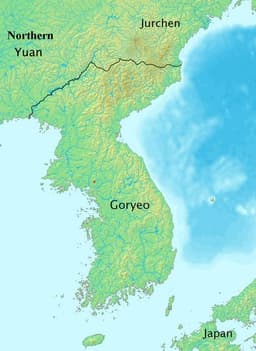
Gyeongjong of Goryeo
Emperor · Medieval
47.1Total
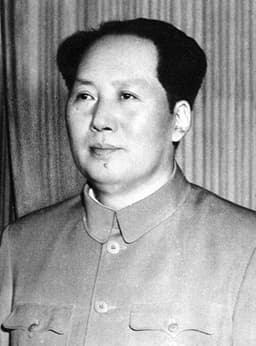
Mao Zedong
Politician · Modern
79.4Total
Basic Information
Born
955
1893
Died
981
1976
Era
Medieval
Modern
Nationality
Korea
China
Occupation
Emperor
Politician
Civilization
Eastern
Eastern
Score Comparison
Military (10%)
20.0
75.0
Political (20%)
53.8
88.0
Influence (20%)
53.3
85.0
Legacy (20%)
47.5
70.0
Leadership (15%)
48.8
85.0
Strategy (15%)
45.0
72.0
TOTAL
47.1
79.4
Gyeongjong of Goryeo — Complete Timeline
976 AD
Institution of the Jeonsigwa Land SystemReform◆ Major
King Gyeongjong established the jeonsigwa, a land distribution system that allocated state-owned farmland to government officials based on their rank. This reform aimed to secure royal revenue and control over land, while providing a stable income for the bureaucracy.
Impact: nationalconstructive
Mao Zedong — Complete Timeline
1934 AD
Long MarchWar
Mao Zedong led the Chinese Red Army on a strategic retreat from Nationalist forces, covering approximately 6,000 miles over 370 days. The march solidified Mao's leadership within the Chinese Communist Party and became a foundational myth of the Communist revolution.
Chinese Civil WarCommunist RevolutionRetreat
Impact: national
1949 AD
Proclamation of the People's Republic of ChinaPolitical Action
Mao Zedong declared the founding of the People's Republic of China from Tiananmen Gate in Beijing. This ended the Chinese Civil War and established Communist rule over mainland China, with Mao as Chairman of the Central People's Government.
Founding of PRCCommunist VictoryRevolution
Impact: global
1958 AD
Great Leap ForwardReform◆ Major
Mao launched a campaign to rapidly industrialize China and collectivize agriculture. The policy led to widespread mismanagement, resulting in a famine that caused an estimated 15-45 million deaths between 1959 and 1961.
FamineIndustrializationCollectivization
Impact: nationaldestructive
1960 AD
Sino-Soviet SplitPolitical Action◆ Major
Mao's ideological differences with Soviet leader Nikita Khrushchev led to a breakdown in relations between China and the Soviet Union. The split ended the Sino-Soviet alliance and reshaped global Cold War dynamics, with China pursuing an independent path.
Cold WarIdeological ConflictAlliance Breakdown
Impact: global
1966 AD
Cultural RevolutionPolitical Action
Mao initiated a sociopolitical movement to purge capitalist and traditional elements from Chinese society. The Red Guard youth groups attacked intellectuals and officials, leading to widespread violence, destruction of cultural artifacts, and an estimated 1-2 million deaths.
Political PurgeSocial UpheavalRed Guard
Impact: nationaldestructive
1971 AD
Ping-Pong DiplomacyCultural◆ Major
Mao approved an invitation for the U.S. table tennis team to visit China, initiating a thaw in Sino-American relations. This cultural exchange paved the way for President Nixon's visit to China in 1972 and the eventual normalization of diplomatic ties.
DiplomacyU.S.-China RelationsCultural Exchange
Impact: globalconstructive
Expert Analysis
Gyeongjong of Goryeo vs Mao Zedong
# The Revolutionary and the Reformer: Mao Zedong and Gyeongjong of Goryeo
Imagine two men, separated by a millennium, each standing at the helm of a vast Eastern civilization. One, a peasant’s son who would reshape a continent through fire and ideology; the other, a medieval king who sought stability through a scroll of land reforms. Mao Zedong and Gyeongjong of Goryeo never met, yet their stories—one of cataclysmic upheaval, the other of quiet consolidation—reveal the starkly different paths that power can take when driven by ambition, circumstance, and the weight of history.
Origins
Mao Zedong was born in 1893 in the rural village of Shaoshan, Hunan, the son of a prosperous farmer. His early life was marked by rebellion against his father’s authority and a voracious appetite for books—Chinese classics, Western philosophy, and revolutionary pamphlets. The China of his youth was a crumbling empire, humiliated by foreign powers and torn by warlord conflicts. Mao’s world was one of chaos, where the old order was dying and the new had yet to be born.
Gyeongjong of Goryeo, born in 955, entered a world far more stable. As the son of King Gwangjong, he inherited a kingdom already unified on the Korean Peninsula, with a centralized bureaucracy and a Confucian court. Goryeo was a medieval state navigating the tensions between Buddhist monasteries, aristocratic clans, and a monarchy striving for control. Gyeongjong’s upbringing was not one of peasant struggle but of palace politics, where the greatest threat came not from foreign invaders but from noble families who hoarded land and power.
Their eras shaped them profoundly. Mao grew up in a time of collapse and possibility; Gyeongjong in a time of consolidation and order. One would become a destroyer of worlds; the other, a builder of systems.
Rise to Power
Mao’s ascent was a long, bloody march—literally. He joined the Chinese Communist Party in its infancy, but it was the Long March of 1934 that cemented his leadership. Covering approximately 6,000 miles through some of China’s most treacherous terrain, Mao led the Red Army in a strategic retreat from Nationalist forces. It was a journey of survival that forged a legend. By the time he reached Yan’an, Mao was not just a commander but a symbol: the man who could endure the impossible.
Gyeongjong’s rise was quieter. He became king in 975 upon the death of his father, at the age of twenty. There was no epic retreat, no military trial by fire. Instead, he inherited a throne that had been strengthened by his father’s purges of rival nobles. His challenge was not to seize power but to wield it effectively—a task that required patience and administrative skill, not guerrilla warfare.
Leadership & Governance
Mao’s leadership was a paradox of genius and catastrophe. Militarily, he was a strategist of unconventional warfare, as shown in the Long March and later campaigns against the Japanese and Nationalists. His political score of 82.0 reflects his ability to unite a fractured nation under a single ideology. But his governance was marked by radical experiments. The Great Leap Forward of 1958 aimed to rapidly industrialize China and collectivize agriculture, but mismanagement led to widespread famine, with millions dead. Then came the Cultural Revolution in 1966, a sociopolitical movement to purge capitalist and traditional elements, unleashing the Red Guard and plunging the nation into chaos. Yet Mao also showed pragmatism: Ping-Pong Diplomacy in 1971, when he approved an invitation for the U.S. table tennis team to visit China, thawed Sino-American relations and reshaped global geopolitics.
Gyeongjong ruled for only six years, from 975 to 981, but his single major reform—the institution of the *jeonsigwa* land system in 976—was a masterstroke of governance. This system allocated state-owned farmland based on official rank, stabilizing state finances and reducing the power of landed aristocrats. His military score of 55.1 and strategy score of 30.0 suggest he was no warrior, but his political score of 60.5 and leadership score of 73.5 indicate a ruler who understood that true power lies in institutions, not battles. He did not seek to transform society overnight; he sought to make it more orderly.
Triumph & Tragedy
Mao’s greatest triumph was the proclamation of the People’s Republic of China on October 1, 1949, from Tiananmen Gate in Beijing. It was the culmination of decades of struggle, and for a moment, hope seemed boundless. His tragedy was that the very policies he championed—the Great Leap Forward, the Cultural Revolution—undermined that hope, leaving a legacy of suffering that still haunts China’s memory.
Gyeongjong’s triumph was quieter: a land system that endured for centuries, providing a foundation for Goryeo’s stability. His tragedy was that he died young, at just 26, in 981, leaving his reforms to be carried on by successors. He never saw the full flowering of his work.
Character & Destiny
Mao was a man of immense ego and ideological certainty. He believed he could reshape human nature itself, and his personality—charismatic, ruthless, visionary—drove China through a crucible of fire. His decisions were often impulsive, as with the Great Leap Forward, but he also knew when to retreat, as with Ping-Pong Diplomacy. History was his canvas, and he painted in broad, violent strokes.
Gyeongjong was a different breed: cautious, methodical, perhaps even timid. His low strategy score suggests he was no grand visionary, but he understood the art of the possible. He did not seek to remake the world; he sought to fix what was broken. His destiny was to be a footnote in the grand narrative of Korean history, not its central figure.
Legacy
Mao’s legacy is immense and contested. He is remembered as the father of modern China, a revolutionary who ended a century of humiliation, but also as a tyrant whose policies caused immense suffering. His influence score of 79.7 and legacy score of 69.9 reflect this duality. He remains a towering figure, debated in classrooms and political circles worldwide.
Gyeongjong’s legacy is more modest but no less real. The *jeonsigwa* system influenced Korean land administration for generations, and he is remembered as a stabilizing force in Goryeo’s golden age. His influence score of 72.7 and legacy score of 64.4 suggest a ruler who did not shake the world but steadied it.
Conclusion
Mao Zedong and Gyeongjong of Goryeo embody two faces of leadership: the revolutionary who changes the world through upheaval, and the reformer who changes it through order. Mao’s story is one of fire and blood, of immense ambition and immense cost. Gyeongjong’s is one of ink and parchment, of quiet patience and quiet achievement. Both shaped their civilizations, but in profoundly different ways. Perhaps the lesson is that history measures leaders not by the scale of their ambition, but by the durability of their work—and that sometimes, the quietest hands leave the deepest marks.
Rankings
🥇
Mao ZedongLeader
Mil: 75.0Pol: 88.0Inf: 85.0
79.4
🥈
Gyeongjong of Goryeo
Mil: 20.0Pol: 53.8Inf: 53.3
47.1
+32.3 behind
How This Comparison Works
Algorithm
Each figure is scored on 6 dimensions (0—100 scale) based on structured historical data: Military (10%), Political (20%), Influence (20%), Legacy (20%), Leadership (15%), Strategy (15%). The weighted total produces the final ranking.
Data Sources
Scores are computed from structured sub-indicators in the database. Scale factors adjust for era (Ancient ×0.85, Modern ×1.0) and civilization size (Eastern ×1.05, Other ×0.80) to account for differences in population and military scale.
Maximum 3 Figures
Comparisons are limited to 2—3 figures to ensure readability and statistical meaningfulness.
Error Margins
±5 points per dimension — Sub-scores are derived from historical records with inherent uncertainty. Two figures within 5 points on a dimension should be considered roughly equivalent in that area.
Total Score Accuracy
±3 points overall — The weighted combination of 6 dimensions produces a total score with approximately ±3 points of uncertainty. Differences of less than 3 points are not statistically significant— the figures are effectively tied.
Known Limitations
- Historical records are incomplete and uneven across civilizations
- Figures from oral-tradition societies may be underrepresented
- Occupation labels can misclassify multi-role figures
- Scores measure capability and impact, not moral character
- Quantitative scoring is a comparison tool, not absolute truth
Capability Radar
Military (10%) — Battles & Warfare
Battles
5
85
Win Rate
5
80
Expansion
5
85
Political (20%) — Governance & Reform
Reform
70
95
Diplomacy
40
80
Economy
65
70
Influence (20%) — Cultural & Global Reach
Cultural
30
90
Global
20
90
Legacy (20%) — Historical Impact
Historical
45
95
Longevity
40
85
Leadership (15%) — Power & Stability
Tenure
55
95
Stability
50
60
Strategy (15%) — Tactics & Innovation
Strategy
5
85
Tactics
5
75
Reform
5
90
Similar Comparisons
Comments & Discussion
数据判官6/16/2026
只凭共同点就并列这两人是偷懒的分析。毛泽东的遗产是数亿人命运被彻底改写,而高丽景宗不过是王朝平稳交接的一个环节。土地改革看似相似,但毛是消灭阶级,景宗是安抚贵族。拿死亡数字说话都算不公平,因为一个是战争与饥荒的后果,一个是和平期的行政调整。硬要放一起,就是在误导读者。
SCROLLS_AND_SWORDS6/16/2026
Sure, both men touched land reform, but Gyeongjong did it by reading an edict in court while Mao mobilized armies of peasants to smash centuries of feudal order. The Jeonsigwa law was about re-calibrating aristocratic grants—tweaking the status quo. Mao’s Land Reform was about obliterating the status quo. Gyeongjong aimed for stability; Mao aimed for revolution. Different goals, different tools, different worlds. This comparison feels like an academic stretch.
经典考据派6/16/2026
高丽景宗在位不过四年,核心政策是延续父亲光宗的奴婢按检法并推行田柴科。这更像一场行政延续,而非个人革命。把这样一位过渡性君主和二十世纪最激进的革命家并列,史学上站不住脚。一个是在已有框架内优化系统,一个是粉碎框架重建。对比前至少该考虑在位时间与影响的量级差异。
PEASANT_WARRIOR6/16/2026
You folks are overthinking this. Mao and Gyeongjong both knew that land is power. The king tweaked noble grants to keep his palace stable; Mao gave land to millions of poor farmers to win their loyalty. Same strategy—control land, control people—just executed in wildly different contexts. Gyeongjong wasn't a revolutionary, sure, but he understood the same principle: the guy who decides who farms what rules the country. Simple.
MedievalMind6/16/2026
Comparing a mid-game monarch who tinkered with land taxes to the man who turned China inside out is like comparing a garden spade to a bulldozer. Mao fought a civil war, expelled imperial powers, and forced industrialization with the Great Leap Forward. Gyeongjong passed the Jeonsigwa law. One changed the course of world history; the other barely registers outside Korean textbooks. These two don’t belong in the same comparative sentence.