Loading...
Gyeongjong of Goryeo vs Louis XII
Louis XII leads by 9.4 pts · 2 figures compared
…
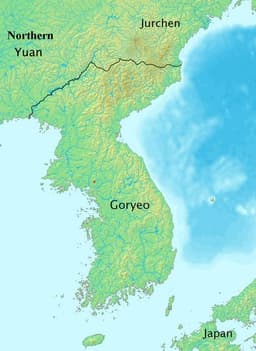
Gyeongjong of Goryeo
Emperor · Medieval
47.1Total

Louis XII
Emperor · Medieval
56.5Total
Basic Information
Born
955
1462
Died
981
1515
Era
Medieval
Medieval
Nationality
Korea
France
Occupation
Emperor
Emperor
Civilization
Eastern
Western
Score Comparison
Military (10%)
20.0
40.0
Political (20%)
53.8
70.0
Influence (20%)
53.3
58.0
Legacy (20%)
47.5
48.3
Leadership (15%)
48.8
79.8
Strategy (15%)
45.0
35.0
TOTAL
47.1
56.5
Gyeongjong of Goryeo — Complete Timeline
976 AD
Institution of the Jeonsigwa Land SystemReform◆ Major
King Gyeongjong established the jeonsigwa, a land distribution system that allocated state-owned farmland to government officials based on their rank. This reform aimed to secure royal revenue and control over land, while providing a stable income for the bureaucracy.
Impact: nationalconstructive
Louis XII — Complete Timeline
1498 AD
Reduced Taxes and Reformed JusticeReform◆ Major
Upon becoming king, Louis XII reduced the taille (land tax) and reformed the judicial system. He established the Grand Conseil to oversee justice and curbed abuses by royal officials. These measures earned him the title 'Father of the People' from the Estates-General.
Tax ReformJustice ReformPopularity
Impact: nationalconstructive
1499 AD
Invasion of Italy and Conquest of MilanWar◆ Major
Louis XII invaded Italy, claiming the Duchy of Milan through his grandmother's lineage. His forces captured Milan without major resistance, and he was proclaimed Duke of Milan. This began the Italian Wars of the early 16th century.
Italian WarsMilanConquest
Impact: regional
Married Anne of BrittanyPolitical Action◆ Major
Louis XII married Anne of Brittany, widow of his predecessor Charles VIII. This marriage ensured the permanent union of Brittany with France, ending Breton autonomy. The marriage was politically motivated and required papal dispensation due to consanguinity.
MarriageBreton UnionDynastic Policy
Impact: nationalconstructive
1508 AD
League of Cambrai against VenicePolitical Action◆ Major
Louis XII joined Pope Julius II, Emperor Maximilian I, and Ferdinand of Aragon in the League of Cambrai, aimed at partitioning Venetian territories. The French victory at Agnadello (1509) initially succeeded, but the alliance later fractured, and France lost its gains.
AllianceItalian WarsVenice
Impact: regionaldestructive
1513 AD
Defeat at the Battle of NovaraWar◆ Major
Louis XII's forces were defeated by the Swiss at Novara, forcing the French to abandon Milan. The defeat ended French control of northern Italy and marked the collapse of Louis's Italian ambitions. The war drained French finances and led to a peace treaty in 1514.
BattleItalian WarsDefeat
Impact: regionaltragic
Expert Analysis
Origins
**Gyeongjong of Goryeo** (born 955, reigned 975–981) was the fifth king of the Goryeo dynasty in Korea. He was the son of King Gwangjong, who had centralized power and reduced noble influence. Gyeongjong grew up in a court marked by his father's purges of powerful clans. His early education focused on Confucian governance and statecraft. Upon ascending the throne at age 20, he faced a kingdom still consolidating after his father's aggressive reforms.
**Louis XII** (born 1462, reigned 1498–1515) was a French king from the Valois-Orléans line. He was raised in the aftermath of the Hundred Years' War and educated as a noble, not initially expecting to become king. His early life involved managing his duchy of Orléans and participating in the mad wars against his cousin Charles VIII. He became king after Charles VIII's accidental death, inheriting a stable but financially strained realm.
Rise to Power
Gyeongjong became king upon his father's death in 975. His rise was straightforward as the legitimate heir, but he had to navigate the powerful aristocratic families that his father had suppressed. He lacked a strong power base and relied on compromise with the nobility. His key turning point was the institution of the jeonsigwa land system in 976, which allocated state-owned farmland to officials based on rank, aiming to stabilize the bureaucracy and reward loyalty.
Louis XII's rise was more circuitous. He was a cousin of Charles VIII and had led rebellions against him in the 1480s. He was imprisoned for three years after the Mad War. Upon Charles VIII's death in 1498, Louis became king. He immediately sought to secure his position by divorcing his wife (to marry Charles's widow, Anne of Brittany) and reducing taxes to gain popularity. His invasion of Italy in 1499 to claim Milan was a bold move to establish his reputation as a conqueror.
Leadership & Governance
Gyeongjong's leadership was cautious and conciliatory. His jeonsigwa system was a bureaucratic reform that aimed to reduce corruption and create a merit-based allocation of land revenue. However, it was limited in scope and did not fundamentally alter the power of entrenched clans. He also attempted to strengthen royal authority but lacked the forcefulness of his father. His political score of 53.8 reflects moderate success in governance, but his military score of 20.0 shows he avoided conflict. His leadership score of 48.8 indicates a balanced but unremarkable reign.
Louis XII was a popular ruler, earning the title "Father of the People" for reducing the taille (land tax) by a third and reforming the judiciary through the Grand Conseil. He centralized justice and curbed noble abuses. His leadership score of 79.8 is high, reflecting his ability to win public support and manage the kingdom. However, his military strategy score of 35.0 is low, as his Italian campaigns were costly and ultimately failed. His invasion of Milan in 1499 succeeded initially, but the Battle of Novara in 1513 forced France out of Italy.
Triumph & Tragedy
Gyeongjong's greatest triumph was the jeonsigwa system, which provided a framework for land distribution that lasted for centuries in modified forms. It helped stabilize the Goryeo bureaucracy and set a precedent for merit-based rewards. His greatest failure was his inability to control the nobility effectively; after his death, power struggles resumed. His short reign (6 years) limited his impact.
Louis XII's triumphs include reducing taxes, which improved the lives of commoners, and marrying Anne of Brittany, which permanently united Brittany with France. His Italian conquests, especially the capture of Milan, expanded French influence. His tragedies include the disastrous League of Cambrai (1508) against Venice, which backfired when the Pope turned against France. The defeat at Novara in 1513 ended French ambitions in Italy and drained the treasury. His legacy score of 48.3 reflects mixed outcomes.
Character & Destiny
Gyeongjong was cautious and pragmatic, shaped by his father's violent reign. He chose reform over confrontation, which preserved stability but left underlying tensions unresolved. His character—measured and non-confrontational—led to a quiet reign but limited his ability to leave a strong mark. Historians view him as a transitional figure between Gwangjong's centralization and later kings' struggles.
Louis XII was ambitious and popular, but his desire for glory in Italy overextended France. His character was generous and reform-minded at home, but militarily overconfident. His destiny was to be remembered as a good domestic king but a failed conqueror. The Swiss victory at Novara was a humiliating end to his Italian dreams.
Legacy
Gyeongjong's jeonsigwa system influenced Korean land administration for centuries, though it was later replaced by more comprehensive systems. He is remembered as a reformer who attempted to rationalize governance. His total score of 47.1 reflects a modest but significant contribution to Korean state-building.
Louis XII's legacy is mixed: he is celebrated as a reformer who reduced taxes and improved justice, but his Italian wars wasted resources and set France up for future conflicts. The union of Brittany with France was a lasting achievement. His total score of 56.5 is higher due to his stronger leadership and political skills.
Conclusion
Louis XII had greater impact overall, scoring 56.5 to Gyeongjong's 47.1. His domestic reforms—tax reduction and judicial improvements—directly benefited millions, and the annexation of Brittany shaped French geography permanently. Gyeongjong's jeonsigwa was important for Korean administration, but it was a single reform within a short reign. Louis XII's leadership score of 79.8 dwarfs Gyeongjong's 48.8, showing his ability to govern effectively. While his military failures were significant, his political and legacy scores (70.0 and 48.3) surpass Gyeongjong's (53.8 and 47.5). In the long term, Louis XII's actions had broader consequences for European politics, while Gyeongjong's impact remained confined to Korea.
Rankings
🥇
Louis XIILeader
Mil: 40.0Pol: 70.0Inf: 58.0
56.5
🥈
Gyeongjong of Goryeo
Mil: 20.0Pol: 53.8Inf: 53.3
47.1
+9.4 behind
How This Comparison Works
Algorithm
Each figure is scored on 6 dimensions (0—100 scale) based on structured historical data: Military (10%), Political (20%), Influence (20%), Legacy (20%), Leadership (15%), Strategy (15%). The weighted total produces the final ranking.
Data Sources
Scores are computed from structured sub-indicators in the database. Scale factors adjust for era (Ancient ×0.85, Modern ×1.0) and civilization size (Eastern ×1.05, Other ×0.80) to account for differences in population and military scale.
Maximum 3 Figures
Comparisons are limited to 2—3 figures to ensure readability and statistical meaningfulness.
Error Margins
±5 points per dimension — Sub-scores are derived from historical records with inherent uncertainty. Two figures within 5 points on a dimension should be considered roughly equivalent in that area.
Total Score Accuracy
±3 points overall — The weighted combination of 6 dimensions produces a total score with approximately ±3 points of uncertainty. Differences of less than 3 points are not statistically significant— the figures are effectively tied.
Known Limitations
- Historical records are incomplete and uneven across civilizations
- Figures from oral-tradition societies may be underrepresented
- Occupation labels can misclassify multi-role figures
- Scores measure capability and impact, not moral character
- Quantitative scoring is a comparison tool, not absolute truth
Capability Radar
Military (10%) — Battles & Warfare
Battles
5
45
Win Rate
5
50
Expansion
5
40
Political (20%) — Governance & Reform
Reform
70
70
Diplomacy
40
60
Economy
65
75
Influence (20%) — Cultural & Global Reach
Cultural
30
40
Global
20
30
Legacy (20%) — Historical Impact
Historical
45
45
Longevity
40
35
Leadership (15%) — Power & Stability
Tenure
55
65
Stability
50
65
Strategy (15%) — Tactics & Innovation
Strategy
5
45
Tactics
5
40
Reform
5
30
Similar Comparisons
Comments & Discussion
No comments yet. Be the first to share your thoughts!