Loading...
Alexios I Komnenos vs Gyeongjong of Goryeo
Alexios I Komnenos leads by 31.3 pts · 2 figures compared
…
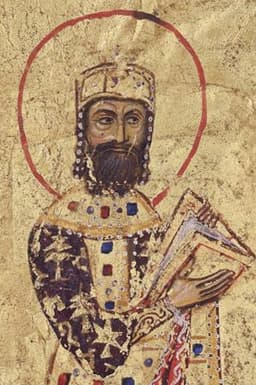
Alexios I Komnenos
Emperor · Medieval
78.4Total
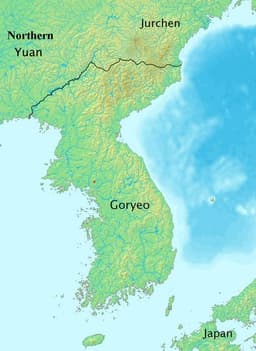
Gyeongjong of Goryeo
Emperor · Medieval
47.1Total
Basic Information
Born
1048
955
Died
1118
981
Era
Medieval
Medieval
Nationality
Byzantine Empire
Korea
Occupation
Emperor
Emperor
Civilization
Western
Eastern
Score Comparison
Military (10%)
61.7
20.0
Political (20%)
78.0
53.8
Influence (20%)
88.0
53.3
Legacy (20%)
80.0
47.5
Leadership (15%)
78.0
48.8
Strategy (15%)
68.0
45.0
TOTAL
78.4
47.1
Alexios I Komnenos — Complete Timeline
1081 AD
Battle of DyrrhachiumWar◆ Major
Alexios I Komnenos was defeated by the Norman army under Robert Guiscard at Dyrrhachium. The Byzantine forces were routed, and Alexios barely escaped. This loss allowed the Normans to occupy much of the western Balkans, though Alexios later recovered some territory.
Norman InvasionDefeatBalkans
Impact: regionaltragic
1090 AD
Reforms of the Byzantine Military and EconomyReform◆ Major
Alexios I implemented a series of reforms to restore Byzantine power. He reorganized the army by relying more on foreign mercenaries, reformed the currency (the hyperpyron), and granted tax exemptions to the Church. These measures stabilized the empire after decades of decline.
Military ReformEconomic ReformKomnenian Restoration
Impact: nationalconstructive
1095 AD
Appeal to the West: Council of PiacenzaPolitical Action
Alexios I sent envoys to Pope Urban II at the Council of Piacenza, requesting military aid against the Seljuk Turks. This appeal contributed to Urban's call for the First Crusade at the Council of Clermont later that year, initiating the Crusader movement.
First CrusadePope Urban IISeljuk Turks
Impact: global
1097 AD
First Crusade: Siege of NicaeaWar◆ Major
Alexios I cooperated with the Crusader army to besiege and capture Nicaea from the Seljuk Turks. The city was surrendered to Byzantine control, and Alexios used the Crusaders to recover key territories in Anatolia, though tensions later arose over land claims.
First CrusadeNicaeaByzantine-Crusader Relations
Impact: regionalconstructive
Gyeongjong of Goryeo — Complete Timeline
976 AD
Institution of the Jeonsigwa Land SystemReform◆ Major
King Gyeongjong established the jeonsigwa, a land distribution system that allocated state-owned farmland to government officials based on their rank. This reform aimed to secure royal revenue and control over land, while providing a stable income for the bureaucracy.
Impact: nationalconstructive
Expert Analysis
Alexios I Komnenos vs Gyeongjong of Goryeo
# The Emperor and the King: Two Paths to Survival in a Violent Age
In the autumn of 1081, Alexios I Komnenos watched his army shatter on the plains of Dyrrhachium. Norman knights under Robert Guiscard had torn through his best troops, and the Byzantine emperor fled the field with little more than his life. A century earlier, such a defeat would have been unthinkable for the master of Constantinople. Now it was merely another crisis in an empire bleeding from every frontier. Across the world, in the Korean peninsula, another ruler faced a different kind of emergency—not of foreign invasion, but of internal decay. King Gyeongjong of Goryeo inherited a kingdom where the old aristocracy had grown fat on land grants while the treasury ran dry. Two medieval rulers, separated by thousands of miles and utterly different civilizations, each confronted the central question of their age: how to hold a realm together when the old order was crumbling.
Origins
Alexios Komnenos was born into the Byzantine military aristocracy at a time when the empire had become a playground for ambitious generals. His family had already produced one emperor, Isaac I, who had been deposed after a brief reign. The young Alexios grew up watching the throne change hands through coups and civil wars, learning early that power was something to be seized rather than inherited. His world was one of constant warfare—against Normans in the west, Seljuk Turks in the east, and Pecheneg raiders from the north. Every frontier bled, and Constantinople itself seemed perpetually under threat.
Gyeongjong of Goryeo, born in 955, knew a different kind of instability. His father, King Gwangjong, had been a reformer who purged the old nobility and centralized power, but his methods had been brutal and divisive. When Gyeongjong took the throne in 975 at the age of twenty, he inherited a court seething with resentment. The great families had been humiliated but not destroyed, and they watched the new king carefully. Unlike Alexios, who faced enemies beyond his borders, Gyeongjong’s greatest challenges lay within his own palace.
Rise to Power
Alexios rose through military command, not inheritance. He distinguished himself fighting Turks in Anatolia and earned a reputation as a capable general. But his path to the throne in 1081 came through conspiracy. Together with his older brother Isaac, he led a rebellion against the incompetent Emperor Nikephoros III Botaneiates, marching on Constantinople with an army that included both Byzantine troops and Turkish mercenaries. The city fell without a major battle, and Alexios was crowned emperor at age thirty-three. He had seized power through force, and he knew he would have to keep it through cunning.
Gyeongjong’s accession was smoother but no less precarious. He inherited the throne peacefully from his father, but he inherited also the wounds of Gwangjong’s harsh reforms. The aristocracy, though beaten down, still controlled local administration and held deep grudges. A young king who ruled through fear would likely meet the same fate as his father—respected but isolated, his reforms undone after his death. Gyeongjong chose a different path.
Leadership & Governance
The contrast between their governing styles is stark. Alexios governed as a warrior-emperor, constantly in the field, personally leading armies and negotiating with enemies. His military reforms were pragmatic: he relied increasingly on foreign mercenaries, including Varangian guards, Turkish horse archers, and even Norman knights who had once fought against him. He understood that the old Byzantine army of native recruits could not be rebuilt quickly, so he bought time with gold and alliances. His political genius lay in his ability to play enemies against each other—Normans against Turks, Crusaders against Seljuks, always keeping Constantinople at the center of the chessboard.
Gyeongjong governed from the throne room, not the battlefield. His great achievement was the *jeonsigwa* land system, instituted in 976, which redistributed state-owned farmland according to official rank. This was not a radical break but a careful compromise: it acknowledged the aristocracy’s right to land while tying that right to government service. Officials received land grants that reverted to the state upon their death, preventing the accumulation of vast hereditary estates. The system stabilized royal finances, reduced corruption, and gave the bureaucracy a stake in the kingdom’s stability. Where Alexios bought loyalty with gold and victory, Gyeongjong bought it with land and order.
Triumph & Tragedy
Alexios’s greatest triumph was also his most ambiguous legacy. When he appealed to Pope Urban II at the Council of Piacenza in 1095, requesting military aid against the Seljuk Turks, he set in motion the First Crusade. The Crusaders arrived in 1096—not as the disciplined mercenaries he had hoped for, but as a chaotic flood of knights, peasants, and fanatics. Alexios managed to steer them toward his own objectives, cooperating with them to recapture Nicaea in 1097. The city fell to the Byzantines through a combination of siege and negotiation, a masterpiece of diplomatic manipulation. But the Crusaders soon proved uncontrollable, carving out their own kingdoms in Antioch and Jerusalem, sowing seeds of future conflict between East and West.
Gyeongjong’s tragedy was one of brevity. He reigned only six years, from 975 to 981, dying at age twenty-six. The *jeonsigwa* system he created would survive him, becoming the foundation of Goryeo’s government for centuries, but he never saw its full fruits. His early death left his reforms in the hands of successors who would face their own crises. Where Alexios lived to see his schemes unfold over decades, Gyeongjong planted a tree he would never sit beneath.
Character & Destiny
Alexios was a survivor, flexible to the point of opportunism. He could fight a Norman duke one year and hire his knights the next; he could beg the Pope for help while simultaneously negotiating with Turkish sultans. His memoirs, written by his daughter Anna Komnene, reveal a man who saw politics as a game of patience and deception. He trusted no one fully, which was wise, and he forgave no enemy completely, which was necessary. His character matched his age: desperate, brilliant, and morally complicated.
Gyeongjong seems, by contrast, a builder rather than a fighter. His strategy score of 30.0, the lowest among his ratings, suggests he was no military mind. But his political wisdom—a score of 60.5, modest but solid—reflects a ruler who understood that stability comes from institutions, not battles. He chose to heal wounds rather than open new ones, to compromise rather than conquer. In a different era, he might have been called a reformer. In his own, he was simply a king who died too young.
Legacy
Alexios I Komnenos founded a dynasty that would restore Byzantine power for a century. His reforms, his diplomacy, and his sheer will dragged the empire back from the brink. But he also opened the door to the Crusades, a force that would eventually contribute to Constantinople’s fall. His legacy is a paradox: the savior who invited the storm.
Gyeongjong of Goryeo left a quieter legacy. The *jeonsigwa* land system became the bedrock of Goryeo’s governance, a model of bureaucratic order that influenced Korean statecraft for generations. His reign was short, his name less famous than his father’s or his successors’, but his work endured. He is remembered not as a conqueror but as an administrator, a king who understood that the health of a kingdom depends on the distribution of its land.
Conclusion
Standing at their respective thrones, these two rulers faced the same fundamental truth: that power is never secure, that order is always fragile. Alexios met this truth with energy and cunning, fighting every battle, negotiating every treaty, bending every force to his will. Gyeongjong met it with patience and structure, building a system that would outlast him. One saved an empire through war; the other stabilized a kingdom through law. In the end, both understood that the art of ruling is the art of surviving—and that survival sometimes means knowing when to fight, and sometimes knowing when to build.
Rankings
🥇
Alexios I KomnenosLeader
Mil: 61.7Pol: 78.0Inf: 88.0
78.4
🥈
Gyeongjong of Goryeo
Mil: 20.0Pol: 53.8Inf: 53.3
47.1
+31.3 behind
How This Comparison Works
Algorithm
Each figure is scored on 6 dimensions (0—100 scale) based on structured historical data: Military (10%), Political (20%), Influence (20%), Legacy (20%), Leadership (15%), Strategy (15%). The weighted total produces the final ranking.
Data Sources
Scores are computed from structured sub-indicators in the database. Scale factors adjust for era (Ancient ×0.85, Modern ×1.0) and civilization size (Eastern ×1.05, Other ×0.80) to account for differences in population and military scale.
Maximum 3 Figures
Comparisons are limited to 2—3 figures to ensure readability and statistical meaningfulness.
Error Margins
±5 points per dimension — Sub-scores are derived from historical records with inherent uncertainty. Two figures within 5 points on a dimension should be considered roughly equivalent in that area.
Total Score Accuracy
±3 points overall — The weighted combination of 6 dimensions produces a total score with approximately ±3 points of uncertainty. Differences of less than 3 points are not statistically significant— the figures are effectively tied.
Known Limitations
- Historical records are incomplete and uneven across civilizations
- Figures from oral-tradition societies may be underrepresented
- Occupation labels can misclassify multi-role figures
- Scores measure capability and impact, not moral character
- Quantitative scoring is a comparison tool, not absolute truth
Capability Radar
Military (10%) — Battles & Warfare
Battles
75
5
Win Rate
70
5
Expansion
60
5
Political (20%) — Governance & Reform
Reform
85
70
Diplomacy
90
40
Economy
70
65
Influence (20%) — Cultural & Global Reach
Cultural
70
30
Global
75
20
Legacy (20%) — Historical Impact
Historical
85
45
Longevity
80
40
Leadership (15%) — Power & Stability
Tenure
80
55
Stability
75
50
Strategy (15%) — Tactics & Innovation
Strategy
85
5
Tactics
80
5
Reform
75
5
Similar Comparisons
Comments & Discussion
No comments yet. Be the first to share your thoughts!