Loading...
Gyeongjong of Goryeo vs Kublai Khan
Kublai Khan leads by 27.2 pts · 2 figures compared
…
Gyeongjong of Goryeo
Emperor · Medieval
47.1Total
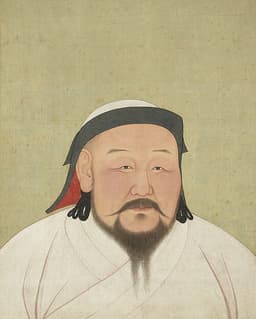
Kublai Khan
Emperor · Medieval
74.3Total
Basic Information
Born
955
1215
Died
981
1294
Era
Medieval
Medieval
Nationality
Korea
Mongolia
Occupation
Emperor
Emperor
Civilization
Eastern
Eastern
Score Comparison
Military (10%)
20.0
77.5
Political (20%)
53.8
79.2
Influence (20%)
53.3
75.0
Legacy (20%)
47.5
70.0
Leadership (15%)
48.8
72.0
Strategy (15%)
45.0
76.0
TOTAL
47.1
74.3
Gyeongjong of Goryeo — Complete Timeline
976 AD
Institution of the Jeonsigwa Land SystemReform◆ Major
King Gyeongjong established the jeonsigwa, a land distribution system that allocated state-owned farmland to government officials based on their rank. This reform aimed to secure royal revenue and control over land, while providing a stable income for the bureaucracy.
Impact: nationalconstructive
Kublai Khan — Complete Timeline
1260 AD
Adoption of Tibetan Buddhism as State ReligionCultural◆ Major
Kublai Khan appointed the Tibetan lama Drog
Tibetan BuddhismReligionMongol-Tibet Relations
Impact: regional
1271 AD
Proclamation of the Yuan DynastyPolitical Action◆ Major
Kublai Khan officially proclaimed the Yuan dynasty, adopting a Chinese-style dynastic name. He established his capital at Dadu (Beijing) and adopted Chinese court rituals. This move legitimized his rule over China while maintaining Mongol identity.
Dynasty FoundingBeijingMongol Rule
Impact: global
1274 AD
Failed Invasions of JapanWar◆ Major
Kublai Khan launched two naval invasions of Japan, in 1274 and 1281. Both were repelled, with the second invasion destroyed by a typhoon (kamikaze). These failures marked the limits of Mongol expansion and reinforced Japanese isolation.
Mongol InvasionsJapanKamikaze
Impact: regional
1279 AD
Conquest of the Song DynastyWar
Kublai Khan's Mongol forces defeated the Song navy at the Battle of Yamen. The last Song emperor drowned, ending the Song dynasty. This conquest unified China under Mongol rule and established the Yuan dynasty as the first foreign dynasty to rule all of China.
Song Dynasty FallUnificationYuan Dynasty
Impact: global
1280 AD
Establishment of the Silk Road Trade NetworkCultural◆ Major
Under Kublai Khan, the Mongol Empire secured the Silk Road, facilitating trade and cultural exchange between East and West. Marco Polo visited his court. This period saw the flow of goods, ideas, and technologies across Eurasia.
Silk RoadTradeCultural Exchange
Impact: globalconstructive
Expert Analysis
Kublai Khan vs Gyeongjong of Goryeo
# The Conqueror and the Reformer
On a windswept Korean peninsula in the year 976, King Gyeongjong of Goryeo signed a decree that would quietly reshape his kingdom’s finances. Half a world away, in the opulent halls of his new capital at Dadu, Kublai Khan was preparing fleets that would crash against the shores of Japan. One man built a system; the other built an empire. Both ruled in the same century of upheaval, yet their names echo through history with vastly different resonance. Why did one leave a legacy of salt and stone, while the other left a blueprint that outlasted his dynasty?
Origins
Kublai Khan entered the world in 1215, the grandson of Genghis Khan, born into a nomadic tradition that measured power in horses and conquest. The Mongol steppe was a harsh classroom, where survival depended on speed, ruthlessness, and the ability to command loyalty across tribes. By contrast, Gyeongjong of Goryeo was born in 955 into the structured hierarchy of a Korean court that had already refined its bureaucracy for centuries. His father, King Gwangjong, had purged the aristocracy and centralized power, leaving his son a throne that required maintenance, not expansion. Their eras defined them: Kublai inherited a world in motion, Gyeongjong a world in need of order.
Rise to Power
Kublai’s ascent was a brutal contest of brothers. In 1260, after a civil war with his younger brother Ariq Böke, he emerged as the Great Khan, but his victory was incomplete—the Mongol Empire fractured, leaving him to rule only the eastern half. He compensated by turning his gaze southward, toward China, a prize that would legitimize his claim. Gyeongjong’s path was quieter. Crowned in 975 at age twenty, he inherited a stable kingdom from his father. No wars of succession, no rival claimants—just a throne waiting for a steady hand. Where Kublai had to fight for his crown, Gyeongjong simply had to wear it.
Leadership & Governance
Kublai Khan ruled with a conqueror’s pragmatism. In 1271, he proclaimed the Yuan Dynasty, adopting a Chinese-style name to appeal to his new subjects, while simultaneously appointing the Tibetan lama Drogön Chögyal Phagpa as imperial preceptor in 1260, making Tibetan Buddhism the state religion. He was a master of cultural synthesis, employing Chinese administrators, Persian engineers, and Mongol generals. Yet his military genius had limits: the invasions of Japan in 1274 and 1281 were catastrophic failures, the second destroyed by a typhoon the Japanese called *kamikaze*—divine wind. His political score of 78.0 reflects a ruler who could conquer but not always consolidate.
Gyeongjong’s governance was the opposite: modest in ambition, profound in effect. In 976, he instituted the *jeonsigwa* land system, allocating state-owned farmland according to official rank. This stabilized royal finances, curbed aristocratic power, and created a predictable revenue stream. His strategy score of 30.0 suggests he was no general, but his leadership score of 73.5 hints at a different kind of strength—the patience to reform rather than ravage. While Kublai built roads for armies, Gyeongjong built a ledger for clerks.
Triumph & Tragedy
Kublai’s greatest triumph was the conquest of the Song Dynasty in 1279. At the Battle of Yamen, his fleet crushed the last Song resistance; the boy emperor drowned, and all of China fell under Mongol rule. It was the apex of his military score of 88.0—a feat of logistics and will. But his tragedy was equally grand: the failed Japanese invasions bled the treasury and tarnished his aura of invincibility. The Silk Road trade network he established in 1280 brought silk and spices to Europe, but also the plague, a grim footnote to his legacy.
Gyeongjong’s triumph was quieter. The *jeonsigwa* system outlasted his short six-year reign, becoming the backbone of Goryeo’s fiscal policy for generations. His tragedy was obscurity—he died young in 981, perhaps poisoned, his reforms overshadowed by the more dramatic wars of his successors. No divine winds, no epic battles—just a king who died before his work was fully tested.
Character & Destiny
Kublai was a man of appetite—for land, for power, for knowledge. He welcomed Marco Polo to his court, curious about the West, yet he could order the execution of a minister with cold detachment. His character was a contradiction: a nomad who built cities, a Buddhist who employed Confucians, a conqueror who sought peace. This duality drove his ambition but also his overreach. Gyeongjong, by contrast, was a consolidator. His reforms suggest a cautious mind, one that understood that a kingdom’s strength lies not in its borders but in its institutions. He ruled at a time when Goryeo needed stability, not glory, and he delivered it.
Legacy
Kublai Khan’s legacy is visible in the map of Asia—the Yuan Dynasty reshaped China, the Silk Road connected continents, and his name became synonymous with Mongol might. His total score of 79.6 reflects a ruler of immense impact, but his legacy is mixed: admired for his vision, criticized for his wars. Gyeongjong’s legacy is invisible but enduring. The *jeonsigwa* system influenced Korean land policy for centuries, and his reign is remembered as a pivot from aristocratic chaos to bureaucratic order. His total score of 60.6 is modest, but his influence score of 72.7 suggests that quiet reforms can echo louder than conquests.
Conclusion
Standing at the edge of history, one sees two kings: one who tried to rule the world, and one who tried to rule his kingdom well. Kublai Khan’s story is a thunderstorm—dramatic, destructive, unforgettable. Gyeongjong’s is a slow river—steady, nourishing, easily overlooked. Yet both shaped the lives of millions. Perhaps the difference between them is not one of greatness, but of scale. The conqueror builds empires that crumble; the reformer builds systems that endure. In the end, the divine wind that saved Japan was just weather. The *jeonsigwa* that fed a kingdom was a choice.
Rankings
🥇
Kublai KhanLeader
Mil: 77.5Pol: 79.2Inf: 75.0
74.3
🥈
Gyeongjong of Goryeo
Mil: 20.0Pol: 53.8Inf: 53.3
47.1
+27.2 behind
How This Comparison Works
Algorithm
Each figure is scored on 6 dimensions (0—100 scale) based on structured historical data: Military (10%), Political (20%), Influence (20%), Legacy (20%), Leadership (15%), Strategy (15%). The weighted total produces the final ranking.
Data Sources
Scores are computed from structured sub-indicators in the database. Scale factors adjust for era (Ancient ×0.85, Modern ×1.0) and civilization size (Eastern ×1.05, Other ×0.80) to account for differences in population and military scale.
Maximum 3 Figures
Comparisons are limited to 2—3 figures to ensure readability and statistical meaningfulness.
Error Margins
±5 points per dimension — Sub-scores are derived from historical records with inherent uncertainty. Two figures within 5 points on a dimension should be considered roughly equivalent in that area.
Total Score Accuracy
±3 points overall — The weighted combination of 6 dimensions produces a total score with approximately ±3 points of uncertainty. Differences of less than 3 points are not statistically significant— the figures are effectively tied.
Known Limitations
- Historical records are incomplete and uneven across civilizations
- Figures from oral-tradition societies may be underrepresented
- Occupation labels can misclassify multi-role figures
- Scores measure capability and impact, not moral character
- Quantitative scoring is a comparison tool, not absolute truth
Capability Radar
Military (10%) — Battles & Warfare
Battles
5
95
Win Rate
5
90
Expansion
5
95
Political (20%) — Governance & Reform
Reform
70
88
Diplomacy
40
85
Economy
65
90
Influence (20%) — Cultural & Global Reach
Cultural
30
85
Global
20
85
Legacy (20%) — Historical Impact
Historical
45
90
Longevity
40
80
Leadership (15%) — Power & Stability
Tenure
55
90
Stability
50
80
Strategy (15%) — Tactics & Innovation
Strategy
5
92
Tactics
5
85
Reform
5
88
Similar Comparisons
Comments & Discussion
MONGOLOPSIS6/16/2026
Kublai built boats to invade Japan; Gyeongjong built a tax system that actually worked. The real question isn't who was greater, but who understood governance. Kublai's fleets sank in typhoons, while Gyeongjong's land-tax reform stabilized Goryeo for generations. Empires built on conquest collapse; systems built on salt and stone endure.
盐铁判官6/16/2026
盐专卖?朝鲜半岛的盐政?拜托,Gyeongjong那套盐铁专卖不过是照搬唐朝的旧瓶装新酒。Kublai再怎么说也搞出了纸币流通,虽然最后烂尾了,但那是创新的失败。Gyeongjong的改革?抄作业还抄得小心翼翼,算什么英雄?
DRAGONAMBER6/16/2026
Narrative bias at its finest. Gyeongjong's "blueprint" was basically a tax tweak on salt and land—hardly revolutionary. Meanwhile, Kublai Khan unified China after centuries of division, connected Eurasia via the Silk Road, and tried naval conquest. One launched history's largest pre-modern invasion fleet; the other balanced a budget. Let's not confuse mundane with profound.
沧海遗珠6/16/2026
你们都在吹Kublai的场面,我却想问问:Gyeongjong面对的可是五代十国余波后的烂摊子。他爹Gwangjong杀了一批权贵,留下的是暗流涌动。Gyeongjong不是不想打,是真没资本打。他用制度稳住了一个内伤的国家,这比外战更需要胆识。Kublai有蒙古铁骑撑腰,Gyeongjong有什么?只有一纸空文和孤胆。
NUMISMATISTX6/16/2026
Citing Kublai's paper money as innovation? Please. His government printed so much chao that hyperinflation wrecked the economy by 1300. Gyeongjong's commodity-based salt tax was boring but resilient. You want a monetary system that lasted? Look at Korea, not Dadu. Sometimes boring wins the long game.