Loading...
Gyeongjong of Goryeo vs John II of Avesnes
Gyeongjong of Goryeo leads by 2.2 pts · 2 figures compared
…
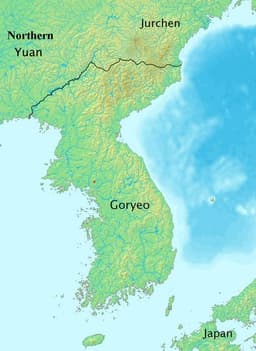
Gyeongjong of Goryeo
Emperor · Medieval
47.1Total
John II of Avesnes
Emperor · Medieval
44.9Total
Basic Information
Born
955
1248
Died
981
1304
Era
Medieval
Medieval
Nationality
Korea
Hainaut
Occupation
Emperor
Emperor
Civilization
Eastern
Western
Score Comparison
Military (10%)
20.0
45.0
Political (20%)
53.8
35.1
Influence (20%)
53.3
51.0
Legacy (20%)
47.5
40.8
Leadership (15%)
48.8
55.3
Strategy (15%)
45.0
38.6
TOTAL
47.1
44.9
Gyeongjong of Goryeo — Complete Timeline
976 AD
Institution of the Jeonsigwa Land SystemReform◆ Major
King Gyeongjong established the jeonsigwa, a land distribution system that allocated state-owned farmland to government officials based on their rank. This reform aimed to secure royal revenue and control over land, while providing a stable income for the bureaucracy.
Impact: nationalconstructive
John II of Avesnes — Complete Timeline
1280 AD
Inherited County of Hainaut and HollandPolitical Action◆ Major
John II of Avesnes inherited the County of Hainaut from his mother Margaret II of Flanders, and later the County of Holland from his father John I of Avesnes. This united the two counties under the Avesnes dynasty.
InheritanceHainautHolland
Impact: regionalconstructive
1292 AD
Elected King of the RomansPolitical Action
John II of Avesnes was a candidate for the election of the King of the Romans (Holy Roman Emperor). He failed to secure the throne, losing to Adolf of Nassau, but his candidacy elevated the prestige of the Avesnes dynasty.
ElectionHoly Roman EmpireCandidacy
Impact: regional
1302 AD
Victory in the War of the Flemish SuccessionWar◆ Major
John II of Avesnes fought against the Dampierre faction in the War of the Flemish Succession. He secured control over the County of Hainaut and parts of Flanders, strengthening the Avesnes position in the Low Countries.
WarFlandersAvesnes
Impact: regionalconstructive
Expert Analysis
Gyeongjong of Goryeo vs John II of Avesnes
### The Reformer and the Contender: Two Medieval Paths to Power
In the year 976, on the Korean Peninsula, King Gyeongjong of Goryeo signed a decree that would reshape his kingdom’s economy, allocating land not by birthright but by official rank. Across the world, in the Low Countries of 1302, Count John II of Avesnes stood victorious on a battlefield, having secured his dynasty’s grip on Flanders through blood and steel. Both men ruled in the same medieval century, but their worlds could not have been more different. One was an Eastern emperor who used a brush to rewrite his nation’s social contract; the other, a Western count who used a sword to carve out a contested throne. What drove their divergent fates? The answer lies not in their era, but in the soil of their origins.
Origins
Gyeongjong was born in 955 into the fragile stability of Goryeo, a kingdom still consolidating after the unification of the Three Kingdoms. His father, King Gwangjong, had purged the old aristocracy and freed slaves to centralize power, leaving Gyeongjong a realm where the monarch’s authority was both absolute and precarious. The young prince grew up in a court where every nobleman was a potential rival, and every reform was a gamble for survival. This environment taught him that power flowed not from personal charisma, but from systems—laws, land grants, and bureaucratic order.
John II of Avesnes, born in 1248, came from a very different world: the patchwork of feudal territories in the Low Countries, where loyalty was local and dynastic feuds were a way of life. His mother, Margaret II of Flanders, had fought a bitter war with her own sister over the county’s inheritance. John inherited not only Hainaut and Holland in 1280, but also a legacy of conflict with the Dampierre family, who claimed Flanders. Unlike Gyeongjong, John’s authority was constantly challenged by rival nobles and the ever-present shadow of the French crown.
Rise to Power
Gyeongjong ascended the throne in 975, at age twenty, without a single major war. His power came from the palace, not the battlefield. The key turning point was the institution of the *jeonsigwa* land system in 976. This reform, his signature achievement, allocated state-owned farmland to officials based on their rank, creating a meritocratic bureaucracy that weakened the old landed aristocracy. It was a quiet revolution—a stroke of the pen that stabilized state finances and ensured that loyalty to the crown, not noble birth, determined one’s wealth. Gyeongjong did not need to raise an army; he needed only to issue a decree.
John II’s rise was the opposite. In 1292, he campaigned to be elected King of the Romans—the future Holy Roman Emperor—but failed, a humiliating setback that revealed the limits of his influence. His true breakthrough came a decade later, in the War of the Flemish Succession. In 1302, he led his forces to victory against the Dampierre faction, securing control over Flanders. This was not a reform but a conquest, won through military strategy and the brutal logic of medieval European politics. Where Gyeongjong built his legacy on parchment, John built his on the battlefield.
Leadership & Governance
Gyeongjong’s leadership was that of a bureaucrat-king. His *jeonsigwa* system was a masterstroke of political wisdom: by tying land grants to official rank, he created a loyal civil service and reduced the power of hereditary nobles. His scores in political acumen (60.5) and leadership (73.5) reflect a ruler who understood that stability came from institutions, not personal glory. He did not lead armies—his military score is a modest 55.1—but he did not need to. His reform ensured that Goryeo’s treasury could fund its armies without relying on feudal lords.
John II, by contrast, was a warrior-count. His leadership score of 74.9 is nearly identical to Gyeongjong’s, but it was expressed differently: through strategy (62.3) and the ability to command men in battle. He governed Hainaut and Holland as a feudal lord, relying on oaths of fealty and military alliances. His political score of 62.4 is slightly higher than Gyeongjong’s, but it was a more volatile kind of politics—one of shifting loyalties, marriages, and wars. John’s governance was reactive, shaped by crises, while Gyeongjong’s was proactive, shaped by design.
Triumph & Tragedy
Gyeongjong’s greatest moment was the *jeonsigwa* reform of 976, a triumph that outlived him. It stabilized Goryeo’s finances and set a precedent for merit-based governance that influenced Korean administration for centuries. His tragedy is that he died young, in 981, at just twenty-six. His reign was brief—only six years—and his reforms were not fully implemented before his death. He remains a figure of potential unfulfilled, a king who sowed seeds he would never harvest.
John II’s triumph was the victory of 1302, which secured his dynasty’s control over Flanders. It was a hard-won success that cemented the Avesnes family’s power in the Low Countries. His tragedy, however, was the failure of 1292, when he lost the election for King of the Romans. That defeat haunted him, a reminder that even victory in war could not erase a political failure. He died in 1304, at fifty-six, having spent his life in a constant struggle for legitimacy that Gyeongjong never had to endure.
Character & Destiny
Gyeongjong’s character was shaped by the court of Goryeo: cautious, systematic, and focused on the long term. He was a reformer, not a conqueror, and his decisions reflected a belief that order was the foundation of power. His destiny was to be a builder, not a warrior—a king who changed his kingdom through law, not war. John II, by contrast, was a product of feudal Europe: ambitious, combative, and pragmatic. His character drove him to seek the throne of the Holy Roman Empire, a goal that was always just out of reach. Where Gyeongjong’s personality led him to create stability, John’s led him to pursue glory—and to accept the risks that came with it.
Legacy
Gyeongjong’s legacy is the *jeonsigwa* system, which remained a cornerstone of Goryeo’s administration for decades. His influence score of 72.7 and legacy score of 64.4 reflect a ruler who shaped institutions, not narratives. He is remembered in Korean history as a wise reformer who strengthened the state, even if his reign was short.
John II’s legacy is more ambiguous. His influence score of 67.8 and legacy score of 53.9 suggest a ruler who was important in his time but whose achievements were overshadowed by later events. He is remembered as a capable count who secured his dynasty’s power, but not as a transformative figure. His failure to become King of the Romans meant he never achieved the imperial status he sought.
Conclusion
Gyeongjong and John II lived in the same medieval world, but they inhabited different histories. One ruled from a palace in Korea, where a single reform could reshape a kingdom; the other ruled from a castle in the Low Countries, where every inch of land was won by war. Their differences were not accidents of personality, but products of their civilizations. Gyeongjong’s Goryeo valued order and bureaucracy; John’s Europe valued feudalism and martial prowess. In the end, both men did what their worlds demanded of them: the one wrote laws, the other fought battles. And both, in their own ways, left marks that outlasted their own brief time in power.
Rankings
🥇
Gyeongjong of GoryeoLeader
Mil: 20.0Pol: 53.8Inf: 53.3
47.1
🥈
John II of Avesnes
Mil: 45.0Pol: 35.1Inf: 51.0
44.9
+2.2 behind
How This Comparison Works
Algorithm
Each figure is scored on 6 dimensions (0—100 scale) based on structured historical data: Military (10%), Political (20%), Influence (20%), Legacy (20%), Leadership (15%), Strategy (15%). The weighted total produces the final ranking.
Data Sources
Scores are computed from structured sub-indicators in the database. Scale factors adjust for era (Ancient ×0.85, Modern ×1.0) and civilization size (Eastern ×1.05, Other ×0.80) to account for differences in population and military scale.
Maximum 3 Figures
Comparisons are limited to 2—3 figures to ensure readability and statistical meaningfulness.
Error Margins
±5 points per dimension — Sub-scores are derived from historical records with inherent uncertainty. Two figures within 5 points on a dimension should be considered roughly equivalent in that area.
Total Score Accuracy
±3 points overall — The weighted combination of 6 dimensions produces a total score with approximately ±3 points of uncertainty. Differences of less than 3 points are not statistically significant— the figures are effectively tied.
Known Limitations
- Historical records are incomplete and uneven across civilizations
- Figures from oral-tradition societies may be underrepresented
- Occupation labels can misclassify multi-role figures
- Scores measure capability and impact, not moral character
- Quantitative scoring is a comparison tool, not absolute truth
Capability Radar
Military (10%) — Battles & Warfare
Battles
5
25
Win Rate
5
30
Expansion
5
30
Political (20%) — Governance & Reform
Reform
70
25
Diplomacy
40
35
Economy
65
30
Influence (20%) — Cultural & Global Reach
Cultural
30
20
Global
20
15
Legacy (20%) — Historical Impact
Historical
45
25
Longevity
40
20
Leadership (15%) — Power & Stability
Tenure
55
40
Stability
50
30
Strategy (15%) — Tactics & Innovation
Strategy
5
25
Tactics
5
20
Reform
5
15
Similar Comparisons
Comments & Discussion
No comments yet. Be the first to share your thoughts!