Loading...
Gustavus Adolphus vs Qin Shi Huang
Qin Shi Huang leads by 11.1 pts · 2 figures compared
…

Gustavus Adolphus
General · Modern
74.1Total
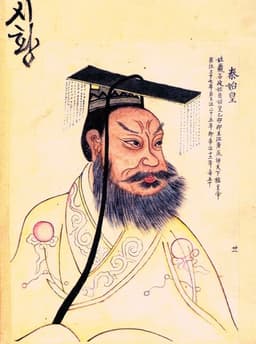
Qin Shi Huang
Emperor · Ancient
85.2Total
Basic Information
Born
1594
-259
Died
1632
-210
Era
Modern
Ancient
Nationality
Sweden
China
Occupation
General
Emperor
Civilization
Western
Eastern
Score Comparison
Military (10%)
76.4
80.0
Political (20%)
78.0
90.0
Influence (20%)
70.8
85.0
Legacy (20%)
65.0
90.0
Leadership (15%)
85.0
78.0
Strategy (15%)
80.6
82.0
TOTAL
74.1
85.2
Gustavus Adolphus — Complete Timeline
1620 AD
Military Reforms: Combined-Arms TacticsReform◆ Major
Gustavus Adolphus reformed the Swedish army, introducing lighter muskets, mobile artillery, and integrated infantry-cavalry-artillery tactics. These innovations increased battlefield flexibility and firepower, setting a new standard for European warfare.
Military ReformTacticsInnovation
Impact: globalconstructive
1631 AD
Battle of BreitenfeldWar
Gustavus Adolphus led the Swedish-Saxon army to a decisive victory over the Imperial forces under Count Tilly at Breitenfeld. This battle demonstrated the effectiveness of his combined-arms tactics and established Sweden as a major European power.
BattleThirty Years' WarMilitary Innovation
Impact: global
1632 AD
Battle of LützenWar◆ Major
Gustavus Adolphus was killed leading a cavalry charge at the Battle of L
BattleDeath in BattleThirty Years' War
Impact: globaltragic
Qin Shi Huang — Complete Timeline
246 BC
Construction of the Mausoleum and Terracotta ArmyOther◆ Major
Qin Shi Huang commissioned a vast mausoleum complex near Xi'an, guarded by thousands of life-sized terracotta soldiers, horses, and chariots. The project employed hundreds of thousands of workers and reflected his obsession with immortality and imperial power.
Impact: global
230 BC
Conquest of the Six Warring StatesWar
From 230 to 221 BCE, Ying Zheng led the Qin state in a series of campaigns that conquered the Han, Zhao, Wei, Chu, Yan, and Qi states. This unified China under a single ruler for the first time, ending the Warring States period.
Impact: global
221 BC
Standardization of Writing, Currency, and MeasurementsReform◆ Major
Qin Shi Huang ordered the standardization of Chinese script, currency, and weights and measures across the unified empire. This facilitated administration, trade, and cultural integration, laying a foundation for future dynasties.
Impact: globalconstructive
Proclamation of the Qin DynastyPolitical Action
After conquering the last independent state, Ying Zheng declared himself Shi Huangdi (First Emperor), founding the Qin Dynasty. He adopted a new title to signify his supreme authority and initiated centralized imperial rule.
Impact: global
214 BC
Initiation of the Great Wall ConstructionOther◆ Major
Qin Shi Huang ordered the connection and extension of existing northern fortifications to create a unified defensive wall against nomadic Xiongnu raids. This project involved massive conscripted labor and became the precursor to the later Great Wall.
Impact: regional
213 BC
Burning of Books and Burying of ScholarsPolitical Action◆ Major
On the advice of Li Si, Qin Shi Huang ordered the burning of historical records and philosophical texts not aligned with Legalist doctrine. He also had 460 Confucian scholars buried alive to suppress dissent and consolidate ideological control.
Impact: nationaldestructive
Expert Analysis
gustavus-adolphus-vs-qin-shi-huang
### The Emperor and the Lion: Two Paths to Immortality
On a cold November morning in 1632, a king in a buff coat and a plumed hat led a cavalry charge into the thick, sulfurous smoke of a German battlefield. Gustavus Adolphus of Sweden, the “Lion of the North,” was at the pinnacle of his genius, his revolutionary tactics reshaping the map of Europe. Hours later, his body lay riddled with bullets and sword cuts, stripped by enemy soldiers who did not recognize the fallen monarch. Half a world away and nearly two millennia earlier, another ruler, Qin Shi Huang, the First Emperor of China, had spent his final years in a very different kind of pursuit: a paranoid search for an elixir of immortality, only to die from mercury poisoning in 210 BC, his breath failing as his alchemists’ potion turned to poison. One died in the blaze of combat, the other in the quiet of a poisoned dream. Both sought to conquer time itself. Their stories, separated by eighteen centuries and vast cultural divides, reveal the starkly different engines of ambition that drive great men to remake the world.
### Origins
Ying Zheng was born in 259 BC, a prince of the western state of Qin, a frontier kingdom hardened by constant warfare with nomadic tribes. His childhood was a crucible of political terror: his father was a hostage in a rival state, and the young prince grew up surrounded by spies, scheming eunuchs, and the ever-present threat of assassination. The era of the Warring States had torn China apart for centuries, a brutal contest where survival belonged to the most ruthless. This world taught him that trust was a liability and that power, absolute and unchallenged, was the only true security.
Gustavus Adolphus, born in 1594, came of age in a very different crucible. Sweden was a poor, sparsely populated kingdom on the edge of Europe, but it was also a Lutheran nation forged in the fires of the Reformation. His father, Charles IX, had fought to secure the throne against Catholic rivals, and young Gustavus received an education as rigorous in Renaissance humanism as in military science. He was fluent in Latin, German, and Dutch, debated theology, and studied the campaigns of Maurice of Nassau. Where Qin Shi Huang learned that the world was a chaotic threat to be crushed, Gustavus Adolphus learned that it was a problem to be solved with discipline, innovation, and faith.
### Rise to Power
Qin Shi Huang’s ascent was a cold, methodical slaughter. At thirteen, he inherited the Qin throne, but real power rested with his regent, Lü Buwei, and the eunuch Lao Ai. In 238 BC, the young king, then twenty-one, crushed a rebellion by Lao Ai, executing his rival and exiling his own mother. Two years later, he forced Lü Buwei to commit suicide. Having purged his court, he turned his attention outward. From 230 to 221 BC, his armies rolled over the six other Warring States like a tidal wave, deploying overwhelming force, bribery, and psychological warfare. When the last king surrendered, Ying Zheng renamed himself *Shi Huangdi*—the First Emperor—and declared a new order of heaven and earth.
Gustavus Adolphus rose through a combination of inheritance and audacity. He became king at sixteen, but his throne was immediately contested by Denmark and Poland. Rather than purging his court, he forged alliances, marrying the daughter of the Elector of Brandenburg. His great leap came when he intervened in the Thirty Years’ War, a catastrophic religious conflict tearing apart the Holy Roman Empire. In 1630, he landed on the German coast with a small, disciplined army. He was not a conqueror of ancient kingdoms, but a Protestant champion wading into a European inferno, his ambitions tempered by the need to win allies, not just subjects.
### Leadership & Governance
Here, the two men diverged most profoundly. Qin Shi Huang was an architect of total control. He standardized writing, currency, and axle lengths across his new empire, a monumental achievement that unified China for millennia. But his governance was a reign of terror. He burned the books of Confucian scholars and buried dissidents alive, believing that history should begin with him. His legalist philosophy, guided by the minister Li Si, treated all subjects as cogs in a machine, bound by harsh, uniform laws. The Great Wall, begun in 214 BC, was a monument to his vision—and to the forced labor of millions who died building it.
Gustavus Adolphus led through inspiration and innovation. His military reforms, begun in 1620, were revolutionary: lighter muskets that allowed faster volleys, mobile artillery that could be moved by a few horses, and combined-arms tactics that integrated infantry, cavalry, and artillery into a single, fluid instrument. At the Battle of Breitenfeld in 1631, he shattered the Imperial army under Count Tilly, a victory that stunned Europe. But he was also a political leader who respected the autonomy of his German allies, understanding that a coalition required trust, not fear. He was ruthless in battle but merciful in victory, forbidding the sack of captured cities—a stark contrast to the age’s norms.
### Triumph & Tragedy
Qin Shi Huang’s greatest triumph was the conquest itself: the creation of an empire that would become the template for Chinese civilization. His greatest tragedy was his own paranoia. Obsessed with death, he embarked on a vast mausoleum—the Terracotta Army, a silent legion of clay soldiers meant to guard him in the afterlife. He also swallowed mercury pills, believing them to be the elixir of life. Instead, they killed him. His empire collapsed within three years of his death, undone by the very harshness that had built it.
Gustavus Adolphus’s triumph was the Battle of Breitenfeld, where his tactics rewrote the rules of war. His tragedy came a year later, at Lützen in 1632. Leading a cavalry charge in a fog of smoke, he was separated from his men and shot. His body was found hours later, stripped and trampled. Yet his death did not undo his work. The Swedish army, now a model for Europe, carried on, and his legacy shaped military doctrine for centuries.
### Character & Destiny
Qin Shi Huang’s character was forged in isolation and fear. He was brilliant, decisive, and utterly incapable of sharing power or trust. His destiny was to build a monument to himself, but his paranoia ensured that monument would be as brittle as it was grand. Gustavus Adolphus, by contrast, was a king who led from the front, who studied and debated, who inspired loyalty rather than terror. His destiny was to die young, but in a blaze of purpose, his death a sacrifice that sanctified his cause.
### Legacy
Qin Shi Huang left a paradox. He unified China, gave it a written script, and a bureaucratic system that lasted two thousand years. But his name is also synonymous with tyranny. The Terracotta Army, discovered in 1974, has made him a global icon, yet the man himself remains a ghost—feared, admired, but never loved.
Gustavus Adolphus left a different legacy. He is remembered as the father of modern warfare, the first great general of the gunpowder age. His tactical innovations were studied by Frederick the Great and Napoleon. But he is also a national hero of Sweden, a symbol of a small nation that rose to greatness through courage and intelligence. His death at Lützen, at the age of thirty-seven, cemented his legend: the Lion of the North, who died as he lived, leading the charge.
### Conclusion
What drove these two men to such different outcomes? Qin Shi Huang sought to conquer time by erasing the past and controlling the future, building walls around his soul as well as his empire. Gustavus Adolphus sought to conquer time by shaping the future, leaving behind ideas and methods that outlived his body. One built a tomb; the other built a tradition. In the end, the emperor’s empire crumbled, but the king’s tactics endured. Perhaps the lesson is not about which was greater, but about what kind of immortality we truly seek—a monument of stone and fear, or a legacy of transformation and faith.
Rankings
🥇
Qin Shi HuangLeader
Mil: 80.0Pol: 90.0Inf: 85.0
85.2
🥈
Gustavus Adolphus
Mil: 76.4Pol: 78.0Inf: 70.8
74.1
+11.1 behind
How This Comparison Works
Algorithm
Each figure is scored on 6 dimensions (0—100 scale) based on structured historical data: Military (10%), Political (20%), Influence (20%), Legacy (20%), Leadership (15%), Strategy (15%). The weighted total produces the final ranking.
Data Sources
Scores are computed from structured sub-indicators in the database. Scale factors adjust for era (Ancient ×0.85, Modern ×1.0) and civilization size (Eastern ×1.05, Other ×0.80) to account for differences in population and military scale.
Maximum 3 Figures
Comparisons are limited to 2—3 figures to ensure readability and statistical meaningfulness.
Error Margins
±5 points per dimension — Sub-scores are derived from historical records with inherent uncertainty. Two figures within 5 points on a dimension should be considered roughly equivalent in that area.
Total Score Accuracy
±3 points overall — The weighted combination of 6 dimensions produces a total score with approximately ±3 points of uncertainty. Differences of less than 3 points are not statistically significant— the figures are effectively tied.
Known Limitations
- Historical records are incomplete and uneven across civilizations
- Figures from oral-tradition societies may be underrepresented
- Occupation labels can misclassify multi-role figures
- Scores measure capability and impact, not moral character
- Quantitative scoring is a comparison tool, not absolute truth
Capability Radar
Military (10%) — Battles & Warfare
Battles
85
85
Win Rate
88
90
Expansion
85
90
Political (20%) — Governance & Reform
Reform
80
95
Diplomacy
78
75
Economy
70
90
Influence (20%) — Cultural & Global Reach
Cultural
75
95
Global
78
85
Legacy (20%) — Historical Impact
Historical
85
95
Longevity
80
95
Leadership (15%) — Power & Stability
Tenure
75
70
Stability
65
65
Strategy (15%) — Tactics & Innovation
Strategy
90
85
Tactics
95
80
Reform
95
95
Similar Comparisons
Comments & Discussion
LionFall Historian6/17/2026
Gustavus Adolphus died the way a king should—sword in hand, leading from the front. Qin Shi Huang cowered in his palace, swallowing mercury like a coward. One man’s death forged a legend; the other’s dissolved in poison. The Swedish Lion’s tactical genius in the Thirty Years’ War—combined arms, mobile artillery—rewrote warfare. The Emperor’s only legacy is a clay army and a failed liver. Give me a commander who bleeds on the battlefield over a despot who rots behind walls.
长生毒酒6/17/2026
秦始皇统一六国靠的是法家铁腕,不是战场上的个人英雄主义。你说他怕死?他怕的是帝国分崩离析,而瑞典国王死了三十年战争就输了。看看秦朝的标准度量衡、同轨同文,哪个不是千年基业?古斯塔夫的火药战术再牛,也不如一把锄头持久。两个人都想不朽,一个造兵马俑,一个留军事教科书,别分高低。
Data Skeptic Dan6/17/2026
Let’s talk casualties: Qin’s wars killed an estimated 500,000+ soldiers, plus countless civilians from forced labor—the Great Wall alone buried thousands. Gustavus’s entire Swedish army peaked at maybe 40,000. Qin Shi Huang conquered a continent; the Lion poked at a petty German duchy. Scale matters. The Emperor’s unification shaped a fifth of humanity’s history. A Swedish king who died in a minor battle? That’s a footnote. Numbers don’t lie—one built an empire, the other just a reputation.
墨家余声6/17/2026
别被兵马俑的排场骗了。秦始皇统一文字、修驰道,背后是焚书坑儒的文化屠杀。古斯塔夫至少保留了新教的自由思想,还建立了一所大学——乌普萨拉大学至今存在。一个用活人陪葬的暴君,一个推行宗教宽容的改革者,这对比还不够清楚?技术可以复制,但人性一旦被碾碎,千年都难修复。我选狮子。