Loading...
Gonzalo Fernandez de Cordoba vs Tokugawa Ieyasu
Tokugawa Ieyasu leads by 3.2 pts · 2 figures compared
…

Gonzalo Fernandez de Cordoba
General · Medieval
78.6Total
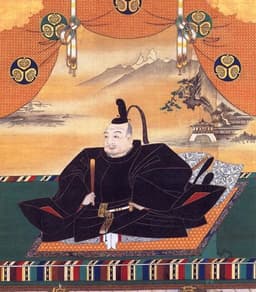
Tokugawa Ieyasu
General · Modern
81.8Total
Basic Information
Born
1453
1543
Died
1515
1616
Era
Medieval
Modern
Nationality
Spain
Japan
Occupation
General
General
Civilization
Western
Eastern
Score Comparison
Military (10%)
78.5
78.0
Political (20%)
62.7
82.0
Influence (20%)
80.0
88.0
Legacy (20%)
82.0
75.0
Leadership (15%)
85.0
85.0
Strategy (15%)
80.5
82.0
TOTAL
78.6
81.8
Gonzalo Fernandez de Cordoba — Complete Timeline
1503 AD
Battle of CerignolaWar◆ Major
Cordoba's Spanish army defeated the French at Cerignola, Italy. Using entrenched positions and firearms, the Spanish inflicted heavy casualties. This was the first major battle won primarily by arquebus fire.
Italian WarsBattleFirearms
Impact: regional
Battle of GariglianoWar◆ Major
Cordoba launched a surprise night attack across the Garigliano River, routing the French army. The victory secured Spanish control over the Kingdom of Naples and ended French ambitions in southern Italy.
Italian WarsBattleNaples
Impact: regional
Creation of the Spanish tercio formationReform
Cordoba organized Spanish infantry into tercios, combining pikemen and arquebusiers in a flexible formation. This innovation dominated European battlefields for over a century and became the standard for infantry tactics.
Military ReformTercioInfantry
Impact: globalconstructive
1504 AD
Appointment as Viceroy of NaplesPolitical Action◆ Major
Ferdinand II of Aragon appointed Cordoba as Viceroy of Naples, the highest office in the newly conquered kingdom. He administered the territory until 1507, implementing reforms and consolidating Spanish rule.
AdministrationNaplesViceroyalty
Impact: regional
Tokugawa Ieyasu — Complete Timeline
1600 AD
Battle of SekigaharaWar
Tokugawa Ieyasu led the Eastern Army to victory over Ishida Mitsunari's Western Army at Sekigahara. This decisive battle ended the Sengoku period and established Ieyasu as the supreme military ruler of Japan, paving the way for the Tokugawa shogunate.
Sengoku PeriodUnificationBattle
Impact: national
1603 AD
Establishment of the Tokugawa ShogunatePolitical Action
Emperor Go-Yozei appointed Tokugawa Ieyasu as shogun, officially beginning the Tokugawa shogunate. Ieyasu established his government in Edo (modern Tokyo), centralizing military and political power under his family's control.
ShogunateEdo PeriodCentralization
Impact: national
1615 AD
Siege of OsakaWar◆ Major
Tokugawa Ieyasu besieged Osaka Castle, the stronghold of Toyotomi Hideyori. The castle fell, and Hideyori committed suicide. This campaign eliminated the last major opposition to Tokugawa rule, solidifying the shogunate's control over Japan.
Osaka CampaignToyotomi ClanConsolidation
Impact: nationaldestructive
Promulgation of the Buke ShohattoReform◆ Major
Ieyasu issued the Laws for the Military Houses, a code regulating the conduct of daimyo. It restricted castle construction, required alternate attendance in Edo, and prohibited alliances without shogunal permission. This law helped control the feudal lords.
Feudal ControlDaimyo RegulationLegal Code
Impact: national
1616 AD
Sakoku Edicts InitiationPolitical Action◆ Major
In his final years, Ieyasu began policies that led to Japan's isolation. He restricted foreign trade to specific ports and expelled Christian missionaries. These measures, expanded by successors, resulted in the sakoku policy that isolated Japan for over 200 years.
IsolationismForeign PolicyChristianity
Impact: national
Expert Analysis
Origins
Tokugawa Ieyasu (1543–1616) was born into the Matsudaira clan of Mikawa Province, a minor samurai family caught between powerful neighbors. His childhood was marked by hostage exchanges and warfare, shaping his patience and strategic acumen. Gonzalo Fernández de Córdoba (1453–1515), known as El Gran Capitán, hailed from a noble Andalusian family. He began his military career fighting in the War of the Castilian Succession and later against the Moors in Granada. Both emerged from turbulent periods of consolidation—Japan's Sengoku period and Spain's Reconquista—but their paths diverged: Ieyasu focused on state-building, while Córdoba revolutionized warfare.
Rise to Power
Ieyasu’s rise was gradual and pragmatic. He allied with Oda Nobunaga and later Toyotomi Hideyoshi, expanding his domain through careful diplomacy and battlefield successes. After Hideyoshi’s death, Ieyasu maneuvered among rival factions, culminating in his decisive victory at the Battle of Sekigahara (1600), which effectively made him Japan's supreme military leader. He then received the title of shōgun in 1603, founding the Tokugawa shogunate. Córdoba’s ascent was more direct: his leadership in the Granada War impressed Ferdinand and Isabella, who entrusted him with command in Italy. There, he defeated the French at Cerignola (1503) and Garigliano (1503), securing Naples for Spain and earning the title Viceroy of Naples. His innovative tercio formation blended pikemen and arquebusiers, setting a new standard for European armies.
Leadership & Governance
Ieyasu’s governance was systematic and long-lasting. He implemented the Buke Shohatto (laws for warrior households) to control the daimyō, the sankin kōtai system (alternate attendance) to weaken regional lords, and initiated the Sakoku edicts to isolate Japan and control foreign influence. His rule established over 250 years of peace under the Tokugawa shogunate. Córdoba’s governance was more military-focused. As Viceroy of Naples, he administered the kingdom effectively, but his political influence waned after Ferdinand and Isabella grew wary of his popularity. He was recalled to Spain and died in relative obscurity. Ieyasu’s institutional legacy far surpasses Córdoba’s in terms of enduring political structure.
Triumph & Tragedy
Ieyasu’s greatest triumph was Sekigahara, where he outmaneuvered and defeated the Western Army despite numerical disadvantage. His subsequent Siege of Osaka (1614-1615) eliminated the last major opposition, the Toyotomi clan. However, his later years saw tragedy in the execution of his son and heir, Tokugawa Hidetada’s brother-in-law, and the harsh Sakoku policies that stifled cultural exchange. Córdoba’s triumphs were his Italian campaigns: Cerignola, where his defensive position and firearms defeated French heavy cavalry, and Garigliano, a daring river crossing that caught the French off guard. His tragedy was political: despite his victories, he was mistrusted by the crown and died without the rewards he deserved. Both men achieved their primary goals, but Ieyasu’s success was more complete and lasting.
Character & Destiny
Ieyasu was patient, calculating, and ruthless when necessary. He famously said, “The strong man is one who knows when to fight and when to let others fight.” His destiny was to unify Japan and establish a dynasty. Córdoba was chivalrous, innovative, and loyal, but his destiny was to be a brilliant general overshadowed by his monarchs. He is remembered as the “Great Captain,” but his reforms were later eclipsed by the tercio’s evolution. Ieyasu’s character suited his era’s demands for consolidation; Córdoba’s suited the dynamic, expanding Spain of the late 15th century.
Legacy
Ieyasu’s legacy is immense: the Tokugawa shogunate ended centuries of civil war, shaped Japanese culture, and created the conditions for modernization. His military and political systems influenced Japan until the Meiji Restoration. Córdoba’s legacy is primarily military: he pioneered the tercio, which dominated European battlefields for over a century, and introduced combined-arms tactics that presaged modern warfare. However, his political legacy is minor compared to Ieyasu’s. In terms of historical impact, Ieyasu’s influence on Japan’s trajectory is greater than Córdoba’s on Spain’s.
Conclusion
Tokugawa Ieyasu and Gonzalo Fernández de Córdoba were both transformative figures, but their impacts differ in scope. Ieyasu’s unification of Japan and establishment of a stable, long-lasting government gave him a broader and more enduring legacy. Córdoba’s military innovations were crucial for Spain’s dominance, but his political achievements were limited. Based on historical influence, Ieyasu’s overall impact scores higher (82 vs 79), reflecting his role as a nation-builder versus Córdoba’s role as a military reformer. Ieyasu’s victory in this comparison is clear: he changed the course of a nation for centuries, while Córdoba changed the course of warfare for a century. Thus, Tokugawa Ieyasu is the more consequential historical figure.
Rankings
🥇
Tokugawa IeyasuLeader
Mil: 78.0Pol: 82.0Inf: 88.0
81.8
🥈
Gonzalo Fernandez de Cordoba
Mil: 78.5Pol: 62.7Inf: 80.0
78.6
+3.2 behind
How This Comparison Works
Algorithm
Each figure is scored on 6 dimensions (0—100 scale) based on structured historical data: Military (10%), Political (20%), Influence (20%), Legacy (20%), Leadership (15%), Strategy (15%). The weighted total produces the final ranking.
Data Sources
Scores are computed from structured sub-indicators in the database. Scale factors adjust for era (Ancient ×0.85, Modern ×1.0) and civilization size (Eastern ×1.05, Other ×0.80) to account for differences in population and military scale.
Maximum 3 Figures
Comparisons are limited to 2—3 figures to ensure readability and statistical meaningfulness.
Error Margins
±5 points per dimension — Sub-scores are derived from historical records with inherent uncertainty. Two figures within 5 points on a dimension should be considered roughly equivalent in that area.
Total Score Accuracy
±3 points overall — The weighted combination of 6 dimensions produces a total score with approximately ±3 points of uncertainty. Differences of less than 3 points are not statistically significant— the figures are effectively tied.
Known Limitations
- Historical records are incomplete and uneven across civilizations
- Figures from oral-tradition societies may be underrepresented
- Occupation labels can misclassify multi-role figures
- Scores measure capability and impact, not moral character
- Quantitative scoring is a comparison tool, not absolute truth
Capability Radar
Military (10%) — Battles & Warfare
Battles
85
85
Win Rate
90
90
Expansion
80
75
Political (20%) — Governance & Reform
Reform
75
90
Diplomacy
80
85
Economy
65
88
Influence (20%) — Cultural & Global Reach
Cultural
75
85
Global
75
70
Legacy (20%) — Historical Impact
Historical
85
90
Longevity
80
95
Leadership (15%) — Power & Stability
Tenure
70
95
Stability
70
95
Strategy (15%) — Tactics & Innovation
Strategy
88
92
Tactics
95
88
Reform
95
80
Similar Comparisons
Comments & Discussion
No comments yet. Be the first to share your thoughts!