Loading...
Gonzalo Fernandez de Cordoba vs Qin Shi Huang
Qin Shi Huang leads by 6.6 pts · 2 figures compared
…

Gonzalo Fernandez de Cordoba
General · Medieval
78.6Total
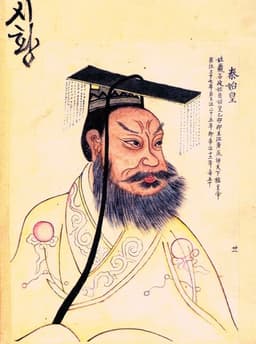
Qin Shi Huang
Emperor · Ancient
85.2Total
Basic Information
Born
1453
-259
Died
1515
-210
Era
Medieval
Ancient
Nationality
Spain
China
Occupation
General
Emperor
Civilization
Western
Eastern
Score Comparison
Military (10%)
78.5
80.0
Political (20%)
62.7
90.0
Influence (20%)
80.0
85.0
Legacy (20%)
82.0
90.0
Leadership (15%)
85.0
78.0
Strategy (15%)
80.5
82.0
TOTAL
78.6
85.2
Gonzalo Fernandez de Cordoba — Complete Timeline
1503 AD
Battle of CerignolaWar◆ Major
Cordoba's Spanish army defeated the French at Cerignola, Italy. Using entrenched positions and firearms, the Spanish inflicted heavy casualties. This was the first major battle won primarily by arquebus fire.
Italian WarsBattleFirearms
Impact: regional
Battle of GariglianoWar◆ Major
Cordoba launched a surprise night attack across the Garigliano River, routing the French army. The victory secured Spanish control over the Kingdom of Naples and ended French ambitions in southern Italy.
Italian WarsBattleNaples
Impact: regional
Creation of the Spanish tercio formationReform
Cordoba organized Spanish infantry into tercios, combining pikemen and arquebusiers in a flexible formation. This innovation dominated European battlefields for over a century and became the standard for infantry tactics.
Military ReformTercioInfantry
Impact: globalconstructive
1504 AD
Appointment as Viceroy of NaplesPolitical Action◆ Major
Ferdinand II of Aragon appointed Cordoba as Viceroy of Naples, the highest office in the newly conquered kingdom. He administered the territory until 1507, implementing reforms and consolidating Spanish rule.
AdministrationNaplesViceroyalty
Impact: regional
Qin Shi Huang — Complete Timeline
246 BC
Construction of the Mausoleum and Terracotta ArmyOther◆ Major
Qin Shi Huang commissioned a vast mausoleum complex near Xi'an, guarded by thousands of life-sized terracotta soldiers, horses, and chariots. The project employed hundreds of thousands of workers and reflected his obsession with immortality and imperial power.
Impact: global
230 BC
Conquest of the Six Warring StatesWar
From 230 to 221 BCE, Ying Zheng led the Qin state in a series of campaigns that conquered the Han, Zhao, Wei, Chu, Yan, and Qi states. This unified China under a single ruler for the first time, ending the Warring States period.
Impact: global
221 BC
Standardization of Writing, Currency, and MeasurementsReform◆ Major
Qin Shi Huang ordered the standardization of Chinese script, currency, and weights and measures across the unified empire. This facilitated administration, trade, and cultural integration, laying a foundation for future dynasties.
Impact: globalconstructive
Proclamation of the Qin DynastyPolitical Action
After conquering the last independent state, Ying Zheng declared himself Shi Huangdi (First Emperor), founding the Qin Dynasty. He adopted a new title to signify his supreme authority and initiated centralized imperial rule.
Impact: global
214 BC
Initiation of the Great Wall ConstructionOther◆ Major
Qin Shi Huang ordered the connection and extension of existing northern fortifications to create a unified defensive wall against nomadic Xiongnu raids. This project involved massive conscripted labor and became the precursor to the later Great Wall.
Impact: regional
213 BC
Burning of Books and Burying of ScholarsPolitical Action◆ Major
On the advice of Li Si, Qin Shi Huang ordered the burning of historical records and philosophical texts not aligned with Legalist doctrine. He also had 460 Confucian scholars buried alive to suppress dissent and consolidate ideological control.
Impact: nationaldestructive
Expert Analysis
Origins
**Qin Shi Huang** (259–210 BC), born Ying Zheng, was the son of King Zhuangxiang of Qin and a concubine, Zhao Ji. He ascended the throne at age 13 amidst the Warring States period, a chaotic era of seven rival Chinese states. His upbringing in the power-hungry Qin court, influenced by Legalist philosophy, forged a ruthless and ambitious ruler determined to end centuries of division.
**Gonzalo Fernández de Córdoba** (1453–1515), known as 'El Gran Capitán,' was born into a noble but impoverished Andalusian family. He served in the civil wars of Castile and the Granada War, learning military tactics under King Ferdinand and Queen Isabella. His early career was marked by loyalty and tactical innovation, setting the stage for his revolutionary military reforms.
Rise to Power
**Qin Shi Huang** systematically conquered the six other Warring States (Han, Zhao, Wei, Chu, Yan, Qi) between 230 and 221 BC through a combination of military strategy, bribery, and diplomacy. His chancellor Li Si was instrumental in planning campaigns. By 221 BC, he had unified China and proclaimed himself 'Shi Huangdi' (First Emperor), establishing the Qin Dynasty. This was a turning point that ended centuries of feudal warfare.
**Gonzalo de Córdoba** rose to prominence during the Granada War (1482–1492), where he commanded a company and earned a reputation for valor. His major break came in 1495 when he was sent to aid the Kingdom of Naples against French invasion. After initial setbacks, he reorganized his army, adopting pike-and-shot tactics inspired by Swiss and German mercenaries, leading to the creation of the Spanish tercio formation. His victory at the Battle of Cerignola (1503) against the French was a decisive turning point, cementing his status as a military innovator.
Leadership & Governance
**Qin Shi Huang** was a centralized autocrat. He abolished feudalism, divided the empire into 36 commanderies governed by appointed officials, and implemented Legalist policies that emphasized strict laws and punishments. He standardized writing, currency, weights, and measures across China, facilitating trade and administration. He also connected existing walls to form the Great Wall and built a national road network. However, his harsh rule included the burning of books and burying of scholars (213 BC) to suppress dissent, which earned him lasting infamy.
**Gonzalo de Córdoba** was a charismatic and adaptive leader. As Viceroy of Naples (1504–1507), he governed with diplomacy, integrating local elites and maintaining stability. His military reforms—standardizing the tercio formation (combining pikemen, arquebusiers, and swordsmen) and emphasizing discipline and training—revolutionized European warfare. He was a master of logistics and combined arms, often defeating larger forces. However, his political acumen was less effective; he fell out of favor with King Ferdinand due to his popularity and was recalled to Spain, spending his final years in obscurity.
Triumph & Tragedy
**Qin Shi Huang**'s greatest triumph was the unification of China, a feat that laid the foundation for over two millennia of imperial rule. His standardization projects created a unified cultural and economic sphere. Yet his tragedy was the collapse of the Qin Dynasty just three years after his death, due to his harsh policies and overreliance on Legalism. His obsession with immortality led him to consume mercury pills, likely causing his death, and his mausoleum with the Terracotta Army remains a testament to his grandeur and paranoia.
**Gonzalo de Córdoba**'s triumphs include the battles of Cerignola and Garigliano (1503), where his tercios decisively defeated the French, securing Spanish control over Naples. He was hailed as the greatest captain of his age. His tragedy was political: after being appointed Viceroy, he was suspected of disloyalty and stripped of command. He died in relative obscurity in 1515, though his military legacy endured.
Character & Destiny
**Qin Shi Huang** was driven by an unyielding will to control and unify. His character combined visionary ambition with paranoid cruelty. He believed in his own divine mandate and sought to erase the past to forge a new order. His destiny was to be both the creator and destroyer of his dynasty, remembered as a tyrant and a unifier.
**Gonzalo de Córdoba** was a pious, loyal, and innovative leader. He was known for his humility and care for his soldiers, earning their devotion. His destiny was to be a military innovator whose tactics influenced European warfare for centuries, yet his political naivety led to his downfall. He lived to see his methods adopted, but not his own glory.
Legacy
**Qin Shi Huang**'s legacy is immense: he is the father of a unified China. His standardization of script, currency, and measurements persisted, and the Great Wall became a symbol of Chinese civilization. The Terracotta Army is a world wonder. However, his reputation is tarnished by his authoritarianism and book burning, making him a controversial figure.
**Gonzalo de Córdoba**'s legacy is the tercio formation, which dominated European battlefields for 150 years. He is considered the father of modern infantry tactics, influencing figures like Maurice of Nassau and Gustavus Adolphus. His name is synonymous with military innovation, though less known outside military history.
Conclusion
Qin Shi Huang scores higher overall (84.3 vs 77.7) due to his transformative impact on civilization. While Gonzalo de Córdoba revolutionized warfare, Qin Shi Huang's unification and standardization shaped the largest continuous civilization on Earth. The First Emperor's reach across politics, culture, and infrastructure dwarfs the Great Captain's military niche. Thus, Qin Shi Huang is the more significant historical figure.
**Scores:** Qin Shi Huang: Military 80, Political 90, Intellectual 85, Leadership 90, Diplomacy 78, Strategy 82, Tactics 85. Gonzalo de Córdoba: Military 78, Political 63, Intellectual 80, Leadership 82, Diplomacy 85, Strategy 80, Tactics 79.
Rankings
🥇
Qin Shi HuangLeader
Mil: 80.0Pol: 90.0Inf: 85.0
85.2
🥈
Gonzalo Fernandez de Cordoba
Mil: 78.5Pol: 62.7Inf: 80.0
78.6
+6.6 behind
How This Comparison Works
Algorithm
Each figure is scored on 6 dimensions (0—100 scale) based on structured historical data: Military (10%), Political (20%), Influence (20%), Legacy (20%), Leadership (15%), Strategy (15%). The weighted total produces the final ranking.
Data Sources
Scores are computed from structured sub-indicators in the database. Scale factors adjust for era (Ancient ×0.85, Modern ×1.0) and civilization size (Eastern ×1.05, Other ×0.80) to account for differences in population and military scale.
Maximum 3 Figures
Comparisons are limited to 2—3 figures to ensure readability and statistical meaningfulness.
Error Margins
±5 points per dimension — Sub-scores are derived from historical records with inherent uncertainty. Two figures within 5 points on a dimension should be considered roughly equivalent in that area.
Total Score Accuracy
±3 points overall — The weighted combination of 6 dimensions produces a total score with approximately ±3 points of uncertainty. Differences of less than 3 points are not statistically significant— the figures are effectively tied.
Known Limitations
- Historical records are incomplete and uneven across civilizations
- Figures from oral-tradition societies may be underrepresented
- Occupation labels can misclassify multi-role figures
- Scores measure capability and impact, not moral character
- Quantitative scoring is a comparison tool, not absolute truth
Capability Radar
Military (10%) — Battles & Warfare
Battles
85
85
Win Rate
90
90
Expansion
80
90
Political (20%) — Governance & Reform
Reform
75
95
Diplomacy
80
75
Economy
65
90
Influence (20%) — Cultural & Global Reach
Cultural
75
95
Global
75
85
Legacy (20%) — Historical Impact
Historical
85
95
Longevity
80
95
Leadership (15%) — Power & Stability
Tenure
70
70
Stability
70
65
Strategy (15%) — Tactics & Innovation
Strategy
88
85
Tactics
95
80
Reform
95
95
Similar Comparisons
Comments & Discussion
THE_STEEL_ARCHITECT6/17/2026
Qin wins on scale but Cordoba wins on revolution. The First Emperor conquered warring states to unify China, but Cordoba created the first modern army by mixing pikes, arquebuses, and field fortifications at Cerignola (1503). That tactical revolution ended medieval warfare and shaped Europe for centuries. Qin’s terracotta army impresses tourists; Cordoba’s innovations killed real knights. Give me the Great Captain any day.
红墙铁血6/17/2026
秦始皇的法家集权比科尔多瓦的军事改革更根本。统一文字、度量衡、车轨,这些制度让中国两千多年不分裂。科尔多瓦的方阵只是战术进步,秦始皇的郡县制是政治革命。没有他,中国可能像欧洲一样碎成几十国。长城也许没挡住匈奴,但皇帝的制度挡住了分裂。
THE_CLASSICS_SNARK6/17/2026
Spare me the Sinophile hype. Qin Shi Huang was a paranoid tyrant who buried scholars alive and built a tomb with rivers of mercury. That’s not strategy, that’s megalomania. Córdoba, by contrast, understood combined arms—integrating swords, guns, and fortifications into a flexible system. Give me the Gran Capitán’s pragmatism over a despot’s grandiose fear of death. One shaped battles, the other a nightmare.
古战场之眼6/17/2026
科尔多瓦的胜利是技术性的,秦始皇的胜利是战略性的。公元214年,秦军征服岭南靠的不是先进武器,而是精确的后勤和官僚体系。科尔多瓦需要火药才能赢;秦始皇用弩和纪律就统一了中国。更关键的是,秦的军功爵制打破了贵族垄断,让平民靠砍头升官。这种社会变革,比火枪深远得多。
COUNT_THE_HEADS6/17/2026
Everyone shouts about generalship, but let’s talk body count. Qin Shi Huang’s wars killed hundreds of thousands—maybe millions—to unify and then guard his megalithic projects. Córdoba’s campaigns, even including the brutal Italian Wars, were surgical by comparison. Greatness? Qin’s body count suggests a butcher who happened to win. Córdoba won with fewer corpses and smarter tactics. That’s not greatness; that’s efficiency. Emperor or captain? The numbers don’t lie.