Loading...
Golbery do Couto e Silva vs Qin Shi Huang
Qin Shi Huang leads by 36.4 pts · 2 figures compared
…
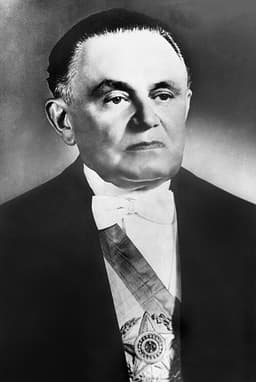
Golbery do Couto e Silva
General · Modern
48.8Total
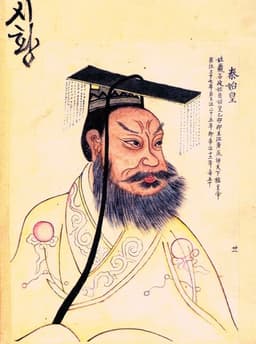
Qin Shi Huang
Emperor · Ancient
85.2Total
Basic Information
Born
1911
-259
Died
1987
-210
Era
Modern
Ancient
Nationality
Brazil
China
Occupation
General
Emperor
Civilization
Western
Eastern
Score Comparison
Military (10%)
10.2
80.0
Political (20%)
68.0
90.0
Influence (20%)
51.8
85.0
Legacy (20%)
46.7
90.0
Leadership (15%)
57.6
78.0
Strategy (15%)
43.3
82.0
TOTAL
48.8
85.2
Golbery do Couto e Silva — Complete Timeline
1950 AD
Developed the 'Geopolitics of Brazil' DoctrineCultural◆ Major
Golbery published 'Geopolitics of Brazil', a book that outlined his strategic vision for Brazil's national security and development. This work influenced the military's thinking on national security and justified the regime's policies.
GeopoliticsNational SecurityMilitary Doctrine
Impact: national
1964 AD
Founded the National Intelligence Service (SNI)Political Action◆ Major
Golbery do Couto e Silva was the main architect and first head of the National Intelligence Service (SNI) after the 1964 military coup. The SNI became the central intelligence and coordination agency of the military regime, monitoring political opponents.
IntelligenceMilitary RegimeRepression
Impact: nationaldestructive
1974 AD
Chief of Staff of the Presidency under GeiselPolitical Action◆ Major
Golbery served as Chief of Staff of the Presidency under President Ernesto Geisel. He was a key strategist of the 'distens
Political StrategyLiberalizationGeisel
Impact: national
1979 AD
Resigned as Chief of StaffPolitical Action◆ Major
Golbery resigned as Chief of Staff under President Jo
ResignationPolitical ConflictAbertura
Impact: national
Qin Shi Huang — Complete Timeline
246 BC
Construction of the Mausoleum and Terracotta ArmyOther◆ Major
Qin Shi Huang commissioned a vast mausoleum complex near Xi'an, guarded by thousands of life-sized terracotta soldiers, horses, and chariots. The project employed hundreds of thousands of workers and reflected his obsession with immortality and imperial power.
Impact: global
230 BC
Conquest of the Six Warring StatesWar
From 230 to 221 BCE, Ying Zheng led the Qin state in a series of campaigns that conquered the Han, Zhao, Wei, Chu, Yan, and Qi states. This unified China under a single ruler for the first time, ending the Warring States period.
Impact: global
221 BC
Standardization of Writing, Currency, and MeasurementsReform◆ Major
Qin Shi Huang ordered the standardization of Chinese script, currency, and weights and measures across the unified empire. This facilitated administration, trade, and cultural integration, laying a foundation for future dynasties.
Impact: globalconstructive
Proclamation of the Qin DynastyPolitical Action
After conquering the last independent state, Ying Zheng declared himself Shi Huangdi (First Emperor), founding the Qin Dynasty. He adopted a new title to signify his supreme authority and initiated centralized imperial rule.
Impact: global
214 BC
Initiation of the Great Wall ConstructionOther◆ Major
Qin Shi Huang ordered the connection and extension of existing northern fortifications to create a unified defensive wall against nomadic Xiongnu raids. This project involved massive conscripted labor and became the precursor to the later Great Wall.
Impact: regional
213 BC
Burning of Books and Burying of ScholarsPolitical Action◆ Major
On the advice of Li Si, Qin Shi Huang ordered the burning of historical records and philosophical texts not aligned with Legalist doctrine. He also had 460 Confucian scholars buried alive to suppress dissent and consolidate ideological control.
Impact: nationaldestructive
Expert Analysis
golbery-do-couto-e-silva-vs-qin-shi-huang
# The Visionary and the Strategist: Two Architects of Order
In 221 BC, a king in eastern Asia declared himself the First Emperor of a world he had conquered with fire and sword. Two thousand years later, in 1964, a general in South America watched as tanks rolled through the streets of Rio de Janeiro, signaling the birth of a different kind of imperial order. Both men sought to impose unity on chaos, yet they could not have been more different. One built a tomb guarded by an army of clay; the other built an intelligence apparatus that guarded a regime of iron. What drove these two architects of order—and what does their contrast reveal about the nature of power itself?
Origins
Qin Shi Huang was born Ying Zheng in 259 BC, a prince of the western state of Qin during the Warring States period—a time when seven kingdoms bled each other dry in a struggle for supremacy that had lasted two centuries. He ascended the throne at thirteen, a boy surrounded by assassins, schemers, and the brutal logic of survival. His tutor, the Legalist philosopher Li Si, taught him that human nature was base and that only harsh law could forge a strong state. The young king learned early: trust was weakness, order was strength.
Golbery do Couto e Silva was born in 1911 in Rio Grande do Sul, a southern state of Brazil that had been forged in civil wars and cattle ranches. He grew up in a nation that was vast, fragmented, and searching for its identity. Where Ying Zheng inherited a war machine, Golbery inherited a military academy. He studied geopolitics under the influence of the German theorist Karl Haushofer and the American strategist Alfred Mahan. His world was one of maps, not battlefields—of doctrine, not bloodshed.
Rise to Power
Ying Zheng’s rise was a matter of conquest. From 230 to 221 BC, he unleashed his armies in a series of campaigns that swallowed the kingdoms of Han, Zhao, Wei, Chu, Yan, and Qi. He did not negotiate; he annihilated. When the last king surrendered, Ying Zheng proclaimed himself *Shi Huangdi*—the First Emperor—in 221 BC. His power was absolute, his authority derived from the sword.
Golbery’s rise was subtler. He never commanded troops in combat. Instead, he wrote. His 1950 book *Geopolitics of Brazil* laid out a vision of national security that resonated with the military officers who would overthrow Brazil’s civilian government in 1964. When the coup succeeded, Golbery was the natural choice to found the National Intelligence Service (SNI)—the brain of the new regime. He became chief of staff under President Ernesto Geisel in 1974, the architect of a policy called *distensão*: a slow, controlled opening of the dictatorship. His power was not in armies but in information.
Leadership & Governance
Qin Shi Huang ruled through terror and uniformity. He standardized writing, currency, and measurements across his empire—a monumental achievement that would define Chinese civilization for millennia. He ordered the connection of northern fortifications into what would become the Great Wall, a project that consumed countless lives. But his most infamous act was the burning of books and the burying of scholars in 213 BC, an attempt to erase history itself and impose a single orthodoxy. His leadership was a hammer: efficient, brutal, and ultimately unsustainable.
Golbery ruled through networks and timing. The SNI became a shadow state, monitoring dissent, managing factions within the military, and shaping policy. He was the master of the “slow opening”—a gradual liberalization that would allow the regime to survive by transforming itself. Where Qin Shi Huang sought to freeze time, Golbery sought to manage it. His strategy was a scalpel: precise, patient, and adaptable.
Triumph & Tragedy
Qin Shi Huang’s triumph was the unification of China—a feat that had seemed impossible. His tragedy was that his dynasty lasted only fifteen years after his death in 210 BC. The Qin collapsed because it was built on fear, not loyalty. The emperor himself became obsessed with immortality, sending expeditions for the elixir of life while building a mausoleum guarded by thousands of life-sized terracotta soldiers—a silent army for a dead man.
Golbery’s triumph was the success of *distensão*. Under Geisel, Brazil moved from brutal repression toward a controlled democracy, and Golbery was its chief strategist. His tragedy came in 1979, when he resigned as chief of staff under President João Figueiredo, unable to prevent hardline factions from sabotaging the transition. He had opened the door, but he could not control who walked through it.
Character & Destiny
Qin Shi Huang was a paranoid visionary. He believed that order required absolute control—of thought, of history, of even the afterlife. His personality was the engine of his greatness and the seed of his ruin. He could not delegate, could not trust, could not imagine a future beyond his own will.
Golbery was a calculating pragmatist. He believed that power was a game of patience, that information was more valuable than force. His personality made him indispensable to a regime that needed brains to survive, but it also made him vulnerable to those who preferred the simplicity of repression. He was a strategist in a house of soldiers.
Legacy
Qin Shi Huang’s legacy is the blueprint of imperial China. The standardized script he imposed is still used; the Great Wall he began still stands; the Terracotta Army he commissioned still guards his tomb. His political score of 88 reflects a man who invented the machinery of empire. But his legacy is also a warning: unification by force leaves a bitter aftertaste.
Golbery’s legacy is the architecture of Brazil’s transition to democracy. The SNI model influenced intelligence services across Latin America. His political score of 91 reflects a mind that understood power not as a club but as a system. Yet he is remembered ambivalently—as the man who gave a dictatorship its brains, even if he also gave it an exit.
Conclusion
What separates a tyrant from a strategist? Perhaps the answer lies in their relationship with time. Qin Shi Huang wanted to conquer eternity; Golbery do Couto e Silva wanted to manage a moment. One built a tomb; the other built a timeline. Both understood that order requires sacrifice, but they disagreed on what should survive the sacrifice. The First Emperor wanted his empire to last forever; the Brazilian general wanted his regime to know when to let go. In the end, the clay soldiers still stand, and the intelligence files have been opened. Both men got what they wanted—but not in the way they imagined.
Rankings
🥇
Qin Shi HuangLeader
Mil: 80.0Pol: 90.0Inf: 85.0
85.2
🥈
Golbery do Couto e Silva
Mil: 10.2Pol: 68.0Inf: 51.8
48.8
+36.4 behind
How This Comparison Works
Algorithm
Each figure is scored on 6 dimensions (0—100 scale) based on structured historical data: Military (10%), Political (20%), Influence (20%), Legacy (20%), Leadership (15%), Strategy (15%). The weighted total produces the final ranking.
Data Sources
Scores are computed from structured sub-indicators in the database. Scale factors adjust for era (Ancient ×0.85, Modern ×1.0) and civilization size (Eastern ×1.05, Other ×0.80) to account for differences in population and military scale.
Maximum 3 Figures
Comparisons are limited to 2—3 figures to ensure readability and statistical meaningfulness.
Error Margins
±5 points per dimension — Sub-scores are derived from historical records with inherent uncertainty. Two figures within 5 points on a dimension should be considered roughly equivalent in that area.
Total Score Accuracy
±3 points overall — The weighted combination of 6 dimensions produces a total score with approximately ±3 points of uncertainty. Differences of less than 3 points are not statistically significant— the figures are effectively tied.
Known Limitations
- Historical records are incomplete and uneven across civilizations
- Figures from oral-tradition societies may be underrepresented
- Occupation labels can misclassify multi-role figures
- Scores measure capability and impact, not moral character
- Quantitative scoring is a comparison tool, not absolute truth
Capability Radar
Military (10%) — Battles & Warfare
Battles
5
85
Win Rate
5
90
Expansion
5
90
Political (20%) — Governance & Reform
Reform
60
95
Diplomacy
55
75
Economy
30
90
Influence (20%) — Cultural & Global Reach
Cultural
20
95
Global
20
85
Legacy (20%) — Historical Impact
Historical
40
95
Longevity
30
95
Leadership (15%) — Power & Stability
Tenure
40
70
Stability
20
65
Strategy (15%) — Tactics & Innovation
Strategy
40
85
Tactics
10
80
Reform
30
95
Similar Comparisons
Comments & Discussion
SwordAndBrush6/17/2026
Qin Shi Huang built with bronze and blood what Golbery managed with files and briefcases. The First Emperor unified weights, scripts, and roads across an empire; Golbery unified intelligence and repression. But here's the real take: Qin's terracotta army took 700,000 laborers and decades. Golbery's SNI took a few hundred officers and six years. The ancient architect needed literal mountains of clay. The modern one needed only paper, filing cabinets, and plausible deniability. Which is scarier? T
烽火辩士6/17/2026
拿秦始皇和戈贝里比?这根本是拿长城比铁丝网。嬴政用军功爵制压碎六国贵族,戈贝里用国家安全理论驯化巴西平民。但有个细节你们忽略了——秦朝的焚书是公开的,所有人都知道书在烧;戈贝里的审查是无声的,你根本不知道自己说了什么就进了档案。一个是旗帜鲜明的专制,一个是戴天鹅绒手套的铁拳。我宁可面对前者,起码你知道敌人在哪。
SkepticalLog6/17/2026
Let's pump the brakes on the "two architects of order" rhetoric. Comparing the Qin unification to Brazil's 1964 coup is like comparing a supernova to a birthday candle. Different scales, different fuels. Qin Shi Huang commanded millions of subjects, conquered six warring states, and left a political template that lasted two millennia. Golbery masterminded a military regime that lasted 21 years and built a surveillance state that Brazil dismantled. One shaped the course of Asian civilization; the
纸背观史6/17/2026
说到秩序,我觉得戈贝里比秦始皇更值得警惕。嬴政的暴政至少是写在史书里的——坑儒、焚书、修长城,每一件都看得见摸得着。而戈贝里的制度之恶,是"反共防谍"和"国家安全"这些漂亮话后面的无形之网。更关键的是,秦朝二世而亡,后人能反思;戈贝里的制度遗产却悄悄渗进了巴西的民主体制,至今还在"国家安全法"的条文里活着。最危险的暴政,往往是那些你以为已经结束了的。
ClayAndSteel6/17/2026
The comparison works best when you look at their monuments. Qin built a tomb army of 8,000 life-sized clay soldiers—a physical testament to his absolute power that would outlast his dynasty. Golbery built the SNI, an intelligence system so pervasive it outlasted the dictatorship itself and shaped Brazilian politics for decades. One is frozen in terra cotta, a tourist attraction. The other is frozen in institutional memory, a lingering ghost. Which legacy would you rather confront? The clay army