Loading...
Ghiyath al-Din Tughluq vs Wang Shichong
Ghiyath al-Din Tughluq leads by 12.7 pts · 2 figures compared
…
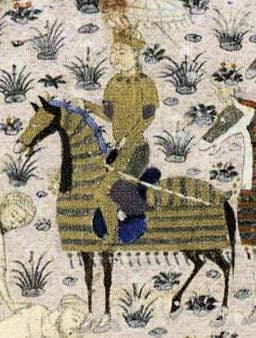
Ghiyath al-Din Tughluq
Emperor · Medieval
59.7Total
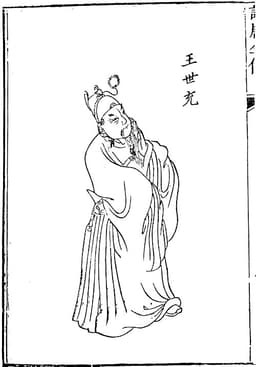
Wang Shichong
Emperor · Medieval
47.0Total
Basic Information
Born
1300
570
Died
1325
621
Era
Medieval
Medieval
Nationality
India
China
Occupation
Emperor
Emperor
Civilization
Indian
Eastern
Score Comparison
Military (10%)
61.7
60.0
Political (20%)
68.0
35.1
Influence (20%)
56.4
50.2
Legacy (20%)
48.3
40.8
Leadership (15%)
74.0
48.4
Strategy (15%)
60.7
57.5
TOTAL
59.7
47.0
Ghiyath al-Din Tughluq — Complete Timeline
1320 AD
Founding of the Tughluq DynastyPolitical Action
Ghiyath al-Din Tughluq, then governor of Dipalpur, led a revolt against the Khilji sultan Khusrau Khan. He defeated Khusrau Khan at the Battle of Saraswati and captured Delhi, proclaiming himself sultan. This established the Tughluq dynasty.
Dynasty FoundingRevoltDelhi Sultanate
Impact: nationalconstructive
1321 AD
Construction of Tughlaqabad FortCultural
Ghiyath al-Din Tughluq founded the city of Tughlaqabad near Delhi and built a massive fort there. The fort was designed to be impregnable, with thick walls and a strategic location. It served as his capital and a symbol of his power.
Fort BuildingUrban PlanningArchitecture
constructive
1323 AD
Conquest of WarangalWar◆ Major
Ghiyath al-Din Tughluq led a campaign against the Kakatiya kingdom of Warangal. He defeated the Kakatiya ruler Prataparudra II and annexed the region to the Delhi Sultanate. This extended Tughluq control into the Deccan.
Deccan CampaignKakatiya WarTerritorial Expansion
Impact: regionaldestructive
1325 AD
Death in a Pavilion CollapseOther◆ Major
Ghiyath al-Din Tughluq was killed when a wooden pavilion collapsed on him during a victory parade near Tughlaqabad. The structure was reportedly built hastily. His son Muhammad bin Tughluq succeeded him amid suspicions of foul play.
Accidental DeathSuccessionConspiracy
Impact: nationaltragic
Wang Shichong — Complete Timeline
618 AD
Rebellion at LuoyangPolitical Action◆ Major
Wang Shichong, a Sui general, staged a coup in Luoyang, killing the Sui regent and declaring himself emperor of the short-lived Zheng dynasty. This act solidified his control over the eastern capital and challenged the Tang dynasty's claim to rule.
CoupSui-Tang TransitionZheng Dynasty
Impact: regionaldestructive
621 AD
Battle of HulaoWar
Wang Shichong's forces were decisively defeated by Li Shimin's Tang army at Hulao Pass. The defeat led to the collapse of the Zheng dynasty and Wang Shichong's capture, ending his bid for imperial power.
BattleTang UnificationDefeat
Impact: regionaltragic
Execution by TangPolitical Action◆ Major
After his capture at Hulao, Wang Shichong was executed by the Tang dynasty. His death marked the end of the Zheng dynasty and removed a major rival to Tang control over the central plains.
ExecutionTang Unification
Impact: regionaltragic
Expert Analysis
Origins
Ghiyath al-Din Tughluq (born c. 1320? exact date unknown) was a Turkic slave soldier who rose through the ranks of the Delhi Sultanate under the Khalji dynasty. He served as governor of Dipalpur (modern Punjab) under Sultan Alauddin Khalji, gaining military experience and administrative skills. His background was that of a military aristocrat, with no known royal lineage.
Wang Shichong (born c. 590) was of Xiongnu descent, serving as a general under the Sui dynasty. He gained prominence for suppressing rebellions in the late Sui period. Unlike Tughluq, Wang had a more ethnically mixed background, being part of the nomadic Xiongnu elite integrated into Chinese imperial service.
Rise to Power
Tughluq's rise began in 1321 when he led a revolt against the Khalji sultan Khusrau Khan, whom he defeated at the Battle of Sara (1321). This victory allowed him to seize the throne and found the Tughluq dynasty. His military campaign against Warangal (1323) further solidified his reputation, as he annexed the Kakatiya kingdom and brought the Deccan under Delhi's control.
Wang Shichong's ascent occurred during the chaos of the Sui collapse. In 618, he staged a coup in Luoyang, killing the Sui regent and declaring himself emperor of the Zheng dynasty. However, his rule was contested from the start, facing opposition from Li Yuan (Tang founder) and other rebel factions.
Leadership & Governance
Tughluq scored 74.0 in leadership, reflecting his ability to consolidate power and implement reforms. He established a strong centralized administration, improved taxation systems, and built infrastructure such as the Tughlaqabad Fort. His governance was pragmatic, focusing on military expansion and economic stability.
Wang Shichong scored 35.1 in political skill, indicating poor governance. His reign was marked by paranoia and brutality; he executed potential rivals and alienated allies. His inability to build a stable administration contrasted sharply with Tughluq's effective statecraft.
Triumph & Tragedy
Tughluq's greatest triumph was founding a dynasty that ruled for nearly a century and expanding Delhi's territory into the Deccan. His construction of Tughlaqabad Fort (1321-1325) symbolized his ambition. However, his death in 1325 under a collapsing pavilion (possibly a assassination) cut short his reign, leaving his son Muhammad bin Tughluq to inherit a fragile empire.
Wang Shichong's brief triumph was capturing Luoyang and declaring himself emperor. But his tragedy was total: his defeat at the Battle of Hulao (621) by Li Shimin led to his capture and execution in 622. His Zheng dynasty lasted only three years, collapsing without lasting impact.
Character & Destiny
Tughluq was a decisive and ambitious leader, but his authoritarian tendencies and sudden death suggest a mix of competence and vulnerability. His character enabled him to seize power but not to secure a peaceful succession.
Wang Shichong was cunning but ruthless, alienating allies through suspicion. His political score of 35.1 reflects his inability to inspire loyalty, leading to his swift downfall. Historians consider him a capable general but a disastrous ruler.
Legacy
Tughluq's legacy includes the Tughluq dynasty, which ruled Delhi until 1414. His administrative reforms influenced later sultans. However, his overall legacy score is 48.3, limited by his short reign and overshadowed by his son's failures.
Wang Shichong left no lasting institutions; his Zheng dynasty was erased by the Tang. His military score of 60.0 is overshadowed by his political ineptitude. He is remembered as a minor warlord in the Sui-Tang transition.
Conclusion
Ghiyath al-Din Tughluq had greater impact, based on his leadership (74.0 vs 48.4) and political skill (68.0 vs 35.1). He founded a dynasty that shaped North Indian history for a century, while Wang Shichong's reign was a fleeting episode. Tughluq's total score of 59.7 exceeds Wang's 47.0, reflecting his more substantial achievements. His governance and military expansion (conquest of Warangal) created enduring change, whereas Wang's failure at Hulao sealed his irrelevance. Thus, Tughluq is the more significant historical figure.
Rankings
🥇
Ghiyath al-Din TughluqLeader
Mil: 61.7Pol: 68.0Inf: 56.4
59.7
🥈
Wang Shichong
Mil: 60.0Pol: 35.1Inf: 50.2
47.0
+12.7 behind
How This Comparison Works
Algorithm
Each figure is scored on 6 dimensions (0—100 scale) based on structured historical data: Military (10%), Political (20%), Influence (20%), Legacy (20%), Leadership (15%), Strategy (15%). The weighted total produces the final ranking.
Data Sources
Scores are computed from structured sub-indicators in the database. Scale factors adjust for era (Ancient ×0.85, Modern ×1.0) and civilization size (Eastern ×1.05, Other ×0.80) to account for differences in population and military scale.
Maximum 3 Figures
Comparisons are limited to 2—3 figures to ensure readability and statistical meaningfulness.
Error Margins
±5 points per dimension — Sub-scores are derived from historical records with inherent uncertainty. Two figures within 5 points on a dimension should be considered roughly equivalent in that area.
Total Score Accuracy
±3 points overall — The weighted combination of 6 dimensions produces a total score with approximately ±3 points of uncertainty. Differences of less than 3 points are not statistically significant— the figures are effectively tied.
Known Limitations
- Historical records are incomplete and uneven across civilizations
- Figures from oral-tradition societies may be underrepresented
- Occupation labels can misclassify multi-role figures
- Scores measure capability and impact, not moral character
- Quantitative scoring is a comparison tool, not absolute truth
Capability Radar
Military (10%) — Battles & Warfare
Battles
65
65
Win Rate
70
45
Expansion
70
50
Political (20%) — Governance & Reform
Reform
55
25
Diplomacy
50
35
Economy
50
30
Influence (20%) — Cultural & Global Reach
Cultural
40
20
Global
30
10
Legacy (20%) — Historical Impact
Historical
50
30
Longevity
40
15
Leadership (15%) — Power & Stability
Tenure
60
40
Stability
45
20
Strategy (15%) — Tactics & Innovation
Strategy
65
55
Tactics
60
60
Reform
55
30
Similar Comparisons
Comments & Discussion
No comments yet. Be the first to share your thoughts!