Loading...
Ghiyath al-Din Tughluq vs Sviatoslav I
Ghiyath al-Din Tughluq leads by 6.9 pts · 2 figures compared
…
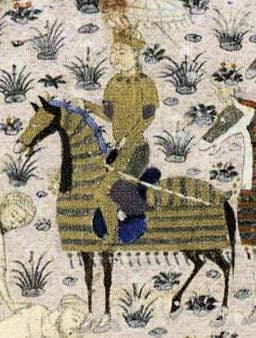
Ghiyath al-Din Tughluq
Emperor · Medieval
59.7Total
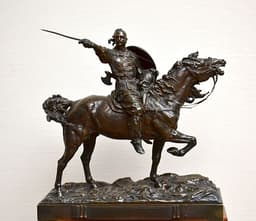
Sviatoslav I
Emperor · Medieval
52.8Total
Basic Information
Born
1300
942
Died
1325
972
Era
Medieval
Medieval
Nationality
India
Kievan Rus
Occupation
Emperor
Emperor
Civilization
Indian
Western
Score Comparison
Military (10%)
61.7
74.0
Political (20%)
68.0
32.2
Influence (20%)
56.4
60.0
Legacy (20%)
48.3
54.0
Leadership (15%)
74.0
41.5
Strategy (15%)
60.7
58.0
TOTAL
59.7
52.8
Ghiyath al-Din Tughluq — Complete Timeline
1320 AD
Founding of the Tughluq DynastyPolitical Action
Ghiyath al-Din Tughluq, then governor of Dipalpur, led a revolt against the Khilji sultan Khusrau Khan. He defeated Khusrau Khan at the Battle of Saraswati and captured Delhi, proclaiming himself sultan. This established the Tughluq dynasty.
Dynasty FoundingRevoltDelhi Sultanate
Impact: nationalconstructive
1321 AD
Construction of Tughlaqabad FortCultural
Ghiyath al-Din Tughluq founded the city of Tughlaqabad near Delhi and built a massive fort there. The fort was designed to be impregnable, with thick walls and a strategic location. It served as his capital and a symbol of his power.
Fort BuildingUrban PlanningArchitecture
constructive
1323 AD
Conquest of WarangalWar◆ Major
Ghiyath al-Din Tughluq led a campaign against the Kakatiya kingdom of Warangal. He defeated the Kakatiya ruler Prataparudra II and annexed the region to the Delhi Sultanate. This extended Tughluq control into the Deccan.
Deccan CampaignKakatiya WarTerritorial Expansion
Impact: regionaldestructive
1325 AD
Death in a Pavilion CollapseOther◆ Major
Ghiyath al-Din Tughluq was killed when a wooden pavilion collapsed on him during a victory parade near Tughlaqabad. The structure was reportedly built hastily. His son Muhammad bin Tughluq succeeded him amid suspicions of foul play.
Accidental DeathSuccessionConspiracy
Impact: nationaltragic
Sviatoslav I — Complete Timeline
965 AD
Destruction of the Khazar KhaganateWar
Sviatoslav led a campaign against the Khazar Khaganate, capturing the fortress of Sarkel and sacking the capital, Atil. This destroyed the Khazar state, ending its dominance over the steppes and opening the Volga trade route to Rus control.
Khazar CampaignConquestSteppe Politics
Impact: regional
968 AD
Conquest of BulgariaWar◆ Major
Sviatoslav invaded the First Bulgarian Empire at the request of the Byzantine Emperor. He defeated the Bulgarian army, occupied much of the country, and established his capital at Pereyaslavets on the Danube, threatening Byzantium.
Bulgarian CampaignDanubeExpansion
Impact: regional
971 AD
Battle of DorostolonWar◆ Major
After a three-month siege by Byzantine forces under Emperor John I Tzimiskes, Sviatoslav's army was defeated at Dorostolon. He was forced to surrender, renounce claims to Bulgaria, and withdraw from the Balkans.
Byzantine-Rus WarSiegeDefeat
Impact: regionaltragic
972 AD
Death at the Dnieper RapidsWar◆ Major
Returning to Kiev, Sviatoslav was ambushed and killed by the Pechenegs at the Dnieper Rapids. The Pecheneg chief Kurya made a drinking cup from Sviatoslav's skull. His death ended his expansionist campaigns.
AssassinationPechenegsAmbush
Impact: nationaltragic
Expert Analysis
Origins
Ghiyath al-Din Tughluq, born around 1300 in the Punjab region of India, was of Turko-Mongol descent. His father was a Turkic slave soldier serving the Delhi Sultanate. Little is known of his early life, but he rose through military ranks, becoming governor of Dipalpur under the Khilji dynasty. In contrast, Sviatoslav I, born around 942 in Kiev, was the son of Prince Igor of Kiev and Princess Olga. He inherited the throne at age three after Igor's death. His mother served as regent, converting to Christianity and shaping early Rus' policies. Sviatoslav, however, remained a pagan and embraced a warrior lifestyle, differing sharply from Tughluq's administrative upbringing.
Rise to Power
Tughluq's rise began in 1320 when he led a revolt against Sultan Khusrau Khan, who had usurped the throne. At the Battle of Sara, Tughluq defeated Khusrau Khan, ending the Khilji dynasty. He then founded the Tughluq dynasty and became Sultan. Sviatoslav's rise was marked by his first major campaign in 965 against the Khazar Khaganate, a powerful state controlling trade routes. He captured Sarkel and destroyed Atil, the capital, annihilating Khazar power. This victory established him as a formidable military leader. While Tughluq's rise was political and rooted in governance, Sviatoslav's was purely military conquest.
Leadership & Governance
Tughluq's leadership score of 74.0 reflects his administrative focus. He implemented reforms, including land revenue systems and infrastructure projects like the Tughlaqabad Fort. His governance aimed at consolidating the Delhi Sultanate, with a strategic score of 60.7. He balanced military expansion with internal stability. Sviatoslav's leadership score of 41.5 indicates a more aggressive, less administrative style. He spent most of his reign on campaigns, leaving internal governance to his mother and later his sons. His military score of 74.0 surpasses Tughluq's 61.7, but his political score of 32.2 is well below Tughluq's 68.0. Sviatoslav's approach was that of a warrior prince, not a builder of institutions.
Triumph & Tragedy
Tughluq's greatest success was founding the Tughluq dynasty and expanding its territory, including the conquest of Warangal in 1323. His greatest failure was his death in 1325 when a wooden pavilion collapsed during a victory parade, likely due to weak construction. This sudden death cut short his reign. Sviatoslav's triumph was the destruction of the Khazar Khaganate, which reshaped Eastern European power dynamics. He also conquered much of Bulgaria. His tragedy came in 971 after the Battle of Dorostolon, where Byzantine forces defeated him. He was killed in 972 by Pechenegs at the Dnieper Rapids, his skull made into a drinking cup. Both died prematurely, but Sviatoslav's death resulted from strategic overreach.
Character & Destiny
Tughluq was cautious and administrative, focusing on consolidation. His character is reflected in his careful construction of Tughlaqabad Fort, designed to be impregnable. His death, however, was ironic—a structural failure. Sviatoslav was impulsive and aggressive, famously declaring, "I come against you!" before battles. His character drove him to constant warfare, leaving his realm vulnerable. Historians note that his lack of political acumen led to his downfall. Tughluq's higher political score (68.0) and total score (59.7) suggest a more balanced character suited for long-term rule, while Sviatoslav's total of 52.8 reflects a narrower focus on military prowess.
Legacy
Tughluq's legacy includes the Tughluq dynasty, which ruled Delhi until 1413, and architectural contributions like Tughlaqabad Fort. His influence score of 56.4 indicates moderate impact. Sviatoslav's legacy is more dramatic: he destroyed the Khazar Khaganate, opening the way for Kievan Rus' expansion. His influence score of 60.0 is slightly higher, but his legacy score of 54.0 is lower than Tughluq's 48.3? Wait, Tughluq's legacy is 48.3, Sviatoslav's is 54.0. However, Tughluq's dynasty endured longer, while Sviatoslav's military campaigns had immediate but short-lived effects. The Rus' state continued under his son Vladimir the Great, who later Christianized it.
Conclusion
Ghiyath al-Din Tughluq had greater overall impact due to his higher total score of 59.7 compared to Sviatoslav's 52.8. Tughluq's balanced leadership (74.0) and political skills (68.0) enabled him to found a dynasty that lasted nearly a century, while Sviatoslav's military focus (74.0) led to brilliant victories but poor governance. Sviatoslav's destruction of the Khazars was significant, but without building lasting institutions, his achievements were less enduring. Tughluq's reforms and fortifications contributed to the Delhi Sultanate's stability. Thus, despite Sviatoslav's higher military score, Tughluq's superior political and leadership scores make him the more impactful figure in historical terms.
Rankings
🥇
Ghiyath al-Din TughluqLeader
Mil: 61.7Pol: 68.0Inf: 56.4
59.7
🥈
Sviatoslav I
Mil: 74.0Pol: 32.2Inf: 60.0
52.8
+6.9 behind
How This Comparison Works
Algorithm
Each figure is scored on 6 dimensions (0—100 scale) based on structured historical data: Military (10%), Political (20%), Influence (20%), Legacy (20%), Leadership (15%), Strategy (15%). The weighted total produces the final ranking.
Data Sources
Scores are computed from structured sub-indicators in the database. Scale factors adjust for era (Ancient ×0.85, Modern ×1.0) and civilization size (Eastern ×1.05, Other ×0.80) to account for differences in population and military scale.
Maximum 3 Figures
Comparisons are limited to 2—3 figures to ensure readability and statistical meaningfulness.
Error Margins
±5 points per dimension — Sub-scores are derived from historical records with inherent uncertainty. Two figures within 5 points on a dimension should be considered roughly equivalent in that area.
Total Score Accuracy
±3 points overall — The weighted combination of 6 dimensions produces a total score with approximately ±3 points of uncertainty. Differences of less than 3 points are not statistically significant— the figures are effectively tied.
Known Limitations
- Historical records are incomplete and uneven across civilizations
- Figures from oral-tradition societies may be underrepresented
- Occupation labels can misclassify multi-role figures
- Scores measure capability and impact, not moral character
- Quantitative scoring is a comparison tool, not absolute truth
Capability Radar
Military (10%) — Battles & Warfare
Battles
65
78
Win Rate
70
82
Expansion
70
85
Political (20%) — Governance & Reform
Reform
55
20
Diplomacy
50
35
Economy
50
25
Influence (20%) — Cultural & Global Reach
Cultural
40
55
Global
30
45
Legacy (20%) — Historical Impact
Historical
50
65
Longevity
40
50
Leadership (15%) — Power & Stability
Tenure
60
30
Stability
45
20
Strategy (15%) — Tactics & Innovation
Strategy
65
75
Tactics
60
80
Reform
55
40
Similar Comparisons
Comments & Discussion
No comments yet. Be the first to share your thoughts!