Loading...
Geunchogo of Baekje vs Ptolemy II Philadelphus
Ptolemy II Philadelphus leads by 1.4 pts · 2 figures compared
…

Geunchogo of Baekje
Emperor · Ancient
57.7Total
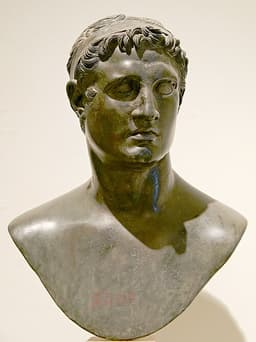
Ptolemy II Philadelphus
Emperor · Ancient
59.1Total
Basic Information
Born
324
-308
Died
375
-246
Era
Ancient
Ancient
Nationality
Korea
Egypt
Occupation
Emperor
Emperor
Civilization
Eastern
Middle Eastern
Score Comparison
Military (10%)
63.3
25.0
Political (20%)
68.0
70.0
Influence (20%)
54.9
72.0
Legacy (20%)
46.7
52.0
Leadership (15%)
72.0
72.0
Strategy (15%)
50.0
43.3
TOTAL
57.7
59.1
Geunchogo of Baekje — Complete Timeline
346 AD
Expanded Baekje to Its PeakWar
Geunchogo of Baekje launched military campaigns that expanded the kingdom to its greatest territorial extent. He conquered parts of southern Korea and controlled key trade routes, making Baekje a regional power.
Territorial ExpansionBaekjeWar
Impact: regionalconstructive
360 AD
Patronized Chinese LearningCultural
Geunchogo invited Chinese scholars to Baekje and promoted the study of Confucian classics. He established schools that taught Chinese literature and philosophy, fostering intellectual development.
EducationConfucianismCultural Exchange
Impact: regionalconstructive
367 AD
Established Diplomatic Relations with JapanPolitical Action◆ Major
Geunchogo sent diplomatic missions to the Yamato court in Japan, establishing formal relations. This led to cultural and technological exchanges, including the introduction of Chinese writing to Japan via Baekje.
DiplomacyJapanCultural Exchange
Impact: regionalconstructive
371 AD
Defeated Goguryeo in BattleWar◆ Major
Geunchogo led a successful campaign against Goguryeo, capturing the fortress of Pyongyang and killing King Gogukwon. This victory temporarily weakened Goguryeo and enhanced Baekje's prestige.
WarGoguryeoBaekje
Impact: regional
Ptolemy II Philadelphus — Complete Timeline
285 BC
Expansion of the Library of AlexandriaCultural◆ Major
Ptolemy II greatly expanded the Library of Alexandria, acquiring manuscripts from across the known world. He appointed scholars like Zenodotus and Callimachus as librarians, making Alexandria the preeminent center of Hellenistic learning and scholarship.
LibraryScholarshipHellenistic
Impact: globalprogressive
280 BC
Construction of the Pharos LighthouseCultural◆ Major
Ptolemy II completed the construction of the Pharos Lighthouse on the island of Pharos off Alexandria. The lighthouse, one of the Seven Wonders of the Ancient World, stood over 100 meters tall and guided ships into the harbor, becoming a symbol of Ptolemaic power and engineering.
Seven WondersArchitectureAlexandria
Impact: globalconstructive
274 BC
First Syrian War (274-271 BC)War◆ Major
Ptolemy II fought the First Syrian War against the Seleucid king Antiochus I. He successfully defended Ptolemaic possessions in Coele-Syria and expanded Egyptian influence into the Aegean and Anatolia, securing his kingdom's position as a major Hellenistic power.
Syrian WarPtolemaic-SeleucidEgypt
Impact: regional
273 BC
Marriage to Arsinoe IIPolitical Action◆ Major
Ptolemy II married his full sister Arsinoe II, a practice common in Egyptian pharaonic tradition but unusual for Greeks. This marriage consolidated his power and was used for propaganda, with both being deified as the Theoi Philadelphoi (Sibling-Loving Gods).
Royal MarriageIncestDeification
Impact: national
250 BC
Patronage of the Septuagint TranslationCultural◆ Major
According to tradition, Ptolemy II commissioned the translation of the Hebrew Bible into Greek, known as the Septuagint, for the Library of Alexandria. This translation made Jewish scriptures accessible to the Greek-speaking world and became foundational for Christianity.
TranslationBibleHellenistic Judaism
Impact: globalconstructive
Expert Analysis
Origins
Geunchogo of Baekje (born 324 AD, reigned 346–375 AD) was the 13th king of Baekje, one of the Three Kingdoms of Korea. He was the son of King Biryu, though his early life is sparsely recorded. Baekje at the time was a growing state on the Korean Peninsula, and Geunchogo received training in military and Confucian studies from Chinese scholars who had migrated to the region. His education emphasized Chinese classics, which later influenced his governance.
Ptolemy II Philadelphus (born 309 BC, reigned 283–246 BC) was the son of Ptolemy I Soter, a Macedonian general of Alexander the Great and founder of the Ptolemaic Kingdom in Egypt. He was raised in the multicultural environment of Alexandria, receiving Greek education alongside exposure to Egyptian traditions. His mother, Berenice I, was a noblewoman, and Ptolemy II grew up amidst court intrigues and the consolidation of Ptolemaic power.
Rise to Power
Geunchogo ascended the throne in 346 AD after his father's death. Baekje was then under pressure from Goguryeo to the north. Geunchogo immediately reorganized the military and sought alliances. A key turning point was his diplomatic mission to the Yamato court in Japan around 367 AD, establishing formal ties that brought technological and cultural exchange. This alliance secured Baekje's southern flank, allowing him to focus on Goguryeo. In 371 AD, he led a campaign that captured Pyongyang and killed King Gogukwon of Goguryeo, a victory that temporarily crippled Goguryeo and expanded Baekje's territory to its greatest extent.
Ptolemy II became co-regent with his father in 285 BC and sole ruler in 283 BC. His rise was marked by the elimination of rivals, including his half-brother Magas (who later became king of Cyrene). He secured his position by marrying his full sister Arsinoe II in 274 BC, a bold move that consolidated the royal line and aligned with Egyptian pharaonic tradition. This marriage also neutralized Arsinoe's previous ambitions. Ptolemy II's early reign focused on strengthening Egypt's borders and building infrastructure.
Leadership & Governance
Geunchogo ruled as a warrior-king, personally leading campaigns and expanding Baekje's borders. He scored 50.0 in strategy and 72.0 in leadership, reflecting his hands-on military approach. Domestically, he promoted Confucian learning by inviting Chinese scholars and establishing schools. He also encouraged agricultural development and trade with Japan and China. His governance was centralized, with the king as the ultimate authority. However, his military focus left little room for administrative reforms; Baekje remained a feudal state with powerful local lords.
Ptolemy II, scoring 70.0 in political and 72.0 in leadership, was a builder and patron. He completed the Pharos Lighthouse (one of the Seven Wonders) and expanded the Library of Alexandria, appointing scholars like Zenodotus and Callimachus. He also commissioned the Septuagint translation of the Hebrew Bible. Economically, he stabilized Egypt's currency and promoted trade in the Mediterranean. His marriage to his sister was a political move that solidified the dynasty but was controversial among Greek subjects. He ruled through a bureaucratic apparatus, relying on Greek and Egyptian administrators.
Triumph & Tragedy
Geunchogo's greatest triumph was his victory over Goguryeo in 371 AD, which expanded Baekje's territory to its peak and eliminated a major rival. He also established lasting diplomatic ties with Japan, leading to cultural exchanges that influenced Japanese court life. However, his tragedy was that his achievements were not sustained. After his death in 375 AD, Baekje gradually lost territory to Goguryeo and Silla. His military overextension and lack of enduring institutions meant his gains were temporary. He scored 46.7 in legacy, reflecting this fragility.
Ptolemy II's triumphs include the Pharos Lighthouse, which became a symbol of Alexandria, and the Library, which made the city a center of learning. The Septuagint translation had profound religious and cultural impact. His military score of 25.0 indicates limited success: he fought the First Syrian War (274–271 BC) against Antiochus I, securing Coele-Syria, but failed to expand significantly. His tragedy was the costly naval defeat at the Battle of Cos (c. 258 BC) against Antigonus II Gonatas, which weakened Ptolemaic naval dominance. His sister-wife Arsinoe II's death in 270 BC also left him isolated.
Character & Destiny
Geunchogo was ambitious and aggressive, a king who led from the front. His decision to attack Goguryeo directly and kill its king showed boldness but also risk. He was pragmatic in seeking alliances with Japan and China. However, his character lacked foresight in building sustainable systems; Baekje's power depended on his personal leadership. After his death, the kingdom declined, suggesting his rule was not institutionalized.
Ptolemy II was a cultured and shrewd ruler, more interested in building monuments and knowledge than conquest. His marriage to his sister was a calculated move to consolidate power, but it created dynastic precedent that led to later incestuous marriages. His patronage of the arts and sciences was unmatched, but his military caution meant Egypt did not expand territorially. He was a consolidator rather than an expander, and his legacy endured through institutions.
Legacy
Geunchogo is remembered in Korean history as a great conqueror who briefly made Baekje the dominant power. His diplomatic ties with Japan influenced early Japanese state formation. However, his legacy is localized; outside Korea, he is little known. His score of 54.9 in influence reflects his regional impact.
Ptolemy II's legacy is global. The Library of Alexandria became the ancient world's intellectual hub, and the Pharos Lighthouse was a marvel for centuries. The Septuagint influenced Judaism and Christianity. His reign set the pattern for Ptolemaic rule, which lasted until Cleopatra. He scored 72.0 in influence, far higher than Geunchogo. His contributions to culture and knowledge outlasted any military conquest.
Conclusion
Ptolemy II Philadelphus had greater impact than Geunchogo of Baekje. While Geunchogo's military campaigns scored 63.3 and expanded Baekje temporarily, his achievements were ephemeral and regional. Ptolemy II, with a total score of 59.1 vs. Geunchogo's 57.7, built institutions that shaped civilization for centuries. The Library of Alexandria and the Septuagint are enduring contributions to human knowledge, whereas Geunchogo's victories faded. In the long view, cultural and intellectual patronage outweighs territorial expansion. Ptolemy II's influence on learning and religion is unmatched by Geunchogo's military prowess.
Rankings
🥇
Ptolemy II PhiladelphusLeader
Mil: 25.0Pol: 70.0Inf: 72.0
59.1
🥈
Geunchogo of Baekje
Mil: 63.3Pol: 68.0Inf: 54.9
57.7
+1.4 behind
How This Comparison Works
Algorithm
Each figure is scored on 6 dimensions (0—100 scale) based on structured historical data: Military (10%), Political (20%), Influence (20%), Legacy (20%), Leadership (15%), Strategy (15%). The weighted total produces the final ranking.
Data Sources
Scores are computed from structured sub-indicators in the database. Scale factors adjust for era (Ancient ×0.85, Modern ×1.0) and civilization size (Eastern ×1.05, Other ×0.80) to account for differences in population and military scale.
Maximum 3 Figures
Comparisons are limited to 2—3 figures to ensure readability and statistical meaningfulness.
Error Margins
±5 points per dimension — Sub-scores are derived from historical records with inherent uncertainty. Two figures within 5 points on a dimension should be considered roughly equivalent in that area.
Total Score Accuracy
±3 points overall — The weighted combination of 6 dimensions produces a total score with approximately ±3 points of uncertainty. Differences of less than 3 points are not statistically significant— the figures are effectively tied.
Known Limitations
- Historical records are incomplete and uneven across civilizations
- Figures from oral-tradition societies may be underrepresented
- Occupation labels can misclassify multi-role figures
- Scores measure capability and impact, not moral character
- Quantitative scoring is a comparison tool, not absolute truth
Capability Radar
Military (10%) — Battles & Warfare
Battles
60
30
Win Rate
65
40
Expansion
65
35
Political (20%) — Governance & Reform
Reform
55
70
Diplomacy
60
80
Economy
55
85
Influence (20%) — Cultural & Global Reach
Cultural
50
85
Global
40
70
Legacy (20%) — Historical Impact
Historical
55
80
Longevity
45
75
Leadership (15%) — Power & Stability
Tenure
70
75
Stability
60
70
Strategy (15%) — Tactics & Innovation
Strategy
60
40
Tactics
55
35
Reform
50
30
Similar Comparisons
Comments & Discussion
No comments yet. Be the first to share your thoughts!