Loading...
Geunchogo of Baekje vs Napoleon Bonaparte
Napoleon Bonaparte leads by 13.2 pts · 2 figures compared
…
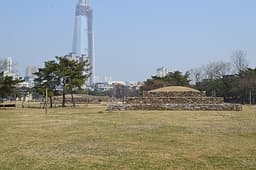
Geunchogo of Baekje
Emperor · Ancient
57.7Total

Napoleon Bonaparte
General · Modern
70.9Total
Basic Information
Born
324
1769
Died
375
1821
Era
Ancient
Modern
Nationality
Korea
France
Occupation
Emperor
General
Civilization
Eastern
Western
Score Comparison
Military (10%)
63.3
94.0
Political (20%)
68.0
72.0
Influence (20%)
54.9
40.0
Legacy (20%)
46.7
80.0
Leadership (15%)
72.0
78.0
Strategy (15%)
50.0
90.0
TOTAL
57.7
70.9
Geunchogo of Baekje — Complete Timeline
346 AD
Expanded Baekje to Its PeakWar
Geunchogo of Baekje launched military campaigns that expanded the kingdom to its greatest territorial extent. He conquered parts of southern Korea and controlled key trade routes, making Baekje a regional power.
Territorial ExpansionBaekjeWar
Impact: regionalconstructive
360 AD
Patronized Chinese LearningCultural
Geunchogo invited Chinese scholars to Baekje and promoted the study of Confucian classics. He established schools that taught Chinese literature and philosophy, fostering intellectual development.
EducationConfucianismCultural Exchange
Impact: regionalconstructive
367 AD
Established Diplomatic Relations with JapanPolitical Action◆ Major
Geunchogo sent diplomatic missions to the Yamato court in Japan, establishing formal relations. This led to cultural and technological exchanges, including the introduction of Chinese writing to Japan via Baekje.
DiplomacyJapanCultural Exchange
Impact: regionalconstructive
371 AD
Defeated Goguryeo in BattleWar◆ Major
Geunchogo led a successful campaign against Goguryeo, capturing the fortress of Pyongyang and killing King Gogukwon. This victory temporarily weakened Goguryeo and enhanced Baekje's prestige.
WarGoguryeoBaekje
Impact: regional
Napoleon Bonaparte — Complete Timeline
1799 AD
Coup of 18 BrumaireOther◆ Major
Napoleon Bonaparte, with support from his brother Lucien and key political figures, overthrew the Directory in a bloodless coup. He established the Consulate with himself as First Consul, effectively becoming the ruler of France. This event ended the French Revolution's most unstable period.
French RevolutionCoupRise to Power
Impact: regional
1804 AD
Promulgation of the Napoleonic CodeOther◆ Major
Napoleon enacted the Civil Code of the French, known as the Napoleonic Code, a comprehensive set of laws that replaced the fragmented feudal legal systems. The code established legal equality, protected property rights, and secularized law. It became the basis for legal systems in many European and world countries.
Legal ReformNapoleonic CodeCivil Law
Impact: globalconstructive
1805 AD
Battle of AusterlitzWar◆ Major
Napoleon's Grande Arm
Napoleonic WarsBattleDecisive Victory
Impact: global
1812 AD
Invasion of RussiaWar◆ Major
Napoleon led the Grande Arm
Napoleonic WarsInvasionDisaster
Impact: globaldestructive
1815 AD
Battle of WaterlooWar◆ Major
Napoleon's French army was defeated by the combined forces of the Duke of Wellington's Anglo-Allied army and Gebhard Leberecht von Bl
Napoleonic WarsBattleFinal Defeat
Impact: globaldestructive
Expert Analysis
geunchogo-of-baekje-vs-napoleon-bonaparte
The Emperor and the King
On a June morning in 1815, Napoleon Bonaparte watched the sun rise over the fields of Waterloo, his grand army arrayed behind him. He had conquered from Madrid to Moscow, rewritten the laws of Europe, and crowned himself emperor. Across the centuries, on a Korean peninsula still divided into warring kingdoms, another ruler—Geunchogo of Baekje—had once stood on the walls of a captured fortress, looking north toward his greatest enemy’s capital. Both men sought glory through conquest. Both reshaped their worlds. Yet one ended in exile on a remote Atlantic island, while the other died in his palace, his kingdom at its zenith. What explains the difference?
Origins
Napoleon Bonaparte was born in 1769 on Corsica, an island only recently annexed by France. His family was minor nobility, but their status was fragile—his father had fought for Corsican independence before switching allegiances. Napoleon grew up speaking Italian, not French, and was mocked at military school for his accent and small stature. This outsider’s hunger for recognition drove him relentlessly. He came of age in the chaos of the French Revolution, when old hierarchies collapsed and a young artillery officer could rise to command armies.
Geunchogo of Baekje, born in 324 CE, faced a different world. He was a king’s son in an ancient Korean kingdom that had existed for centuries. Baekje was one of the Three Kingdoms of Korea, locked in a brutal struggle with Goguryeo to the north and Silla to the east. Unlike Napoleon, Geunchogo inherited a throne and a stable bureaucracy. His challenge was not to climb from obscurity but to expand what he had already received.
Rise to Power
Napoleon’s ascent was a lightning bolt. In 1793, at age twenty-four, he drove British forces from the port of Toulon, earning promotion to brigadier general. By 1796 he commanded the French army in Italy, where his speed and audacity shattered Austrian rule. In 1799 he staged a coup and made himself First Consul. Five years later, he crowned himself Emperor of the French. Each step was a gamble, a calculated risk against enemies both foreign and domestic.
Geunchogo’s rise was more deliberate. He became king of Baekje around 346 CE, at age twenty-two, inheriting a kingdom already strong but surrounded by rivals. His first decade was spent consolidating power, building alliances, and preparing for war. Where Napoleon seized opportunity, Geunchogo cultivated it. He understood that in ancient East Asia, legitimacy mattered as much as force. He invited Chinese scholars to his court, established schools teaching Confucian classics, and presented himself as a civilized ruler, not merely a conqueror.
Leadership & Governance
Napoleon ruled through sheer force of personality and institutional genius. His Napoleonic Code reformed French law, establishing principles of equality before the law and secular administration that endure today. He centralized government, created a system of elite schools, and built roads and canals that unified France. But his governance was ultimately autocratic—he silenced dissent, censored newspapers, and treated conquered territories as resources to be exploited. His military strategy was revolutionary: fast marches, massed artillery, and the tactic of splitting enemy armies to defeat them piecemeal. At Austerlitz in 1805, he destroyed a larger Russian-Austrian army through deception and timing.
Geunchogo governed differently. He expanded Baekje to its territorial peak around 346 CE, conquering regions that gave his kingdom control over the Han River basin—the economic heart of the peninsula. In 371 CE, he led a campaign that captured the fortress of Pyongyang and killed King Gogukwon of Goguryeo, a stunning victory that shifted the balance of power. But his greatest achievement was diplomatic. In 367 CE, he sent missions to the Yamato court in Japan, establishing relations that brought Baekje’s culture, writing system, and Buddhist art to the Japanese archipelago. Where Napoleon imposed, Geunchogo traded—influence for influence, knowledge for knowledge.
Triumph & Tragedy
Napoleon’s triumph was continental Europe itself. By 1810, his empire stretched from Spain to Poland, and his brothers sat on thrones across the continent. But his tragedy was hubris. The invasion of Russia in 1812 destroyed his Grand Army—over 400,000 men died in the snow. He refused to compromise, refused to accept limits, and was finally defeated at Waterloo in 1815. Exiled to Saint Helena, he spent his last years dictating memoirs, still insisting he had been right.
Geunchopo’s triumph was the golden age of Baekje. Under his reign, the kingdom became a maritime power, trading with China and Japan while dominating the peninsula. His defeat of Goguryeo in 371 CE was a masterstroke—not just a military victory but a political one, humbling a rival that had threatened Baekje for centuries. He died in 375 CE, still king, still in control. There was no exile, no final defeat. His tragedy was not personal but dynastic: within two centuries after his death, Baekje would be destroyed by its enemies, its culture absorbed by others.
Character & Destiny
Napoleon was a man of insatiable ambition. “Impossible is a word to be found only in the dictionary of fools,” he once said. He believed he could bend history to his will, and for a time he did. But his refusal to compromise, his need for total victory, made him unable to consolidate what he had won. He conquered Europe but could not govern it.
Geunchopo was more pragmatic. He expanded his kingdom but also built institutions that would outlast him. He sought not to destroy his enemies but to weaken them, not to dominate but to lead. His strategy was patient, his vision long-term. Where Napoleon’s character drove him to overreach, Geunchopo’s restraint allowed him to die in power.
Legacy
Napoleon’s legacy is immense and contested. He is remembered as a military genius, a reformer, and a tyrant. The Napoleonic Code influenced legal systems across Europe and the Americas. His campaigns reshaped warfare and nationalism. But he is also a warning: the man who wanted everything ended with nothing.
Geunchopo’s legacy is quieter but enduring. In Korea, he is remembered as a great king who brought Baekje to its height. In Japan, he is credited with transmitting Chinese learning and Buddhism, laying foundations for Japanese civilization. His diplomatic model—influence through culture, not conquest—proved more durable than Napoleon’s armies.
Conclusion
Standing on the battlefield of Waterloo, Napoleon could see the end coming. Geunchopo, on the walls of Pyongyang, saw only victory. Both men sought to shape their worlds, but they understood power differently. Napoleon commanded through fear and brilliance; Geunchopo through patience and diplomacy. One burned bright and vanished; the other built slowly and endured. History remembers both, but it offers a quiet lesson: the conqueror who cannot stop conquering is already defeated. The king who knows when to rule, not just fight, builds something that lasts.
Rankings
🥇
Napoleon BonaparteLeader
Mil: 94.0Pol: 72.0Inf: 40.0
70.9
🥈
Geunchogo of Baekje
Mil: 63.3Pol: 68.0Inf: 54.9
57.7
+13.2 behind
How This Comparison Works
Algorithm
Each figure is scored on 6 dimensions (0—100 scale) based on structured historical data: Military (10%), Political (20%), Influence (20%), Legacy (20%), Leadership (15%), Strategy (15%). The weighted total produces the final ranking.
Data Sources
Scores are computed from structured sub-indicators in the database. Scale factors adjust for era (Ancient ×0.85, Modern ×1.0) and civilization size (Eastern ×1.05, Other ×0.80) to account for differences in population and military scale.
Maximum 3 Figures
Comparisons are limited to 2—3 figures to ensure readability and statistical meaningfulness.
Error Margins
±5 points per dimension — Sub-scores are derived from historical records with inherent uncertainty. Two figures within 5 points on a dimension should be considered roughly equivalent in that area.
Total Score Accuracy
±3 points overall — The weighted combination of 6 dimensions produces a total score with approximately ±3 points of uncertainty. Differences of less than 3 points are not statistically significant— the figures are effectively tied.
Known Limitations
- Historical records are incomplete and uneven across civilizations
- Figures from oral-tradition societies may be underrepresented
- Occupation labels can misclassify multi-role figures
- Scores measure capability and impact, not moral character
- Quantitative scoring is a comparison tool, not absolute truth
Capability Radar
Military (10%) — Battles & Warfare
Battles
60
95
Win Rate
65
90
Expansion
65
95
Political (20%) — Governance & Reform
Reform
55
95
Diplomacy
60
80
Economy
55
85
Influence (20%) — Cultural & Global Reach
Cultural
50
85
Global
40
90
Legacy (20%) — Historical Impact
Historical
55
95
Longevity
45
90
Leadership (15%) — Power & Stability
Tenure
70
85
Stability
60
70
Strategy (15%) — Tactics & Innovation
Strategy
60
95
Tactics
55
98
Reform
50
92
Similar Comparisons
Comments & Discussion
Conqueror of Concepts6/17/2026
Napoleon wins on scale, but Geunchogo wins on endurance. Bonaparte's empire collapsed in a decade because he overextended from Spain to Russia—classic supply-line hubris. Geunchogo's Baekje peaked for 30+ years, dominating Goguryeo and controlling trade routes across the Yellow Sea. One seized glory; the other sustained it. History loves the flashy fall, but I’m backing the steady build.
历史棋手6/17/2026
拿破仑的军事实力无可否认,但近肖古王才是真正的战略大师。他不仅击溃了高句丽,还通过海路与日本和中国南朝建立外交,形成包围网。拿破仑却沉迷于陆地决战,忽视了外交暗流。近肖古在无火药时代用文化联盟巩固霸权,更考验智慧。别被欧洲中心的叙事骗了。
Data Skeptic Dave6/17/2026
The comparison is deeply flawed. Napoleon commanded armies of 400,000+ in a continent-wide war; Geunchogo’s forces were likely under 50,000. Napoleon's battles had tens of thousands dead in a single day—Geunchogo's entire reign may not match that. They’re not “both conquerors” except in the vaguest sense. This is comparing a supernova to a steady flame. Different eras, different metrics.
败者重写6/17/2026
我们过分美化了拿破仑的失败,却忽略了近肖古王的成就。拿破仑逃过厄尔巴岛后仍能齐聚百万大军,但那是旧秩序的残影。近肖古统一了百济文化影响,为后世三国时代奠定基础。拿破仑的遗产是法典和神话,近肖古给了我们一个真正的王国。细节决定胜负:拿破仑输在自大,近肖古赢在克制。
Roman Republic Pal6/17/2026
Wake me when Geunchogo defeats a coalition of half a dozen empires or codifies a legal system that lasts centuries. Napoleon isn't just a general—he’s a revolutionary creator. Westphalia to Vienna, his shadow looms. Baekje’s peak was regional and transient. Geunchogo died in his palace, sure, but his kingdom was gone within two generations. Napoleon’s ideas outlived his downfall. That’s the real victory.