Loading...
Liu Bei vs Ptolemy II Philadelphus
Liu Bei leads by 0.4 pts · 2 figures compared
…
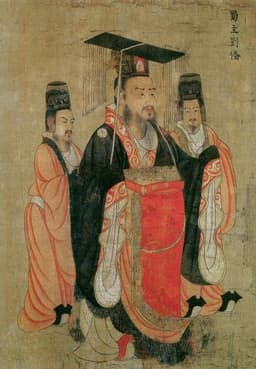
Liu Bei
Emperor · Ancient
59.5Total
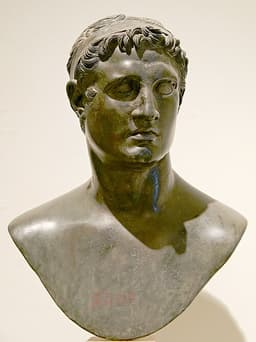
Ptolemy II Philadelphus
Emperor · Ancient
59.1Total
Basic Information
Born
161
-308
Died
223
-246
Era
Ancient
Ancient
Nationality
China
Egypt
Occupation
Emperor
Emperor
Civilization
Eastern
Middle Eastern
Score Comparison
Military (10%)
65.0
25.0
Political (20%)
68.0
70.0
Influence (20%)
55.0
72.0
Legacy (20%)
72.0
52.0
Leadership (15%)
40.0
72.0
Strategy (15%)
50.0
43.3
TOTAL
59.5
59.1
Liu Bei — Complete Timeline
208 AD
Battle of Red CliffsWar
Liu Bei and Sun Quan's combined forces defeated Cao Cao's navy at the Battle of Red Cliffs on the Yangtze River. The victory prevented Cao Cao from conquering the south and allowed Liu Bei to establish a base in Jing Province.
BattleRed CliffsAlliance
Impact: regional
Formation of the Alliance with Sun QuanPolitical Action◆ Major
Liu Bei, advised by Zhuge Liang, formed a strategic alliance with Sun Quan of Wu against the northern warlord Cao Cao. This alliance was crucial for the upcoming Battle of Red Cliffs and established the basis for the Three Kingdoms division.
AllianceSun QuanCao Cao
Impact: regionalconstructive
214 AD
Conquest of Yi ProvinceWar◆ Major
Liu Bei, with the help of Zhuge Liang and other advisors, conquered Yi Province (modern Sichuan) from its ruler Liu Zhang. This provided a wealthy and defensible base for his kingdom, fulfilling a key part of the Longzhong Plan.
ConquestYi ProvinceShu Han
Impact: regional
221 AD
Proclamation of the Shu Han DynastyPolitical Action
After Cao Pi usurped the Han throne, Liu Bei declared himself emperor of Shu Han in Chengdu, claiming to continue the Han dynasty. This formalized the Three Kingdoms period, with Shu, Wei, and Wu as rival states.
DynastyShu HanThree Kingdoms
Impact: national
222 AD
Battle of YilingWar◆ Major
Liu Bei launched a campaign against Sun Quan to avenge the death of his sworn brother Guan Yu. His forces were defeated by Wu general Lu Xun at the Battle of Yiling, resulting in heavy losses and Liu Bei's retreat to Baidi Cheng.
BattleDefeatWu
Impact: regionaltragic
Ptolemy II Philadelphus — Complete Timeline
285 BC
Expansion of the Library of AlexandriaCultural◆ Major
Ptolemy II greatly expanded the Library of Alexandria, acquiring manuscripts from across the known world. He appointed scholars like Zenodotus and Callimachus as librarians, making Alexandria the preeminent center of Hellenistic learning and scholarship.
LibraryScholarshipHellenistic
Impact: globalprogressive
280 BC
Construction of the Pharos LighthouseCultural◆ Major
Ptolemy II completed the construction of the Pharos Lighthouse on the island of Pharos off Alexandria. The lighthouse, one of the Seven Wonders of the Ancient World, stood over 100 meters tall and guided ships into the harbor, becoming a symbol of Ptolemaic power and engineering.
Seven WondersArchitectureAlexandria
Impact: globalconstructive
274 BC
First Syrian War (274-271 BC)War◆ Major
Ptolemy II fought the First Syrian War against the Seleucid king Antiochus I. He successfully defended Ptolemaic possessions in Coele-Syria and expanded Egyptian influence into the Aegean and Anatolia, securing his kingdom's position as a major Hellenistic power.
Syrian WarPtolemaic-SeleucidEgypt
Impact: regional
273 BC
Marriage to Arsinoe IIPolitical Action◆ Major
Ptolemy II married his full sister Arsinoe II, a practice common in Egyptian pharaonic tradition but unusual for Greeks. This marriage consolidated his power and was used for propaganda, with both being deified as the Theoi Philadelphoi (Sibling-Loving Gods).
Royal MarriageIncestDeification
Impact: national
250 BC
Patronage of the Septuagint TranslationCultural◆ Major
According to tradition, Ptolemy II commissioned the translation of the Hebrew Bible into Greek, known as the Septuagint, for the Library of Alexandria. This translation made Jewish scriptures accessible to the Greek-speaking world and became foundational for Christianity.
TranslationBibleHellenistic Judaism
Impact: globalconstructive
Expert Analysis
Origins
Liu Bei (161–223) was born in Zhuo Commandery (modern Hebei) during the declining Eastern Han dynasty. He claimed descent from Emperor Jing of Han, but his family had fallen into poverty. His father died early, and Liu Bei supported himself by weaving mats and selling sandals. At 15, he studied under Lu Zhi, a scholar-official, where he met Gongsun Zan, a future warlord. Liu Bei's early life instilled a sense of Han loyalty and ambition to restore the dynasty.
Ptolemy II Philadelphus (308–246 BC) was born on Kos, the son of Ptolemy I Soter, a Macedonian general of Alexander the Great who became pharaoh of Egypt. Raised in the cosmopolitan court of Alexandria, Ptolemy II received a Greek education emphasizing literature, science, and administration. His father abdicated in 285 BC, making Ptolemy II co-ruler; he became sole ruler in 283 BC. His upbringing immersed him in Hellenistic culture and the legacy of Alexander.
Rise to Power
Liu Bei's rise was gradual and marked by instability. After the Yellow Turban Rebellion (184), he raised a volunteer force and fought rebels, earning minor posts. He lacked a strong base, moving between warlords like Gongsun Zan, Tao Qian, and Cao Cao. In 200, Cao Cao defeated Liu Bei at Xiapi, forcing him to flee to Yuan Shao. Later, he sought refuge with Liu Biao in Jing Province. In 207, he recruited Zhuge Liang, who devised the Longzhong Plan: ally with Sun Quan, conquer Yi Province, and restore Han. The turning point came in 208 at the Battle of Red Cliffs, where Liu Bei and Sun Quan defeated Cao Cao, securing Jing Province. In 214, he conquered Yi Province, and in 221, after Cao Pi usurped the Han throne, Liu Bei declared himself emperor of Shu Han, claiming legitimacy.
Ptolemy II's rise was smoother. He was co-regent with his father from 285 BC and succeeded without major opposition. His early reign focused on consolidating Ptolemaic power in Egypt and the Mediterranean. He married Arsinoe I, daughter of Lysimachus, but later married his full sister Arsinoe II (c. 275 BC), a political move that solidified his rule and aligned with Egyptian traditions. He faced a rebellion by Magas of Cyrene (c. 274 BC) and the First Syrian War (274–271 BC) against the Seleucid king Antiochus I, successfully defending Coele-Syria. His diplomatic marriages and patronage of culture strengthened his position.
Leadership & Governance
Liu Bei's leadership was based on personal virtue and relationships. He was known for benevolence (ren) and treating subordinates like family. He shared hardships with his troops and refused to abandon civilians during retreats. His governance in Shu Han emphasized Confucian values, appointing capable officials like Zhuge Liang and Fa Zheng. He implemented land reforms, reduced taxes, and promoted agriculture. However, his reliance on personal bonds sometimes led to strategic errors, such as the campaign against Sun Quan to avenge Guan Yu, which ended in disaster at Yiling (222). His military score of 65.0 reflects competence but not brilliance, while his political score of 68.0 shows effective alliance-building.
Ptolemy II was an administrator and patron. He centralized the economy, expanding the state monopoly system inherited from his father. He built infrastructure: the Pharos Lighthouse (completed c. 280 BC), the Library of Alexandria, and the Museum. He sponsored scholars like Zenodotus, Callimachus, and Euclid. His political score of 70.0 reflects stable rule and diplomatic marriages. He maintained a strong navy and used mercenaries, but his military score of 25.0 indicates limited personal military engagement. His leadership score of 72.0 shows effective administration and cultural patronage, but he avoided direct combat.
Triumph & Tragedy
Liu Bei's greatest triumph was founding Shu Han, surviving against powerful rivals. He successfully conquered Yi Province, a wealthy region that became his base. His alliance with Sun Quan was crucial. His greatest tragedy was the Battle of Yiling (222), where he lost perhaps 70,000 troops and his own life shortly after. His decision to attack Wu instead of focusing on Wei was a strategic blunder driven by personal vengeance.
Ptolemy II's triumphs include completing the Pharos Lighthouse and expanding the Library of Alexandria, which became the ancient world's intellectual center. He also commissioned the Septuagint, a Greek translation of the Hebrew Bible. His military success in the First Syrian War secured Ptolemaic holdings. His tragedy was the failure of his later Syrian wars: the Second Syrian War (260–253 BC) ended with territorial losses. His incestuous marriage to Arsinoe II, while politically savvy, was controversial among Greeks and set a precedent that weakened the dynasty's reputation.
Character & Destiny
Liu Bei was charismatic, persistent, and morally principled. He inspired loyalty, as seen in Zhuge Liang's dedication. However, his emotional decisions led to failures. He scored 40.0 in leadership (perhaps underrated due to his benevolence), but his strategy score of 50.0 reflects inconsistency. His destiny was to die in 223, having failed to restore Han, but his legacy endured through Shu Han.
Ptolemy II was shrewd, cultured, and pragmatic. He prioritized stability and cultural legacy over military expansion. His character shaped a prosperous, intellectual kingdom, but his avoidance of direct military engagement limited Egypt's territorial growth. He died naturally in 246 BC, leaving a strong state to his son Ptolemy III.
Legacy
Liu Bei's legacy is immense in Chinese culture. He is a symbol of righteous ambition, celebrated in the novel *Romance of the Three Kingdoms*. His state Shu Han, though short-lived, influenced later Chinese political thought emphasizing virtue in leadership. His total score of 59.5 reflects moderate overall impact.
Ptolemy II's legacy is tangible: the Pharos Lighthouse (destroyed by earthquakes) and the Library of Alexandria (burned) remain iconic. His patronage of the Septuagint influenced Western religion. His total score of 59.1 is nearly identical, but his influence score of 72.0 exceeds Liu Bei's 55.0.
Conclusion
While both scored similarly overall, Ptolemy II had greater lasting impact through cultural and intellectual contributions that shaped Western civilization. The Library and Septuagint outlasted Shu Han's political influence. Liu Bei's military and political achievements, though significant, were regional and less enduring. Therefore, Ptolemy II Philadelphus, with higher influence and leadership scores, edges out Liu Bei in historical significance.
Rankings
🥇
Liu BeiLeader
Mil: 65.0Pol: 68.0Inf: 55.0
59.5
🥈
Ptolemy II Philadelphus
Mil: 25.0Pol: 70.0Inf: 72.0
59.1
+0.4 behind
How This Comparison Works
Algorithm
Each figure is scored on 6 dimensions (0—100 scale) based on structured historical data: Military (10%), Political (20%), Influence (20%), Legacy (20%), Leadership (15%), Strategy (15%). The weighted total produces the final ranking.
Data Sources
Scores are computed from structured sub-indicators in the database. Scale factors adjust for era (Ancient ×0.85, Modern ×1.0) and civilization size (Eastern ×1.05, Other ×0.80) to account for differences in population and military scale.
Maximum 3 Figures
Comparisons are limited to 2—3 figures to ensure readability and statistical meaningfulness.
Error Margins
±5 points per dimension — Sub-scores are derived from historical records with inherent uncertainty. Two figures within 5 points on a dimension should be considered roughly equivalent in that area.
Total Score Accuracy
±3 points overall — The weighted combination of 6 dimensions produces a total score with approximately ±3 points of uncertainty. Differences of less than 3 points are not statistically significant— the figures are effectively tied.
Known Limitations
- Historical records are incomplete and uneven across civilizations
- Figures from oral-tradition societies may be underrepresented
- Occupation labels can misclassify multi-role figures
- Scores measure capability and impact, not moral character
- Quantitative scoring is a comparison tool, not absolute truth
Capability Radar
Military (10%) — Battles & Warfare
Battles
65
30
Win Rate
55
40
Expansion
65
35
Political (20%) — Governance & Reform
Reform
45
70
Diplomacy
75
80
Economy
50
85
Influence (20%) — Cultural & Global Reach
Cultural
80
85
Global
70
70
Legacy (20%) — Historical Impact
Historical
85
80
Longevity
85
75
Leadership (15%) — Power & Stability
Tenure
60
75
Stability
55
70
Strategy (15%) — Tactics & Innovation
Strategy
70
40
Tactics
60
35
Reform
40
30
Similar Comparisons
Comments & Discussion
No comments yet. Be the first to share your thoughts!