Loading...
Ptolemy II Philadelphus vs Seti I
Ptolemy II Philadelphus leads by 0.8 pts · 2 figures compared
…
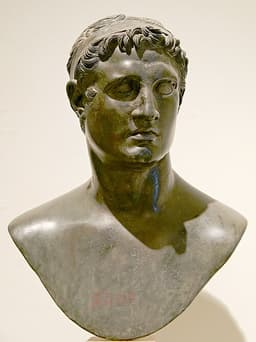
Ptolemy II Philadelphus
Emperor · Ancient
59.1Total
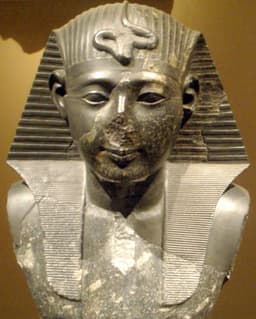
Seti I
Emperor · Ancient
58.3Total
Basic Information
Born
-308
-1290
Died
-246
-1279
Era
Ancient
Ancient
Nationality
Egypt
Egypt
Occupation
Emperor
Emperor
Civilization
Middle Eastern
Middle Eastern
Score Comparison
Military (10%)
25.0
74.7
Political (20%)
70.0
62.7
Influence (20%)
72.0
56.7
Legacy (20%)
52.0
54.0
Leadership (15%)
72.0
53.2
Strategy (15%)
43.3
58.0
TOTAL
59.1
58.3
Ptolemy II Philadelphus — Complete Timeline
285 BC
Expansion of the Library of AlexandriaCultural◆ Major
Ptolemy II greatly expanded the Library of Alexandria, acquiring manuscripts from across the known world. He appointed scholars like Zenodotus and Callimachus as librarians, making Alexandria the preeminent center of Hellenistic learning and scholarship.
LibraryScholarshipHellenistic
Impact: globalprogressive
280 BC
Construction of the Pharos LighthouseCultural◆ Major
Ptolemy II completed the construction of the Pharos Lighthouse on the island of Pharos off Alexandria. The lighthouse, one of the Seven Wonders of the Ancient World, stood over 100 meters tall and guided ships into the harbor, becoming a symbol of Ptolemaic power and engineering.
Seven WondersArchitectureAlexandria
Impact: globalconstructive
274 BC
First Syrian War (274-271 BC)War◆ Major
Ptolemy II fought the First Syrian War against the Seleucid king Antiochus I. He successfully defended Ptolemaic possessions in Coele-Syria and expanded Egyptian influence into the Aegean and Anatolia, securing his kingdom's position as a major Hellenistic power.
Syrian WarPtolemaic-SeleucidEgypt
Impact: regional
273 BC
Marriage to Arsinoe IIPolitical Action◆ Major
Ptolemy II married his full sister Arsinoe II, a practice common in Egyptian pharaonic tradition but unusual for Greeks. This marriage consolidated his power and was used for propaganda, with both being deified as the Theoi Philadelphoi (Sibling-Loving Gods).
Royal MarriageIncestDeification
Impact: national
250 BC
Patronage of the Septuagint TranslationCultural◆ Major
According to tradition, Ptolemy II commissioned the translation of the Hebrew Bible into Greek, known as the Septuagint, for the Library of Alexandria. This translation made Jewish scriptures accessible to the Greek-speaking world and became foundational for Christianity.
TranslationBibleHellenistic Judaism
Impact: globalconstructive
Seti I — Complete Timeline
1290 BC
Establishment of the 19th Dynasty's Power BasePolitical Action◆ Major
Seti I, son of Ramesses I, solidified the 19th Dynasty's rule by strengthening the military and administrative structures. He appointed his son Ramesses II as co-regent, ensuring a smooth succession and laying the foundation for Ramesses II's long reign.
DynastySuccessionRamesses II
Impact: nationalconstructive
1288 BC
Military Campaigns in Syria and LibyaWar◆ Major
Seti I led military campaigns into Syria to reassert Egyptian control over Canaan and against Libyan tribes in the west. He recaptured the city of Kadesh and defeated the Libyans, securing Egypt's borders and restoring its military reputation.
MilitarySyriaLibya
Impact: regional
1285 BC
Construction of the Temple of AbydosCultural◆ Major
Seti I built the magnificent Temple of Abydos, dedicated to Osiris. The temple features exquisite reliefs and the famous King List, which records the names of 76 pharaohs from Menes to Seti I, providing a crucial chronological record.
ArchitectureAbydosKing List
Impact: globalconstructive
1280 BC
Construction of the Great Hypostyle Hall at Karnak (Completion)Cultural◆ Major
Seti I completed the Great Hypostyle Hall at Karnak, begun by Horemheb. The hall's 134 columns are covered with reliefs depicting Seti I's military victories and religious ceremonies, making it a masterpiece of New Kingdom architecture.
ArchitectureKarnakHypostyle Hall
Impact: globalconstructive
Expert Analysis
Origins
Ptolemy II Philadelphus was born in 309 BC on Kos, the son of Ptolemy I Soter, a Macedonian general under Alexander the Great who became ruler of Egypt. His mother was Berenice I. He was educated in the Hellenistic tradition, studying under scholars like Philitas of Cos. In contrast, Seti I was born around 1323 BC in Avaris, the son of Ramesses I, a vizier who founded the 19th Dynasty. His mother was Queen Sitre. Seti grew up in a military environment, his family having risen from the ranks of the army. His name means "He of the god Seth." Both were second rulers of their dynasties, but Ptolemy inherited a stable kingdom, while Seti's father reigned only two years, leaving Seti to consolidate power.
Rise to Power
Ptolemy II became co-regent with his father in 285 BC and sole ruler upon Ptolemy I's death in 283 BC. He faced early challenges from his half-brother Magas, who governed Cyrene and later rebelled. Ptolemy solidified his rule by marrying his sister Arsinoe II, a political move that secured her support and wealth. Seti I rose to power after his father's short reign. He was likely co-regent with Ramesses I for a brief period. His first major act was to lead a campaign against Shasu bedouin in Canaan, reasserting Egyptian dominance. He also suppressed a rebellion in Nubia. Seti's military prowess quickly established his authority, contrasting with Ptolemy's more diplomatic and cultural approach.
Leadership & Governance
Ptolemy II governed as an absolute monarch, centralizing administration in Alexandria. He continued his father's policy of promoting Greek culture while respecting Egyptian traditions. He commissioned the Septuagint translation, patronized the Library, and supported the Museum, attracting scholars like Euclid and Eratosthenes. His economic policies included state monopolies on oil, papyrus, and textiles. Seti I also ruled as an autocrat but focused on military expansion and temple building. He reorganized the army into divisions named after gods (Amun, Ra, Ptah) and appointed his son Ramesses as co-regent early. Seti's building projects, like the Hypostyle Hall at Karnak, reinforced the pharaoh's divine role. Politically, Ptolemy II scored 70.0, while Seti I scored 62.7, reflecting Ptolemy's more sophisticated administrative and diplomatic skills.
Triumph & Tragedy
Ptolemy II's greatest success was the completion of the Pharos Lighthouse (one of the Seven Wonders) and the expansion of the Library, making Alexandria the intellectual capital of the Mediterranean. He won the First Syrian War (274-271 BC), securing Coele-Syria. His tragedy was the Second Syrian War (260-253 BC), where he lost territory to the Seleucids and faced a revolt in Cyrene. Seti I triumphed in his Syrian campaigns, recapturing Kadesh and signing a treaty with the Hittites. He built the Temple of Abydos, a masterpiece of Egyptian art. His failure was not fully defeating the Hittites; the unresolved conflict led to his son Ramesses II's famous battle at Kadesh. Seti's military score of 74.7 far exceeds Ptolemy's 25.0, but his political score is lower.
Character & Destiny
Ptolemy II was a patron of arts and sciences, described as gentle and scholarly. His marriage to his sister scandalized Greeks but aligned with Egyptian tradition. He was cautious in war, preferring diplomacy. Seti I was a warrior pharaoh, energetic and ambitious. His reliefs show him personally leading charges. He was also a devout builder, restoring temples and honoring gods. Ptolemy's character led to a stable, culturally rich reign, while Seti's military focus set the stage for his son's grand campaigns. Both died natural deaths: Ptolemy in 246 BC at age 63, Seti around 1279 BC after 11-15 years of rule. Their leadership scores are close: Ptolemy 72.0, Seti 53.2, indicating Ptolemy's more effective governance.
Legacy
Ptolemy II's legacy is the Library of Alexandria and the Pharos, symbols of Hellenistic learning. The Septuagint influenced biblical scholarship. His reign established the Ptolemaic dynasty's cultural prestige. Seti I's legacy is the Temple of Abydos, the Karnak Hypostyle Hall, and his tomb in the Valley of the Kings (KV17), one of the finest. He restored Egyptian power after the Amarna period. However, his son Ramesses II overshadowed him. In the comparison algorithm, Ptolemy II scores 72.0 in influence and 52.0 in legacy, while Seti scores 56.7 and 54.0 respectively. Ptolemy's influence endures through the Library's concept, while Seti's legacy is more architectural and military.
Conclusion
While Seti I was the superior military commander (74.7 vs 25.0), Ptolemy II Philadelphus had greater overall impact. His political score (70.0 vs 62.7), influence (72.0 vs 56.7), and leadership (72.0 vs 53.2) edge out Seti. The Library of Alexandria and Pharos Lighthouse represent lasting contributions to civilization that transcend military conquest. Seti's achievements, though impressive, were largely surpassed by his son. Therefore, Ptolemy II Philadelphus is the more historically significant figure, with a total score of 59.1 compared to Seti's 58.3.
Rankings
🥇
Ptolemy II PhiladelphusLeader
Mil: 25.0Pol: 70.0Inf: 72.0
59.1
🥈
Seti I
Mil: 74.7Pol: 62.7Inf: 56.7
58.3
+0.8 behind
How This Comparison Works
Algorithm
Each figure is scored on 6 dimensions (0—100 scale) based on structured historical data: Military (10%), Political (20%), Influence (20%), Legacy (20%), Leadership (15%), Strategy (15%). The weighted total produces the final ranking.
Data Sources
Scores are computed from structured sub-indicators in the database. Scale factors adjust for era (Ancient ×0.85, Modern ×1.0) and civilization size (Eastern ×1.05, Other ×0.80) to account for differences in population and military scale.
Maximum 3 Figures
Comparisons are limited to 2—3 figures to ensure readability and statistical meaningfulness.
Error Margins
±5 points per dimension — Sub-scores are derived from historical records with inherent uncertainty. Two figures within 5 points on a dimension should be considered roughly equivalent in that area.
Total Score Accuracy
±3 points overall — The weighted combination of 6 dimensions produces a total score with approximately ±3 points of uncertainty. Differences of less than 3 points are not statistically significant— the figures are effectively tied.
Known Limitations
- Historical records are incomplete and uneven across civilizations
- Figures from oral-tradition societies may be underrepresented
- Occupation labels can misclassify multi-role figures
- Scores measure capability and impact, not moral character
- Quantitative scoring is a comparison tool, not absolute truth
Capability Radar
Military (10%) — Battles & Warfare
Battles
30
70
Win Rate
40
75
Expansion
35
65
Political (20%) — Governance & Reform
Reform
70
60
Diplomacy
80
65
Economy
85
60
Influence (20%) — Cultural & Global Reach
Cultural
85
70
Global
70
55
Legacy (20%) — Historical Impact
Historical
80
65
Longevity
75
60
Leadership (15%) — Power & Stability
Tenure
75
55
Stability
70
65
Strategy (15%) — Tactics & Innovation
Strategy
40
70
Tactics
35
65
Reform
30
60
Similar Comparisons
Comments & Discussion
No comments yet. Be the first to share your thoughts!