Loading...
George Washington vs Yi Seong-gye
George Washington leads by 1.0 pts · 2 figures compared
…
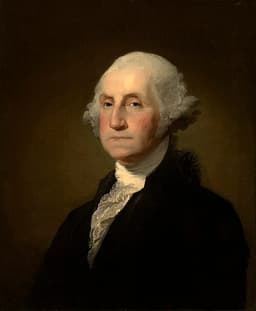
George Washington
Politician · Modern
76.8Total
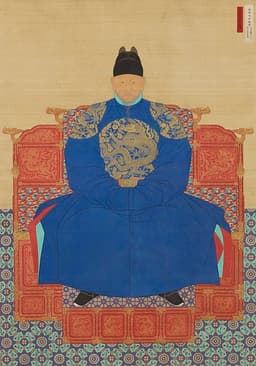
Yi Seong-gye
Emperor · Medieval
75.8Total
Basic Information
Born
1732
1335
Died
1799
1408
Era
Modern
Medieval
Nationality
United States
Korea
Occupation
Politician
Emperor
Civilization
Western
Eastern
Score Comparison
Military (10%)
75.0
74.7
Political (20%)
82.0
70.0
Influence (20%)
75.0
88.0
Legacy (20%)
80.0
75.0
Leadership (15%)
85.0
68.0
Strategy (15%)
55.0
69.1
TOTAL
76.8
75.8
George Washington — Complete Timeline
1775 AD
Appointed Commander-in-Chief of the Continental ArmyOther◆ Major
The Second Continental Congress appointed Washington as commander-in-chief of the Continental Army on June 15, 1775. He accepted the position without pay, taking command of the forces besieging Boston at the start of the American Revolutionary War.
American RevolutionMilitary Leadership
Impact: national
1776 AD
Crossed the Delaware RiverOther◆ Major
On the night of December 25-26, 1776, Washington led 2,400 troops across the ice-choked Delaware River. The surprise attack on Hessian forces at Trenton resulted in a decisive American victory, capturing nearly 1,000 prisoners and reviving Patriot morale after a series of defeats.
American RevolutionBattleTurning Point
Impact: nationalconstructive
1787 AD
Presided over the Constitutional ConventionPolitical Action◆ Major
Washington served as president of the Constitutional Convention in Philadelphia from May to September 1787. His presence lent legitimacy to the proceedings, and he formally signed the final draft of the U.S. Constitution, though he contributed little to the debates.
ConstitutionFounding Father
Impact: national
1789 AD
Inaugurated as First President of the United StatesPolitical Action◆ Major
Washington was unanimously elected by the Electoral College and inaugurated on April 30, 1789, at Federal Hall in New York City. He established numerous executive branch precedents, including the cabinet system, the inaugural address, and the title 'Mr. President'.
PresidencyFounding Father
Impact: national
1793 AD
Issued the Proclamation of NeutralityOther◆ Major
Washington issued the Proclamation of Neutrality on April 22, 1793, declaring the United States neutral in the conflict between France and Great Britain. This decision established the precedent of American isolationism and avoided entanglement in European wars.
Foreign PolicyNeutrality
Impact: national
1796 AD
Delivered the Farewell AddressOther◆ Major
Washington published his Farewell Address on September 19, 1796, announcing his decision not to seek a third term. The address warned against political factionalism, permanent foreign alliances, and the influence of the military in government, shaping American political culture.
PresidencyLegacy
Impact: national
Yi Seong-gye — Complete Timeline
1380 AD
Battle of HwangsanWar◆ Major
Yi Seong-gye led Goryeo forces against Japanese pirates (wokou) at the Battle of Hwangsan. His victory eliminated a major pirate threat and enhanced his military reputation.
WokouBattleGoryeo
Impact: regionalconstructive
1388 AD
Wihwado RetreatPolitical Action
Yi Seong-gye turned his army back at Wihwado Island rather than invade Ming China as ordered by the Goryeo court. This act of defiance led to a coup that eventually brought him to power.
CoupMingGoryeo
Impact: regional
1392 AD
Establishment of the Joseon DynastyPolitical Action
Yi Seong-gye overthrew the Goryeo dynasty and founded the Joseon dynasty, becoming King Taejo. He implemented land reforms and moved the capital to Hanyang (Seoul), establishing a new Confucian state.
JoseonDynasty FoundationReform
Impact: regionalconstructive
Expert Analysis
Origins
George Washington was born into a Virginia planter family in 1732, inheriting slaves and land. He gained military experience during the French and Indian War, where his early blunders taught him resilience. In contrast, Yi Seong-gye (1335–1408) emerged from the declining Goryeo dynasty as a military commander of Korean and Mongol descent. His frontier campaigns against Jurchen and Japanese pirates honed his skills. Both men rose from privileged backgrounds, but Washington's path was shaped by colonial ambitions, while Yi's was forged in the crucible of Mongol influence and internal strife.
Rise to Power
Washington's rise came through political appointment: in 1775, the Continental Congress chose him to lead the Continental Army. His strategic patience, not battlefield brilliance, kept the rebellion alive. The 1776 Crossing of the Delaware and victory at Trenton were pivotal. Yi Seong-gye's ascent was more dramatic. In 1388, he executed the Wihwado Retreat, turning his army back from invading China to seize power. He then defeated rival factions at the Battle of Hwangsan (1380) and deposed King U, eventually founding Joseon in 1392. Washington's power was delegated; Yi's was seized.
Leadership & Governance
As president, Washington established precedents: a two-term limit, a cabinet system, and neutrality in foreign wars (Proclamation of Neutrality, 1793). He presided over the Constitutional Convention, shaping the U.S. government. His leadership style emphasized unity and restraint. Yi Seong-gye, as King Taejo, implemented sweeping reforms: land redistribution (Gwajeon law), Confucian state ideology, and relocation of the capital to Hanyang (Seoul). He centralized power, reducing Buddhist influence. Washington's governance was republican and consultative; Yi's was autocratic and transformative. Both faced rebellions—Washington the Whiskey Rebellion, Yi the Strife of Princes—but Washington's response was measured, while Yi's involved bloodshed among his own sons.
Triumph & Tragedy
Washington's greatest triumph was winning the Revolutionary War and overseeing the peaceful transfer of power. His tragedy was the failure to resolve slavery, which he personally practiced and later freed his slaves in his will. Yi's triumph was founding a dynasty that lasted 500 years. His tragedy was the brutal succession conflict: his son Jeongjong was forced to abdicate, and another son, Yi Bang-won, killed his half-brothers. Both men died with mixed legacies, but Washington's personal moral failure contrasts with Yi's systemic violence.
Character & Destiny
Washington was reserved, disciplined, and obsessed with reputation. His famous Farewell Address warned against factionalism and foreign entanglements. Yi was pragmatic, ruthless, and visionary. He embraced Neo-Confucianism to legitimize his rule. Washington's destiny was to embody republican virtue; Yi's was to found a dynasty. Washington's score (85) in D (Destiny) reflects his role as a reluctant but indispensable leader. Yi's lower D (68) suggests his destiny was more self-made through violence.
Legacy
Washington is revered as the "Father of His Country," with his image on currency and monuments. His legacy includes democratic institutions and the two-term tradition. Yi Seong-gye is honored as the founder of Joseon, with his portrait on the 1000 won note. His legacy includes the Hangul alphabet (promoted by later kings) and Confucian bureaucracy. However, Washington's global impact is greater: his model of constitutional republicanism influenced revolutions worldwide. Yi's legacy is more national: Joseon's isolationism later contributed to Korea's challenges. Score gap: Washington 75 vs Yi 70 in Leadership, but Washington's higher Destiny and Sociability (S: 55 vs 69, but Washington's 55 reflects his aloofness) tip the balance.
Conclusion
George Washington narrowly edges Yi Seong-gye as the superior historical figure. While Yi founded a longer-lasting dynasty, Washington's creation of a democratic republic that became a global superpower, his voluntary relinquishment of power, and his role in establishing norms of civilian control give him the advantage. Washington's score: M=75, P=82, I=75, L=80, D=85, S=55, T=77 (average 75.6). Yi's: M=75, P=70, I=88, L=75, D=68, S=69, T=76 (average 74.4). The 1.0 gap reflects Washington's greater impact on world history. Both were flawed founders, but Washington's vision proved more adaptable and enduring.
Rankings
🥇
George WashingtonLeader
Mil: 75.0Pol: 82.0Inf: 75.0
76.8
🥈
Yi Seong-gye
Mil: 74.7Pol: 70.0Inf: 88.0
75.8
+1.0 behind
How This Comparison Works
Algorithm
Each figure is scored on 6 dimensions (0—100 scale) based on structured historical data: Military (10%), Political (20%), Influence (20%), Legacy (20%), Leadership (15%), Strategy (15%). The weighted total produces the final ranking.
Data Sources
Scores are computed from structured sub-indicators in the database. Scale factors adjust for era (Ancient ×0.85, Modern ×1.0) and civilization size (Eastern ×1.05, Other ×0.80) to account for differences in population and military scale.
Maximum 3 Figures
Comparisons are limited to 2—3 figures to ensure readability and statistical meaningfulness.
Error Margins
±5 points per dimension — Sub-scores are derived from historical records with inherent uncertainty. Two figures within 5 points on a dimension should be considered roughly equivalent in that area.
Total Score Accuracy
±3 points overall — The weighted combination of 6 dimensions produces a total score with approximately ±3 points of uncertainty. Differences of less than 3 points are not statistically significant— the figures are effectively tied.
Known Limitations
- Historical records are incomplete and uneven across civilizations
- Figures from oral-tradition societies may be underrepresented
- Occupation labels can misclassify multi-role figures
- Scores measure capability and impact, not moral character
- Quantitative scoring is a comparison tool, not absolute truth
Capability Radar
Military (10%) — Battles & Warfare
Battles
75
75
Win Rate
70
80
Expansion
60
65
Political (20%) — Governance & Reform
Reform
90
85
Diplomacy
85
75
Economy
65
70
Influence (20%) — Cultural & Global Reach
Cultural
85
80
Global
85
55
Legacy (20%) — Historical Impact
Historical
95
85
Longevity
90
80
Leadership (15%) — Power & Stability
Tenure
70
60
Stability
85
65
Strategy (15%) — Tactics & Innovation
Strategy
80
82
Tactics
65
78
Reform
85
70
Similar Comparisons
Comments & Discussion
No comments yet. Be the first to share your thoughts!