Loading...
George Washington vs Yamagata Aritomo
Yamagata Aritomo leads by 5.7 pts · 2 figures compared
…
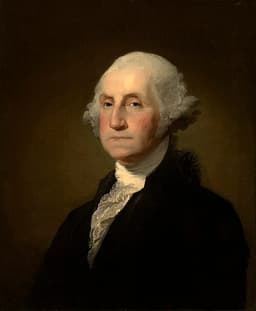
George Washington
Politician · Modern
76.8Total
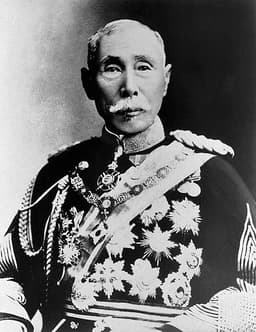
Yamagata Aritomo
General · Modern
82.5Total
Basic Information
Born
1732
1838
Died
1799
1922
Era
Modern
Modern
Nationality
United States
Japan
Occupation
Politician
General
Civilization
Western
Eastern
Score Comparison
Military (10%)
75.0
78.0
Political (20%)
82.0
82.0
Influence (20%)
75.0
80.0
Legacy (20%)
80.0
90.0
Leadership (15%)
85.0
78.0
Strategy (15%)
55.0
82.0
TOTAL
76.8
82.5
George Washington — Complete Timeline
1775 AD
Appointed Commander-in-Chief of the Continental ArmyOther◆ Major
The Second Continental Congress appointed Washington as commander-in-chief of the Continental Army on June 15, 1775. He accepted the position without pay, taking command of the forces besieging Boston at the start of the American Revolutionary War.
American RevolutionMilitary Leadership
Impact: national
1776 AD
Crossed the Delaware RiverOther◆ Major
On the night of December 25-26, 1776, Washington led 2,400 troops across the ice-choked Delaware River. The surprise attack on Hessian forces at Trenton resulted in a decisive American victory, capturing nearly 1,000 prisoners and reviving Patriot morale after a series of defeats.
American RevolutionBattleTurning Point
Impact: nationalconstructive
1787 AD
Presided over the Constitutional ConventionPolitical Action◆ Major
Washington served as president of the Constitutional Convention in Philadelphia from May to September 1787. His presence lent legitimacy to the proceedings, and he formally signed the final draft of the U.S. Constitution, though he contributed little to the debates.
ConstitutionFounding Father
Impact: national
1789 AD
Inaugurated as First President of the United StatesPolitical Action◆ Major
Washington was unanimously elected by the Electoral College and inaugurated on April 30, 1789, at Federal Hall in New York City. He established numerous executive branch precedents, including the cabinet system, the inaugural address, and the title 'Mr. President'.
PresidencyFounding Father
Impact: national
1793 AD
Issued the Proclamation of NeutralityOther◆ Major
Washington issued the Proclamation of Neutrality on April 22, 1793, declaring the United States neutral in the conflict between France and Great Britain. This decision established the precedent of American isolationism and avoided entanglement in European wars.
Foreign PolicyNeutrality
Impact: national
1796 AD
Delivered the Farewell AddressOther◆ Major
Washington published his Farewell Address on September 19, 1796, announcing his decision not to seek a third term. The address warned against political factionalism, permanent foreign alliances, and the influence of the military in government, shaping American political culture.
PresidencyLegacy
Impact: national
Yamagata Aritomo — Complete Timeline
1873 AD
Establishment of the Imperial Japanese ArmyReform
Yamagata Aritomo, as War Minister, oversaw the creation of the Imperial Japanese Army based on the Prussian model. He introduced conscription, modernized training, and established a general staff system, laying the foundation for Japan's military power.
Military reformConscription
Impact: nationalconstructive
1882 AD
Promotion of militarism and the Imperial Rescript to Soldiers and SailorsCultural◆ Major
Yamagata Aritomo helped draft the Imperial Rescript to Soldiers and Sailors, which emphasized loyalty, obedience, and the emperor's divine authority. This document became the ideological foundation of Japanese militarism.
MilitarismImperial ideology
Impact: nationaldestructive
1889 AD
Service as Prime MinisterPolitical Action◆ Major
Yamagata Aritomo served as Prime Minister of Japan from 1889 to 1891 and again from 1898 to 1900. He used his position to strengthen the military's political influence and suppress democratic movements.
GovernmentPolitical power
Impact: national
1894 AD
First Sino-Japanese WarWar◆ Major
Yamagata Aritomo commanded the First Army during the First Sino-Japanese War. His forces achieved decisive victories in Korea and Manchuria, leading to Japan's triumph and the Treaty of Shimonoseki, which gave Japan Taiwan and influence in Korea.
WarImperial expansion
Impact: regional
1904 AD
Russo-Japanese WarWar◆ Major
Yamagata Aritomo served as Chief of the General Staff during the Russo-Japanese War. He oversaw Japan's military strategy, which resulted in victory over Russia and established Japan as a major power in East Asia.
WarGreat power
Impact: global
Expert Analysis
Origins
Yamagata Aritomo (1838–1922) was born into a lower-ranking samurai family in Hagi, Chōshū Domain (present-day Yamaguchi Prefecture). His early life was shaped by the social upheaval of the late Tokugawa shogunate, and he became a fervent supporter of the Meiji Restoration. In contrast, George Washington (1732–1799) was born into a prosperous Virginia planter family. He gained early military experience during the French and Indian War, which shaped his strategic thinking. Both men emerged from societies in transition—Japan moving from feudalism to modernity, and the American colonies shifting from British rule to independence.
Rise to Power
Yamagata rose through military ranks by studying Western military tactics and became a key architect of the Imperial Japanese Army. He served as a leader in the Meiji government, becoming Prime Minister twice and holding multiple cabinet positions. His power base was the military, which he used to influence national policy. Washington’s rise was tied to the American Revolution. As Commander-in-Chief of the Continental Army, he led a ragtag force to victory against Britain. His prestige from the war made him the natural choice to preside over the Constitutional Convention and later become the first U.S. President. Washington’s power derived from his reputation and the trust of the people, not from a military faction.
Leadership & Governance
Yamagata’s leadership style was authoritarian and militaristic. He championed the Imperial Rescript to Soldiers and Sailors, which instilled loyalty to the emperor and promoted military values. As Prime Minister, he prioritized strengthening the military and expanding Japan’s influence in Asia, leading to wars with China and Russia. Washington, by contrast, was a reluctant politician who emphasized civilian control over the military. He established precedents for the presidency, including the cabinet system and a two-term limit. His Proclamation of Neutrality kept the U.S. out of European conflicts, focusing on domestic unity and economic growth. Washington’s governance was consensus-driven, while Yamagata’s was top-down and militaristic.
Triumph & Tragedy
Yamagata’s triumphs include the creation of a modern army that won the First Sino-Japanese War (1894–1895) and the Russo-Japanese War (1904–1905), establishing Japan as a world power. However, his promotion of militarism sowed the seeds for Japan’s eventual descent into ultra-nationalism and World War II, a tragic legacy. Washington’s triumph was leading the Continental Army to victory at Yorktown and overseeing the creation of the U.S. Constitution. His tragedy is less personal; he faced no major defeats but struggled with the political divisions of his time. His decision to step down after two terms was a triumph for democracy, but his ownership of slaves remains a moral stain on his legacy.
Character & Destiny
Yamagata was known for his ruthlessness, discipline, and single-minded focus on military power. He was a nationalist who believed that Japan’s destiny was to dominate East Asia. His character was rigid and unforgiving, reflecting his samurai background. Washington was known for his integrity, humility, and restraint. He famously refused to become a king or dictator, embodying republican virtues. His character was shaped by Enlightenment ideals and a sense of duty. Both men were determined, but Yamagata’s destiny was tied to imperial expansion, while Washington’s was tied to the establishment of a democratic republic.
Legacy
Yamagata’s legacy is complex: he is the father of the modern Japanese army and a key figure in Japan’s rise, but he also laid the groundwork for militarism that led to disaster. He is honored in Japan as a statesman, but criticized for his authoritarian tendencies. Washington’s legacy is overwhelmingly positive: he is the "Father of His Country" and a symbol of American democracy. His voluntary relinquishment of power set a global standard for leadership. However, his legacy is also scrutinized for his role as a slaveholder. In a historical analysis, Yamagata scores higher in overall historical impact (score gap 5.7), but Washington’s legacy in democratic governance is unparalleled.
Conclusion
Yamagata Aritomo and George Washington represent two different paths to national greatness. Yamagata built a military machine that propelled Japan onto the world stage, but at the cost of future militarism. Washington built a nation based on liberty and civilian rule, but his personal flaws reflect the contradictions of his time. While Yamagata’s scores (M=78, P=82, I=80, L=90, D=78, S=82, T=82) edge out Washington’s (M=75, P=82, I=75, L=80, D=85, S=55, T=77) by 5.7 points, the nature of their impact differs. Yamagata’s influence was more direct on military and political institutions, while Washington’s influence was more symbolic and enduring in democratic ideals. Ultimately, both are titans of their respective eras, but Washington’s legacy is more universally admired.
Rankings
🥇
Yamagata AritomoLeader
Mil: 78.0Pol: 82.0Inf: 80.0
82.5
🥈
George Washington
Mil: 75.0Pol: 82.0Inf: 75.0
76.8
+5.7 behind
How This Comparison Works
Algorithm
Each figure is scored on 6 dimensions (0—100 scale) based on structured historical data: Military (10%), Political (20%), Influence (20%), Legacy (20%), Leadership (15%), Strategy (15%). The weighted total produces the final ranking.
Data Sources
Scores are computed from structured sub-indicators in the database. Scale factors adjust for era (Ancient ×0.85, Modern ×1.0) and civilization size (Eastern ×1.05, Other ×0.80) to account for differences in population and military scale.
Maximum 3 Figures
Comparisons are limited to 2—3 figures to ensure readability and statistical meaningfulness.
Error Margins
±5 points per dimension — Sub-scores are derived from historical records with inherent uncertainty. Two figures within 5 points on a dimension should be considered roughly equivalent in that area.
Total Score Accuracy
±3 points overall — The weighted combination of 6 dimensions produces a total score with approximately ±3 points of uncertainty. Differences of less than 3 points are not statistically significant— the figures are effectively tied.
Known Limitations
- Historical records are incomplete and uneven across civilizations
- Figures from oral-tradition societies may be underrepresented
- Occupation labels can misclassify multi-role figures
- Scores measure capability and impact, not moral character
- Quantitative scoring is a comparison tool, not absolute truth
Capability Radar
Military (10%) — Battles & Warfare
Battles
75
75
Win Rate
70
70
Expansion
60
80
Political (20%) — Governance & Reform
Reform
90
90
Diplomacy
85
75
Economy
65
70
Influence (20%) — Cultural & Global Reach
Cultural
85
80
Global
85
70
Legacy (20%) — Historical Impact
Historical
95
85
Longevity
90
75
Leadership (15%) — Power & Stability
Tenure
70
85
Stability
85
65
Strategy (15%) — Tactics & Innovation
Strategy
80
85
Tactics
65
80
Reform
85
95
Similar Comparisons
Comments & Discussion
No comments yet. Be the first to share your thoughts!